
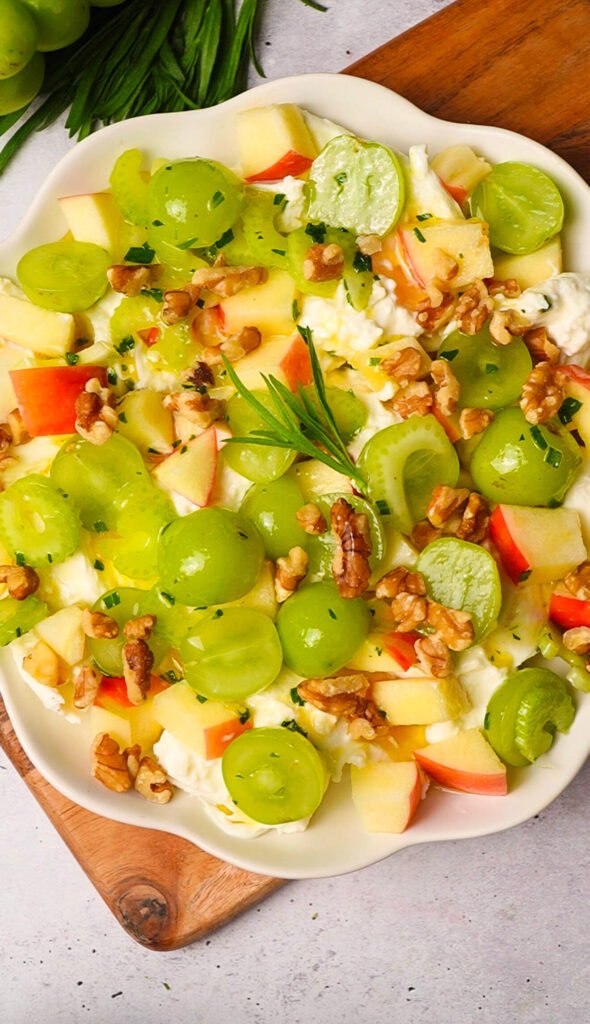
This Waldorf salad with burrata is a fresh, modern take on the classic – made without mayo and layered with crisp apples, juicy grapes, celery, toasted walnuts, and a light lemon dressing. It’s simple, clean, and actually something you’ll want to make again.
There are some recipes you grow up knowing… but never really craving.
For me, a classic Waldorf salad always fell into that category. I understood it. I respected it. But I never once thought, I need that right now.
Until I started thinking about what it actually should be.
Because at its core, a Waldorf salad has everything going for it – crisp apples, juicy grapes, crunchy celery, walnuts. The problem was never the ingredients. It was the heaviness, the lack of contrast, and honestly… the way everything gets buried under a thick, creamy dressing.
So instead of trying to tweak the original, I rebuilt it completely.
This version keeps everything that works, strips away what doesn’t, and adds one element that changes everything: burrata.
And once you try it this way, it’s very hard to go back.
If you love recipes that feel fresh but still a little elevated, you’ll probably also enjoy my Burrata with Roasted Tomatoes—it follows that same simple, flavor-first approach.
Why This Waldorf Salad Works So Well
The biggest shift here is moving away from a mayo-based dressing and toward something lighter, brighter, and more balanced. The lemon and olive oil dressing doesn’t overpower anything – it just enhances what’s already there.
Then the burrata comes in and does what mayo was trying to do, but better. It gives you that creamy element, but in a way that feels fresh and clean instead of heavy.
I use burrata this way in a lot of my recipes, especially in simple combinations like this Italian Summer Toast with Burrata & Slow-Roasted Tomatoes, where it acts almost like a built-in sauce.
You still get the sweetness from the grapes and apples, the crunch from celery and walnuts, and that classic flavor combination, but now everything feels more defined. Nothing is lost, nothing is muted.
It’s the kind of salad that actually makes you want another bite!
Ingredients You’ll Need
This is a short list, but every ingredient matters here. The quality and how you handle them will make a noticeable difference in the final result.
- Burrata (2 balls, torn)
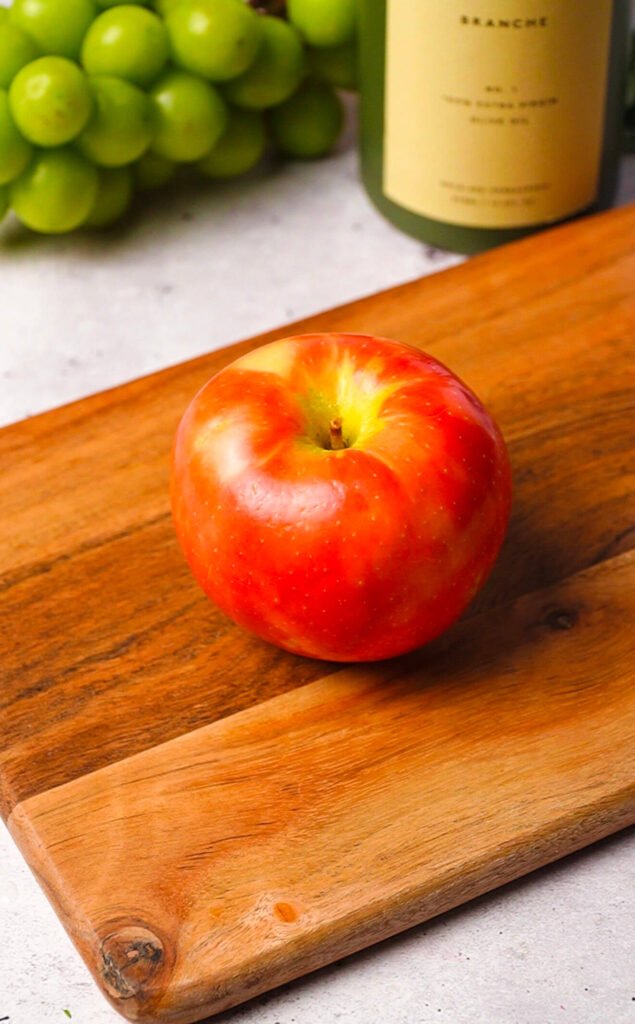
- Honeycrisp apple (½, chopped)
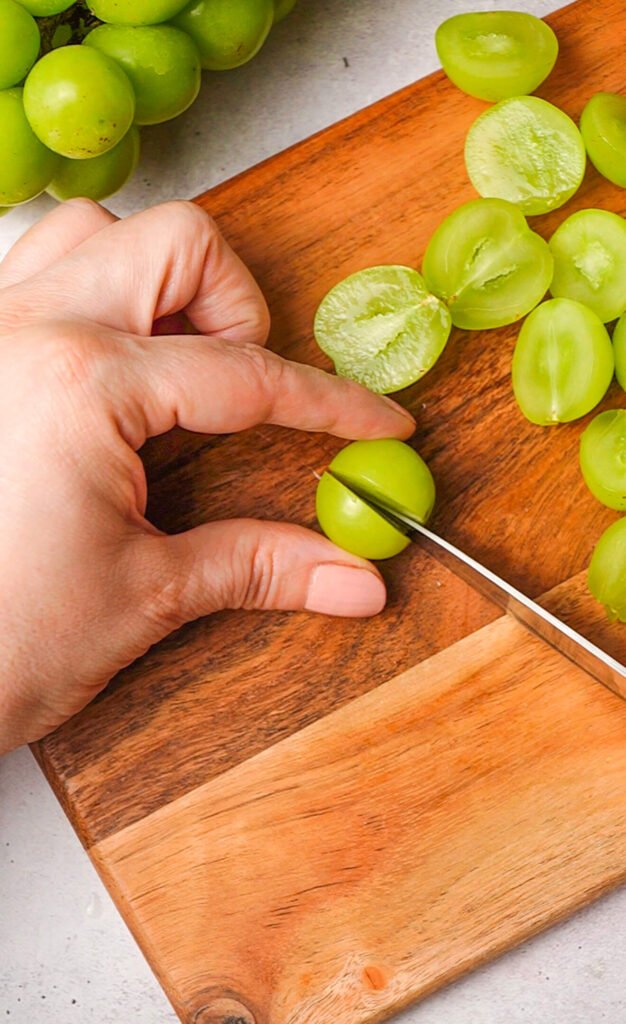
- Green grapes (½ cup, halved)
- Celery (1 stalk, very thinly sliced)
- Toasted walnuts (chunky, not crushed)
For the dressing:
- Olive oil (2 tbsp)
- Lemon juice (1 tbsp)
- Honey (1 tsp)
- Dijon mustard (½ tsp)
- Finely chopped tarragon (1 tbsp)
- Salt to taste
That balance of sweet, fresh, and slightly savory is something I also focus on in salads like my Caramel Pear And Prosciutto Salad, where contrasting flavors really make the dish.
How to Make Waldorf Salad With Burrata
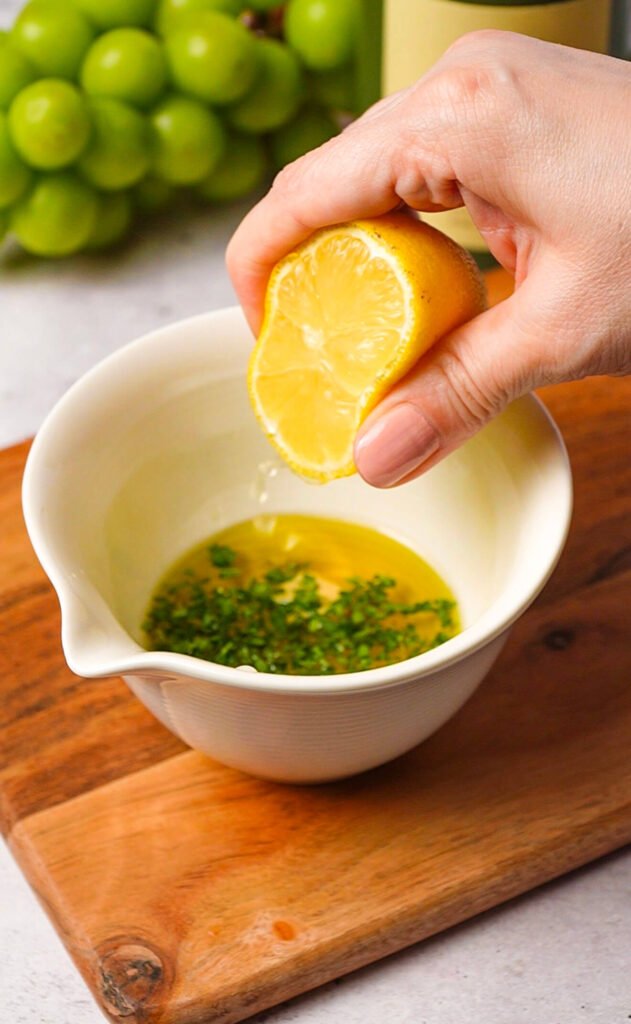
Start with the dressing. This is what ties everything together, so take a minute to get it right. Whisk together the olive oil, lemon juice, honey, Dijon, tarragon, and salt until it’s smooth and slightly emulsified. It should taste bright, lightly sweet, and balanced.
If you’ve made my Lemon-Dill Orzo Salad, the idea is similar here – light dressing, just enough to coat without overpowering.
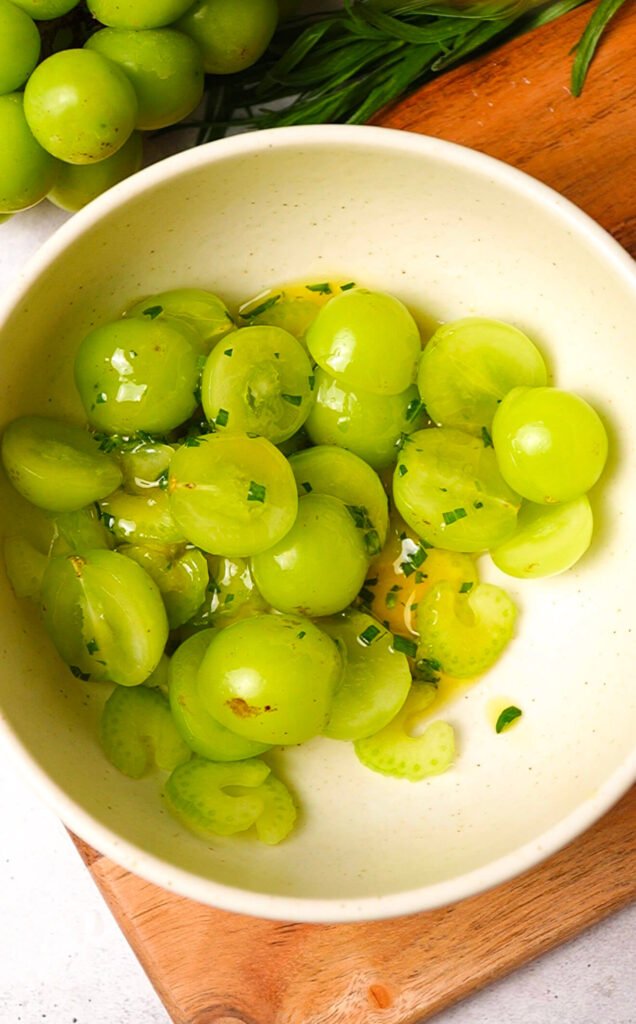
In a separate bowl, combine the sliced celery and halved grapes. Add about half of the dressing and toss gently. This step is important – it ensures these ingredients are properly seasoned and glossy without overcoating everything.
Now for assembling.
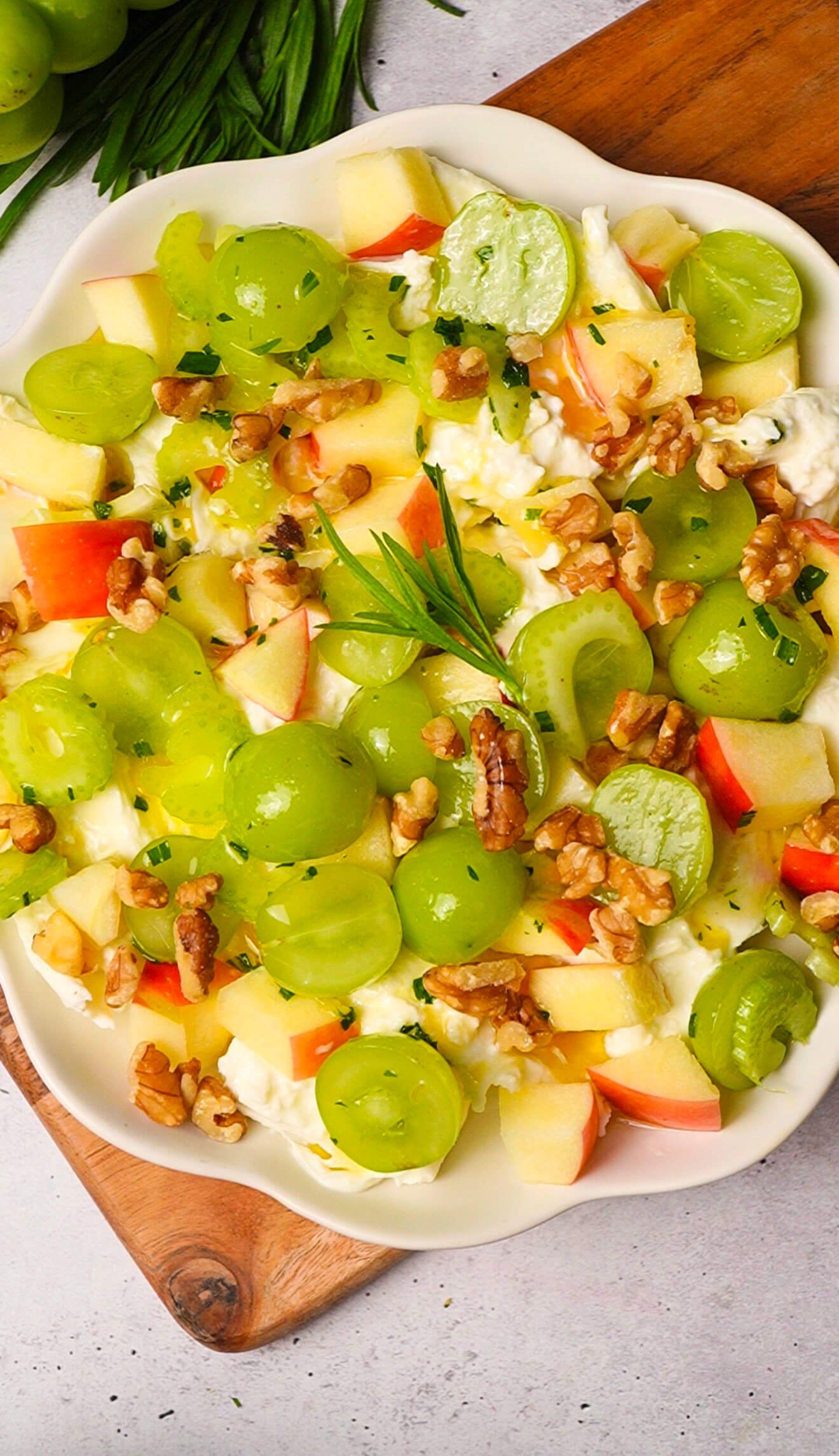
Arrange the torn burrata on a serving plate. Don’t scatter it too much – let it sit in soft, creamy mounds so it becomes the base of the salad.
Add the chopped apple, followed by the celery and grape mixture. Try not to mix everything too much at this stage. Let the ingredients sit in layers so each one stays visually distinct.
Drizzle the remaining dressing over the top.
Finish with toasted walnuts and a little extra tarragon if you like.
Serve immediately.
A Few Small Details That Make a Big Difference
This is where the recipe really comes together. It’s not complicated, but the way you handle each element matters more than it might seem.
First, the apples. Since they’re not tossed in dressing, you want to cut them right before assembling to keep them fresh and crisp. If you’re prepping ahead, a quick toss in a little lemon juice will prevent browning without changing the flavor.
Second, the celery. Slice it as thin as possible – almost shaved. This keeps the texture delicate and prevents it from overpowering the salad.
And finally, the walnuts. Toasting them is not optional. It brings out their flavor and adds that deeper, slightly warm note that balances the freshness of everything else.
What Makes This Different From a Traditional Waldorf Salad
A traditional Waldorf salad is built around a creamy dressing, usually mayonnaise-based, which creates a uniform texture and flavor.
This version moves in the opposite direction.
Instead of blending everything together, it keeps the ingredients distinct. You can taste each component individually – sweet, crisp, creamy, nutty – while still getting a balanced bite.
The burrata replaces the heaviness with something softer and more natural. The lemon dressing sharpens everything instead of dulling it.
It’s still recognizable, but it feels completely different.
I take a similar approach in recipes like my Prosciutto Avocado Toast with Chili Crunch, where each ingredient stays distinct instead of being fully mixed together.
How To Serve It
This is one of those salads that works in more situations than you expect.
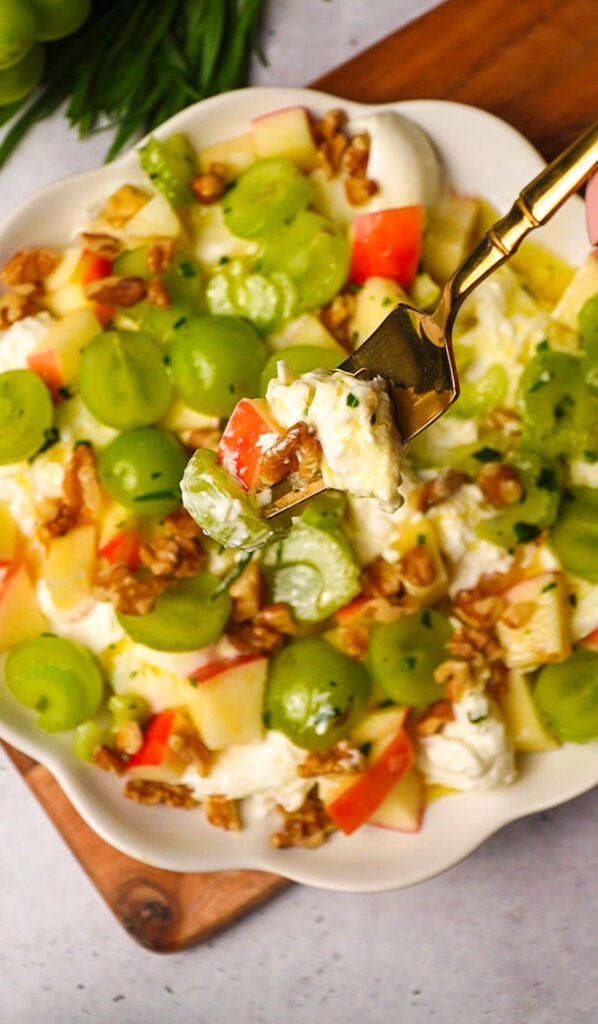
It can be a light lunch on its own, especially with a slice of good bread on the side. It also works really well as part of a spread – something you’d put out when you’re hosting and want everything to feel a little elevated but still approachable.
It pairs especially well with simple toasts like this Fresh Mozzarella and Tomato Toast with Herb-Garlic Olive Oil, which keeps everything in that same light, fresh style.
If you’ve made recipes like my burrata-based appetizers or fresh toast variations, this fits right into that same style. It’s simple, but it looks like you put in more effort than you actually did.
Variations You Can Try
Once you make this once, it’s easy to adjust depending on what you have or what you’re in the mood for.
You can swap the apples for pears if you want something softer and slightly sweeter. Red grapes work too, though green grapes keep it a bit brighter.
If you don’t have tarragon, fresh herbs like chives or even a little dill can work, though the flavor will shift slightly.
For something a little more savory, a few thin slices of prosciutto on top would fit perfectly here. If you like that combination, you might also enjoy my Burrata Salad with Melon and Prosciutto, which uses a similar sweet-and-salty balance.
Storage Notes
This salad is best served right after assembling. The textures are at their peak, and the burrata is at its creamiest.
If you do need to prep ahead, you can:
- make the dressing
- slice the celery
- toast the walnuts
Then assemble everything just before serving.
Once dressed, it doesn’t hold particularly well, so I wouldn’t recommend storing leftovers for long.
Frequently Asked Questions
Can I make Waldorf salad with burrata ahead of time?
You can prep parts of it, but I wouldn’t assemble it fully in advance.
The best approach is to make the dressing, slice the celery, and toast the walnuts ahead of time. Then cut the apple and assemble everything right before serving. That’s what keeps the texture fresh and the burrata creamy.
Once it’s fully assembled, the salad starts to lose that clean, crisp contrast pretty quickly.
How do I keep apples from browning?
If you’re not assembling immediately, toss the chopped apples in a little lemon juice.
You don’t need much – just enough to lightly coat them. It won’t make them taste overly acidic, but it will keep them looking fresh and bright.
If you’re serving right away, you can skip this step.
What is the best apple to use for Waldorf salad?
A crisp, slightly sweet apple works best here.
Honeycrisp is ideal because it holds its texture and has a balanced sweetness. Fuji or Pink Lady are also great options. I would avoid softer apples – they tend to get lost next to the burrata.
Can I use mozzarella instead of burrata?
You can, but it won’t give you the same result.
Burrata has that creamy center that acts almost like a natural dressing when you cut into it. Regular mozzarella is firmer and won’t create that same texture.
If burrata isn’t available, fresh mozzarella is the closest substitute, but the salad will feel a bit less rich and cohesive.
Is this Waldorf salad healthy?
Compared to a traditional Waldorf salad, this version is much lighter.
There’s no mayonnaise, and the dressing is based on olive oil and lemon juice. You’re getting fresh fruit, healthy fats from walnuts and olive oil, and protein from the burrata.
It’s balanced without feeling heavy, which is exactly the goal here.
Can I make this recipe dairy-free?
Yes, with one change.
You can simply leave out the burrata and still have a fresh, bright salad. It will be lighter and more fruit-forward. If you want to replace the creaminess, a dairy-free soft cheese or even sliced avocado could work.
What can I serve with Waldorf salad with burrata?
This salad pairs really well with simple, fresh dishes.
It works beautifully with toasted bread, grilled chicken, or even as part of a larger spread with other appetizers. If you’ve made some of my burrata toast recipes or fresh summer salads, this fits right into that same style of menu.
Can I use a different nut instead of walnuts?
Yes, but walnuts are still the best fit here.
They have a slightly bitter, earthy flavor that balances the sweetness of the fruit. If you need a substitute, pecans are the closest option. Almonds will work, but they change the flavor profile a bit more.
Final Thoughts
This is one of those recipes that feels familiar but still new at the same time.
It keeps the essence of a Waldorf salad, but everything is lighter, fresher, and more intentional. Nothing feels unnecessary, and nothing is overcomplicated.
And most importantly – it’s actually something you’ll want to make again.
If you’ve ever felt like a Waldorf salad wasn’t really your thing, this version might change your mind.
And if you’re looking for more recipes like this, I’ve put together a full collection of 15 Fancy Toast Ideas That Feel Gourmet (But Are Actually Easy) that follow the same simple but elevated approach.

Waldorf Salad with Burrata (A Fresh, Modern Twist)
Ingredients
Method
- In a small bowl, whisk together the olive oil, lemon juice, honey, Dijon mustard, chopped tarragon, and salt until smooth and lightly emulsified.
- In a separate bowl, combine the sliced celery and halved grapes. Add half of the dressing and toss gently to coat.
- Arrange the torn burrata on a serving plate, keeping it in soft, creamy mounds.
- Add the chopped apple evenly over the burrata.
- Spoon the celery and grape mixture over the top.
- Drizzle the remaining dressing over the salad.
- Finish with toasted walnuts and an optional sprinkle of extra tarragon.
- Serve immediately.
Notes
- Slice the celery very thinly for the best texture – it should be delicate, not crunchy in large pieces.
- Cut the apple just before assembling to keep it fresh. If needed, toss lightly with lemon juice to prevent browning.
- Toasting the walnuts enhances their flavor and adds depth – don’t skip this step.
- This salad is best served immediately after assembling for the freshest texture and flavor.