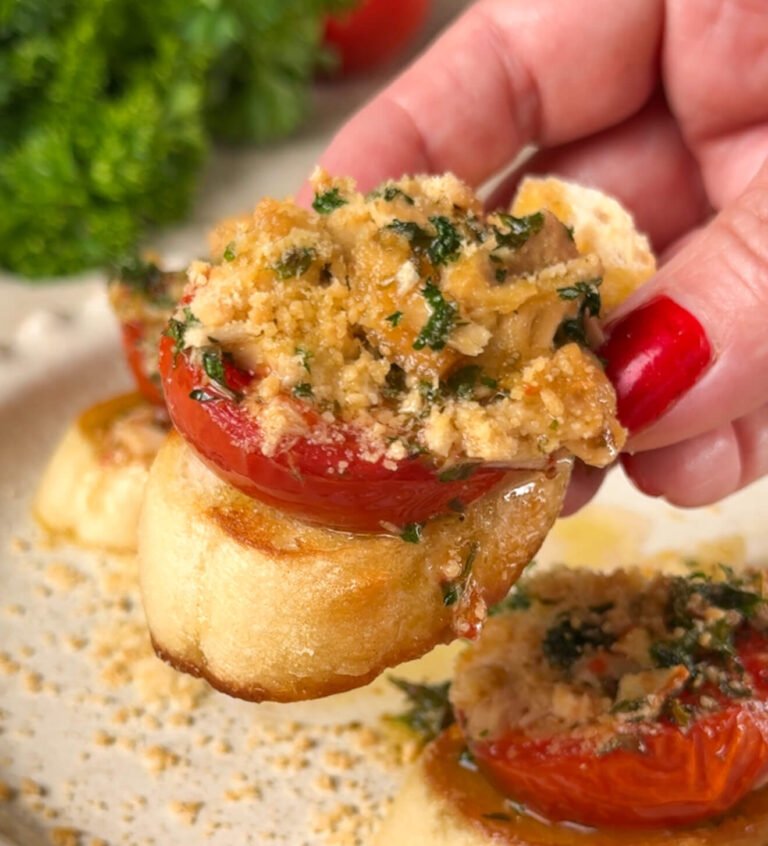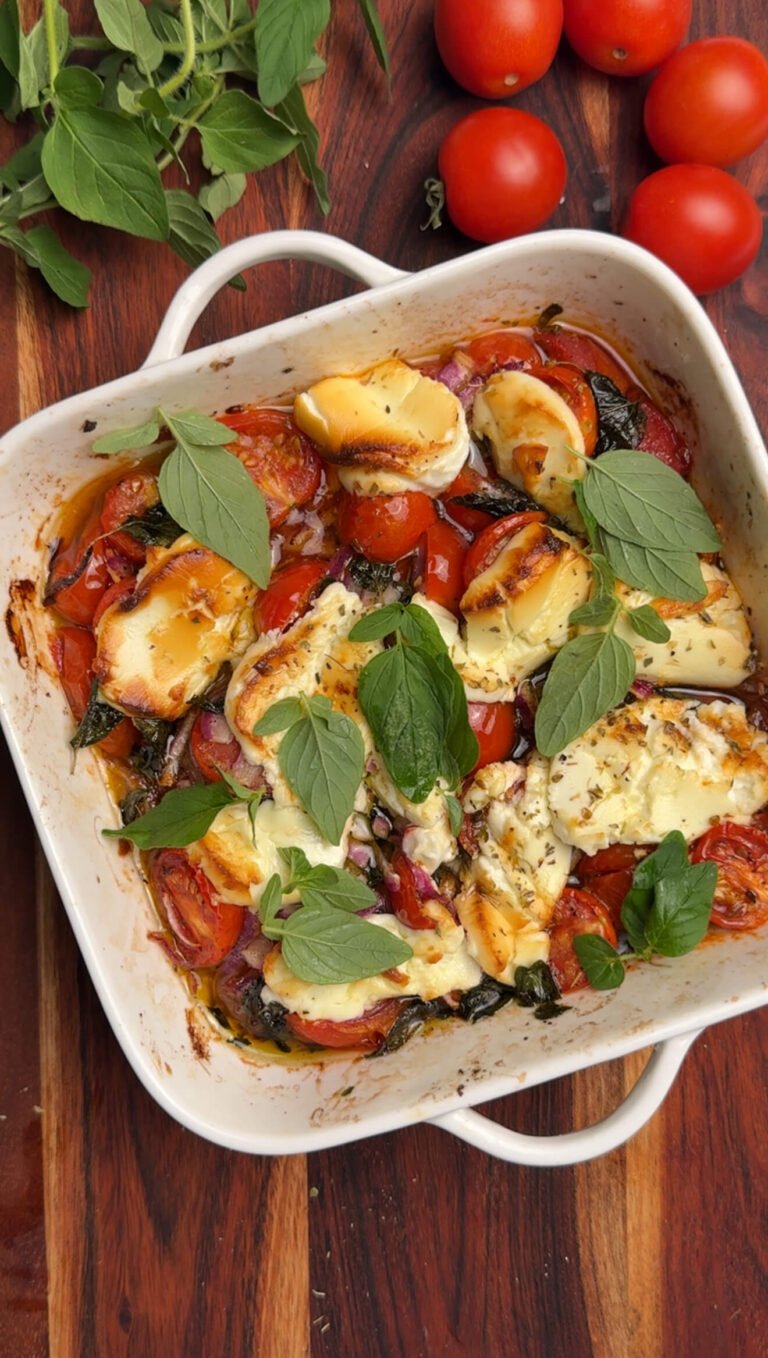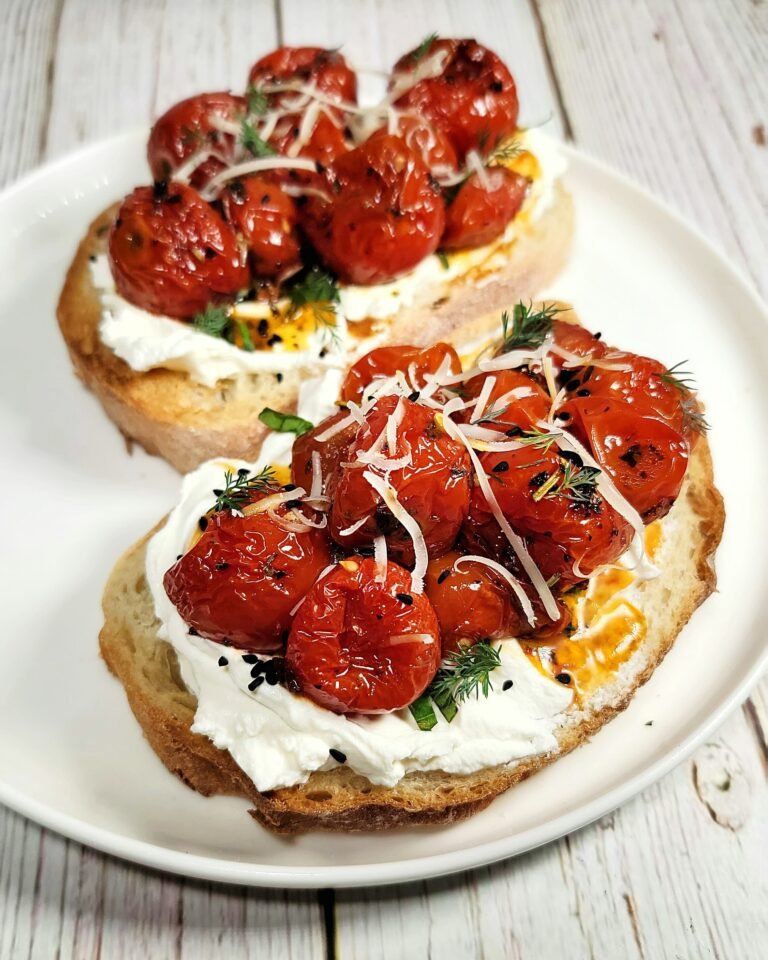

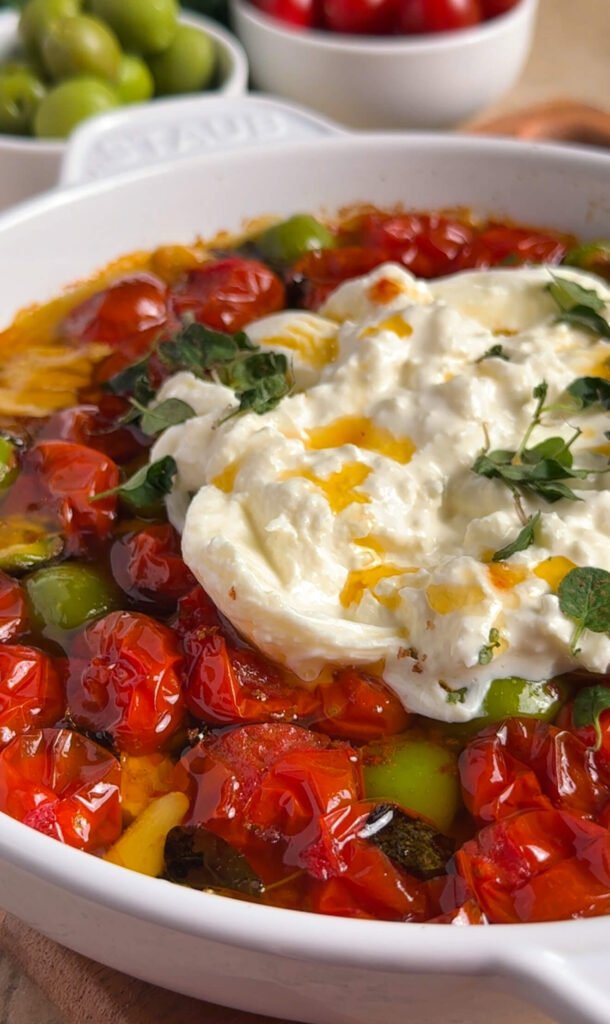
Soft, jammy roasted tomatoes with buttery olives, mellow garlic, and creamy burrata. Everything comes together in one pan and is best served warm with good bread.
This is one of those things I started making without planning to turn it into a “recipe”… and then kept coming back to it enough times that it clearly needed a spot here.
I wanted something built around tomatoes and burrata – but not another version of the same cold platter. Something warmer, a little more layered in flavor, but still very simple. No extra steps, no unnecessary ingredients, just a few small adjustments that make it feel completely different.
Roasting the tomatoes changes everything. They soften, release their juices, and turn slightly concentrated – almost like a quick, rustic confit. The garlic mellows out instead of staying sharp, and the olives warm through and take on this soft, almost buttery texture.
Then you add burrata right at the end, break it open, and let it mix with all those warm juices. That’s it. But it works!
What Makes This Roasted Tomato Burrata Actually Worth Making
There are a lot of roasted tomato burrata recipes out there, and most of them are… fine. But they often miss that one detail that makes you want to make it again.
Here, it’s the balance. The tomatoes are sweet but still bright. The olives add saltiness and depth without overpowering anything. The garlic is there, but soft and subtle. And the burrata ties everything together into something creamy without making it heavy.
The lemon peel is a small detail, but it matters more than you’d expect. It doesn’t make the dish taste “lemony” – it just lifts everything slightly and keeps it from feeling flat. And the oregano at the end keeps it fresh.
Ingredient Notes (What Actually Matters Here)
This isn’t a complicated ingredient list, but a few choices make a noticeable difference.
Cherry tomatoes are ideal because they hold their shape while roasting, but still soften enough to become jammy. Grape tomatoes work too, but cherry tend to be a bit sweeter and juicier.
Castelvetrano olives are worth using if you can find them. They’re milder and less briny than most olives, and once they warm up in olive oil, they almost melt into the dish. If you swap them for something sharper like Kalamata, the whole balance shifts.
Crushing the garlic instead of mincing it is intentional. It releases flavor without letting the garlic burn or turn bitter in the oven. You end up with soft, almost spreadable cloves instead of crispy bits.
Olive oil isn’t just there for roasting – it becomes part of the sauce. Use one you actually like the taste of.
And the burrata… don’t overthink it. Just make sure it’s fresh and at room temperature before serving so it opens easily and blends into the tomatoes.
How to Get That “Jammy” Texture (Without Overcooking)
This is the part that makes the dish.
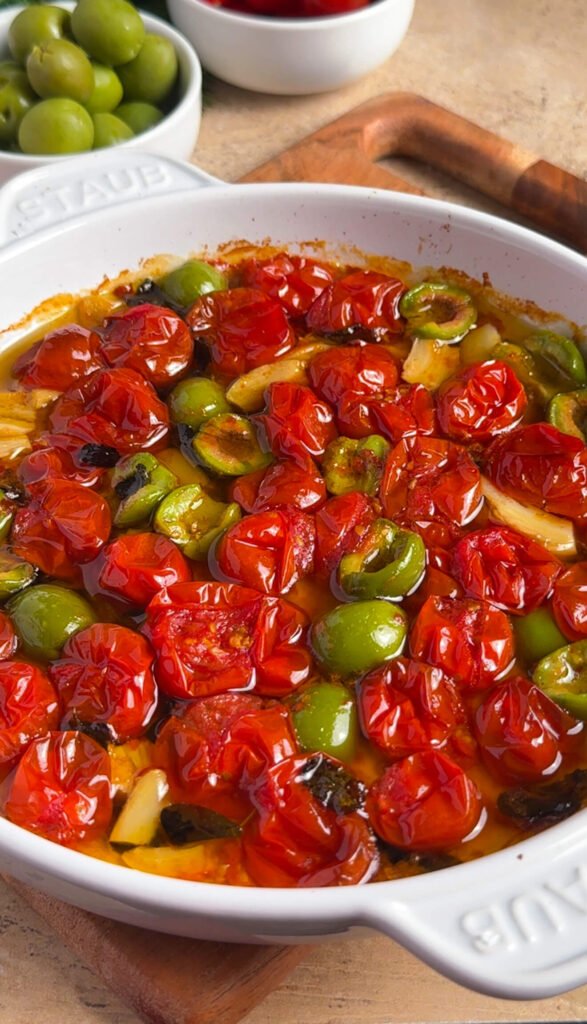
At 375°F, the tomatoes have enough heat to break down slowly without drying out or blistering too aggressively. You’re not trying to char them – you want them soft, glossy, and full of juices.
Forty minutes is usually right, but don’t treat it like a strict rule. You’re looking for:
- tomatoes that have collapsed slightly
- visible juices in the pan
- garlic that’s soft, not browned
If the pan looks dry, they’ve gone too far. If they’re still firm and holding shape completely, they need more time.
Letting everything sit for 5–10 minutes after roasting is just as important. That’s when the juices settle and the flavors come together.
Bringing It Together
Once the tomatoes are out of the oven and slightly cooled, that’s when you add the burrata.
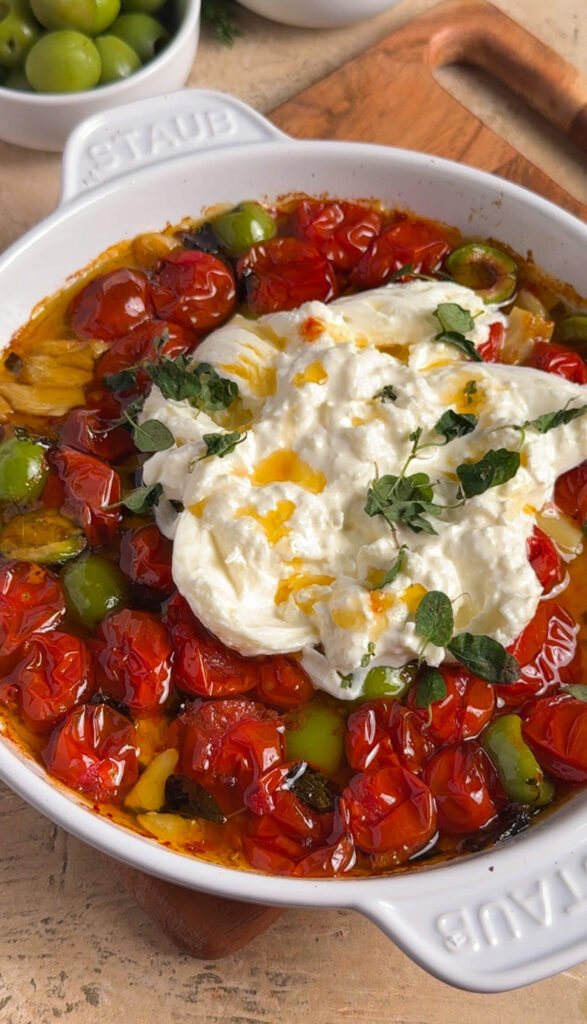
Don’t place it on top and leave it whole – gently tear it open and spread it slightly. You want it to mix with the warm tomatoes and soak up some of that oil and juice.
Spoon a little of the roasting liquid over the burrata. That’s where all the flavor is.
Finish with the remaining oregano. It keeps everything from feeling too rich and adds that fresh, slightly peppery note at the end.
How to Serve It
This works as a light lunch for two, or easily as an appetizer for four.
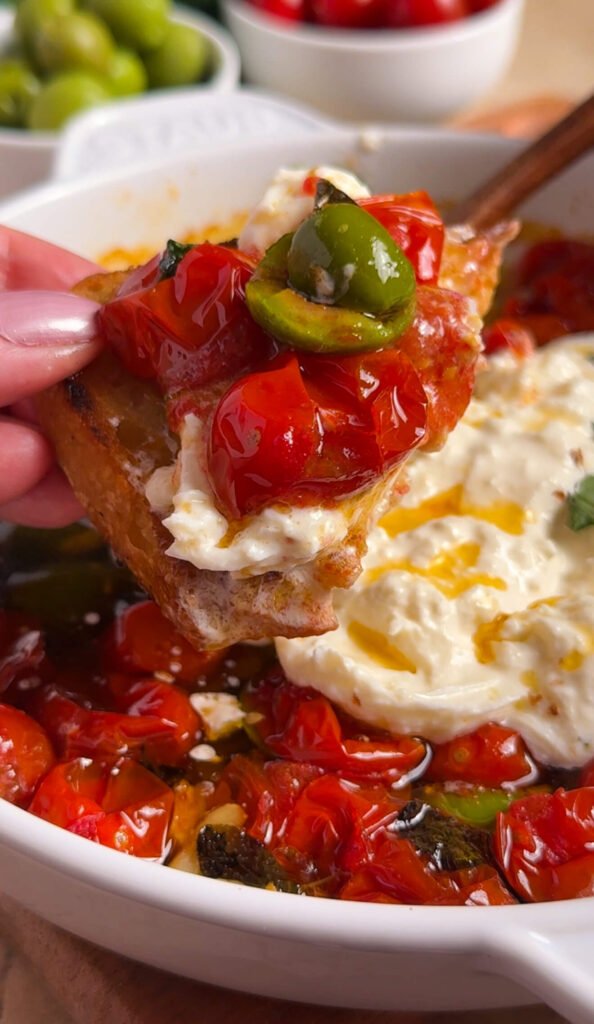
The obvious choice is toasted bread or a fresh baguette – something with a little structure so it can hold the tomatoes and burrata without falling apart.
If you want to push it slightly further, you can:
- rub the toast lightly with garlic before serving
- drizzle with a little extra olive oil
- or even use grilled sourdough for more texture
It also works surprisingly well as part of a larger spread. If you’re putting together something for guests, this pairs naturally with things like burrata toast variations, simple salads, or even something like my Heirloom Tomato Toast with Anchovy Butter– the flavors overlap in a good way without feeling repetitive.
Small Adjustments That Actually Change the Dish
You don’t need to change anything here, but if you want to adapt it slightly depending on what you have:
Adding a few anchovies to the oil before roasting gives it a deeper, more savory base. They dissolve into the oil and don’t taste fishy, just richer.
A drizzle of hot honey at the end shifts it in a slightly sweet-spicy direction, which works especially well if you’re serving it as an appetizer.
Fresh basil can replace oregano if that’s what you have, but oregano holds up better to the warmth of the dish.
And if you’ve made my Garlic Confit before, you can use a few cloves here instead of raw garlic – it makes the whole thing even softer and more mellow.
A Few Common Mistakes (Easy to Avoid)
The biggest one is overcrowding the pan. If the tomatoes are piled on top of each other, they’ll steam instead of roast, and you won’t get that concentrated texture.
Another is adding the burrata too early. It needs to go on after roasting, not before, otherwise it melts completely and disappears.
Using very sharp or briny olives can also throw things off. This recipe depends on balance, not intensity.
And finally, skipping the resting time after roasting. It seems minor, but it makes a difference in how everything comes together.
Why This Works for Entertaining
This is the kind of dish that looks like you put in more effort than you did.
It comes out of the oven already looking finished. The colors are right, the textures are layered, and once you add burrata, it has that slightly dramatic effect when it opens up.
It’s also very forgiving. You don’t need precise timing beyond the roasting, and it holds well for a bit if you’re serving it alongside other things.
If you’ve made recipes like my Burrata with Roasted Tomatoes or even the Stracciatella, Prosciutto & Hot Honey Toast, this fits right into that same style – simple ingredients, but treated in a way that makes them feel more interesting.
Frequently Asked Questions
Can I make roasted tomato burrata ahead of time?
You can roast the tomatoes and olives ahead of time, but I wouldn’t assemble the full dish until right before serving. The tomatoes actually hold very well – just reheat them gently in the oven or even on the stovetop until warm again.
Add the burrata fresh at the end. That’s what gives you that creamy contrast and makes the dish feel finished.
How do I know when the tomatoes are “jammy”?
This is one of the most important parts of making a good jammy roasted tomatoes with burrata.
You’re looking for tomatoes that have softened and slightly collapsed, with visible juices pooling in the dish. They shouldn’t be dry or wrinkled – and they shouldn’t still feel firm.
If they look glossy and almost saucy, you’re there!
Can I use different olives?
Yes, but it will change the flavor.
Castelvetrano olives are ideal because they’re mild, slightly sweet, and not overly briny. Once roasted, they become soft and almost buttery.
If you use something like Kalamata olives, the dish will be sharper and more intense. Still good, just a different direction.
What bread is best to serve with burrata and roasted tomatoes?
You want something sturdy enough to hold the juices without falling apart.
A fresh baguette or toasted sourdough works best. If you lightly toast it and rub it with garlic, it turns this into a really good burrata appetizer with bread that feels a little more intentional.
Can I add protein to make it a full meal?
You can, but I’d keep it simple so you don’t overpower the tomatoes and burrata.
Grilled shrimp, prosciutto, or even a soft-boiled egg on the side all work well. If you’ve made my layered toast recipes before, you could even turn this into a more structured dish with a base.
Why use smashed garlic instead of minced?
Minced garlic burns quickly in the oven, especially at this temperature.
Lightly smashing the garlic releases flavor but keeps it intact, so it softens instead of browning too much. By the end, it’s mellow, slightly sweet, and blends into the oil instead of sitting on top.
Can I skip the lemon peel?
You can, but it’s doing more than you think.
It doesn’t make the dish taste lemony – it just adds a subtle brightness that keeps the roasted tomatoes and olive oil from feeling too heavy. If you don’t have lemon peel, a tiny splash of lemon juice at the end can work as a substitute.
Is this served hot or cold?
Warm is best.
You want the tomatoes and olive oil slightly warm so the burrata softens when it hits the dish. That contrast – warm tomatoes, creamy cheese – is what makes this roasted tomato burrata recipe so good.
Final Thoughts
This is one of those recipes that doesn’t try too hard, and that’s exactly why it works!
It’s simple, but not boring. Familiar, but not predictable. And once you make it once, it’s very easy to come back to it again without needing to look anything up.
If you’re building out your go-to list of easy burrata recipes, this one deserves a spot!
Jammy Roasted Tomatoes with Burrata & Olives
Ingredients
Method
- Preheat oven to 375°F.
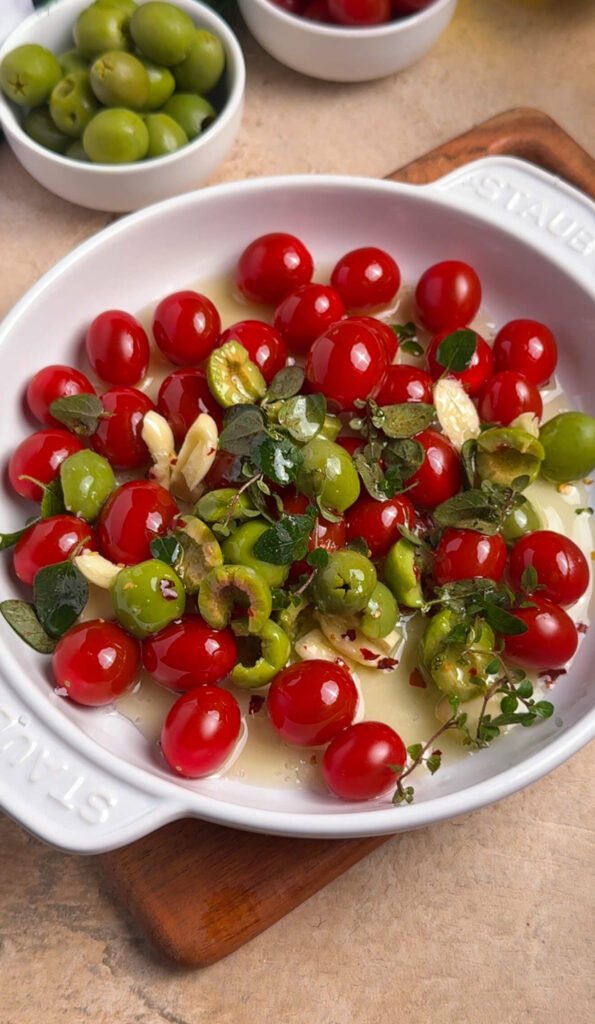
- In a small baking dish, combine cherry tomatoes, olives, smashed garlic, 1 tablespoon oregano, olive oil, lemon peel, salt, and red pepper flakes.
- Roast for about 40 minutes, until the tomatoes are soft, jammy, and release their juices, and the garlic is tender.
- Remove from the oven and let cool slightly for 5–10 minutes.
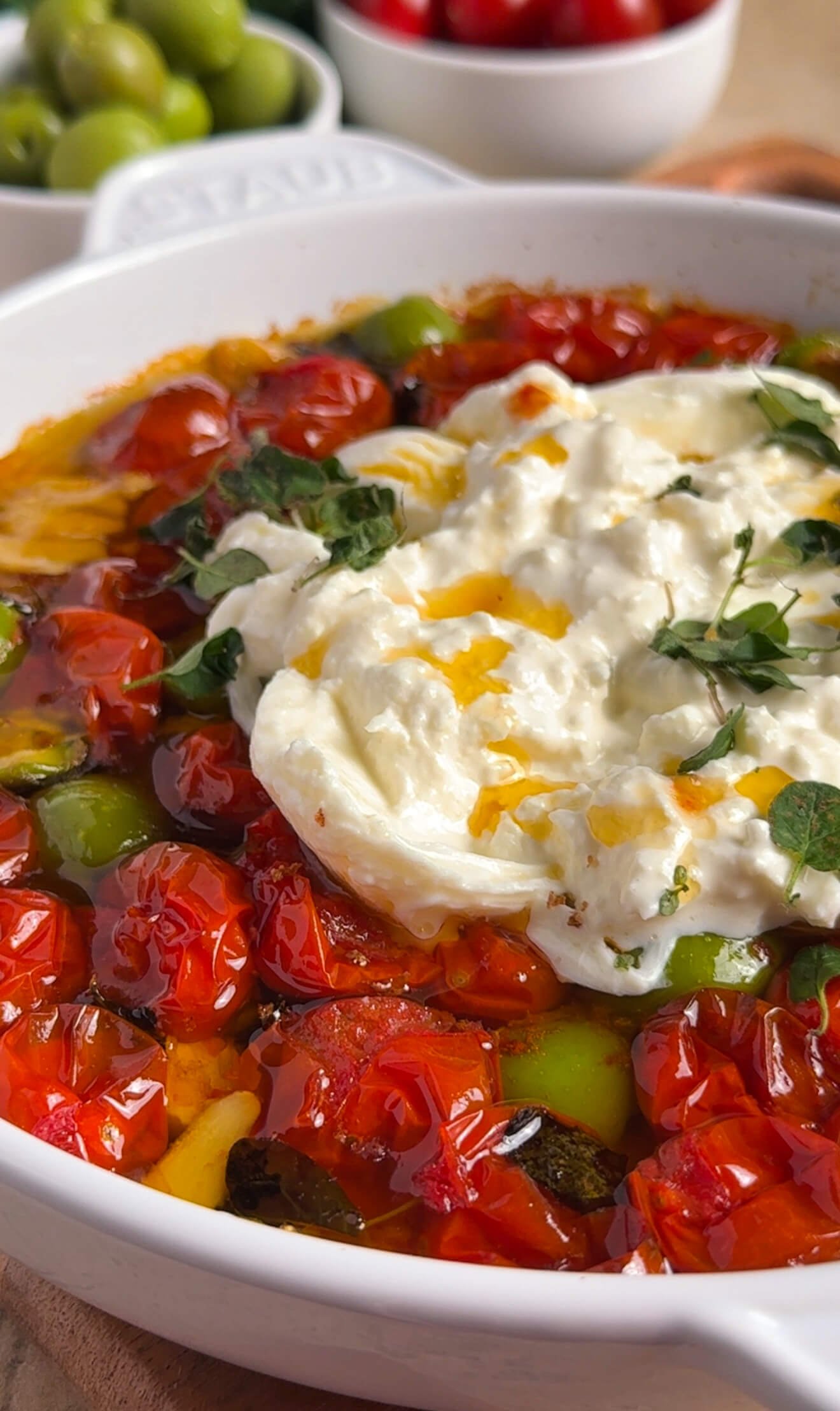
- Place the burrata on top and gently tear it open to spread slightly. Spoon some of the warm cooking juices over the cheese.
- Finish with the remaining oregano and serve immediately with toasted bread or fresh baguette.
Notes
- Use Castelvetrano olives for the best flavor – they become soft and buttery when warm.
- Don’t mince the garlic – smashing prevents burning and keeps the flavor mellow.
- Tomatoes should look glossy and saucy, not dry – that’s the “jammy” texture.
- Add burrata only after roasting so it stays creamy and doesn’t melt away.