
If there is one appetizer that never fails to stop a conversation, it’s baked brie.
The moment you set a warm, gooey wheel of brie on the table – glossy with honey, draped in fruit, or crowned with something unexpected – the room changes. Forks hover. Someone leans in. And without fail, someone says: “Wait, you made this?”
That’s exactly why baked brie has become one of my most-made, most-loved recipes. It looks wildly impressive, requires almost no effort, and works for every occasion – from a cozy Tuesday night glass of wine to a holiday party where you need to feed twenty people and still feel calm when they arrive.
Over the past few years, I’ve developed and tested seven different baked brie recipes, each with its own personality, season, and flavor story. This guide brings them all together in one place, along with everything I’ve learned about choosing the right brie, nailing the technique, and building flavor combinations that truly sing.
Whether you’re making baked brie for the first time or you’re looking for a new variation to add to your rotation, you’re in the right place.
What Is Baked Brie? (And Why Is It So Magical?)
Brie is a soft, creamy French cow’s milk cheese with a white, edible rind. When you bake it, the interior melts into a luscious, silky texture while the rind holds its shape – creating a natural vessel that’s essentially a warm, oozy cheese dip in elegant form.
The magic of baked brie is in the contrast. Creamy meets crunchy. Rich meets bright. Warm meets cool. Every great baked brie recipe is built around this tension – and when it works, it’s genuinely one of the most satisfying bites in all of appetizer cooking.
How to Choose the Right Brie for Baking
Not all brie is equal, and the right choice makes a real difference.
Double-cream brie is the gold standard for baking. It melts smoothly, holds its shape long enough to serve, and creates that signature molten center. Look for wheels that feel soft but still hold their shape – if it’s rock hard, it hasn’t aged enough; if it’s completely soft, it may collapse too quickly in the oven.
Triple-cream brie is richer and softer, which means it melts faster. This works beautifully in recipes with shorter bake times or lower temperatures, but it can become too runny if over-baked.
Brie size matters too. A small 8-oz wheel serves 4–6 people as an appetizer. A larger 16-oz wheel is better for a crowd of 8–12. Adjust your bake time slightly – smaller wheels need about 15 minutes, larger ones 20–25 minutes.
Where to buy: Most grocery stores carry Président or other French brie brands that work perfectly. For something more special, look for artisan American brie at specialty cheese shops or Whole Foods.
The Technique: How to Bake Brie Perfectly Every Time
The technique is simple, but a few details separate good baked brie from great baked brie.
Step 1: Score the rind
Use a sharp knife to lightly score the top rind in a crosshatch pattern. This allows heat to penetrate evenly, helps your glaze or toppings adhere, and gives the cheese a beautiful appearance as it bakes.
Step 2: Add your toppings before baking
Most toppings – honey glazes, nuts, fruit, herbs – should go on before the oven. This lets them caramelize, meld, and develop flavor. Save delicate fresh elements (fresh herbs, raw fruit, honeycomb) for after.
Step 3: Bake at the right temperature
375°F (190°C) is the sweet spot. Hot enough to melt the interior, gentle enough not to burst the rind or brown the toppings too quickly.
Step 4: Watch the time, not just the clock
Brie is ready when the sides feel soft and yielding when you gently press the rind, and when you see the top beginning to puff slightly. This usually takes 15–20 minutes for a standard wheel. Every oven is different – check at 13 minutes.
Step 5: Let it rest (briefly)
Two to three minutes of resting time after the oven makes a significant difference. It allows the interior to stabilize slightly so it flows slowly and beautifully when cut, rather than flooding immediately.
Step 6: Serve immediately
Baked brie waits for no one. Have your crackers, bread, or crudités ready before it comes out of the oven.
The Best Baked Brie Recipes
Here are seven of my most-made baked brie recipes – organized from sweet to savory, and from light and fresh to rich and cozy. Every one of them is ready in under 30 minutes.
1. Pistachio Baked Brie with Orange Honey and Honeycomb
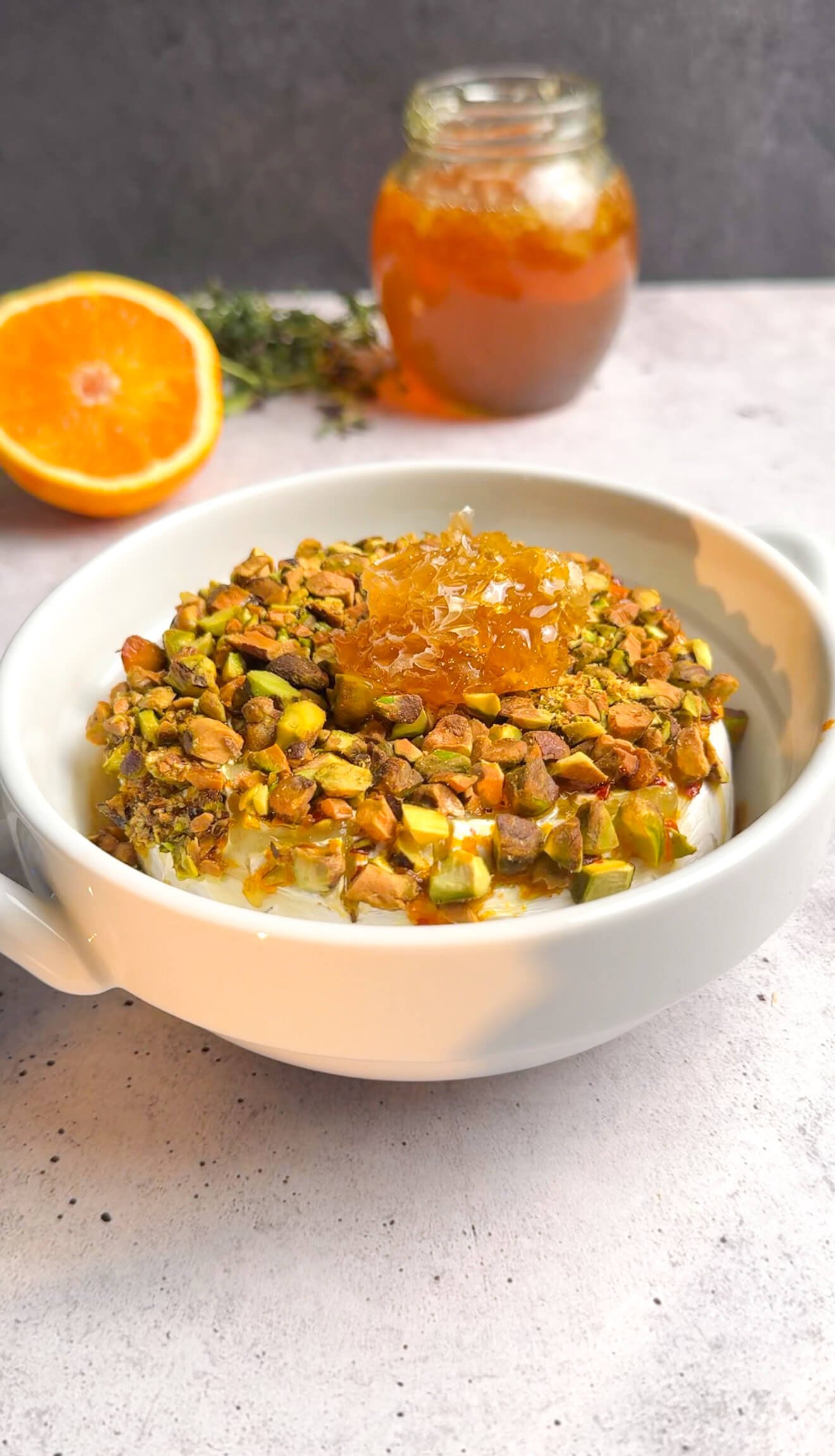
This is the one that stops people in their tracks. A caramelized pistachio crust, orange-infused honey glaze, and a finishing crown of fresh honeycomb make this the most visually dramatic baked brie I’ve ever made – and one of the easiest.
The orange zest is the secret. It cuts through the richness of the cheese and the sweetness of the honey, adding brightness that keeps every bite feeling balanced. A pinch of red pepper flakes adds the faintest warmth that lingers just long enough to make you reach for another piece.
Best for: dinner parties, holiday entertaining, wine nights, moments when you want to look like you’ve outdone yourself
Flavor profile: sweet, nutty, bright, slightly spicy
Get the full recipe: Pistachio Baked Brie with Orange Honey
2. Baked Brie with Peach and Hot Honey
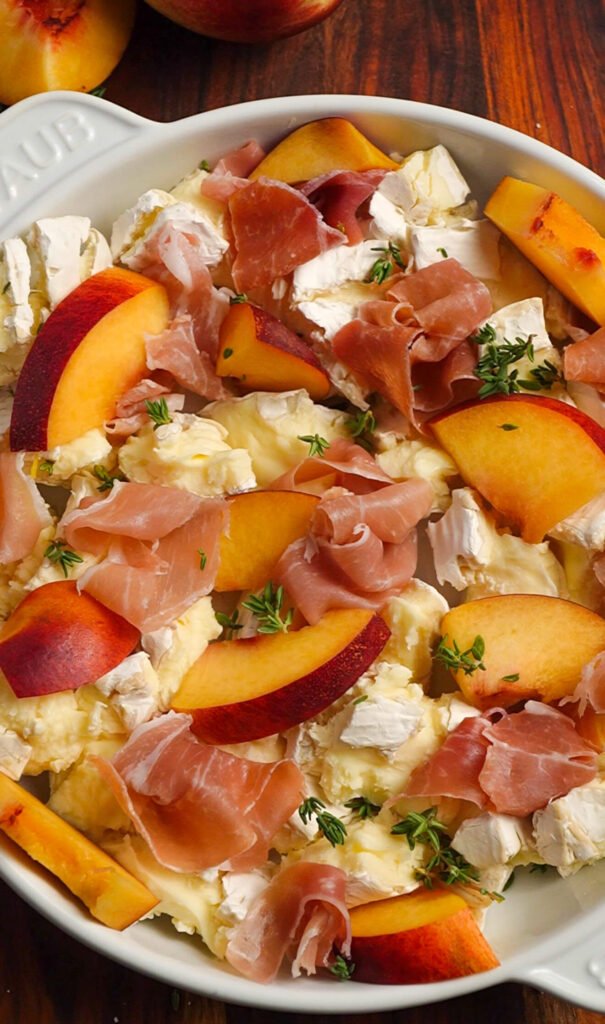
Sweet summer peaches, silky brie, crispy prosciutto, and a drizzle of hot honey – this combination is genuinely one of the best things I make all year, and I only let myself make it when peaches are perfectly ripe.
The prosciutto crisps up beautifully around the edges of the brie as it bakes, adding salt and texture that balances the sweetness of the fruit. The hot honey ties everything together with a gentle heat that lingers on the finish.
This one is summer on a cheese board.
Best for: summer entertaining, backyard gatherings, a stunning appetizer for two
Flavor profile: sweet, salty, juicy, gently spicy
Get the full recipe: Baked Brie with Peach and Hot Honey
3. Baked Brie with Grapes and Honey
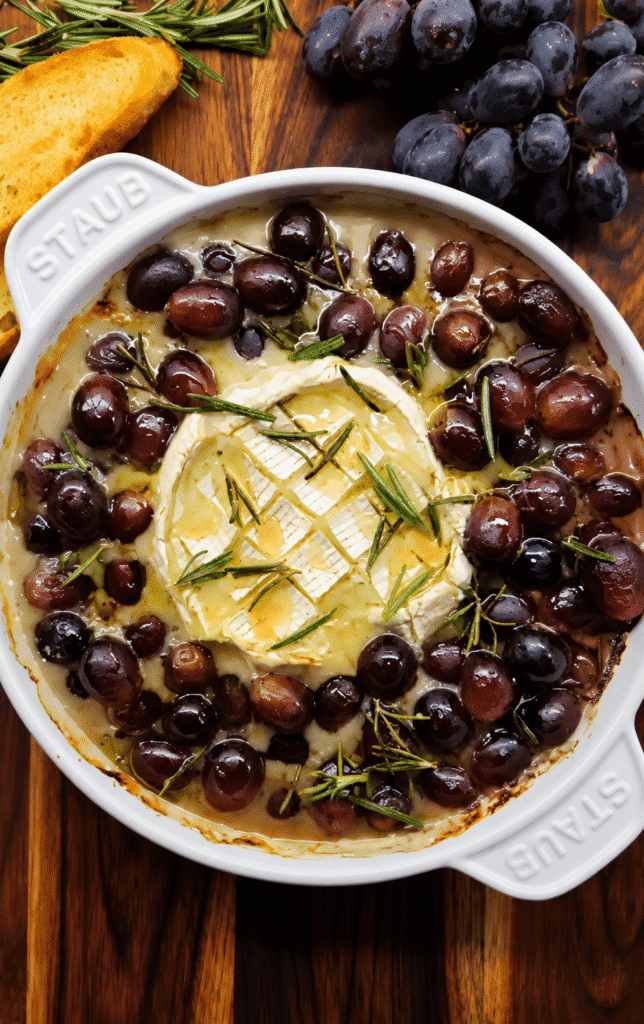
There is something almost otherworldly about the way roasted grapes look next to warm, melted brie. The grapes blister and sweeten in the oven, releasing their juices into a soft, jammy pool around the cheese that becomes its own sauce.
This is one of the most approachable baked brie recipes on this list – minimal ingredients, maximum visual impact, and a flavor combination that feels both classic and special.
Best for: wine nights, autumn entertaining, easy weeknight appetizers that feel fancy
Flavor profile: sweet, jammy, floral, rich
Get the full recipe: Baked Brie with Grapes and Honey
4. Baked Brie with Grapes and Walnuts

A slightly more textured, earthy version of the grapes-and-honey brie above. The walnuts add a satisfying crunch and a nutty depth that pairs beautifully with the sweetness of the roasted grapes.
If the grapes-and-honey version is elegant and light, this one is cozy and grounding – the kind of appetizer you’d want on a cold October evening with a glass of red wine.
Best for: fall and winter entertaining, Thanksgiving appetizer table, wine and cheese evenings
Flavor profile: sweet, nutty, rich, warming
Get the full recipe: Baked Brie with Grapes and Walnuts
5. Baked Brie with Figs and Rosemary
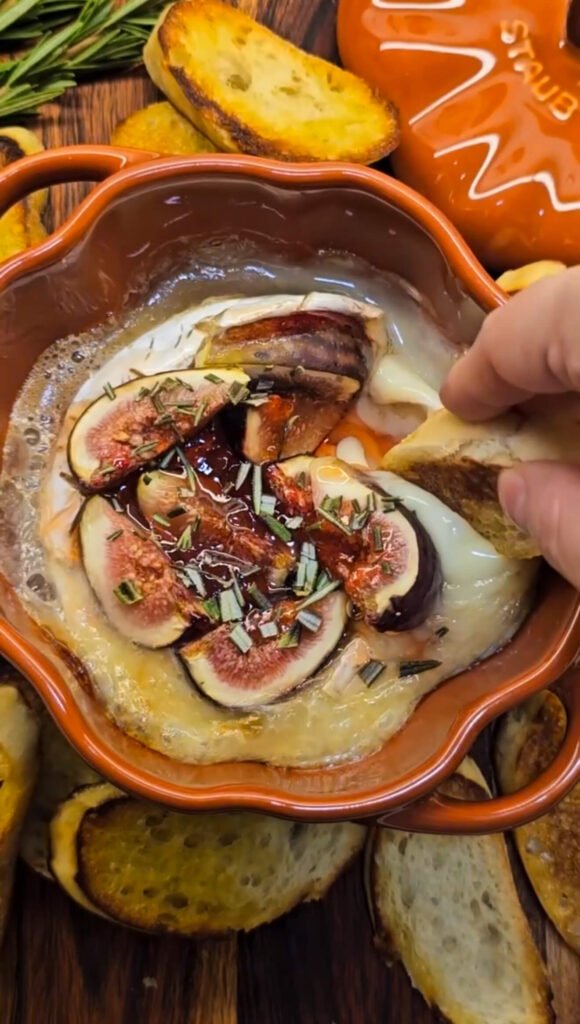
Fresh figs are one of those ingredients that feel inherently luxurious – deep, jammy, and beautiful. Paired with brie and fragrant fresh rosemary, they create an appetizer that tastes like it belongs in a Tuscan farmhouse in September.
The rosemary does something important here: it adds a piney, herbal note that prevents the dish from being too sweet, and it fills the kitchen with the most incredible scent as it bakes. This is autumn in brie form.
Best for: fall dinner parties, Thanksgiving starters, any occasion that calls for something cozy and sophisticated
Flavor profile: earthy, sweet, herbal, deeply aromatic
Get the full recipe: Baked Brie with Figs and Rosemary
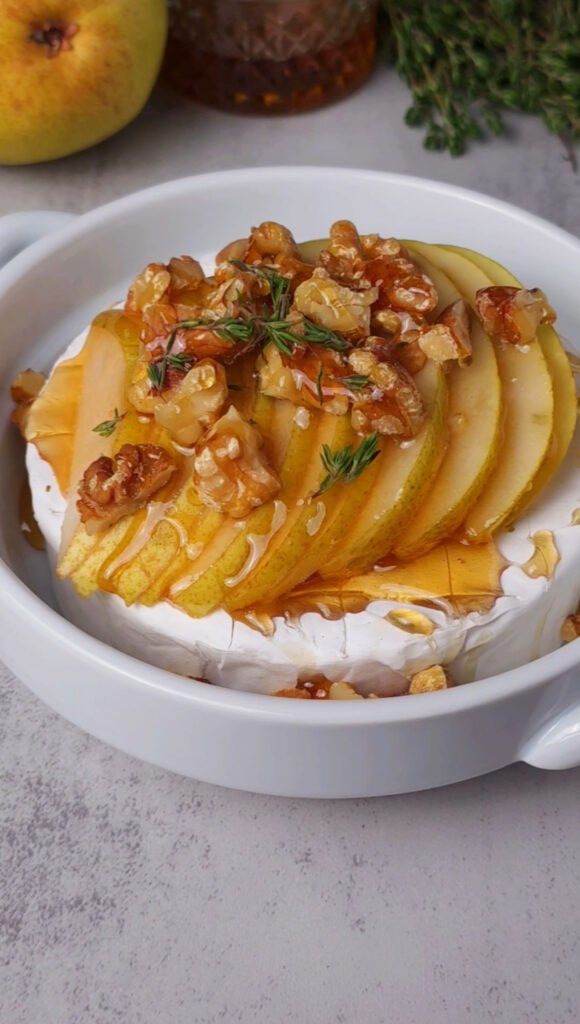
6. Baked Brie with Pear and Honey
This is the classic. If baked brie had a timeless, elegant version that worked at every dinner party regardless of season, it would be this one.
Thinly sliced pears fan out over the brie before baking, softening into delicate layers that soak up the honey and become almost translucent at the edges. A final drizzle of good honey and a few fresh thyme leaves finish the dish with simplicity and grace.
It’s one of those recipes that requires almost nothing – and somehow tastes like everything.
Best for: any occasion, year-round, when you want something universally loved and beautiful
Flavor profile: sweet, delicate, floral, buttery
Get the full recipe: Baked Brie with Pear and Honey
7. Baked Brie with Tomatoes and Olives
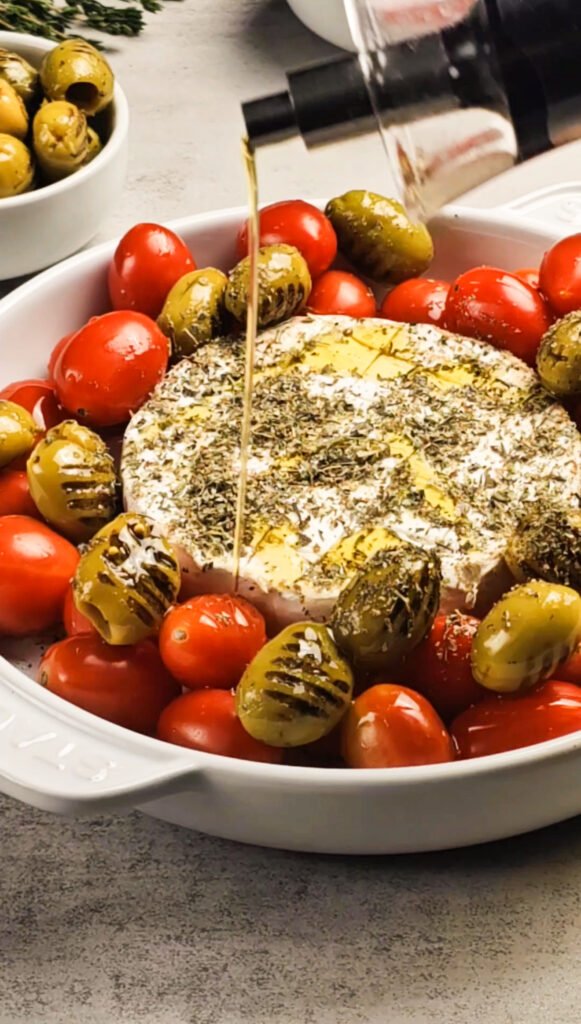
Not all baked brie has to be sweet – and this Mediterranean-inspired version proves it beautifully. Cherry tomatoes, briny olives, garlic, and olive oil turn a warm wheel of brie into something that feels more like a starter at a coastal Italian restaurant than a typical cheese appetizer.
The tomatoes burst and blister in the oven, their juices mingling with the melting brie into a savory, herb-scented pool that is absolutely irresistible on warm crusty bread.
This one is for the people who always skip the sweet appetizers and head straight for the savory corner of the cheese board.
Best for: summer entertaining, Mediterranean-themed menus, anyone who prefers savory over sweet
Flavor profile: savory, bright, briny, herby
Get the full recipe: Baked Brie with Tomatoes and Olives
The Best Toppings for Baked Brie
One of the things I love most about baked brie is how endlessly adaptable it is. Once you understand the basic technique, the toppings are limited only by your pantry and your creativity.
Here are my favorite topping categories and combinations:
Sweet Toppings
- Honey + nuts – the classic for a reason. Use good-quality honey (wildflower, orange blossom, or truffle honey for something special) and toast the nuts first for maximum flavor.
- Fresh or roasted fruit – peaches, figs, pears, grapes, apples, cherries. Stone fruits are particularly magical when roasted with a little honey.
- Jam or preserves – fig jam, apricot preserves, and pepper jelly are all incredible. Spread a thin layer on the scored rind before adding other toppings.
- Honeycomb – added after baking. Melts slightly from the residual heat and looks absolutely stunning.
Savory Toppings
- Tomatoes and olives – cherry tomatoes, Kalamata olives, garlic, olive oil. Mediterranean perfection.
- Caramelized onions – slow-cooked with a splash of balsamic. Deep, sweet, and completely addictive.
- Sun-dried tomatoes and herbs – concentrated flavor that stands up to the richness of the cheese.
- Prosciutto or crispy pancetta – draped over or wrapped around the brie before baking. The salt cuts through the richness beautifully.
Herbs and Spices
- Fresh rosemary or thyme – classic, aromatic, and beautiful as a garnish.
- Red pepper flakes – a pinch adds warmth without heat.
- Black pepper – freshly ground over the top of anything savory.
What to Serve with Baked Brie
The vessel matters. Here’s what works best:
Crackers: water crackers, rosemary crackers, and simple table crackers let the brie be the star without competing flavors.
Bread: sliced baguette (lightly toasted), sourdough rounds, or walnut bread pair beautifully – especially with the savory versions.
Fresh fruit: apple slices, pear slices, and grapes on the side echo the flavors in sweet baked brie recipes and add freshness to the board.
Nuts: a small bowl of candied or spiced walnuts, pecans, or almonds rounds out a beautiful cheese board built around baked brie.
Wine: for sweet versions, a glass of Champagne, Prosecco, or a light Pinot Noir. For savory versions, a crisp Sauvignon Blanc or a dry Rosé.
How to Make Baked Brie Ahead of Time
One of the most common questions I get: can you prep baked brie in advance?
Yes – partially. Here’s how:
- Prepare the brie with all its toppings (except fresh herbs and honeycomb) and place it in the baking dish. Cover with plastic wrap and refrigerate up to 24 hours in advance.
- When ready to serve, remove from the refrigerator 20–30 minutes before baking to take the chill off, then bake as directed.
- Add delicate finishing toppings (fresh herbs, honeycomb, fresh fruit) right before serving.
Do not bake in advance and reheat – it loses its texture and the rind can collapse. Always bake fresh, right before serving.
Can You Eat the Brie Rind?
Yes, absolutely – and you should! The white rind on brie is completely edible. When baked, it softens and takes on a slightly earthy, mushroom-like flavor that many people find is one of the best parts of the experience.
The rind also serves a structural purpose: it holds the cheese together as it melts, acting as the natural vessel that makes baked brie so beautiful and serviceable.
Baked Brie FAQ
How long do you bake brie? Most recipes call for 15–20 minutes at 375°F (190°C). A small 8-oz wheel is ready closer to 15 minutes; a larger 16-oz wheel needs the full 20–22 minutes. The brie is done when the sides feel soft when gently pressed and the top has a slight puff.
Does baked brie need to be room temperature before baking? Ideally, yes. Taking the brie out of the refrigerator 15–20 minutes before baking helps it heat more evenly and reduces the risk of the exterior browning before the interior melts fully.
Can you reheat baked brie? You can, but the texture won’t be the same. If you have leftovers, reheat gently in a 300°F oven for 5–8 minutes just until warmed through. Microwaving works in a pinch (30–45 seconds) but can cause uneven heating.
What size brie should I buy? For 4–6 people: an 8-oz (small) wheel. For 8–12 people: a 16-oz (large) wheel. For a crowd of 15+: two smaller wheels side by side, which also looks beautiful on a serving board.
Is it better to bake brie with or without the rind? Always with the rind. Removing the rind before baking causes the cheese to completely melt and spread, losing the shape that makes it beautiful and easy to serve. The rind is your vessel.
What’s the difference between brie and camembert? Both are soft French cheeses with white rinds, but brie is milder and creamier, while camembert has a slightly stronger, more earthy flavor. Both can be baked using the same technique, so feel free to substitute camembert in any of these recipes if you prefer a bolder cheese flavor.
My Favorite Baked Brie for Every Occasion
Not sure which recipe to make? Here’s a quick guide:
| Occasion | Best Recipe |
| Dinner party showstopper | Pistachio Baked Brie with Honeycomb |
| Summer entertaining | Baked Brie with Peach and Hot Honey |
| Thanksgiving starter | Baked Brie with Figs and Rosemary |
| Fall wine night | Baked Brie with Grapes and Walnuts |
| Year-round classic | Baked Brie with Pear and Honey |
| Savory cheese lover | Baked Brie with Tomatoes and Olives |
| Crowd-pleasing simplicity | Baked Brie with Grapes and Honey |
A Few Final Tips From My Kitchen
After making baked brie dozens of times, here are the three things that matter most:
Use a good baking dish. A ceramic or cast iron dish retains heat beautifully and looks stunning going straight from oven to table. It also keeps the brie warmer for longer as you serve.
Don’t skip the scoring. Even if it feels unnecessary, lightly scoring the top rind takes ten seconds and genuinely improves both the cooking and the aesthetic of the final dish.
Buy better honey. The quality of your honey is noticeable. A good wildflower or orange blossom honey has floral complexity that cheap supermarket honey simply doesn’t. It’s a small upgrade with a big payoff.
Looking for more elegant appetizer ideas? Browse all my appetizer recipes or explore my full toast recipes collection – all designed to feel special without requiring hours in the kitchen.