
Pickle soup sounds unusual until the first spoonful, then it makes complete sense. This rassolnik is hearty, tangy, and built on beef, barley, and grated dill pickles, the kind of soup that’s better the second day than the first.
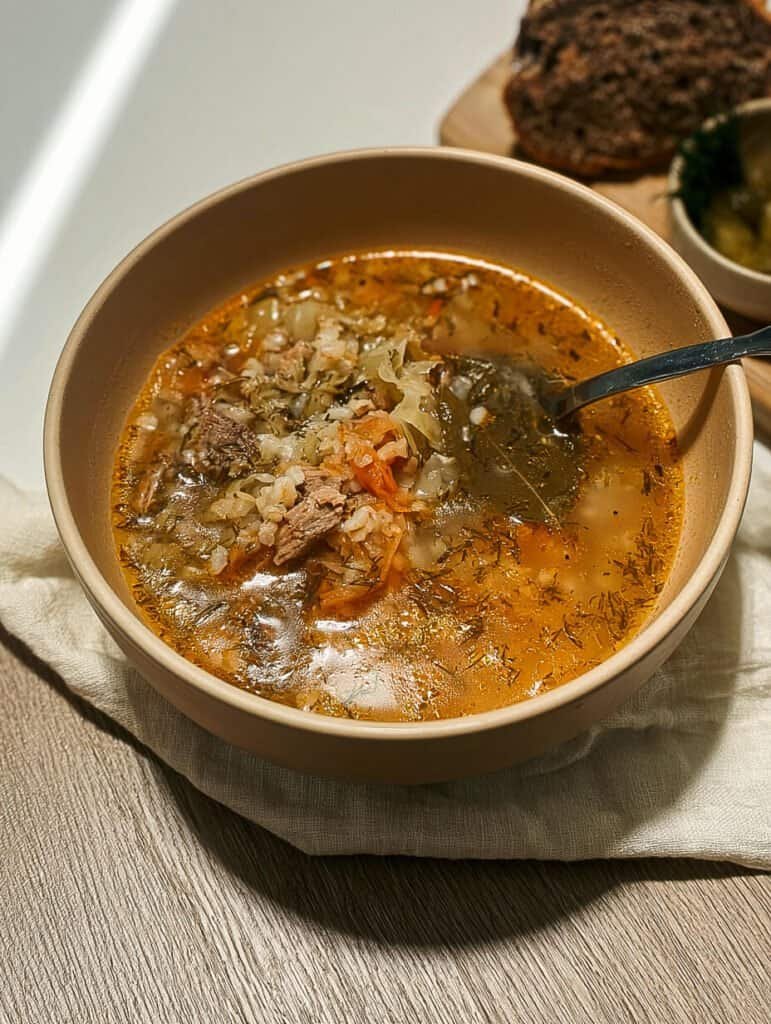
There’s a version of comfort food that doesn’t show up on menus or in glossy cookbooks, and this pickle soup recipe is exactly that kind of dish. Growing up, rassolnik was one of those soups nobody made a fuss about.
It just appeared on a cold day, simmering quietly on the stove while everyone was still half asleep, and by lunch the whole house smelled like dill and beef broth. If you’ve never had a soup made with pickles before, I promise it makes more sense the second the spoon hits your mouth than it does on paper.
This is my simplified, family version of rassolnik. It skips the kidneys and the pickle brine that the classic recipe usually calls for, and leans on things you probably already have: beef stew meat, barley, potatoes, and a couple of good fermented dill pickles from your fridge.
It’s the kind of soup I’d serve on a gray afternoon with a thick slice of rye bread, similar in spirit to how I serve my Best Ukrainian Borscht, just with a completely different flavor profile. Sour, savory, a little starchy from the barley, and finished with sour cream and a small mountain of fresh dill.
Why you’ll love this recipe
- It uses pickles you already have in the fridge door, no pickle brine measuring required
- One pot, and most of the time is hands-off simmering
- Beef stew meat instead of kidneys or bone-in cuts, so it’s easy to find at any grocery store
- Tastes even better the next day, which makes it a great make-ahead lunch
Ingredient notes
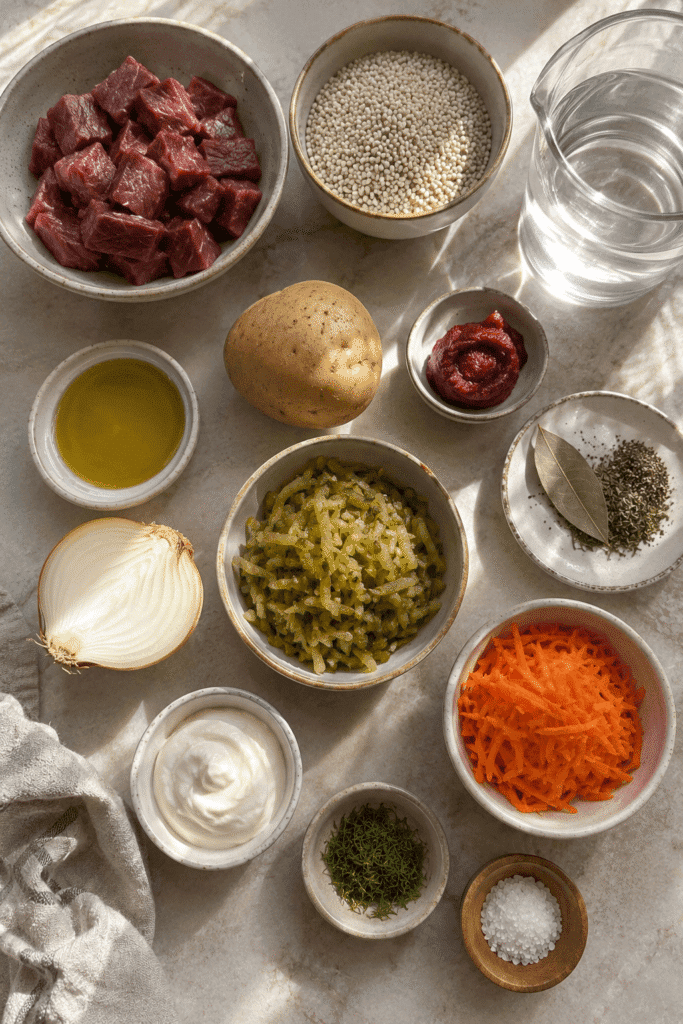
Fermented dill pickles, not sweet or bread-and-butter style. You want the sharp, sour, salt-brined kind, the ones sold in the refrigerated section rather than shelf-stable jars, since those have the fermented tang that gives this soup its whole personality. Grating them releases more of that pickle flavor into the broth than dicing does.
Quick-cooking pearl barley keeps this recipe realistic for a weeknight. Regular pearl barley works too, it just needs a longer simmer. So check your package instructions and adjust the timing in step 4 accordingly.
Beef stew meat or chuck stands in for the traditional beef or pork kidneys. It gives you that same rich, long-simmered broth without asking you to source or prepare an ingredient most American grocery stores don’t carry.
Tomato paste is a small addition, but it rounds out the sourness from the pickles with a little sweetness and depth. Don’t skip it even though it’s just a tablespoon.
How to make it
Start by rinsing your beef and dropping it into a large pot with the cold water. Bring it up to a boil over medium heat, then immediately turn the heat down low. This is the step people rush, and it’s the one that makes the biggest difference in your final broth. As it comes to temperature, foam will rise to the top. Skim it off with a spoon every few minutes, and let the beef simmer gently, uncovered, for about an hour, until it’s fork-tender.
Once the beef is done, lift it out of the broth and let it cool enough to handle, then cut it into bite-sized pieces. Set it aside. Bring the broth back up to a gentle boil and add your diced potatoes along with the barley. Let this cook for about 15 minutes, or until the potatoes are just tender when you poke them with a fork. You want them cooked through but not falling apart.
While that’s happening, warm the olive oil in a skillet over medium heat. Add the onion, grated carrot, and grated pickles, and let them cook down together for 5 to 7 minutes, stirring now and then, until everything softens and the sharp pickle smell mellows into something rounder and more savory. Stir in the tomato paste and cook it for just another minute, enough to lose its raw edge.
Return the beef to the pot, along with the sautéed vegetables, and let everything simmer together for about 5 minutes so the flavors can meet each other. Season with salt, pepper, dried parsley, and the bay leaf, and give it 2 more minutes on low heat. Fish out the bay leaf before serving, then ladle the soup into bowls with a generous spoonful of sour cream and a handful of chopped fresh dill on top.
Tips for success
- Don’t skip the skimming step in the first hour. It’s tedious but it’s what keeps your broth clear instead of cloudy.
- Taste before you add extra salt. Pickles and pickle brine both carry a good amount of sodium already, so season at the end, not the beginning.
- If you like a sharper, more sour soup, stir in a splash of the pickle brine itself right at the end, tasting as you go.
Variations and substitutions
If you don’t love barley, swap in rice, it’s a common substitution in Eastern European kitchens and cooks in less time. For a lighter version, use chicken thighs instead of beef and chicken broth in place of the water. You can also make this vegetarian by skipping the meat entirely, using vegetable broth, and adding a handful of mushrooms in with the sautéed vegetables for extra body.
Storage and make-ahead tips
This soup keeps well in the fridge for 3 to 4 days in a sealed container, and honestly tastes better on day two once the flavors have had time to settle. If it thickens up in the fridge, thin it with a splash of water or broth when you reheat it on the stove over low heat. I don’t recommend freezing it, since the potatoes tend to go grainy once thawed.
FAQ
Can I make this ahead of time? Yes, and I’d actually recommend it. You can make the beef broth a day or two in advance, then finish the rest of the soup the day you plan to serve it, which cuts your active cooking time down significantly.
What can I use instead of fermented dill pickles? Regular kosher dill pickles work in a pinch, but avoid sweet or bread-and-butter style pickles since they’ll throw off the whole balance of the soup.
Is this the traditional version of rassolnik? Not quite. Classic rassolnik is usually made with beef or pork kidneys and pickle brine, and takes longer to cook. This is my simplified family version, built around ingredients that are easy to find, but it still carries all the tang and comfort of the original.
Does this soup taste like pickles? Less than you’d think. The pickles mellow out as they cook and mostly show up as a pleasant tang in the background rather than an overwhelming pickle flavor.
Serving suggestions
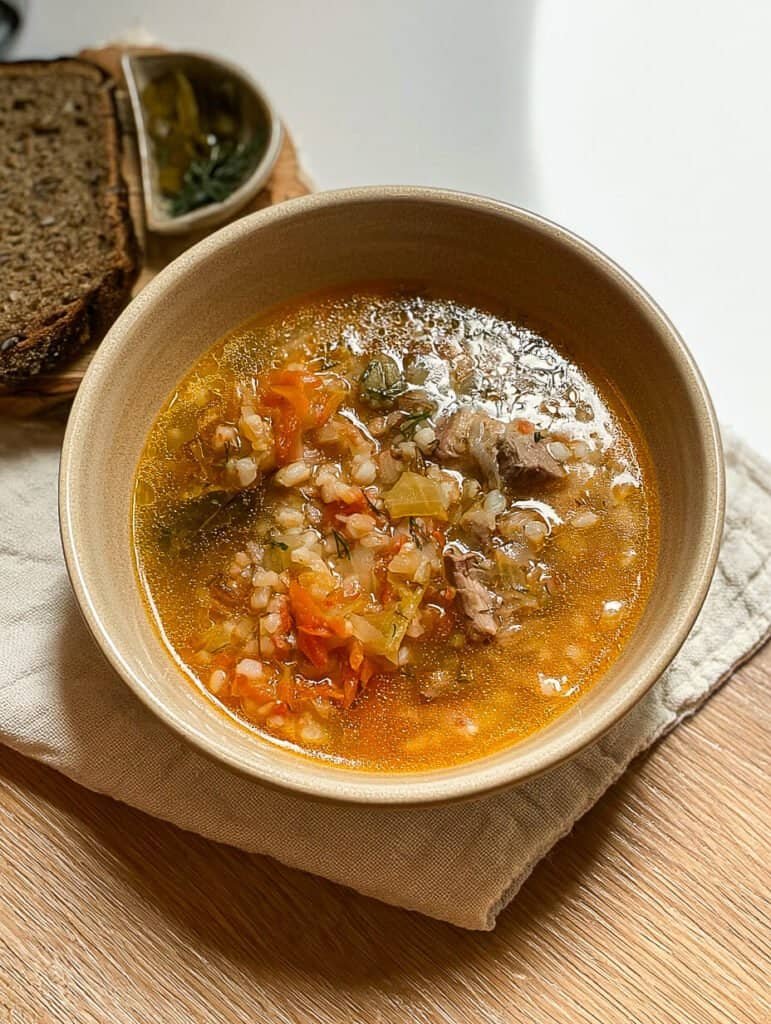
Serve this with a thick slice of rye bread for soaking up the broth, and sour cream on the side so everyone can add as much as they like. If you want to round out the meal with something bright and cool, my Cucumber Avocado & Smoked Salmon Salad is a nice contrast to this warm, savory bowl. And if you’re craving that same nostalgic, grandmother’s-kitchen feeling in a different form, my Cheesy Roasted Tomato Toast has that same thread of childhood memory running through it.
If you’re in the mood for another cozy soup, try my easy mushroom soup with orzo pasta – it’s creamy, comforting, and made in one pot.
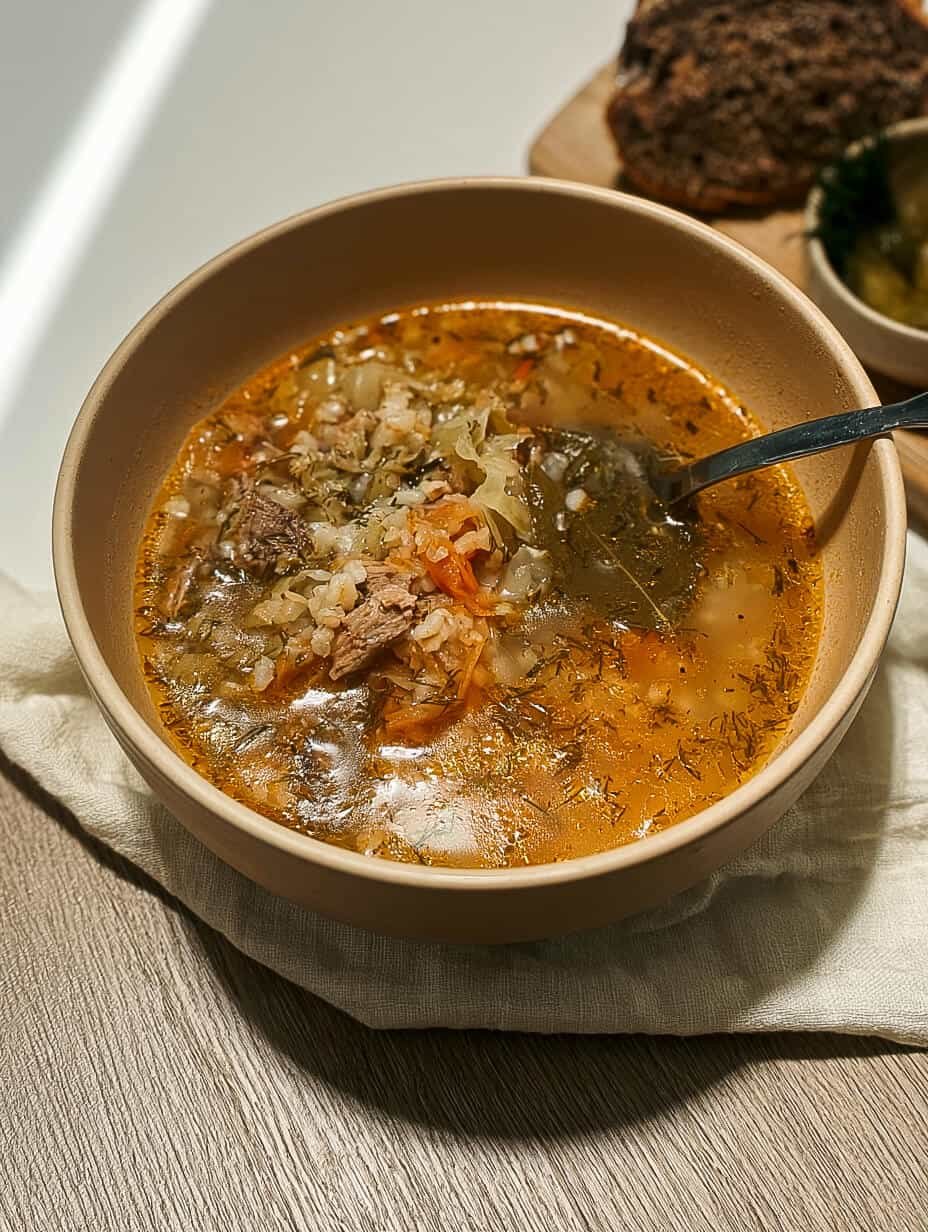

Pickle Soup (Rassolnik) with Beef and Barley
Ingredients
Method
- Rinse the beef and place it in a large pot with the cold water. Bring to a boil over medium heat.
- Reduce the heat to low, skim off any foam that rises to the surface, and simmer gently for 1 hour, until the beef is tender.
- Remove the beef from the broth and cut it into bite-sized pieces.
- Bring the broth back to a gentle boil. Add the diced potatoes and barley, and cook until the potatoes are tender, about 15 minutes.
- Meanwhile, heat the olive oil in a skillet over medium heat. Add the onion, carrot, and grated pickles, and cook for 5 to 7 minutes, until softened.
- Stir in the tomato paste and cook for 1 more minute.
- Return the beef to the pot along with the sautéed vegetables. Simmer for 5 minutes.
- Season with salt, pepper, dried parsley, and the bay leaf. Simmer 2 more minutes.
- Remove the bay leaf. Serve hot with sour cream and fresh dill.
Notes
- This is a simplified family version of rassolnik, made without kidneys or pickle brine for a more accessible everyday soup.
- Broth can be made 1-2 days ahead and refrigerated.
- Store finished soup in the fridge for 3-4 days; freezing is not recommended, as potatoes can turn grainy after thawing.
- For a more traditional sour edge, stir in a splash of pickle brine at the end.
Tried this recipe?
Let us know how it was!This post contains affiliate links. If you purchase through them, I may earn a small commission at no extra cost to you.