
Onions dark and jammy in bacon fat, brie scored and waiting, ten minutes in the oven, maple poured on while it’s still hissing. This is what I make when people are arriving faster than I’m ready for them.
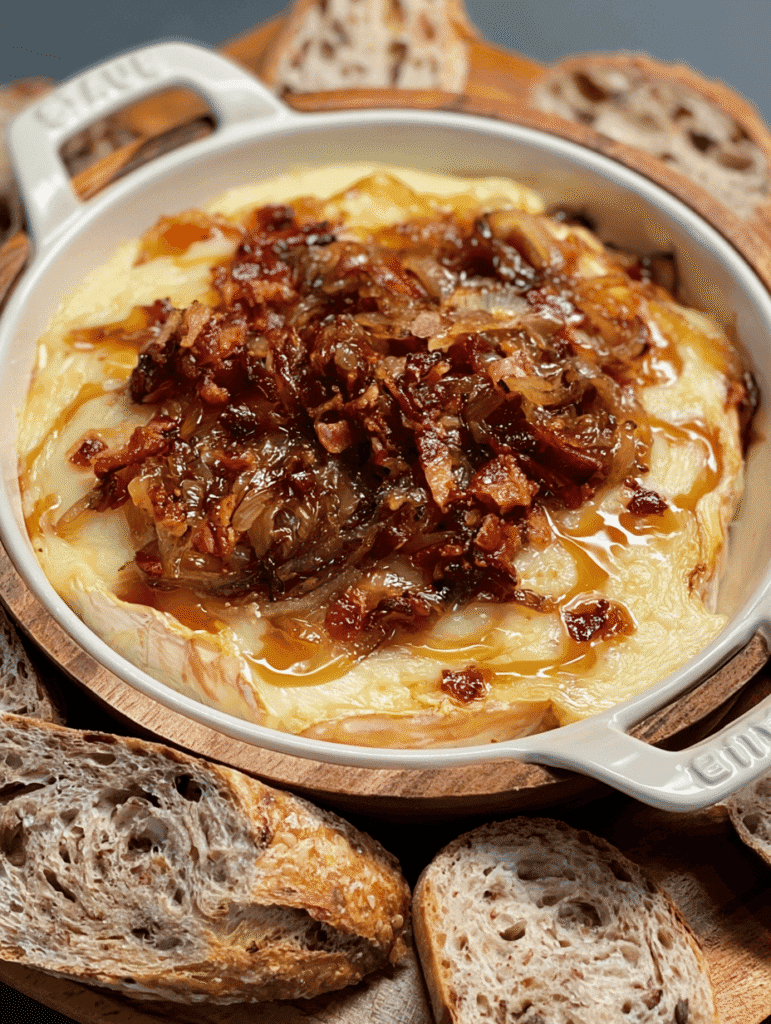
The first time I made baked brie with bacon and caramelized onions, it was for a small dinner I almost didn’t have the energy to host. I’d had a long week, the guest list kept growing, and I needed one appetizer that would look like I’d tried hard without actually asking much of me. This is that recipe. A wheel of brie, scored and baked until it slumps under its own weight, piled with onions that have gone dark and jammy in bacon fat, and finished with a drizzle of maple syrup right out of the oven. It takes about thirty minutes start to finish, most of which is the onions doing their own thing on the stove while you do something else entirely.
I make some version of baked brie every fall, but this one has become the one I reach for first when people are actually coming over. It has weight to it, savory and a little smoky from the bacon, sweet at the edges from the maple, and it disappears in about the time it takes to say hello to your third guest. There’s no puff pastry to fuss with, no proofing, no timing a dough around a party. Just cheese, onions, bacon, and a bottle of maple syrup you probably already have in the fridge.
Why You’ll Love This Recipe
- Five ingredients, real depth of flavor. Nothing here is filler. The bacon fat is what the onions cook in, so every component pulls its weight.
- No puff pastry, no fuss. This is the rind-on, crosshatch-and-bake method, which means less time in the kitchen and less that can go wrong.
- It looks like more effort than it is. Bubbling brie with a maple sheen and dark caramelized onion on top reads as an hors d’oeuvre from a nicer party than the one you’re actually throwing.
- Built for a crowd, but easy to shrink. Works on a big cheese board or as the single centerpiece appetizer for a small gathering.
Ingredient Notes
Brie, rind on. Leave the rind on. It’s what holds the wheel together as it bakes and softens, and it’s completely edible, slightly earthy against the sweetness of the maple. If you pull it off before baking, you’ll just have a puddle of cheese with nothing to contain it. Buy the best quality brie you can find here since it’s doing most of the work; a small wheel from the specialty cheese case will behave better in the oven than a shrink-wrapped supermarket wedge, which can sometimes weep and separate under heat.
Bacon. Just two strips, chopped. You’re not trying to cover the brie in bacon, you’re rendering enough fat to caramelize the onions in and leaving just enough crisp bits on top for texture. Thick-cut bacon gives you better bite here than thin strips, which tend to disappear into the onions.
Yellow onion. Yellow onions caramelize into that deep amber jam texture better than red or sweet onions, which can go stringy or too sweet on their own before you’ve added the maple. Slice thin so they break down evenly.
Brown sugar. A single teaspoon, just enough to help the onions along and deepen the color while they cook. This isn’t candying the onions, it’s giving them a nudge.
Maple syrup. Real maple syrup, not pancake syrup, which is mostly corn syrup and won’t reduce or cling to the cheese the same way. Grade A amber or Grade B (dark, robust) both work, dark grade will read a little more like molasses against the bacon if you want extra depth.
How to Make It
Start the bacon before you do anything else. Get a large skillet over medium-high heat, add your chopped bacon, and let it cook until it’s about halfway done, roughly three minutes, still a little soft rather than fully crisp. You want it partially cooked because it’s going back into the hot skillet with the onions later and will finish there. Pull it out onto a paper towel-lined plate and set it aside.
Now look at the fat left in the pan. You want to pour off most of it, leaving behind just one to two tablespoons, enough to coat the bottom of the skillet without drowning the onions in grease. This is the flavor base for everything that follows, so don’t rinse the pan or start fresh.
Turn the heat down to low or medium-low. Add your thinly sliced onions straight into that reserved bacon fat, along with the brown sugar, a pinch of salt, and a few cracks of pepper. Stir to coat everything, then largely leave it alone, stirring only occasionally, maybe every three or four minutes. This is the part that takes patience: about twenty minutes on low heat for the onions to go from raw and sharp to soft, jammy, and a deep golden brown. If they start sticking or catching before they’ve softened, lower the heat further rather than rushing it with higher heat, which will burn the sugars before the onions actually break down. You’ll know they’re ready when they’ve collapsed in volume, gone glossy, and smell sweet rather than sharp.
While the onions finish, preheat your oven to 400°F and get your baking dish ready, something oven-safe and just slightly larger than the brie wheel, a small cast iron skillet or a shallow ceramic dish both work well.
Set the brie into the dish and take a sharp knife to the top, scoring a crosshatch pattern about a quarter inch deep. This isn’t decorative, it helps the cheese vent and melt evenly instead of ballooning or splitting unevenly in one spot. Don’t cut all the way through the rind into the dish.
Once the onions are done, stir the reserved bacon back in for the last minute just to warm it through and let the pieces mingle. Spoon the entire mixture, onions and bacon together, over the top of the scored brie, pressing it down gently so it settles into the cuts you made.
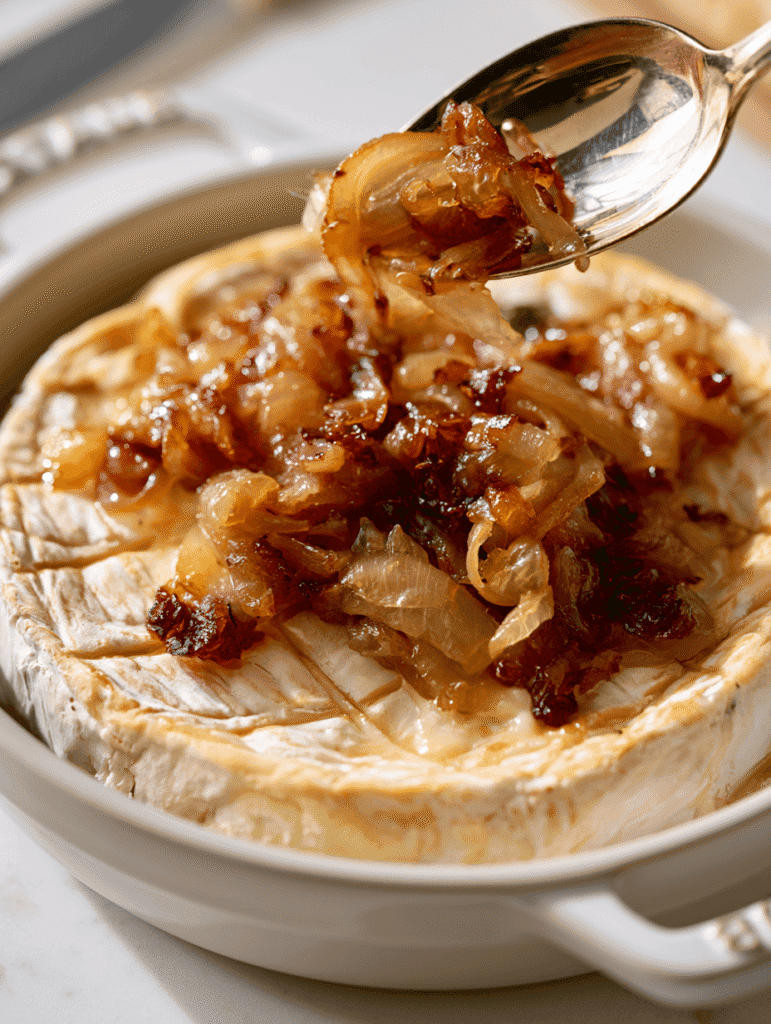
Bake for 10 minutes. Watch it rather than walking away completely; brie wheels vary in size, and what you’re looking for is a wheel that’s visibly softened and slightly domed, with the topping bubbling faintly at the edges. If yours is on the larger side, it may need closer to 12 to 14 minutes. Press gently near the center with the back of a spoon; it should give easily, almost like a warm pillow.
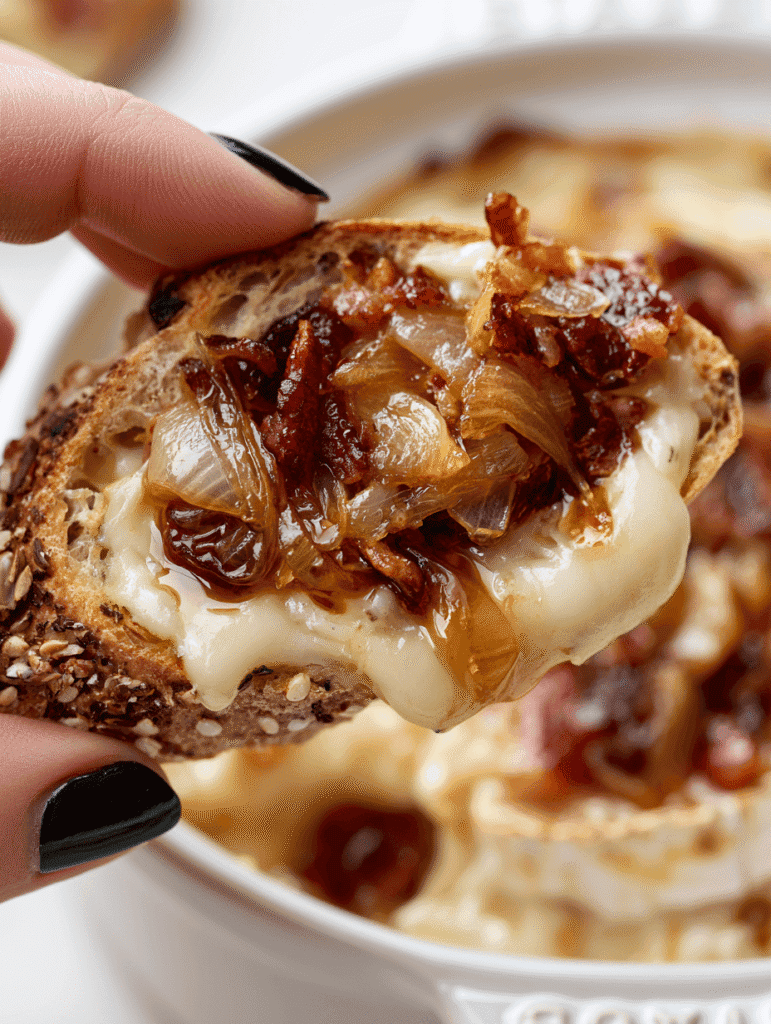
Pull it straight from the oven and drizzle the maple syrup over the top immediately, while everything is still hot enough for it to run into the crosshatch cuts and pool slightly around the onions. Serve right away with sliced baguette, crackers, or apple slices for dipping, brie only holds this texture for a short window before it starts to firm back up as it cools.
Tips for Success
Don’t rush the onions. Twenty minutes on low heat is the actual timeline, not a suggestion you can shortcut with higher heat. If you try to speed it up, you’ll get onions that are browned on the outside but still sharp and undercooked in the middle, and the texture difference is noticeable in the finished dish.
Buy brie a size up from what you think you need. A slightly larger wheel gives you more surface area for the topping and holds its shape better once it’s soft, a very small wheel can collapse entirely under the weight of the onions and bacon.
Serve it the moment it comes out of the oven. This isn’t a make-ahead-and-reheat appetizer in its finished state. Baked brie has a narrow window, maybe 15 to 20 minutes, where it’s properly gooey. After that it firms back up and loses the drama of that first cut. Time the bake to land right as guests arrive or right before you plan to serve it.
Variations and Substitutions
If you want a little herbal note without going full rosemary-and-thyme, a few fresh thyme leaves scattered on right before baking works with the maple instead of against it, though I usually skip herbs entirely here and let the maple carry that warmth on its own.
Pecans or walnuts, toasted and scattered over the top with the onions, add crunch if you’re serving this on a bigger cheese board where texture contrast matters more.
For a smokier version, swap regular bacon for a thick-cut applewood smoked bacon, it holds up better against the sweetness of the onions and maple and won’t get lost.
If brie isn’t available or you want something a little more assertive, a wheel of camembert works in the same method and bakes in roughly the same time, though it will be slightly runnier and more pungent once melted.
Storage and Make-Ahead
The caramelized onion and bacon topping can be made up to two days ahead and stored in an airtight container in the fridge, this is actually the best way to save yourself time on the day of a party. Just reheat it gently in a skillet before spooning it onto the brie and baking as directed.
The assembled, baked brie itself doesn’t store or reheat well once it’s had its full melt, the texture changes and it never quite gets back to that same gooey state. If you do have leftovers, they’ll keep in the fridge for a day or two and are honestly still good cold or gently warmed, spread onto toast the next morning, closer to a savory jam than a proper baked brie at that point.
FAQ
Can I make this ahead of time?
You can caramelize the onions and cook the bacon up to two days in advance and refrigerate them separately or together. Assemble and bake the brie itself right before serving, that final bake is quick and it’s what gives you the gooey texture people are actually after.
Do I need to remove the rind before baking?
No, leave it on. The rind holds the cheese together as it softens and is completely fine to eat, it has a mild, slightly earthy flavor that balances the sweetness on top.
What size brie wheel should I use?
An 8-ounce wheel works for a smaller gathering, but for a party where this is the main appetizer, size up to a 13 to 16-ounce wheel so there’s enough surface area for the topping and enough brie to go around.
Can I use maple syrup that isn’t Grade A?
Yes, and honestly darker Grade B (sometimes labeled “Grade A Dark, Robust” now) can be nice here, it has a deeper, almost molasses-like flavor that stands up well to the smokiness of the bacon.
Serving Suggestions
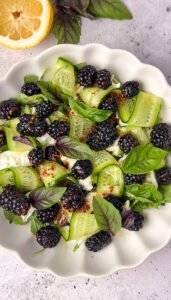
This is the kind of appetizer that wants company on the table, not a solo act. I usually put it out alongside something bright to cut the richness, a grape and brie salad works well if you want to lean further into the brie theme without repeating yourself, the cold, juicy grapes are a good contrast to the warm, melted cheese. If I’m setting up a full spread for a fall gathering, I’ll add a boursin cheese with bacon and caramelized onion at the other end of the table so guests have a spreadable option too, since baked brie disappears fast and people will want something to keep going once it’s gone. Sliced baguette, a few kinds of crackers, and apple slices round it out, and if you want one more warm dish on the table, this is a good moment for something like maple roasted Brussels sprouts to keep the fall flavors consistent across the spread.
Or, I’d serve this with my Butternut Squash Cheese Crackers. The apple, bacon and pecan version works especially well with the maple and caramelized onion flavors here.
This post contains affiliate links. If you purchase through them, I may earn a small commission at no extra cost to you.
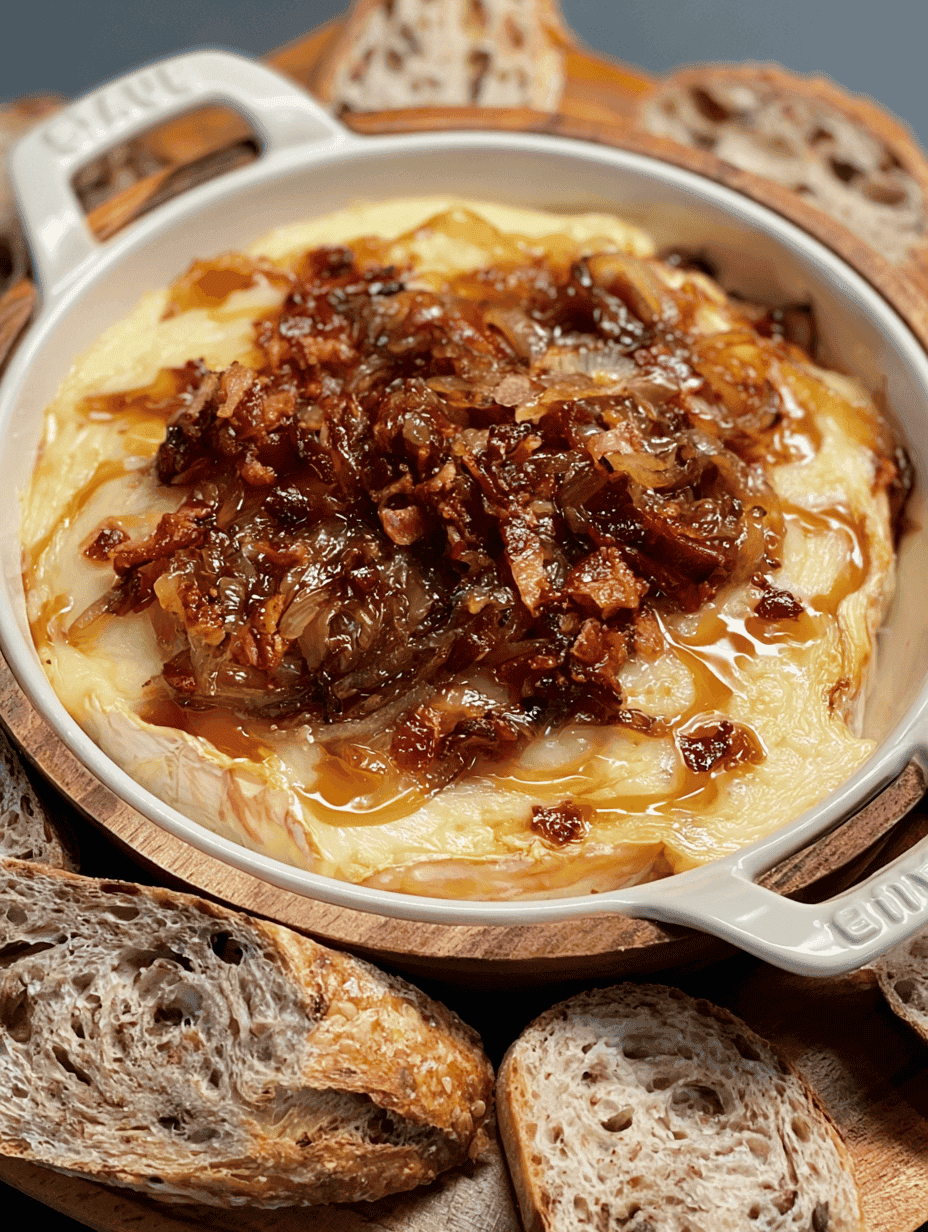

Maple Bacon Baked Brie with Caramelized Onions
Ingredients
Equipment
Method
- Heat a large skillet over medium-high heat. Add the chopped bacon and cook until halfway done, about 3 minutes.
- Remove the bacon with a slotted spoon and place on a paper towel-lined plate. Pour off most of the bacon grease, leaving 1 to 2 tablespoons in the skillet.
- Lower the heat to medium-low. Add the sliced onion to the skillet along with the brown sugar, salt, and pepper. Stir to coat.
- Cook the onions, stirring occasionally, until deeply browned and soft, about 20 minutes.
- While the onions cook, preheat the oven to 400°F. Place the brie in a small oven-safe baking dish.
- Score the top of the brie in a crosshatch pattern with a sharp knife, cutting about a quarter inch deep.
- Stir the reserved bacon back into the onions for the last minute of cooking to warm through.
- Spoon the onion and bacon mixture over the top of the brie, pressing gently into the scored cuts.
- Bake for 10 to 14 minutes, until the brie is visibly soft and slightly domed.
- Remove from the oven and immediately drizzle with maple syrup.
- Serve right away with sliced baguette, crackers, or apple slices.
Notes
- Leave the rind on the brie. It holds the cheese together as it bakes and is safe to eat.
- The onion and bacon topping can be made up to 2 days ahead and refrigerated; reheat gently before topping and baking the brie.
- Baked brie is best served immediately. It has a short window, about 15 to 20 minutes, where the texture is properly gooey.
- For a larger gathering, use a 13 to 16-ounce wheel and roughly double the onion and bacon quantities.