
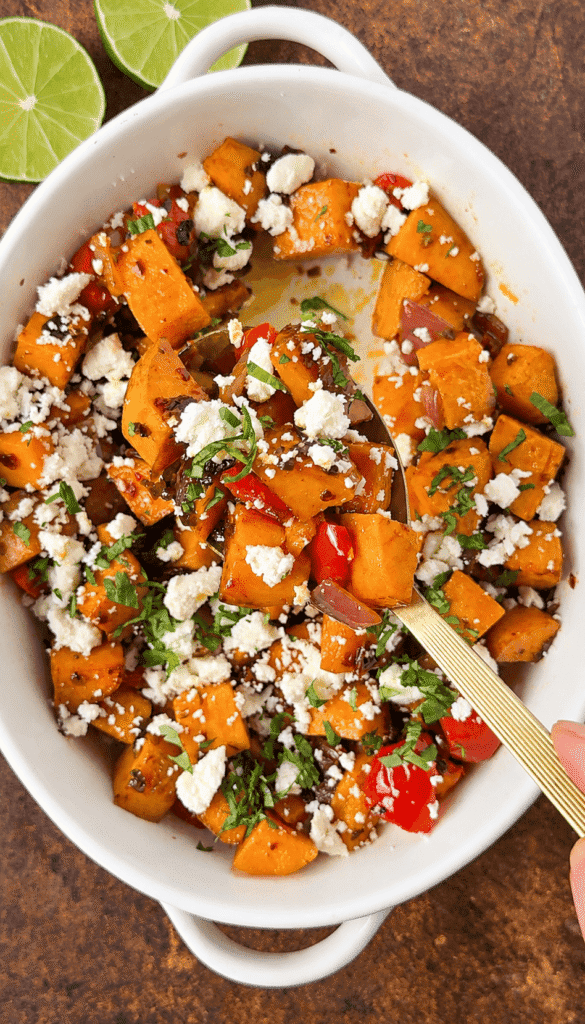
Sweet potatoes don’t need brown sugar to be delicious. A little smoky heat and salty cheese work so well with their natural sweetness, especially when you add lime at the end!
These chipotle roasted sweet potatoes are a simple side dish, with red onion and bell pepper baked right alongside them. I cook everything together in the same baking dish – no sauteing the vegetables first, no separate sauce to make, and no reason to wash another pan.
The chipotle gives them some heat, but you can start with less if you’re unsure. Cotija adds a salty bite without covering the vegetables in melted cheese. I’d keep the toppings simple here – they really don’t need much!
This is something I’d serve with chicken or pork during the week, though it would also fit on a Thanksgiving table. If you enjoyed my butternut squash gratin with bacon and Gruyère, here’s another savory vegetable side to try. The flavors are quite different, so you can have both in your fall dinner rotation without feeling like you’re making the same thing again.
Why You’ll Love This Recipe
- Everything bakes together. The onion and bell pepper go into the oven with the potatoes.
- The heat is adjustable. Use less chipotle for a milder dish.
- There’s very little to do at the end. No dressing to blend or topping to fry.
- It works beyond the holidays. Serve it with a simple dinner, alongside tacos, or as part of a larger meal.
Ingredient Notes
Sweet potatoes
Orange-fleshed sweet potatoes are what you want here. They become soft when baked and have enough natural sweetness to stand up to the chipotle.
Choose firm potatoes without soft patches. If you have a choice, fairly straight potatoes are easier to peel and cut than thin, twisted ones. It’s a small thing, but it makes preparation less annoying.
I peel mine for this recipe. You can leave the skin on if you prefer, provided you scrub it well, but the finished texture will be different. With peeled potatoes, every piece is soft all the way through.
Pre-cut sweet potatoes can save some time. Check the size of the pieces before using them, though – large chunks meant for boiling won’t cook at the same speed as the smaller cubes in this recipe.
Chipotle peppers in adobo
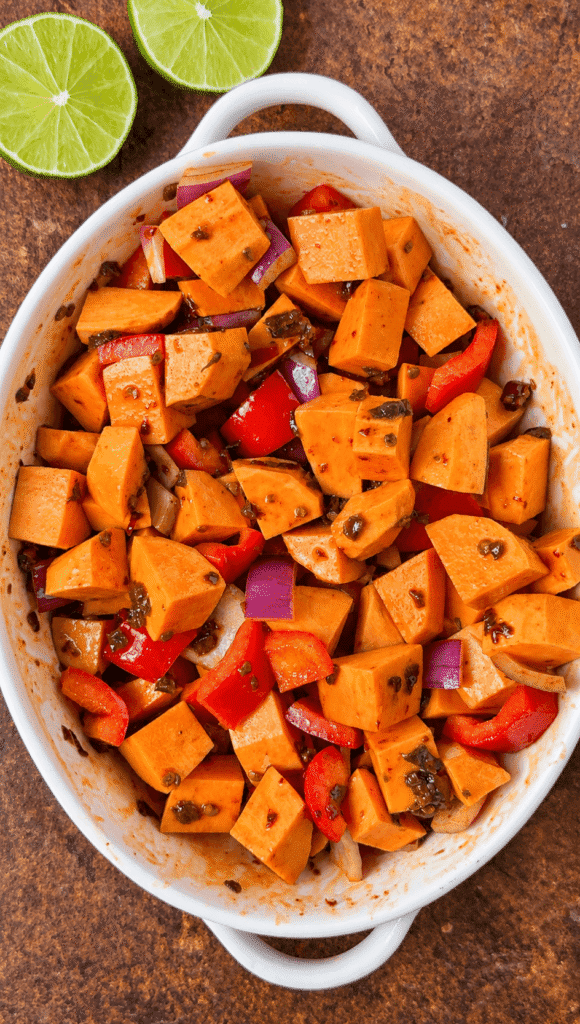
Look for canned chipotle peppers in adobo in the Mexican or international foods section of the grocery store. You’ll be using an individual pepper from the can and some of the sauce surrounding it.
That distinction matters if this is your first time cooking with them. One pepper does not mean one can!
The pepper is soft enough to chop with a knife. You don’t need to blend it, especially for such a small amount. Finely minced pieces will mix into the seasoning without leaving large bites of hot pepper among the vegetables.
You also don’t need a long list of spices here. The canned chipotle and adobo sauce already bring plenty of flavor. Adding several more smoky seasonings can make it harder to taste the vegetables themselves.
Red onion and bell pepper
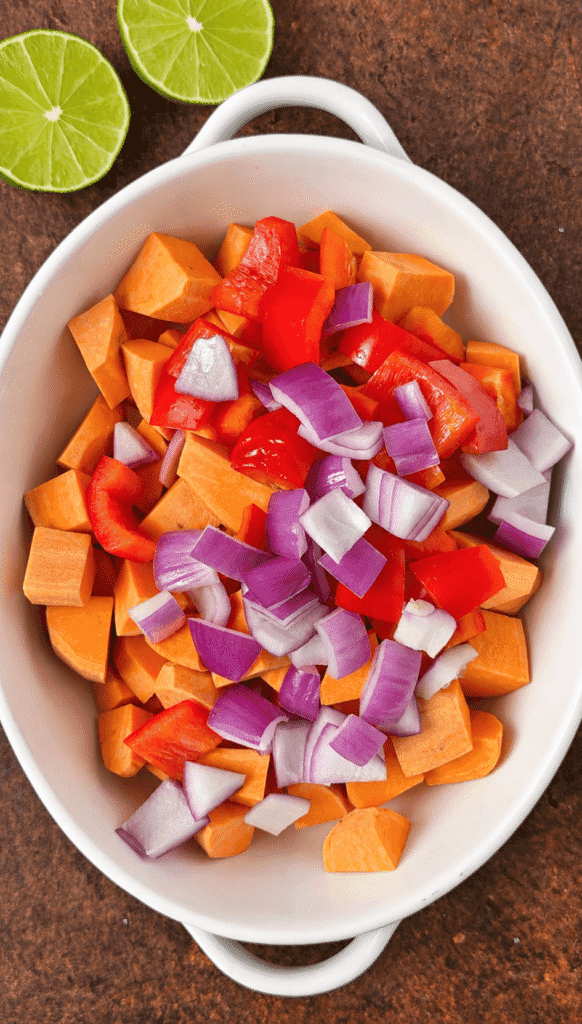
Red onion loses much of its sharpness as it cooks. It softens among the potatoes, with some of the exposed edges taking on color.
Keep the onion in pieces rather than chopping it very finely. You want to find it in the finished dish, not have it disappear completely. The layers will separate as you mix everything, which is fine.
Red bell pepper adds another vegetable without changing the preparation. Yellow or orange bell pepper would also work. Green pepper has a stronger, less sweet flavor, so I’d choose one of the sweeter colors if you have the option.
Cotija
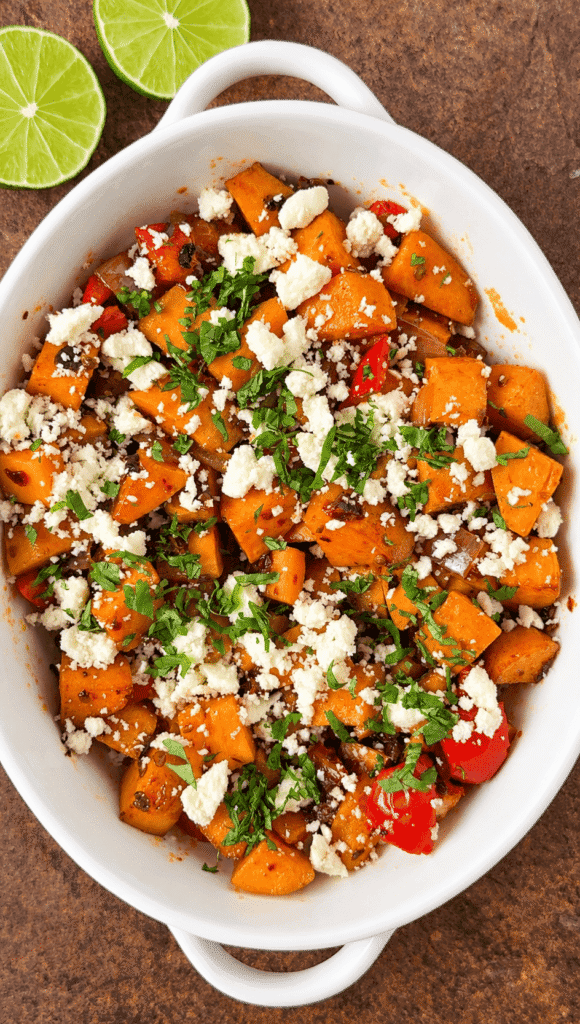
Cotija is a crumbly, salty Mexican cheese. Here, it goes over the vegetables after baking.
You don’t need a thick layer. Small crumbles spread across the top give you some cheese with each serving while leaving the potatoes visible. There’s no need to put the dish back in the oven to melt it.
If you haven’t bought cotija before, check the refrigerated section near queso fresco and other Mexican cheeses. You may find it in a block or already crumbled. Either is convenient for this recipe.
Taste the vegetables with a little cheese before deciding they need more salt. Cotija can be quite salty, and the adobo sauce contributes seasoning too.
Lime and cilantro
Fresh lime juice is worth using here. It gives the finished vegetables a fresher taste, particularly alongside the smoky pepper.
Start with the amount in the recipe card, then decide whether you want more. You can always put lime wedges on the table for people who like a stronger citrus flavor.
Cilantro is optional. If you enjoy it, add a small scattering. If you don’t, leave it off. You don’t need to buy another herb just to replace it.
How Spicy Are Chipotle Roasted Sweet Potatoes?
There isn’t one reliable heat level for every can of chipotles. Pepper size varies, and some brands taste hotter than others. Someone who cooks with them often may find this amount comfortable, while someone sensitive to heat may prefer less.
For your first batch, start with half a pepper if you’re unsure. The adobo sauce has some heat as well, so reducing the pepper doesn’t remove all the spice.
If you’re serving a mixed group, making the whole dish milder is the easiest approach. People who enjoy more heat can add hot sauce to their own portion.
Be particularly careful if you’re doubling the recipe. It’s easy to assume that doubling every ingredient will give exactly the same impression of heat, but peppers aren’t identical. Start conservatively if you’re opening a different brand or using noticeably larger peppers.
The cotija adds richness, but it won’t make an overly spicy batch mild. It’s better to use less chipotle at the beginning than try to fix too much afterward.
A Few Things That Make a Difference
Keep the potato pieces fairly even
You don’t need perfectly measured cubes, but try to avoid having tiny pieces mixed with very large ones. Otherwise, some potatoes may break apart while you’re waiting for the biggest pieces to soften.
This matters more than making the vegetables look perfectly arranged before baking. Once everything is cooked and spooned onto a plate, nobody will notice whether every cube was identical.
Check tenderness, not just color
A browned edge doesn’t necessarily mean a potato is cooked through. Check a larger piece from the middle of the dish as well as one near the edge.
The fork should go in easily. If you feel resistance in the center, the potatoes need more time.
The vegetables in this recipe bake together in a baking dish, so expect tender potatoes with some browned edges. Every side of every cube won’t be crisp, and that isn’t necessary for the dish to be ready.
Be gentle once the potatoes are cooked
Raw sweet potatoes can handle plenty of tossing. Cooked ones need a lighter hand.
Use a spoon or spatula to lift and fold the vegetables when adding the lime. Stirring hard can turn the softer pieces into mash, especially if they’ve had a little extra time in the oven.
If a few corners break off, don’t worry. You’re serving a vegetable side, and it doesn’t need to look untouched.
Substitutions That Keep It Simple
Feta instead of cotija: Crumbled feta is the substitute I’d choose if cotija isn’t available. It’s tangier and usually softer, so the flavor won’t be identical. Add it after baking.
Yellow onion instead of red: This is a practical swap if it saves you a trip to the store. Keep the pieces similar in size to those described in the recipe.
Yellow or orange bell pepper: Both can replace red bell pepper without requiring a different method. Use whichever looks best or is already in your refrigerator.
Without cheese: You can leave the cotija off for a dairy-free version. Taste the potatoes again after adding the lime, since you may want a little more salt without the cheese.
Without cilantro: Simply omit it. The dish still has plenty of flavor.
Chipotle powder is a less direct substitution. It gives you smoky heat, but it doesn’t include the sauce used in this recipe. I wouldn’t replace a whole canned pepper with the same volume of powder. If you want to make the recipe as written, canned chipotle in adobo is the better choice.
Making It Ahead
If you want to get some preparation out of the way, cut the vegetables the day before and refrigerate them in covered containers. Keep the potatoes separate from the onion and bell pepper.
You can also mince the chipotle and prepare the seasoning mixture ahead. Store it covered in the refrigerator, then stir it before using. If the oil has thickened in the cold, let the mixture loosen briefly while you finish preparing dinner.
Pat damp vegetables dry before seasoning them. That is especially useful if you’ve washed or rinsed the cut potatoes.
For the best freshly baked texture, I’d do the cutting ahead and leave the roasting until closer to dinner. But you can cook the vegetables a day ahead if that suits your schedule better. Refrigerate them promptly and leave the cheese and cilantro separate.
After reheating, add the lime and toppings. The potatoes may be softer after a second trip through the oven, so fold them gently rather than stirring several times.
If you’re planning a holiday meal, remember to account for oven space. These potatoes cook at a higher temperature than some casseroles. Preparing them earlier and reheating can be more practical than trying to fit every dish into the oven at once.
Storage and Reheating
Refrigerate leftovers in a shallow, covered container within two hours of cooking. Use them within three to four days, and reheat to 165°F throughout.
For one serving, the microwave is the easiest option. Cover loosely and heat in short intervals, gently turning the vegetables so the middle warms too. The exact time will depend on the portion and your microwave.
For several servings, use an oven-safe dish at 350°F. Cover loosely at first to help prevent drying, then check the potatoes as they warm. A deep dish of cold vegetables takes longer than a shallow portion, so don’t rely on a fixed reheating time.
If you’ve already added the cotija, you can still reheat the leftovers. The cheese may soften into the vegetables rather than staying in distinct crumbles. Add fresh cilantro afterward if you want it.
Freezing is possible, but it wouldn’t be my first choice for this particular dish. Sweet potatoes and peppers can become softer after thawing. If you do freeze a portion, leave off the toppings and thaw it in the refrigerator before reheating.
Frequently Asked Questions
Can I make this without peeling the sweet potatoes?
Yes, if you don’t mind the texture of the skin. Scrub the potatoes thoroughly and remove any damaged areas.
The written recipe uses peeled sweet potatoes, which give the dish a softer texture. Leaving the skin on is a preference, not a reason to change the rest of the recipe.
What can I do with the rest of the canned chipotles?
You’ll have peppers left after making this recipe. They’re useful for adding smoky heat to beans, soups, marinades, or a small batch of mayonnaise.
For longer storage, freeze individual peppers with a little sauce in small portions. That way, you can take out what you need without thawing the entire leftover can.
Label the container clearly. A small portion can still be quite hot, and it’s helpful to know whether you froze a whole pepper or mostly sauce.
Can I double this recipe?
Yes. Use a larger baking dish or divide the vegetables between two dishes so you still have room to turn them.
Adding twice as much to the same small dish changes how the vegetables cook. A deeper pile may need longer, and the exposed pieces can be ready before the middle.
Keep the potato pieces the same size and check tenderness before serving. The original cooking range is a starting point, not a promise for every doubled batch.
Is this a Thanksgiving side or an everyday recipe?
Both. It makes sense on a holiday table, especially if you want a savory sweet potato dish, but nothing about the ingredients requires a special occasion.
For an everyday dinner, serve it with a simply cooked protein and something green. For Thanksgiving, consider the spice preferences of your guests and start with the milder amount of chipotle.
You can also use leftover portions for lunch instead of serving the same dinner again.
What to Serve with Chipotle Roasted Sweet Potatoes
Roast chicken, pork tenderloin, and grilled steak would all work here. The potatoes have enough seasoning that the main dish doesn’t need a complicated sauce.
For Thanksgiving, I’d serve them with my roasted citrus turkey with orange and sage. The lime in the potatoes fits comfortably beside a citrus-seasoned main dish, and the chipotle gives you a different flavor from the usual holiday sides.
My green bean casserole with mushrooms and Gruyère would add a creamy vegetable side to that meal. If you’d prefer something with more texture, try Parmesan Brussels sprouts.
For a casual dinner with grilled meat, corn pudding with honey and jalapeño is another option. Since both recipes include peppers, I’d keep one of them mild and serve a simple salad alongside.
These potatoes also belong next to tacos or a bowl of beans and rice. You don’t need to make a complete holiday menu around them.
For leftovers, warm a portion and serve it with an egg, or spoon it into a tortilla with black beans. Keep the pieces whole for a bowl, or gently mash a few if you want a filling that stays inside a folded tortilla. A little fresh lime is useful after reheating, especially if the leftovers have been in the refrigerator for a day or two.
This post contains affiliate links. If you purchase through them, I may earn a small commission at no extra cost to you.
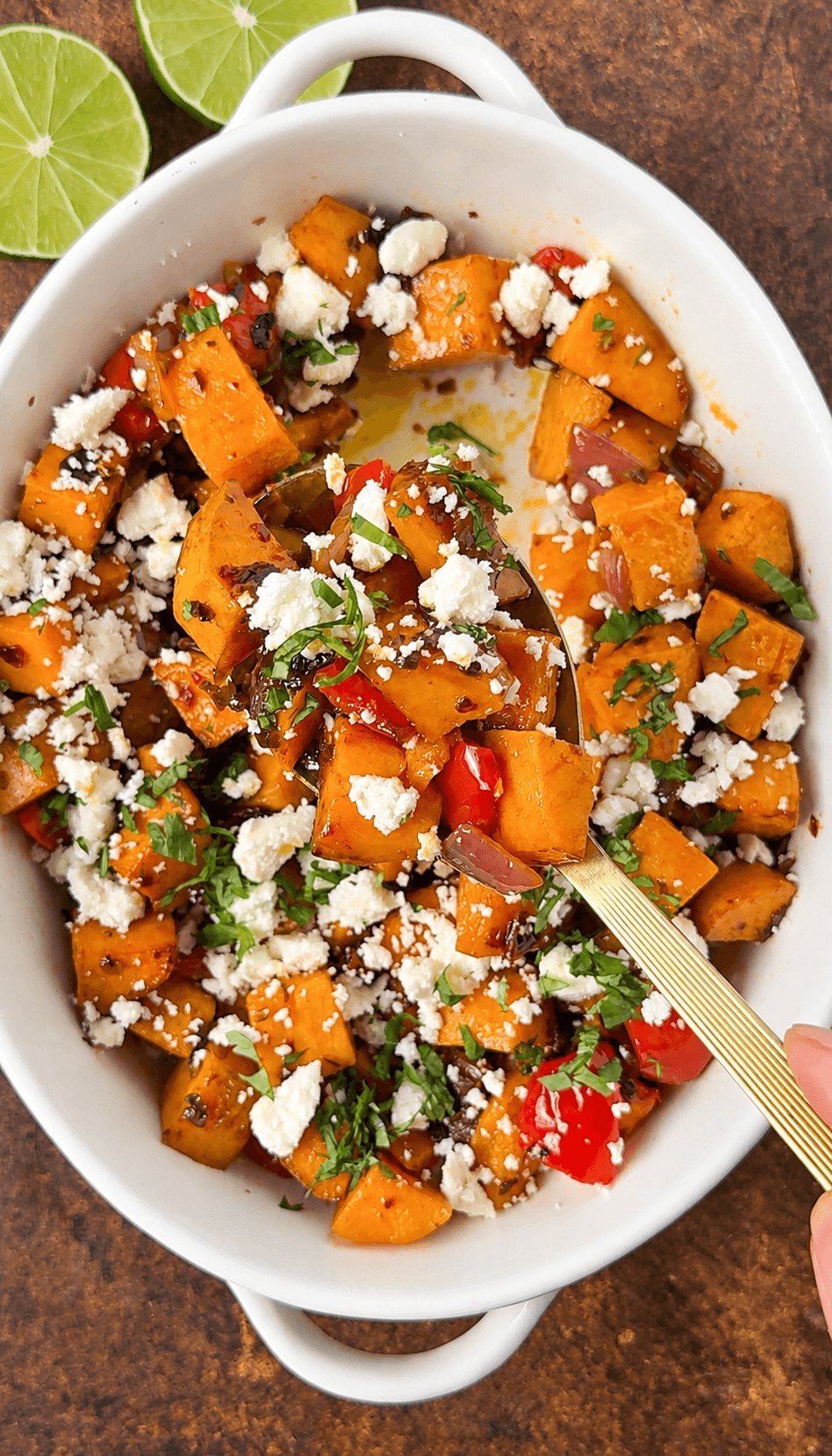

Chipotle Roasted Sweet Potatoes with Lime & Cotija
Ingredients
Method
- Preheat the oven to 425°F.
- Stir together the olive oil, minced chipotle, adobo sauce, and salt in a small bowl.
- Place the sweet potatoes, red onion, and bell pepper in a baking dish or roasting pan.
- Toss the vegetables with the chipotle mixture until evenly coated.
- Roast for 30–40 minutes, tossing halfway through, until the sweet potatoes are tender and browned at the edges. Start checking at 25 minutes.
- Gently toss with the lime juice.
- Taste and adjust the salt and lime juice as needed.
- Scatter with cotija and optional cilantro, then serve.
Notes
- Heat level: Start with ½ chipotle pepper for a milder version. Adobo sauce also contributes heat.
- Baking dish: The vegetables do not need to be in a single layer. Use a dish with enough room to turn them during cooking.
- Cooking time: Check a larger potato cube from the center of the dish. Continue baking if it is still firm.
- Substitution: Crumbled feta can replace cotija, though it will taste tangier.
- Make ahead: Chop and refrigerate the vegetables up to one day ahead. Store the chipotle mixture separately. If roasting ahead, add lime, cheese, and cilantro after reheating.
- Storage: Refrigerate leftovers promptly in a covered container for up to 3–4 days. Reheat to 165°F.
- Doubling: Use a larger dish or two dishes. Additional cooking time may be needed.