
I wanted to make an appetizer that really felt like fall. Something with golden color, warm flavors, and enough substance to feel satisfying. I don’t know why, but pears have always been strongly associated with fall for me. They were the first thing I thought of when I started putting this recipe together.
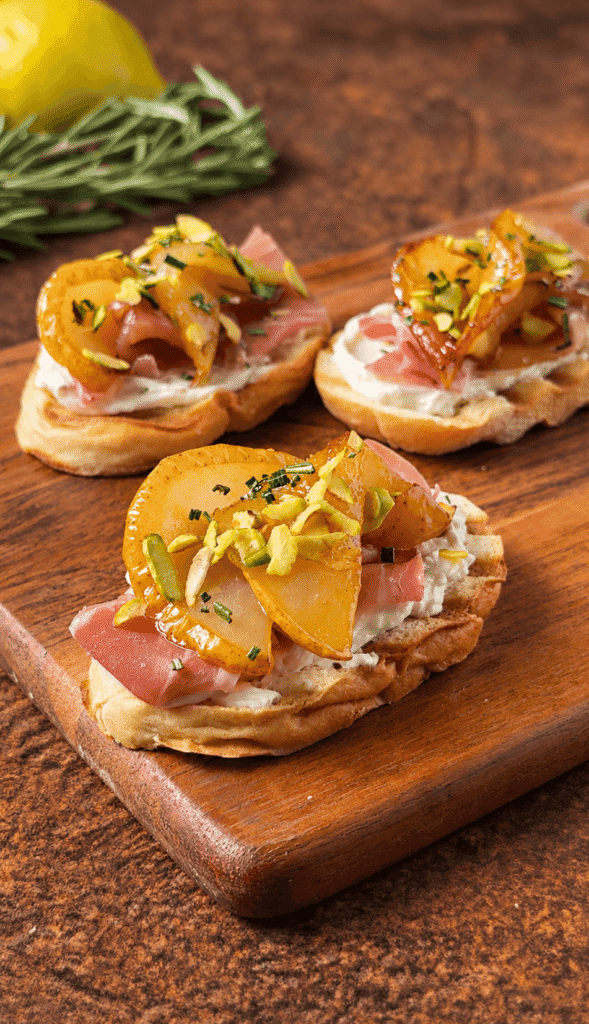
These pear crostini with goat cheese and prosciutto turned out just how I wanted. The pears softened in butter and picked up a glossy honey coating, while the prosciutto brought the salty flavor I love with sweet fruit. The cheese underneath is creamy and a little earthy, with rosemary running through it.
I added cream cheese to mellow the goat cheese, and I’m glad I did. You can still taste the goat cheese, but it leaves room for everything else. That matters here, especially with the delicate flavor of the pears.
If you enjoy my apple Brie toast with ham and caramelized apples, these have a similar fall feeling in an appetizer-sized portion. I’d serve them before dinner with friends or put them on a Thanksgiving appetizer platter. The golden pears look lovely on the table, and there’s no complicated decorating involved.
Why You’ll Love These Pear Crostini
- The goat cheese tastes mellow. Cream cheese softens its sharpness while keeping the earthy flavor that works so well with pears.
- They have plenty of sweet-and-salty flavor. Honey-glazed fruit and prosciutto make each other taste even better.
- You can use the equipment you own. Toast the bread in a dry skillet, in the oven, or on a tabletop grill.
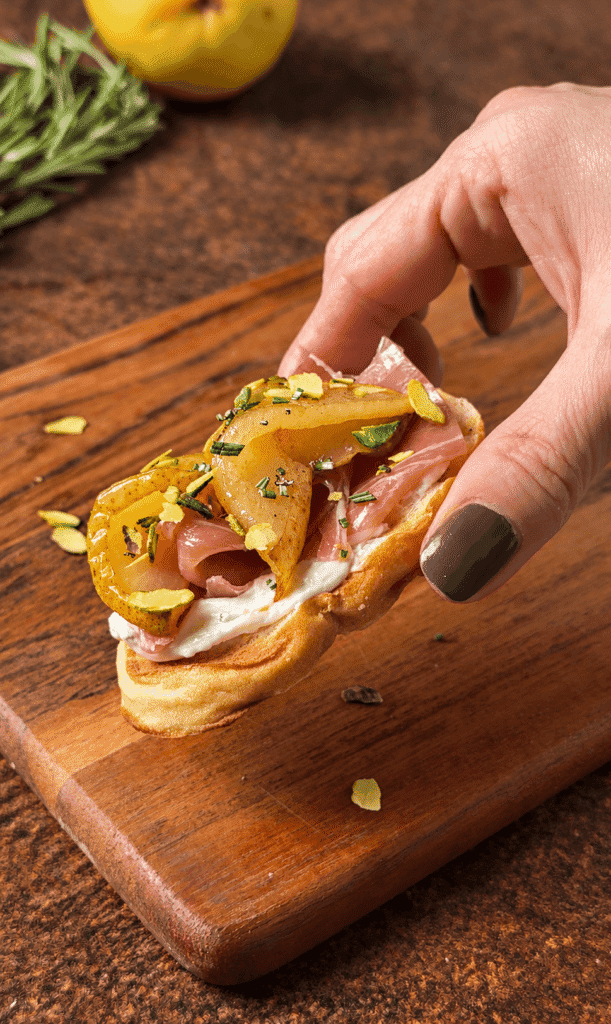
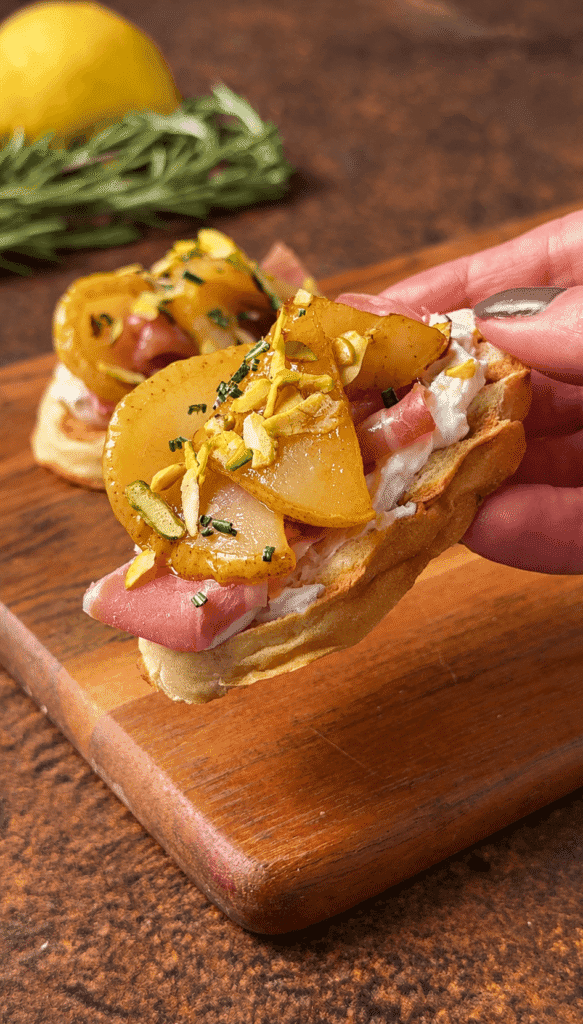
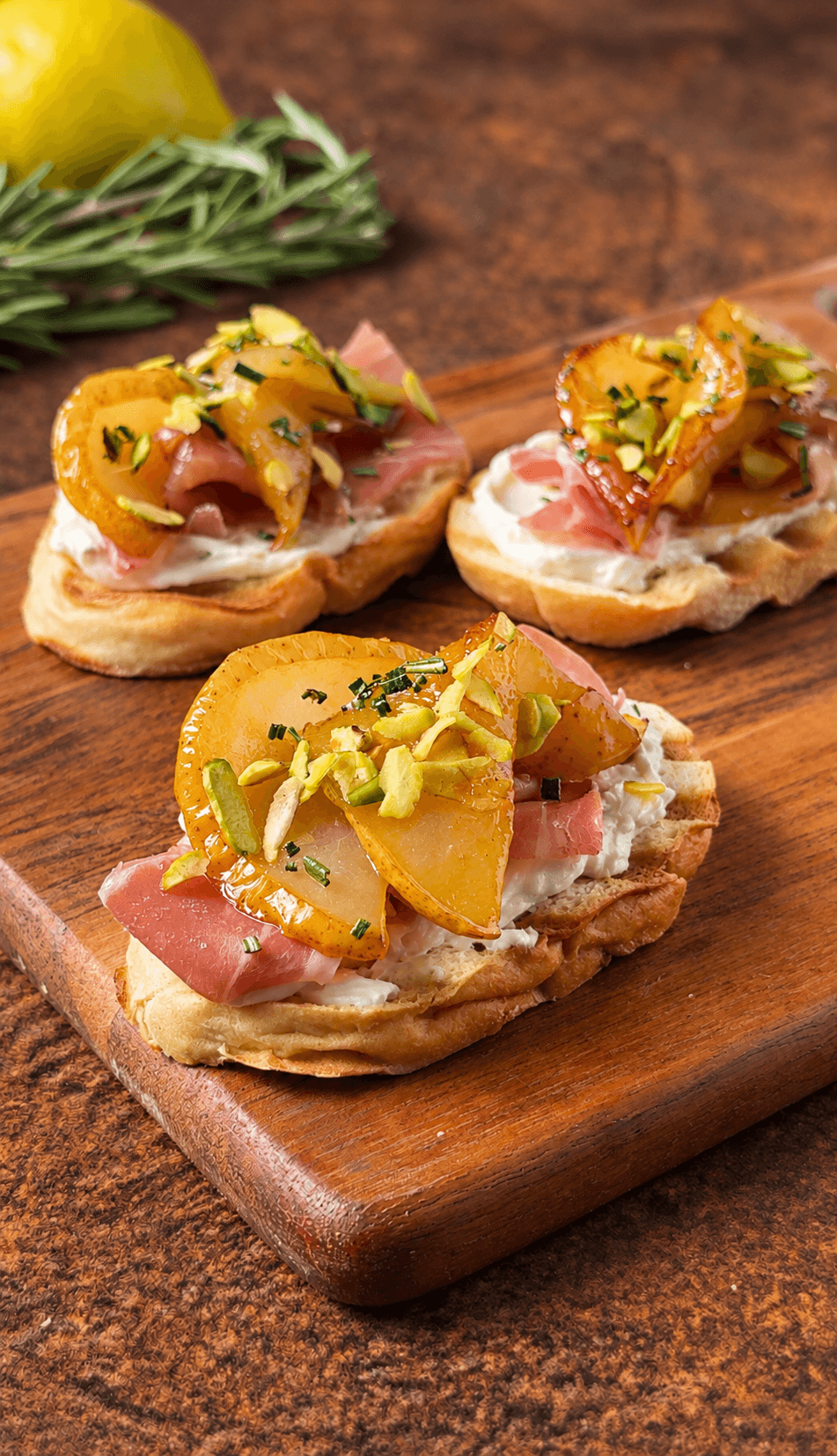
- The toppings are easy to arrange. Overlapping pears, soft folds of prosciutto, and a light sprinkle of pistachios give them a finished look.
Ingredient Notes
Ripe but firm pears
The pears should taste good before they go into the skillet. Cooking helps soften them, but a very underripe pear can still taste bland even after it becomes tender.
Look for fruit that feels firm through the body with a little give near the stem. Avoid pears with soft patches or bruises, especially if those areas feel wet or mushy. You want slices that can be turned in the pan and lifted onto the bread without breaking.
Bosc and Anjou are good choices for this kind of preparation. A firm Bartlett can work too. Ripeness matters more than buying one particular variety, so choose the best fruit available.
I leave the skin on. It gives the slices a pretty outline, and I like the way it looks against the cheese. If your pears have particularly tough skin, or you simply prefer them peeled, you can remove it. The finished slices will be a little more delicate to handle.
Pear sizes vary quite a bit. Use the number of slices in the recipe card as your guide rather than trying to fit every piece of fruit onto the crostini.
Goat cheese softened with cream cheese
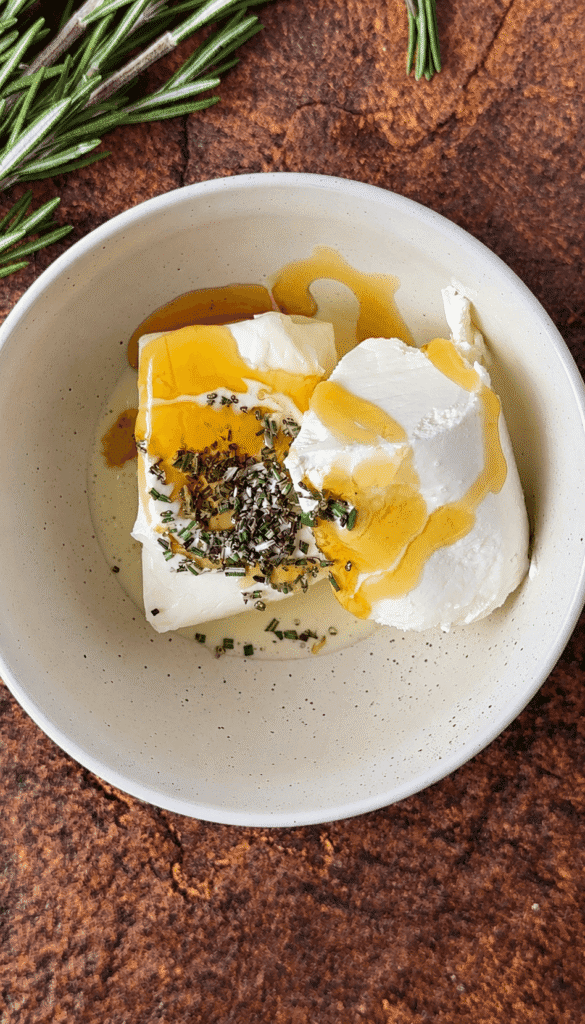
I wanted the flavor of goat cheese without having it dominate the appetizer. Cream cheese helped with that. The spread still has some earthiness and tang, but it tastes softer alongside the sweet pears.
Plain goat cheese is the best choice here. A flavored log can bring in garlic or other herbs that compete with the rosemary. Starting with plain cheese also lets you control the sweetness.
For the cream cheese, I’d use a regular block. Whipped cream cheese from a tub has a different texture and may make the spread less substantial. You want it soft enough to spread easily but thick enough to stay on the bread.
The little bit of heavy cream helps the cheeses blend together. It isn’t meant to turn the mixture into a sauce. Once mixed, the spread should hold the marks from your spoon.
My pear cheesecake with prosciutto is another way I use this fruit-and-cheese pairing. That recipe is chilled and served on a cracker crust. Here, I wanted toasted bread and pears with a warm, buttery flavor.
Fresh rosemary
Rosemary gave this recipe the herby flavor I was looking for. It works with the earthiness of the goat cheese and adds something savory alongside the honey.
Chop the leaves finely. Large pieces of rosemary are much more noticeable when you bite into them, even if you haven’t used very much. Small pieces distribute through the cheese instead of concentrating the flavor in one spot.
Discard the woody stems. They have no place in the spread or on top of the crostini.
I also use a little rosemary as a garnish, but it doesn’t need to cover the pears. There’s already rosemary in the cheese. A light sprinkle adds some color and lets you smell the herb as you pick up a piece.
Fresh rosemary is my preference for this recipe. Dried rosemary stays firmer in an uncooked spread and can feel rough unless it’s crushed very finely.
Honey in the cheese and with the pears
The honey has two jobs here. In the cheese, it takes the edge off the tang. In the skillet, it coats the softened pears and gives them a glossy finish.
I don’t add another drizzle over the assembled crostini. They already had enough sweetness for my taste, and I wanted the prosciutto and rosemary to remain noticeable.
A mild honey is a good choice. A strongly flavored honey will be more obvious in the cheese mixture, where it isn’t cooked.
The natural sweetness of your pears matters too. A ripe, sweet pear will give a different result from one that is still quite firm and mild. Taste the fruit before cooking so you know what you’re working with.
Thinly sliced prosciutto
Thin prosciutto works best because it’s easier to bite through with the bread and pears. Thick pieces can be chewy and may pull away from the crostini as you eat.
I like to fold it loosely. A tightly rolled piece looks neat, but it can create a thick mouthful in the middle while leaving the edges of the bread uncovered.
Prosciutto brings the salty part of this appetizer. I didn’t add extra salt to the cheese or pears. Depending on the brands you use, the cheese and prosciutto may already provide all you need.
If the slices are difficult to separate, take your time with them. A few torn pieces are completely fine. They can be tucked onto the spread just as easily as one perfect slice.
Baguette and pistachios
Choose a baguette with enough bread in the center to hold the spread. A few holes are normal, but very large openings let the cheese fall through and make assembly awkward.
The bread doesn’t need extra oil. I toasted mine on a dry tabletop grill, which is how I got the stripes in the photos. The cheese and butter-cooked pears already add richness.
Sliced pistachios give a light crunch without leaving big pieces of nut on top. I also like their green color against the golden pears.
If you have whole shelled pistachios, chop them into small pieces. Salted pistachios can work, but remember that the prosciutto is salty too. Taste before adding any additional seasoning.
Tips for Success
Give the pears time to soften before adding honey
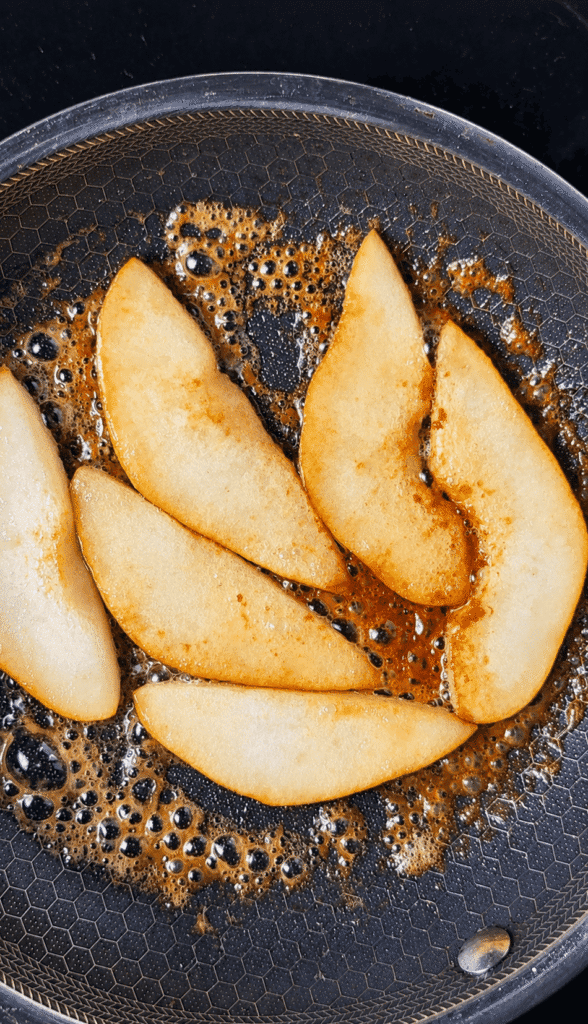
The pears need a little time in the butter before the honey goes into the pan. That was the method I used, and it let the fruit soften without the honey getting too dark while I waited.
Watch the pears rather than relying entirely on the cooking time. Firmer fruit will need longer. Riper slices may be ready sooner, especially if they’re thin.
Once honey is in the pan, the coating can darken quickly. Lower the heat if necessary. You’re looking for golden fruit with a glossy coating, not a thick, dark layer that covers the pear flavor.
A roomy skillet helps. Crowded slices are harder to turn carefully, and they tend to sit in the moisture released by the surrounding fruit. If the pears won’t fit comfortably, work in batches.
Keep the bread crisp but easy to bite
Crostini should have some crunch, but I don’t want bread so hard that the toppings slide off when I try to bite it.
The outside should feel lightly crisp, with enough tenderness left inside to make it comfortable to eat. Fresh baguette and day-old bread will toast differently, so check the first batch before deciding how long the rest needs.
A dry skillet works well when you want to watch the bread closely. The oven is convenient for preparing the whole batch together. Use whichever fits the rest of your cooking.
Let the toast cool before spreading the cheese over it. Hot bread can loosen the spread before you’ve even added the other toppings.
Let the pears cool slightly before assembly
The pears can still be barely warm, but they shouldn’t be straight from the hot skillet. Very hot fruit softens the cheese mixture and makes it harder to keep everything in place.
There’s no need to pile the slices high. A little overlap gives the pears room to show and keeps the crostini easier to eat.
I also like to leave some prosciutto visible around the edges. You can see what’s on the toast without needing extra garnish or a heavy finishing drizzle.
Variations and Substitutions
Making the cheese spread milder
The cream cheese already softens the goat cheese flavor considerably. If you’re making these for someone who finds goat cheese too strong, you can shift the mixture toward more cream cheese.
The result will taste less earthy, so it won’t be exactly the same as the version I made. Still, a mild honey-rosemary spread works with the pears and prosciutto.
I wouldn’t replace the cream cheese with a wetter cheese without checking the consistency. A loose spread makes the toppings harder to support and softens the bread more quickly.
Swapping the pistachios
Finely chopped pecans or walnuts would fit the fall flavors. They bring a different taste and won’t give you the same green color, but they work with both pears and goat cheese.
Keep the pieces small. The nuts should add a little crunch without becoming the most noticeable texture in the bite.
You can also leave them off. The toasted baguette still provides some crispness. If you’re preparing a nut-free version for an allergy, check ingredient labels and avoid cross-contact during preparation.
Leaving out the prosciutto
The pears and cheese can stand on their own if you want a meatless version. You’ll lose some of the salty contrast, which was one of my favorite parts, but the rosemary keeps the spread savory.
Taste an assembled piece before deciding whether it needs a little flaky salt. The amount will depend on your cheese and whether the nuts are salted.
For a vegetarian appetizer, check that the cheese is made with vegetarian-friendly rennet as well.
Trying another fruit
Firm apple slices are a reasonable variation, although the cooking time and flavor will change. Choose apples that hold their shape, and let their tenderness guide you.
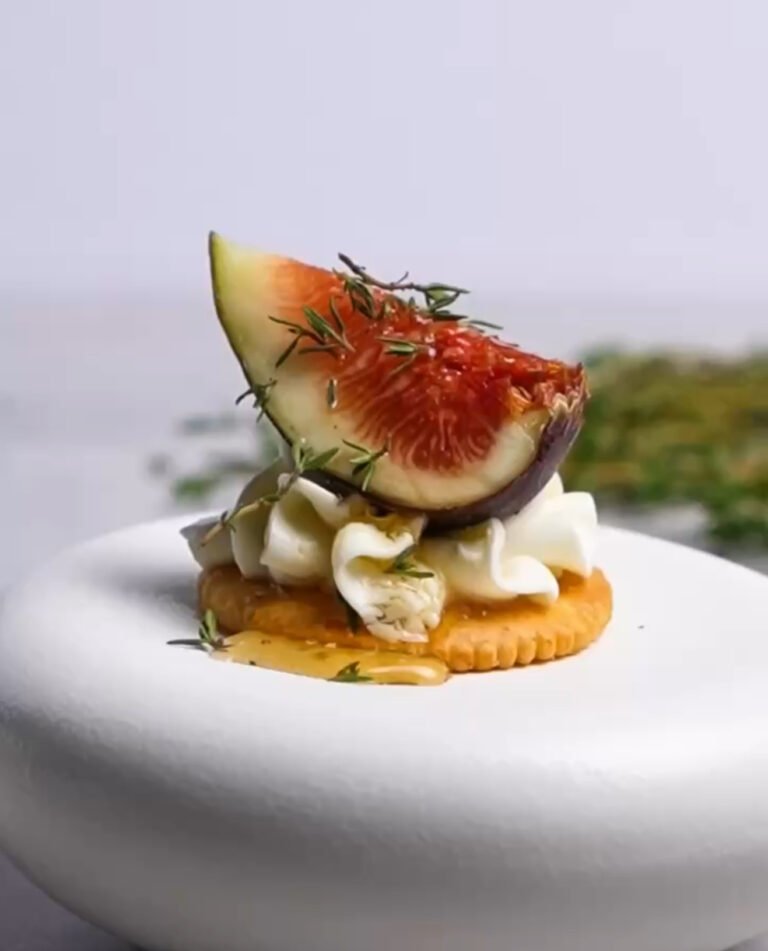
Figs need different handling. If you have those instead, my caramelized fig and prosciutto crostini are a better starting point. They use a ricotta base and a preparation suited to the softer fruit.
For this recipe, pears are what give it the fall feeling I wanted. I’d make the original version first if you have good ones available.
Make-Ahead and Storage
Preparing the components ahead
The cheese spread is the easiest part to prepare in advance. Make it the day before and refrigerate it in a covered container.
It will firm up when chilled. Let it soften briefly before assembly so you can spread it without dragging or breaking the toast. Give it a stir if needed.
The baguette can be toasted earlier on the serving day. Cool it completely before storing it in an airtight container. If you close the container while the bread is warm, trapped steam will soften it.
You can also cook the pears ahead and refrigerate them separately once cooled. For the nicest texture, I’d prepare them the same day you plan to serve the crostini.
The butter coating firms up in the refrigerator, so cold pears won’t look as glossy as they did in the pan. Gentle warming can loosen that coating again without needing to cook the fruit all over.
Assembling for guests
Keep the bread separate from the toppings until you’re close to serving. Once the spread goes on, the toast gradually starts absorbing moisture.
Having everything prepared makes the final assembly easier. Separate the prosciutto, have the pistachios ready, and make sure the pears have cooled enough before you start.
If you’re serving these over a longer period, put out a smaller platter and replenish it. That way, the later crostini haven’t been sitting under the toppings for the whole gathering.
I wouldn’t assemble them the night before. The flavor may still be good, but you’ll lose much of the contrast between the crisp bread and creamy spread.
Keeping leftovers
Refrigerate leftover cheese spread and cooked pears in separate covered containers and use within two to three days. Follow the storage instructions on the prosciutto package once opened.
Assembled leftovers should also go in the refrigerator. The bread will soften, so they’re best eaten the next day for quality.
Reheating the entire crostini changes the cheese spread and prosciutto along with the bread. If you know you won’t use the whole batch at once, keeping the components separate is the better option.
Don’t leave the assembled crostini at room temperature for more than two hours, or one hour when temperatures are above 90°F. I wouldn’t freeze them assembled because the fruit and cheese textures won’t hold up well.
Frequently Asked Questions
Can I make pear crostini ahead of time?
Yes, you can prepare the components ahead. Keep the cheese spread and cooked pears refrigerated separately, and store cooled toast in an airtight container.
Assemble close to serving so the bread keeps its texture. Making the spread ahead is particularly helpful because it removes one task without compromising the finished appetizer.
Do I need to peel the pears?
No. I left the skin on and liked the way it outlined the slices against the cheese.
If your pears have tough skin or you prefer them peeled, remove it. Handle peeled slices gently after cooking, since they can be a little more fragile.
Can I use fresh pears instead of caramelized pears?
You can, but the finished crostini will have a fresher, firmer texture and won’t have the buttery flavor or golden color of this version.
Use ripe fruit and thin slices for that variation. Keep the honey in the cheese mixture, then taste before deciding whether you want any additional sweetness.
The cooked pears are a big part of what made these feel like a fall appetizer to me.
Should these crostini be served warm or cold?
Serve them freshly assembled, with pears that are barely warm or cooled and cheese that is soft enough to spread.
They don’t need to be piping hot. Straight from the refrigerator, though, the cheese will be firmer and the butter on the pears less pleasant. Give yourself a little time to finish the components before arranging the platter.
What to Serve with Pear Crostini
These are fairly substantial for a small appetizer. I’d allow about two per person before dinner, or fewer if you’re offering several other starters.
For a mixed platter, my lemon-caper smoked salmon crostini give you a brighter, briny option beside the sweet pears. Both are easy to pick up and serve on small plates, but the flavors are different enough to make the platter interesting.
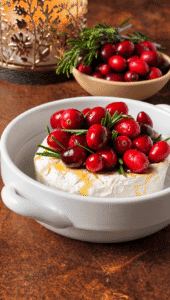
For Thanksgiving or another fall gathering, baked Brie with cranberries and honey brings a warm cheese option with tart fruit. I’d serve something fresh alongside the richer appetizers, such as a simple green salad or crisp vegetables.
These pear crostini also make a satisfying light lunch with a salad. That’s something I appreciate about recipes like this. They feel special enough for guests, but the ingredients are simple enough to enjoy whenever you want that sweet-and-salty combination.
This post contains affiliate links. If you purchase through them, I may earn a small commission at no extra cost to you.

Pear Crostini with Goat Cheese and Prosciutto
Ingredients
Method
- Toast the bread. Place the baguette slices in a dry skillet over medium heat. Toast for 2–3 minutes per side, until lightly golden and crisp, working in batches as needed. Alternatively, toast on a baking sheet in a 400°F oven for 8–10 minutes, turning halfway through. A preheated tabletop grill also works. No additional oil is needed.
- Cool the bread. Transfer the toasted slices to a rack or plate while preparing the toppings.
- Mix the spread. Combine the goat cheese, cream cheese, heavy whipping cream, honey, and rosemary in a bowl until smooth and creamy.
- Prepare the pears. Core the pears and cut into slices about ¼ inch thick, leaving the skin on. You’ll need 20 slices; reserve any extra fruit for another use.
- Soften the pears. Melt the butter in a large skillet over medium heat. Add the pear slices in a single layer and cook until softened but still holding their shape, approximately 3–5 minutes. If needed, work in batches, dividing the butter and honey between them.
- Add the honey. Drizzle the pears with the honey, carefully turn the slices, and cook for 1–2 minutes more, until golden and glazed. Reduce the heat if the honey browns too quickly.
- Cool the pears. Transfer to a plate and let cool until barely warm.
- Spread the cheese. Divide the cheese mixture evenly among the 10 toasted baguette slices.
- Add the toppings. Top each crostini with ½ slice prosciutto and 2 slices caramelized pear.
- Garnish and serve. Sprinkle each crostini with ¼ tsp sliced pistachios and a little finely chopped rosemary. Serve shortly after assembling, without an additional honey drizzle.
Notes
- Pear ripeness: Choose pears that are ripe but still firm. Cooking time depends on ripeness and slice thickness. The fruit should soften without falling apart.
- Cheese texture: Soften both cheeses before mixing. Regular block cream cheese gives the most consistent texture.
- Bread: Toast without added oil. Check early if using day-old baguette, which may toast faster.
- Make ahead: Prepare the cheese spread one day ahead and refrigerate covered. Toast the bread earlier on the serving day and store airtight once completely cool. Keep cooked pears separate until assembly.
- Storage: Refrigerate leftover spread and pears separately for up to 2–3 days. Assembled crostini are best fresh; refrigerate leftovers and eat the following day for the best texture.
- Substitutions: Finely chopped walnuts or pecans can replace the pistachios. Omit the nuts if needed. For a meatless version, leave off the prosciutto and adjust seasoning to taste.