
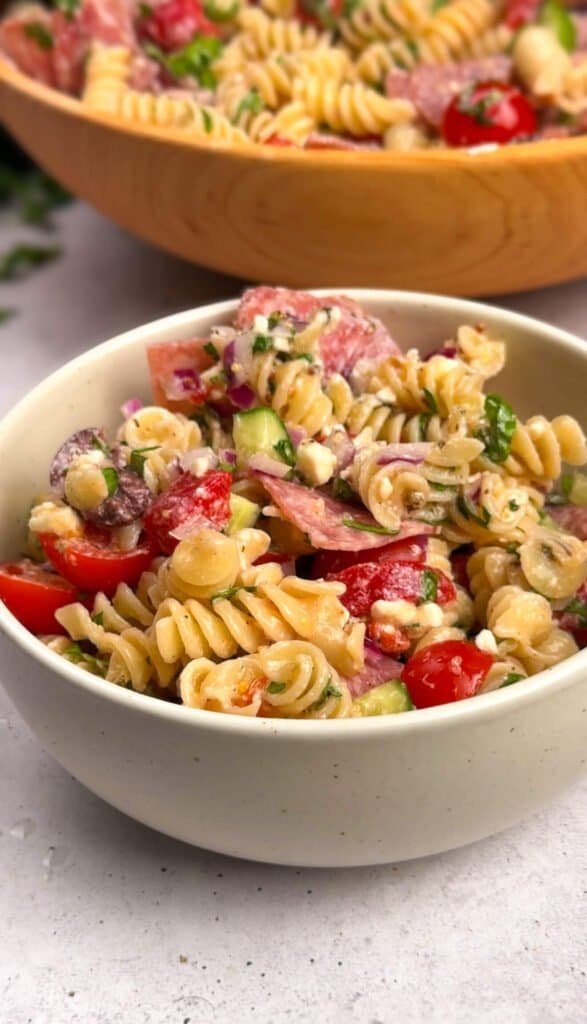
The pasta salad that converted me. I never had cold pasta a day in my life before moving to the US – and now this Mediterranean version is on my summer table every single year without fail. Salami, feta, Kalamata olives, fresh herbs, homemade Italian dressing. Make it the night before. Trust the process.
Pasta salad was not part of my world growing up.
In Ukraine, pasta was a side dish or a full plate of something warm – tossed with butter, served alongside a schnitzel, or cooked into a soup. The idea of cold pasta dressed in vinaigrette and mixed with vegetables? It simply did not exist in my kitchen, or anyone’s kitchen I knew. Pasta was meant to be eaten hot, immediately, with a fork.
Then I moved to the United States. And somewhere in my first few summers here, a coworker brought a giant bowl of pasta salad to a corporate potluck. I remember looking at it skeptically. I remember trying one small forkful out of politeness.
And then I went back for thirds…
Something about the combination – chewy pasta, bright acidity, savory mix-ins, a dressing that had soaked into every piece – was completely new to me and completely addictive. I became a little obsessed. I started making it at home, experimenting, adjusting. And over time, this Mediterranean version became the one I make on repeat. The one that gets the most compliments at summer tables. The one friends ask me to bring to their cookouts, and the one my daughter requests every year before 4th of July.
The same crowd that loves this salad tends to love these Smoked Salmon Crostini as an appetizer while the grill heats up.
The flavors here are deeply savory and layered – salty salami, creamy feta, briny Kalamata olives, sweet roasted peppers, fresh tomatoes, and a homemade Italian dressing with garlic, red wine vinegar, and just a touch of honey to balance it all. It is make-ahead friendly, no-mayo, and honestly tastes better the next morning than it does the day you make it.
If pasta salad was not part of your table before, I hope this one changes that!
Why You’ll Love This Recipe
Flavor in every bite. This is not a bland pasta salad. Every ingredient pulls its weight – the salami adds meatiness and salt, the feta brings creaminess and tang, the olives give briny depth, the roasted peppers add sweetness, and the dressing ties it all together with garlic and herbs.
Make-ahead friendly. You can make this up to 24 hours ahead, which is exactly what you want for summer entertaining. It chills beautifully and the flavor develops over time.
No mayo. The dressing is a clean, olive oil-based Italian vinaigrette. That means it holds up well at outdoor gatherings without any worries about food safety in the heat.
Serves a crowd easily. One pound of pasta feeds 8 as a side, and you can scale it up without any difficulty.
The one people ask about. Every time I bring this to a gathering, someone asks for the recipe. That is the real measure of a good dish.
Ingredients and Why Each One Matters
For the Salad
Rotini or fusilli pasta (1 lb) The shape is not decorative – it is functional. The spiral ridges of rotini or fusilli grab and hold the dressing in a way that smooth pasta simply cannot. Every bite carries flavor. You could use penne or farfalle in a pinch, but the spiral shapes are worth seeking out.
Salami (5 oz, quartered or diced) Good salami brings salt, fat, and depth that makes this salad feel like a full meal rather than a side dish. Look for a hard or dry-cured salami – it holds its texture even after a night in the fridge. Genoa salami works beautifully here. For a vegetarian version, artichoke hearts or sun-dried tomatoes are excellent substitutes (though the flavor profile shifts significantly – both are delicious in their own right).
Feta cheese (5 oz, crumbled) Feta is salty, tangy, and creamy all at once, and it distributes through the salad in a way that seasons every bite. Use a block of feta packed in brine and crumble it yourself – it has far more flavor and better texture than pre-crumbled. Bulgarian or French feta both work well.
Cherry tomatoes (1½ cups, halved) Choose the ripest, most flavorful tomatoes you can find. In summer, this is easy – farmers market cherry tomatoes in season are incomparably sweet. They bring freshness and a little acidity that brightens the whole dish.
Persian cucumber (1, diced) Persian cucumbers are sweeter and less watery than standard English cucumbers, which matters in a pasta salad. They stay crisp without making the dressing watery. If using a regular cucumber, remove the seeds before dicing.
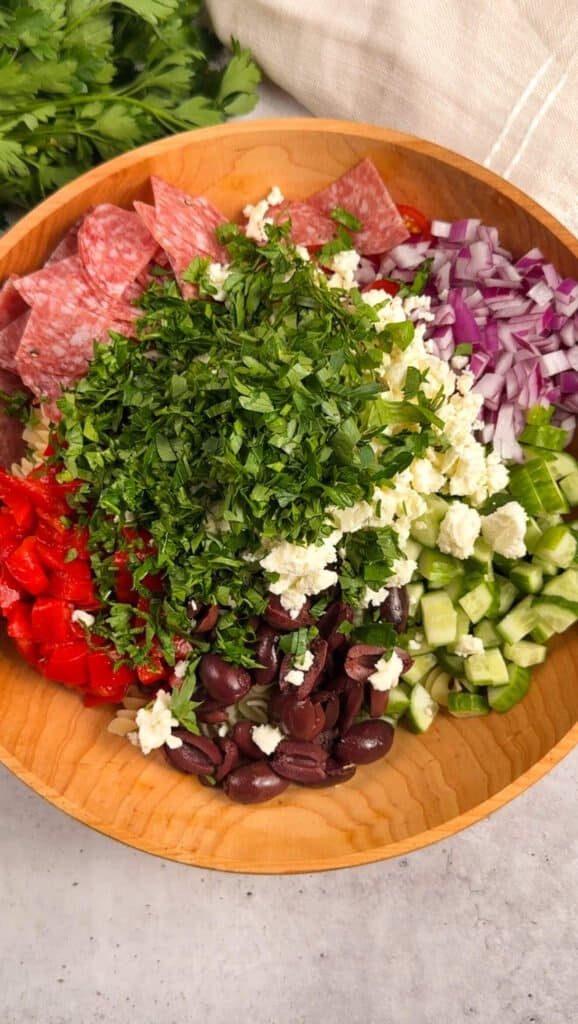
Red onion (½ cup, finely diced) Red onion adds a sharp bite and color. If raw onion is too intense for you, soak the diced onion in cold water for 10 minutes before adding – it takes the edge off while keeping the flavor.
Kalamata olives (½ cup, halved) These are the backbone of the Mediterranean flavor profile here. Kalamata olives are meaty, rich, and deeply briny – they are not interchangeable with canned black olives, which taste flat by comparison. If you can buy them from the olive bar at a good grocery store rather than a jar, do it.
Roasted red peppers (½ cup, sliced) Roasted red peppers add a silky sweetness that contrasts beautifully with all the salty and acidic components. Jarred roasted peppers are perfectly fine and convenient – drain them well and pat dry before slicing.
Fresh parsley and fresh basil (¼ cup each) The herbs are not optional. They are what lifts this salad from good to bright and alive. Tear the basil rather than chop it – chopping bruises the leaves and turns them dark. Add both herbs right before the final toss so they stay fresh and vibrant.
For the Homemade Italian Dressing
Extra virgin olive oil (½ cup) Use a good one. This dressing is simple enough that the quality of the olive oil is noticeable. A grassy, peppery olive oil adds character.
Red wine vinegar (3 tbsp) Red wine vinegar has a brightness that apple cider vinegar and white wine vinegar do not replicate quite the same way. It is the right acid for this dressing.
Fresh lemon juice (1 tbsp) Just a tablespoon adds a different kind of brightness than the vinegar – lighter, more floral. It is a small addition that makes the whole dressing feel more alive.
Garlic (2 cloves, minced) Fresh garlic is non-negotiable. Garlic powder is not the same here – you want the real, pungent punch that mellows slightly as it sits overnight with the salad.
Dijon mustard (1 tsp) Dijon is the emulsifier – it helps the olive oil and vinegar actually come together into a cohesive dressing rather than separating immediately. It also adds a subtle, savory depth that is not immediately identifiable but is very much present.
Dried oregano and dried basil (1 tsp + ½ tsp) A quick tip worth knowing: rub dried herbs between your palms before adding them to any dressing. This releases the essential oils and activates the flavor significantly. It takes three seconds and makes a real difference.
Honey (1 tsp) A small amount of honey rounds out the acidity and brings all the flavors into balance. The dressing does not taste sweet – it just does not taste sharp.
Salt and black pepper (1 tsp salt, ½ tsp pepper) Season the dressing well. Cold dishes need more seasoning than warm ones, which is why the recipe also calls for tasting and adjusting salt right before serving.
Flavor and Texture Walkthrough
This pasta salad hits in layers.
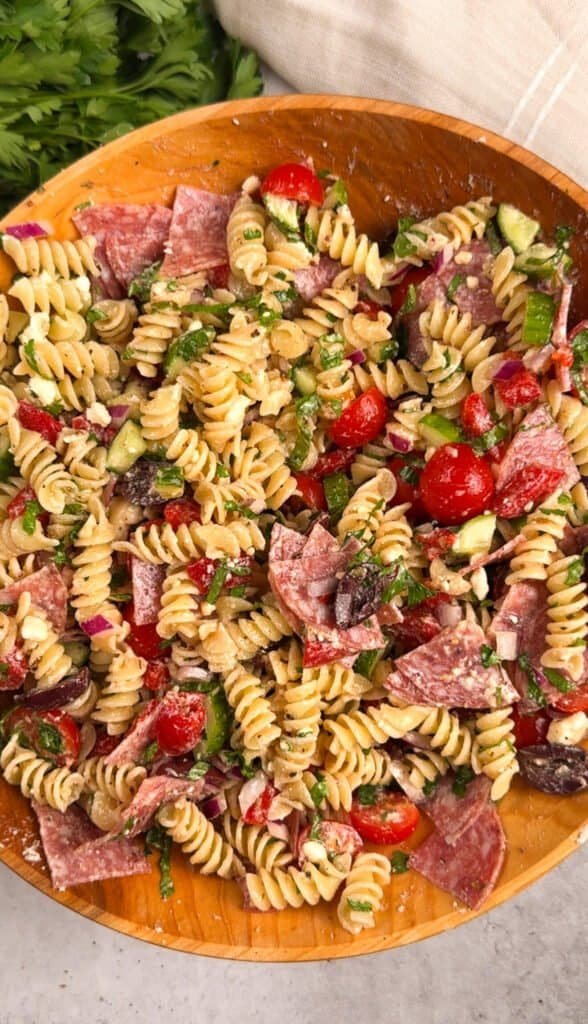
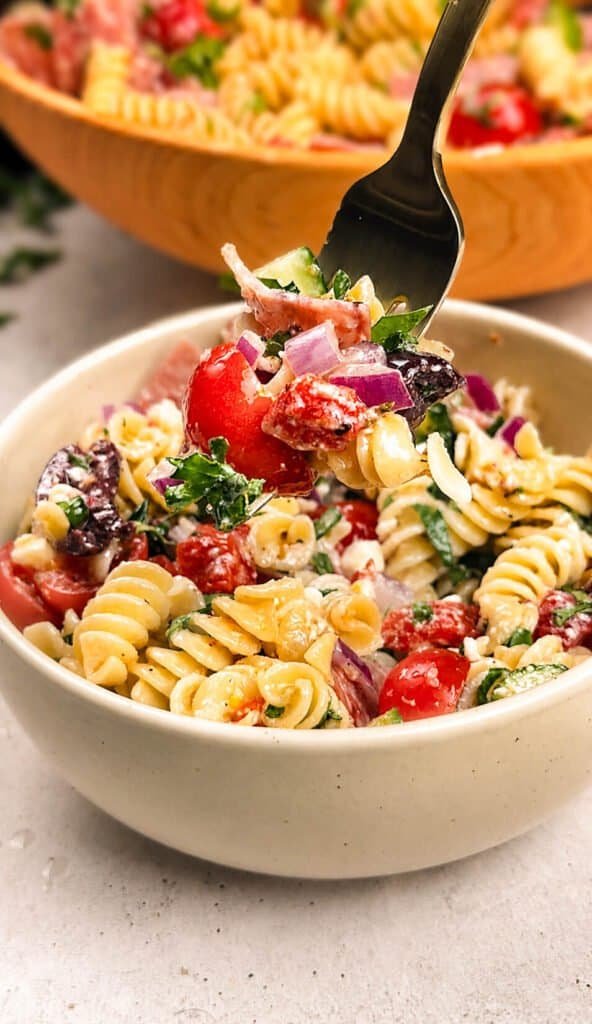
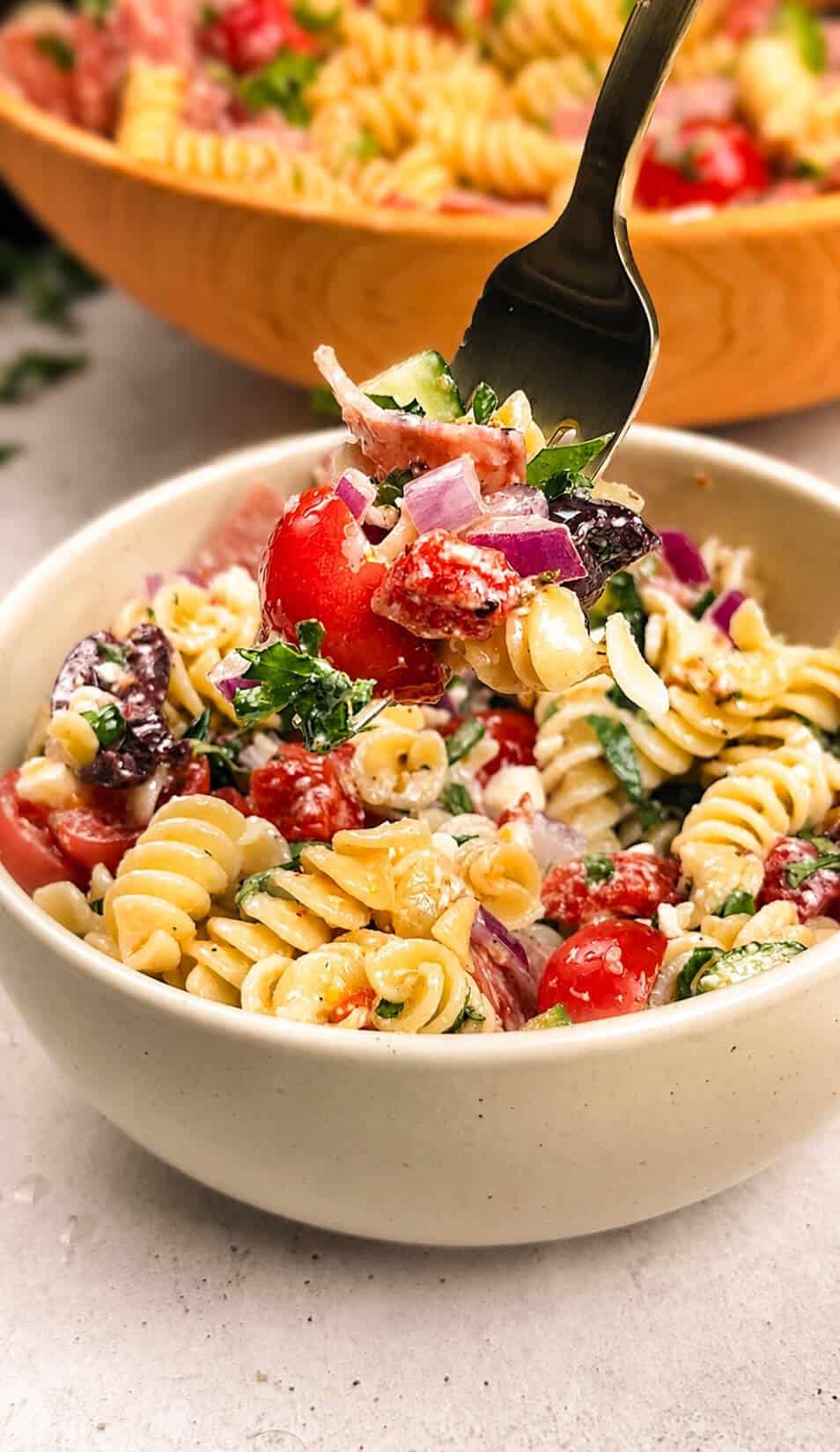
The first thing you notice is the aroma – garlic, fresh basil, that clean herbaceous smell of good olive oil. Then the first bite: the pasta is tender but with a satisfying chew, coated in a dressing that is bright and tangy with a savory, garlicky depth. A piece of feta crumbles against your tongue – creamy and salty. A half-olive brings a briny punch. A bite of roasted pepper adds a silky sweetness. The salami is meaty and rich. The cherry tomato bursts with a little acidity. The cucumber stays crisp and cool.
It is a dish where every single ingredient has a reason for being there, and they all coexist without competing.
After a night in the fridge, the flavors meld and deepen. The pasta absorbs the dressing more completely. The garlic mellows. The herbs settle into everything. This is genuinely one of those recipes that is better on day two.
Want something lighter alongside it? My peach burrata salad makes a great starter.
If you want to turn this into more of a spread, it pairs really well next to something heartier like my Creamy Balsamic Chicken Pasta Salad, the rich, creamy dressing plays nicely against this one’s lighter honey-balsamic vinaigrette.
Step-by-Step Instructions
Step 1: Cook the Pasta
Bring a large pot of water to a boil. Salt it heavily – it should taste like the sea. This is the only opportunity to season the pasta itself, and it matters enormously for the final flavor.
Cook the rotini until al dente – tender but with a slight chew in the center. Check the package, but start tasting a minute or two early. Pasta salad pasta should be slightly firmer than what you’d eat hot, because it continues to soften as it absorbs the dressing.
Drain the pasta, then rinse briefly with cold water. You want to stop the cooking and cool it slightly, but not make it ice cold – warm pasta absorbs dressing far more efficiently than cold pasta. This is the most important technique in the entire recipe.
Step 2: Make the Dressing
Add olive oil, red wine vinegar, lemon juice, minced garlic, Dijon, honey, salt, and pepper to a jar or bowl. Before adding the dried herbs, rub them between your palms over the bowl – you’ll smell the difference immediately. Whisk everything together until the dressing is fully emulsified and slightly thickened. It should look cohesive, not separated.
Step 3: Dress the Warm Pasta
Transfer the drained pasta to a large mixing bowl while it is still warm. Pour two-thirds of the dressing over the pasta and toss well to coat. This step is where the flavor foundation is built. The pasta will drink up the dressing as it cools, and what you get after refrigeration is a deeply seasoned base rather than underdressed noodles with toppings sitting on top.
Let the pasta cool to room temperature, about 15 minutes.
Step 4: Add the Mix-Ins
Add the salami, feta, cherry tomatoes, cucumber, red onion, Kalamata olives, roasted red peppers, parsley, and torn fresh basil. Toss gently to combine – you want everything distributed evenly but you do not want to smash the feta or bruise the tomatoes. A folding motion works better than aggressive stirring.
Step 5: Chill, Then Finish
Cover the bowl and refrigerate for at least one hour. Right before serving, pour the reserved dressing over the top and toss again. Taste. Add more salt if needed – chilled food almost always needs a little more seasoning than you’d expect. Cold suppresses flavor, so be generous.
Serve cold or at room temperature.
Expert Tips for the Best Mediterranean Pasta Salad
Dress the pasta warm. This is the single most impactful technique. Warm pasta is porous and absorbent; cold pasta is not. If you skip this step and add the dressing after the pasta has fully cooled, the dressing just coats the surface and eventually puddles at the bottom of the bowl.
Reserve dressing for serving. Adding fresh dressing right before serving brightens everything and compensates for what the pasta has absorbed overnight. Do not skip this step.
Salt in two stages. Season the pasta water aggressively, and then taste and season again right before serving. Cold salads need more salt than you think.
Make it 24 hours ahead. This salad is significantly better the next day. The dressing permeates every element, the garlic mellows, and the flavors round out. If you have time, make it the day before your event.
Add fresh herbs last. Basil wilts and turns dark if added too early. Keep it refrigerated separately and toss it in just before serving, or add it in step 4 knowing it will soften but still taste good.
Use block feta. Pre-crumbled feta is drier and less flavorful than feta crumbled from a block. The difference is noticeable.
Let it come to room temperature before serving (optional). Straight from the fridge, the olive oil will be slightly thick and the pasta will feel a little firm. Letting it sit at room temperature for 15–20 minutes before serving loosens everything up and makes it feel more lively. This is especially worth doing for outdoor summer parties.
Vegetarian version. Swap the salami for artichoke hearts or sun-dried tomatoes – or use both. The salad is still deeply satisfying without the meat.
Serving Ideas
This Mediterranean pasta salad was built for summer tables, which means it belongs anywhere there is a grill and a crowd. Serve it alongside:
- Grilled chicken thighs, burgers, or hot dogs
- Ribs or pulled pork
- A simple green salad
- Garlic bread or a good crusty baguette
It also works beautifully as a standalone lunch – packed in a container and taken to work, a picnic, or a beach day.
If you want to make it a heartier main dish, add grilled shrimp or sliced grilled chicken on top at serving.
If you love summer salads at the table, my Strawberry Arugula Salad with Burrata is another one worth making this season.
Rounding out a Mediterranean spread? My Mediterranean tomato and olive dip is an easy, no-cook addition that takes ten minutes.
Make-Ahead and Storage
Make-ahead: This salad can be made up to 24 hours in advance. Store covered in the refrigerator. Add the reserved dressing and fresh herbs just before serving.
Storage: Leftovers keep well for up to 3 days in an airtight container in the refrigerator. The pasta will continue to absorb the dressing as it sits – if it seems dry on day two, drizzle with a little extra olive oil and red wine vinegar, toss, and taste for seasoning.
Does it freeze? No. Pasta salad does not freeze well. The pasta becomes mushy and the vegetables break down.
FAQ
Can I make Mediterranean pasta salad the night before? Yes – and you should! This is one of those recipes that genuinely improves with overnight refrigeration. The dressing penetrates the pasta, the flavors meld, and everything tastes more cohesive. Make it the day before your cookout or party for the best results. Reserve some dressing to add fresh at serving time.
What pasta shape is best for Mediterranean pasta salad? Rotini and fusilli are the top choices because their spiral shape holds dressing and small ingredients in the ridges. Farfalle (bow ties) and penne are good alternatives. Avoid long pasta shapes like spaghetti or fettuccine – they do not work well in cold salads.
How do I keep pasta salad from getting dry? The warm pasta trick is key – dressing the pasta while it is still warm allows it to absorb flavor properly from the start. Additionally, reserving one-third of the dressing to add at serving time keeps the salad tasting fresh and well-coated even after hours in the refrigerator.
Can I use store-bought Italian dressing instead of homemade? You can, and it will still be good. But the homemade dressing in this recipe is genuinely worth the extra five minutes. Homemade gives you control over garlic intensity, acidity, and the balance of flavors – and it has no artificial preservatives or excess sugar that many bottled dressings contain.
How long does Mediterranean pasta salad last in the fridge? Up to three days in an airtight container. The quality is best within the first two days. After that, the vegetables begin to soften and the pasta continues to absorb moisture.
Is this pasta salad gluten-free? The recipe as written is not gluten-free because of the pasta. You can substitute a good-quality gluten-free pasta – look for one made from rice flour or a blend – and follow the same cooking and dressing instructions. The texture may differ slightly.
Can I add other vegetables? Absolutely. Sun-dried tomatoes, artichoke hearts, pepperoncini, and chopped bell peppers are all delicious additions. Baby spinach or arugula can be stirred in at serving time for extra greens. The recipe is very flexible.
What is the best way to serve this at a BBQ? Make it the night before and refrigerate it. Pull it out about 20–30 minutes before the party, add the reserved dressing, toss, and taste for seasoning. It can sit at room temperature for about 2 hours safely since there is no mayo in the dressing. Serve in a large bowl with a big spoon for self-serving.
For a starter to pair with this before the grill goes on, this Baked Tomato Bruschetta Dip is always a hit.
And if you’re building out a full summer entertaining spread, browse these savory cheesecake appetizers that go beautifully with a pasta salad table.

Mediterranean Pasta Salad
Ingredients
Method
- Cook the pasta Bring a large pot of heavily salted water to a boil. Cook pasta until al dente according to package directions. Drain and rinse briefly with cold water. Transfer to a large bowl while still warm.
- Make the dressing Add all dressing ingredients to a jar or bowl. Before adding the dried herbs, rub them between your palms to release their oils. Whisk until fully emulsified.
- Dress the warm pasta Pour two-thirds of the dressing over the warm pasta and toss well. Let cool to room temperature, about 15 minutes. (Dressing warm pasta is the key to a flavorful base – the pasta absorbs the dressing as it cools.)
- Add the mix-ins Add salami, feta, cherry tomatoes, cucumber, red onion, olives, roasted peppers, parsley, and basil. Toss gently to combine.
- Chill and finish Refrigerate for at least 1 hour. Just before serving, add the remaining dressing and toss again. Taste and adjust salt – chilled food almost always needs a little more.
Notes
- The warm pasta trick. Always dress the pasta while it is still warm. Warm pasta absorbs dressing; cold pasta does not. This is what separates a deeply flavorful pasta salad from a bland one.
- Make ahead. This salad can be made up to 24 hours in advance and actually tastes better the next day. Store covered in the refrigerator and add the reserved dressing just before serving.
- Storage. Keeps in an airtight container in the refrigerator for up to 3 days. If it seems dry, drizzle with a little extra olive oil and red wine vinegar before serving.
- Vegetarian version. Swap the salami for artichoke hearts or sun-dried tomatoes.
- Feta tip. Use block feta packed in brine and crumble it yourself. Pre-crumbled feta is drier and less flavorful.
- Red onion tip. If raw onion is too sharp for you, soak the diced onion in cold water for 10 minutes before adding. It softens the bite without losing the flavor.