
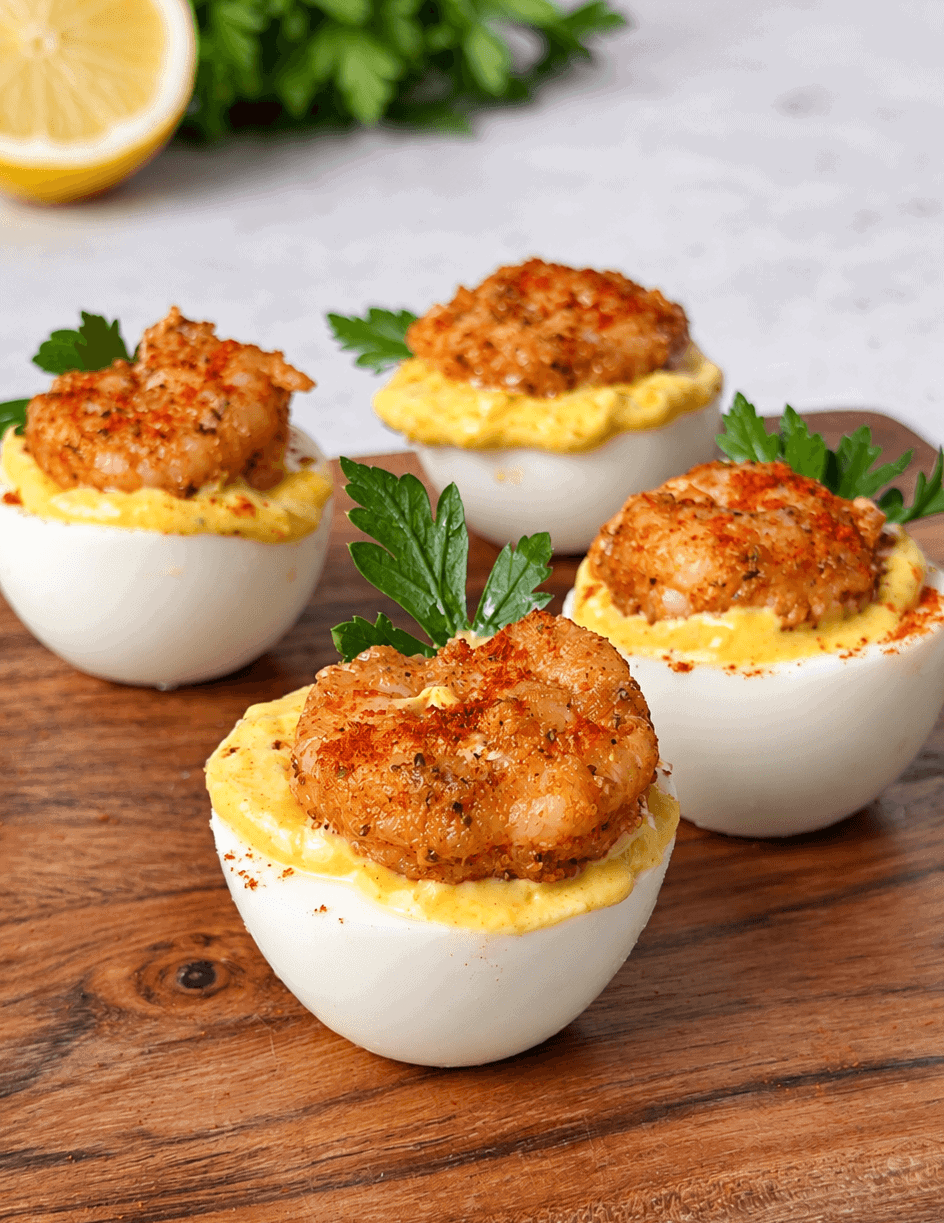
I wanted these Cajun shrimp deviled eggs to look like something I would put out when friends come over for drinks. A generous shrimp on each egg, a little color on top, and enough filling underneath to make the whole bite work. They’re familiar, but the shrimp makes them feel a little more special without turning them into a complicated appetizer.
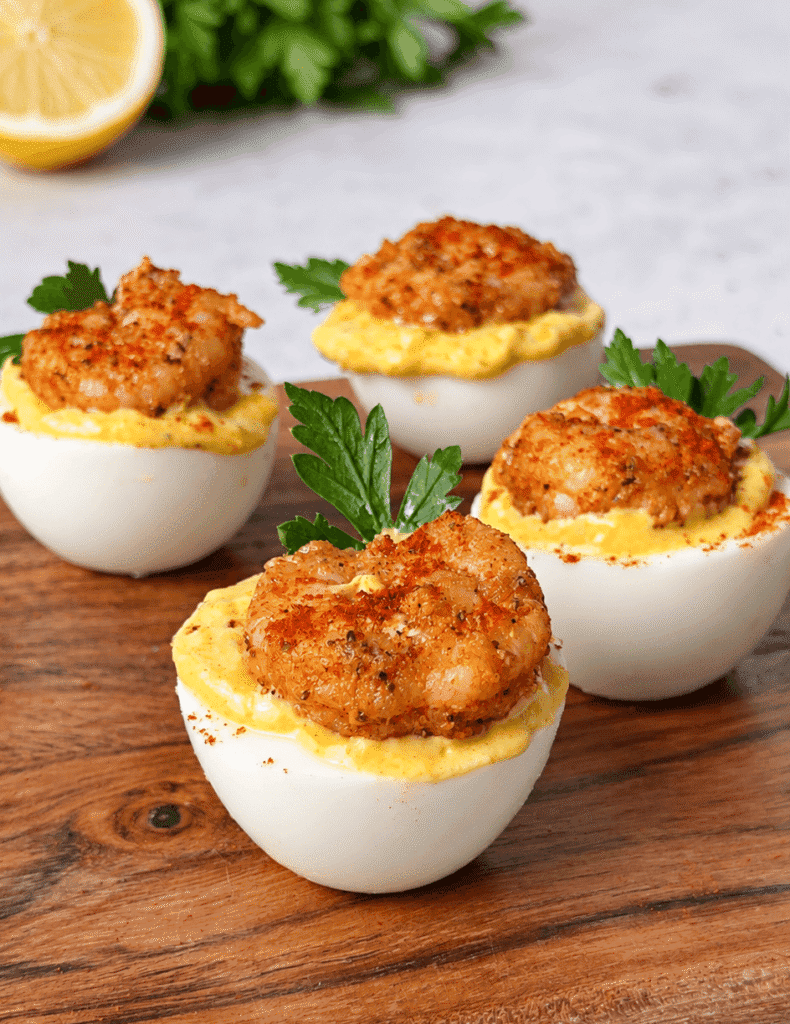
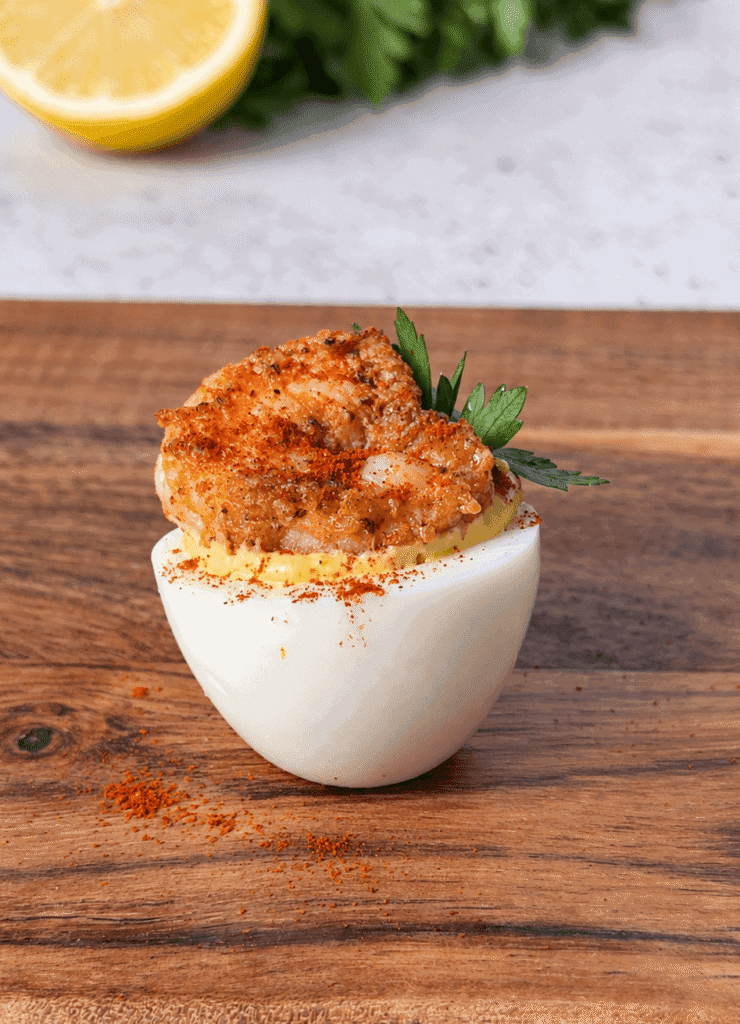
For this version, I cut the eggs across the middle so they stand upright. I like how that gives the shrimp its own little base and keeps the filling visible around the edges. You can see exactly what you’re getting before you pick one up.
If you’ve made my Mediterranean deviled eggs, you already know I like giving this classic appetizer a different direction. Here, the focus is on the seasoned shrimp and a creamy filling with enough tang to keep each bite from feeling heavy.
I’d serve these before dinner or as part of a table of small plates. They also make sense for a holiday gathering, but there’s nothing seasonal about them. A platter, a few friends, and something cold to drink are enough of a reason.
Why You’ll Love These Cajun Shrimp Deviled Eggs
- A whole shrimp on every egg. The topping is a real part of the appetizer, with enough shrimp to taste alongside the filling.
- Simple ingredients with room to adjust. You can keep the heat gentle or make it more noticeable without changing the whole recipe.
- Easy to prepare in stages. The components can be refrigerated separately, leaving assembly for closer to serving.
- A pretty presentation without special equipment. A spoon works for filling the eggs, and the upright shape lets you serve them on a flat platter.
Ingredient Notes
Choosing shrimp that fit the eggs
For this recipe, 31–40 count shrimp give you a generous topping. The count means there are approximately 31 to 40 shrimp per pound. It’s a more useful shopping guide than words such as “medium” or “large,” which can vary between brands.
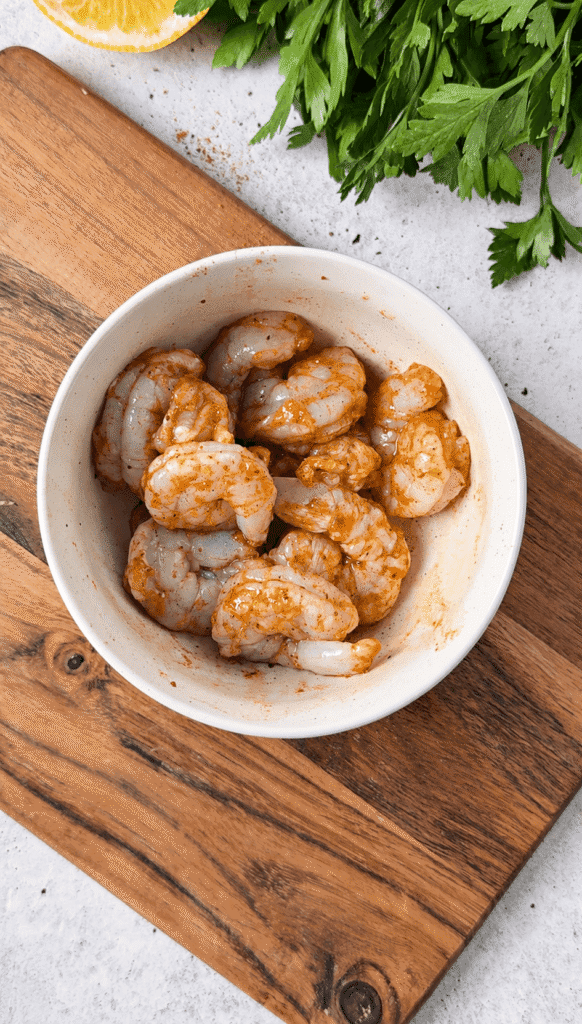
Look for raw shrimp that are already peeled and deveined if you want to save yourself some preparation. Frozen shrimp are fine, too. What matters most for the finished dish is that they’re properly thawed and thoroughly dried before cooking.
Remove the tails. These eggs are meant to be picked up and eaten, and a tail makes that unnecessarily awkward. I also like choosing shrimp of a similar size so the platter looks consistent and the shrimp cook at roughly the same pace.
Smaller shrimp will work if that’s what you have. With much larger shrimp, the topping can become difficult to balance on the filling.
Eggs and the texture of the filling
Large eggs give the shrimp a useful base without making each portion too big. For the batch pictured, I lowered the eggs into boiling water, cooked them for eight minutes, and transferred them straight to an ice bath.
That’s my timing for this version, but egg size and starting temperature affect the result. Eight minutes can leave a softer center than a traditional hard-boiled egg. The recipe card includes that distinction so you can choose the texture you prefer.
The yolks also affect how much mayonnaise the filling needs. A softer yolk needs less help becoming creamy than a firm, fully cooked one. The finished filling should hold a small mound rather than spread across the white.
Cajun seasoning
This is the ingredient I would pay the most attention to when seasoning the dish. Some blends are noticeably salty, some have a stronger cayenne kick, and others lean more heavily on paprika and garlic.
Since the seasoning goes into both the filling and the shrimp, you don’t need to add salt automatically. Taste the filling first. Remember that it will be eaten with seasoned shrimp, so it doesn’t need to deliver all the salt and spice on its own.
If your blend is particularly salty, use a little less and adjust from there. A salt-free Cajun blend gives you more control, but you’ll need to season the filling separately.
The same seasoning is useful in my Cajun shrimp crostinis, if you’re looking for another way to use the jar.
Mayonnaise, mustard, and lemon
Regular full-fat mayonnaise gives the filling a smooth texture and helps it hold its shape. A thinner mayonnaise or dressing-style substitute can make the filling softer, which matters when it needs to support a shrimp.
Dijon adds a little sharpness without leaving large pieces in the filling. Smooth Dijon is my choice here, though whole-grain mustard can work if you don’t mind the texture.
The lemon has a small but useful role. You shouldn’t feel as though you’re eating lemon-flavored eggs. It simply adds some brightness to a rich filling. More isn’t necessarily better, especially because extra juice also loosens the mixture.
Hot sauce and the finishing garnish
A vinegar-based hot sauce works well with the filling. Its heat depends on the brand, so the amount in the card is a starting point rather than a promise that every batch will taste equally spicy.
For serving, I used smoked paprika and fresh cilantro leaves. The paprika adds a smoky finish, and the leaves give the eggs a little freshness and color.
Keep the dusting light. A thick layer of dry paprika can distract from the creamy filling. Choose small, tender cilantro leaves that fit neatly beside the shrimp and are easy to eat.
The Upright Presentation
The crosswise cut is what gives these eggs their little cup shape. Compared with the usual lengthwise halves, they look taller and leave a smaller surface for the topping.
The important detail is the base. You only need a tiny flat area for an egg half to stand. Removing too much white can open the bottom of the yolk cavity, leaving you with filling that has nowhere to stay.
Eggs aren’t identical, so the halves won’t all look exactly alike. Some will be wider, some slightly taller. That’s fine. A consistent amount of filling and similarly sized shrimp will make the platter feel cohesive.
For serving, leave enough space between the eggs that someone can pick one up without disturbing its neighbor. A tightly packed platter may look full, but it’s harder to use once people start reaching for appetizers.
You can also cut the eggs lengthwise. That gives you a wider, lower base and is a practical option if you already have a deviled egg tray. The flavor and yield stay the same.
What Makes the Filling Work
For shrimp deviled eggs, the filling needs to do a little more than it would in a plain deviled egg. It has to sit inside the white, look generous, and support the topping.
Think creamy but stable. A little texture from mashed yolks is perfectly fine, especially if you’re spooning the filling. You don’t need to blend it until it becomes completely uniform just for the sake of appearance.
If you prefer a piped finish, a wide tip is easier to work with than a small decorative one. It allows the filling through without requiring you to make it thinner. Once the shrimp goes on top, much of the piping will be covered anyway.
Keep the mound fairly low. Too much height makes the shrimp less secure and turns a manageable appetizer into something that’s difficult to bite.
Cold filling is also easier to handle. If it softens while you’re working, a short rest in the refrigerator can help. However, chilling won’t fully correct a mixture with too much liquid, so it’s worth being restrained with the mayonnaise and lemon from the beginning.
Three Tips That Make a Difference
Dry shrimp give you better color
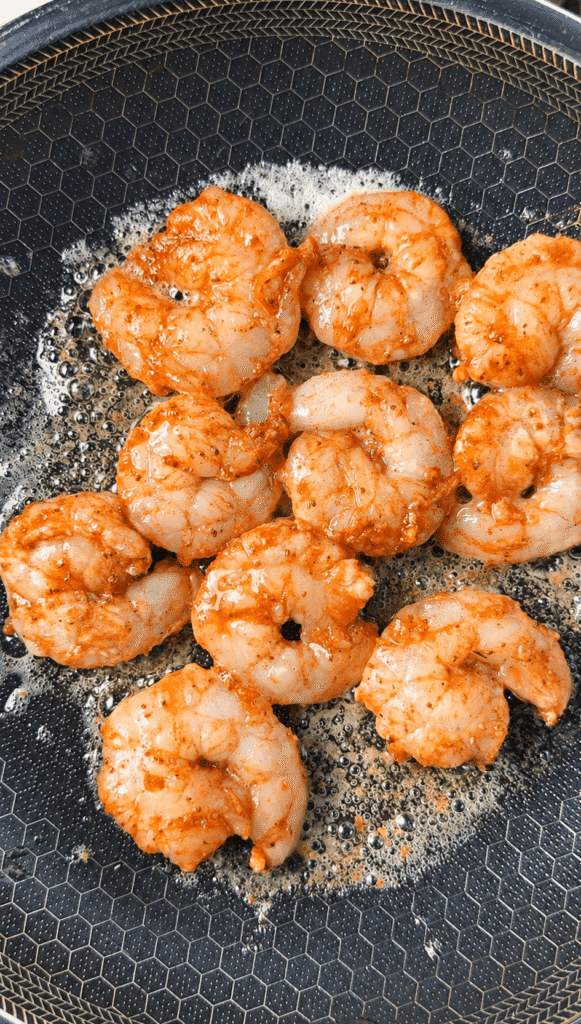
Shrimp often release quite a bit of moisture after thawing. If that moisture goes into the skillet, the shrimp can steam before the seasoning has a chance to develop any color.
Take drying them seriously. This is more useful than leaving them in the pan longer while waiting for them to brown.
You’re looking for cooked shrimp with some color on the seasoned surface. They don’t need a dark crust all over. Trying to force that result can leave the shrimp firm and chewy, especially at this size.
Taste the filling with the topping in mind
A spoonful of filling won’t taste exactly like the assembled egg. The plain white softens the seasoning, while the shrimp adds another layer of it.
Before deciding that the filling needs more salt or hot sauce, consider the whole bite. If you have a less attractive egg half, it makes a useful tasting portion.
This is particularly helpful with a new Cajun blend. It’s much easier to add a little seasoning than to correct a filling that has become too salty.
Let the shrimp cool before assembly
Warm shrimp can soften the filling and leave moisture on its surface. Give them time to cool before they go onto the eggs.
Transfer them out of the hot skillet once they’re cooked. Otherwise, the residual heat continues cooking them while you work on something else.
For a neat finish, use the shrimp themselves as the topping rather than spooning the pan juices over the eggs. A little butter clinging to them is enough. Extra liquid can run down the whites and collect on the platter.
Variations and Substitutions
For a milder version
Choose a mild Cajun seasoning and reduce the hot sauce. The shrimp will still have plenty of flavor, and the filling will keep its tang from the Dijon and lemon.
I would adjust those ingredients before changing the amount of mayonnaise. Adding more mayonnaise to soften the heat can leave you with a filling that’s too loose.
For a mixed group, you can also serve hot sauce separately. People who want more heat can add it without making the whole platter spicy.
If cilantro isn’t your preference
Small flat-leaf parsley leaves are an easy substitute. Chives also work, though they create a different look from the leafy garnish in my photo.
You don’t need several herbs at once. One fresh garnish is enough here.
If you’d rather make an egg appetizer where herbs are part of the filling itself, my Green Goddess deviled eggs go in that direction.
If you only have cooked shrimp
Cooked shrimp can be used, but they won’t behave like raw shrimp in the skillet. Trying to build a browned surface on shrimp that are already cooked can quickly make them tough.
For the recipe as photographed, raw shrimp are the better choice. They give you more control over the seasoning and cooking.
If using cooked shrimp, keep any reheating brief and don’t follow the raw-shrimp cooking time in the card. The goal is to avoid cooking them all over again.
For another deviled egg option on the table
If you’re serving guests who don’t eat shrimp, a separate platter makes more sense than trying to adapt every portion of this recipe.
My Loaded Pickle Deviled Eggs offer a different flavor and some crunch. Keep the platters and serving utensils separate, especially when accommodating a shellfish allergy.
You can make a smaller amount of each rather than doubling one recipe. That gives people a choice without leaving you with an oversized batch.
Make-Ahead and Storage
For the freshest-looking platter, I would prepare the components ahead and assemble the eggs closer to serving.
The whites, filling, and cooked shrimp can be kept in separate covered containers in the refrigerator. A piping bag is convenient for the filling, but a small container works just as well.
Preparing everything the day before is a practical option when the eggs are fully cooked. Keep the components at 40°F or below, and leave the garnish until assembly. Cilantro looks better when it hasn’t spent the night pressed against a lid or damp shrimp.
If you’ve already assembled the eggs, use a container with enough height to protect the toppings. A shallow lid can push the shrimp into the filling and flatten the garnish. Keep the container level during transport.
For quality, I’d plan to enjoy assembled leftovers within two days, assuming the eggs and shrimp were fully cooked and promptly refrigerated. Count from when you cooked the components, not from when you assembled the platter. Don’t use standard hard-cooked egg storage guidance for eggs with undercooked centers.
These are best served chilled. Put out a smaller platter and replenish it from the refrigerator if people will be grazing for a while. Egg dishes should not sit unrefrigerated for more than two hours, or one hour when the temperature is above 90°F.
I wouldn’t freeze them. The texture of the egg whites and the filling won’t be the same after thawing.
Frequently Asked Questions
Can I make shrimp deviled eggs the day before?
Yes, with fully cooked eggs and shrimp. For the neatest result, refrigerate the components separately and assemble them the next day.
If you need to assemble them in advance, protect the toppings with a roomy lid and add the cilantro shortly before serving. There’s no need to reheat the shrimp. These are a chilled appetizer.
Why is my deviled egg filling too runny?
The yolks may be softer than expected, or there may be more mayonnaise or liquid than they can hold. Even eggs from the same carton can vary a little in size.
Chilling helps a warm filling firm up, but a very loose mixture may need an additional cooked yolk. Avoid adding more dry seasoning just to thicken it, because that changes the salt and heat without solving the underlying problem.
The easiest prevention is to hold back some mayonnaise until you can see the texture.
Do I need to pipe the filling?
No. A small spoon is enough, and the shrimp covers most of the surface.
Piping is useful when you want consistent portions or a cleaner edge, but it isn’t essential to the recipe. If you use a bag, choose a wide opening so the filling passes through easily.
Focus on keeping the filling inside the egg and leaving a stable place for the shrimp.
Can I double this recipe for a party?
Yes. Double the ingredients and use a larger serving platter or two smaller ones.
Cook the shrimp in batches if necessary. Crowding them into a small skillet traps moisture and makes even cooking more difficult.
For the seasoning, taste as you go rather than assuming a doubled amount of salt is needed. Cajun blends vary enough that the final adjustment is best made after the filling is mixed.
What to Serve with Cajun Shrimp Deviled Eggs
I’d pair these with something crisp or vegetable-based so the table has a little variety. The eggs already bring a creamy texture and a substantial seafood topping.
My Artichoke Crostini with Sun-Dried Tomatoes would fit well alongside them. The toasted bread adds crunch, and the artichoke topping gives guests a different kind of bite.
For something that can be shared from a bowl, try the Marinated Mozzarella Dip with Sun-Dried Tomatoes. Put the bread or crackers beside it rather than crowding them around the eggs.
If these are appetizers before dinner, I’d plan on two pieces per person when there are other things to eat. For a longer gathering with a small selection of food, make extra. The recipe yields twelve individual pieces, which is six servings at two pieces each.
A flat platter makes the upright presentation easy to see. Keep the garnish close to the eggs rather than covering the serving surface with loose herbs. The shrimp already gives you the height and color, so the rest of the presentation can stay simple.
This post contains affiliate links. If you purchase through them, I may earn a small commission at no extra cost to you.

Cajun Shrimp Deviled Eggs
Ingredients
Method
- Bring a saucepan of water deep enough to cover the eggs to a boil.
- Gently lower the eggs into the boiling water and cook for 8 minutes. See the egg-doneness note below.
- Immediately transfer the eggs to an ice bath and let cool completely.
- Peel the eggs.
- Cut the eggs in half crosswise.
- Trim a very thin slice from each rounded end so the halves stand upright, taking care not to cut through to the yolk cavity.
- Gently remove the yolks and place them in a bowl.
- Mash the yolks with 2 tbsp mayonnaise, Dijon mustard, lemon juice, hot sauce, Cajun seasoning, and garlic powder.
- Add the remaining mayonnaise a little at a time, only as needed for a creamy filling that holds its shape.
- Taste the filling and add salt only if needed.
- Spoon or pipe the filling into the egg whites.
- Refrigerate the filled eggs while preparing the shrimp.
- Pat the shrimp thoroughly dry.
- Toss the shrimp with the Cajun seasoning.
- Heat the olive oil in a skillet over medium-high heat.
- Add the shrimp in a single layer and cook for approximately 1½–2 minutes.
- Flip the shrimp and add the butter.
- Cook for another 1–2 minutes, just until the shrimp are opaque throughout, reducing the heat if the spices begin to burn.
- Transfer the shrimp to a plate and let cool before assembly.
- Place one shrimp on each filled egg.
- Dust lightly with smoked paprika.
- Garnish with fresh cilantro leaves and keep refrigerated until serving.
Notes
- Egg doneness: I cooked the eggs for 8 minutes after lowering them into boiling water, followed by an immediate ice bath. Results vary with egg size and starting temperature, and this timing can leave softer centers. For fully cooked eggs, extend the cooking time as needed, typically to about 10–12 minutes, until both whites and yolks are firm. Use pasteurized shell eggs if serving with undercooked centers.
- Filling consistency: Softer yolks need less mayonnaise. Start with the smaller amount and add more only if needed.
- Seasoning: Cajun blends vary in saltiness and heat. Taste before adding extra salt.
- Presentation: For traditional deviled eggs, halve the eggs lengthwise and skip trimming the ends.
- Make ahead: With fully cooked eggs and shrimp, prepare the components up to one day ahead and refrigerate separately. Assemble and garnish closer to serving.
- Storage: Keep refrigerated at 40°F or below. For best quality, enjoy within two days of cooking the components. Do not freeze.
- Substitutions: Use small parsley leaves instead of cilantro, if preferred. Smaller raw shrimp also work; adjust cooking time accordingly.