
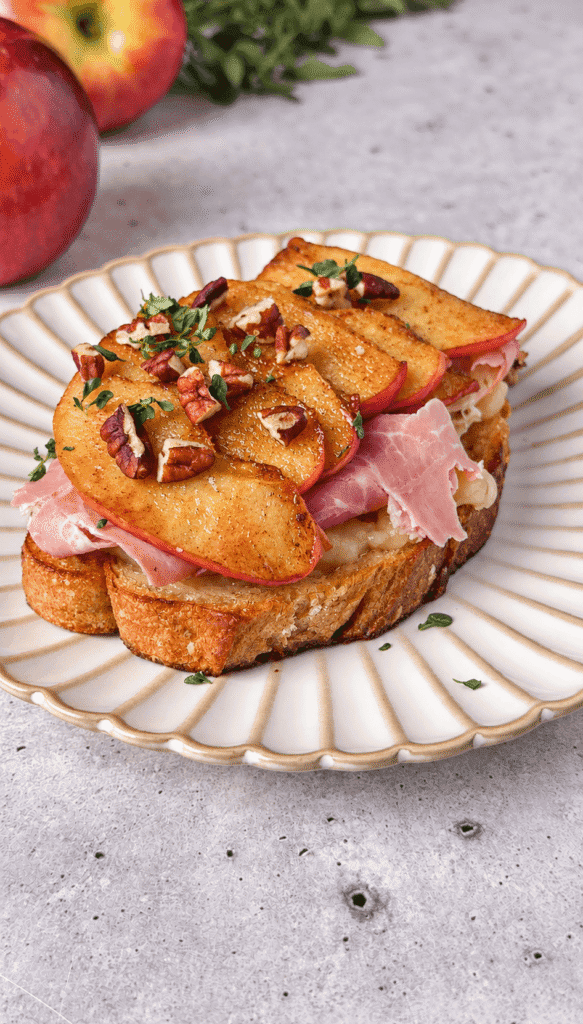
If you have followed me for a while, you know my love for toasts. While I absolutely appreciate a thick slice of bread with just some butter, sometimes toast can be a whole meal. This apple Brie toast with ham and caramelized apples is exactly that kind of toast, and I’d happily make it for lunch on a chilly fall day.
There’s crispy sourdough underneath, with melted Brie and thin slices of ham tucked under warm cinnamon apples. A few chopped pecans add crunch. I finish it with fresh thyme, which brings a little savory flavor back to the sweet apples.
Honeycrisp is my favorite apple here. It has enough sweetness, but also that bit of tartness that works so well with the cheese. Cooked in butter and brown sugar, the slices become tender and glossy while keeping their shape.
If you like my roasted fig and Brie toast with prosciutto, this is another fruit-and-cheese combination to try when apples are in season. You only need half an apple for one toast, and the rest of the ingredients are easy to adjust to what you have. Ham or prosciutto, Brie or Camembert. Keep the bread sturdy and serve it warm.
Why You’ll Love This Apple Brie Toast
- It makes a satisfying meal for one. You can make a single toast without preparing a whole tray or having several portions left over.
- The apples get their own time in the skillet. Cooking them separately lets them soften and develop a buttery cinnamon coating before they go onto the bread.
- You can use what you have. Both ham and prosciutto work, and Camembert is a good alternative to Brie.
- It looks lovely without much arranging. Overlap the apple slices, scatter the pecans, and let some of the ham show around the edges.
Ingredient Notes
Choose a sturdy slice of sourdough
Use one thick slice with enough surface area for the toppings. A wide slice from the middle of the loaf works particularly well. You want room to spread out the apples instead of stacking them into a tall pile that slides off when you cut into it.
Sourdough brings a little tang, which is welcome with the brown sugar and Brie. The crust also gives the toast structure. A rustic country loaf is a good substitute if that is what you have.
Avoid bread with enormous holes through the center. Melted cheese and buttery apple juices can slip straight through them. You do not need a perfectly even crumb, just enough bread to hold lunch together.
Honeycrisp apples are my first choice
Choose an apple that is sweet or sweet-tart and still firm. Honeycrisp is my favorite for this recipe because it has both sweetness and a fresh, slightly tart flavor.
You will need half an apple per toast. The exact number of slices depends on the size of the apple and the bread. Aim for an even layer with a little overlap.
Leave the skin on if you like. It gives the slices a pretty edge and saves a preparation step. If you prefer peeled apples, that works too. Slice them about ¼ inch thick so they have enough body to turn in the skillet without falling apart.
A very soft apple is less suitable here. It can break down before you get those neat slices onto the toast.
Brie or Camembert
One ounce of Brie gives you a layer of cheese underneath the ham and apples. Slice it thinly enough to distribute across the bread rather than leaving one thick piece in the middle.
You can leave the rind on. It is edible, although it will hold its shape more than the creamy center as the cheese warms. If you do not enjoy the rind, trim it away before arranging the cheese.
Camembert is an easy substitute, especially if you like a stronger cheese flavor. Use the same amount.
For another way to put soft cheese and fruit on bread, my peach toast with Crème de Brie uses a spreadable Brie base. Here, sliced Brie goes into the oven briefly so it softens directly onto the sourdough.
Ham adds the savory layer
Use two thin slices of ready-to-eat ham. Fold or tear them so you can spread them across the bread without creating a thick, tightly packed layer.
Prosciutto works as well. It is usually saltier and more delicate than deli ham, so thin, loosely folded pieces are especially useful. Add either option after melting the cheese.
There is no need to cook the meat in the apple skillet. Keeping it separate also keeps the brown sugar coating on the fruit, where you want it.
Butter, brown sugar, and cinnamon
These three ingredients make the coating for the apples. The butter adds richness, while the brown sugar combines with the apple juices as the fruit cooks.
Do not wait for the sugar to become a perfectly smooth syrup in the butter before adding the apples. It can still look a little grainy at that point. The moisture released by the fruit helps it come together.
Half a teaspoon of cinnamon gives this single toast a noticeable cinnamon flavor. Sprinkle it evenly over the apples so it does not collect in one spot.
Pecans and fresh thyme
A teaspoon of chopped pecans is enough to add some crunch without covering the apples. Chop them into small pieces so they are easy to eat with the toast.
Fresh thyme is a finishing touch. Strip the little leaves from the stems and scatter them over the top. You only need a few. Avoid leaving woody stems on the toast, even if they look pretty on the plate.
How to Make Apple Brie Toast with Caramelized Apples
Get the bread and toppings ready
Heat the oven to 350°F. Core and slice the apple, cut the Brie, and have your ham ready before you start cooking.
This is a small recipe, but having everything nearby helps. Once the cheese is melted and the apples are warm, you want to assemble the toast without stopping to chop nuts or search for the thyme.
Toast the sourdough until the surface is golden and crisp. You can use a toaster if the slice fits comfortably, or toast it in the oven. Give both sides some color.
The bread will go into the oven again with the cheese, but that short warming step should not be doing all the toasting. A properly crisp base holds up better underneath the toppings.
Cook the cinnamon apples gently
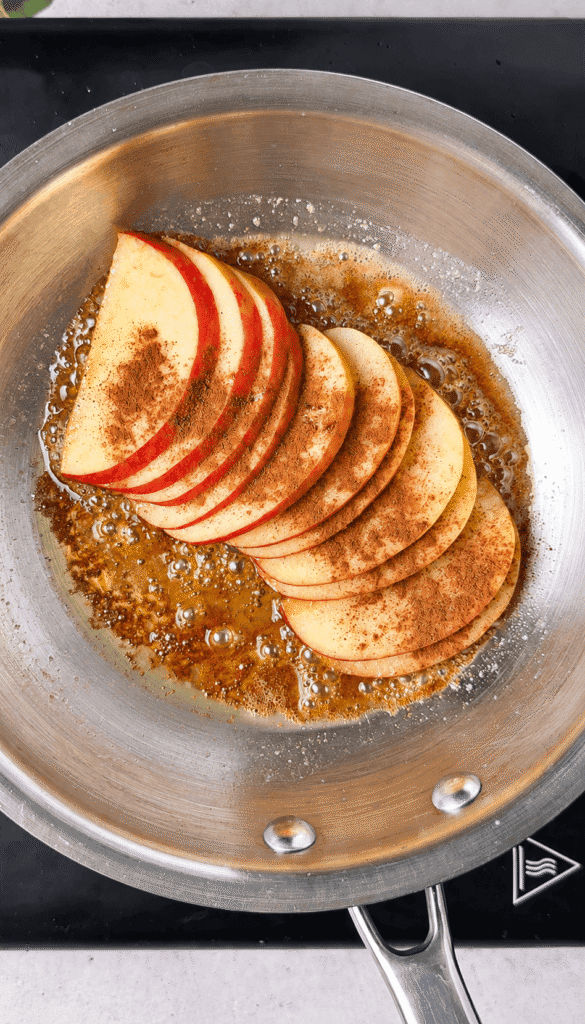
Place the butter and brown sugar in a small skillet over medium heat. Stir as the butter melts, then add the apple slices and sprinkle with cinnamon.
Arrange the fruit in one layer as much as possible. Each slice should have contact with the pan rather than sitting on top of another piece.
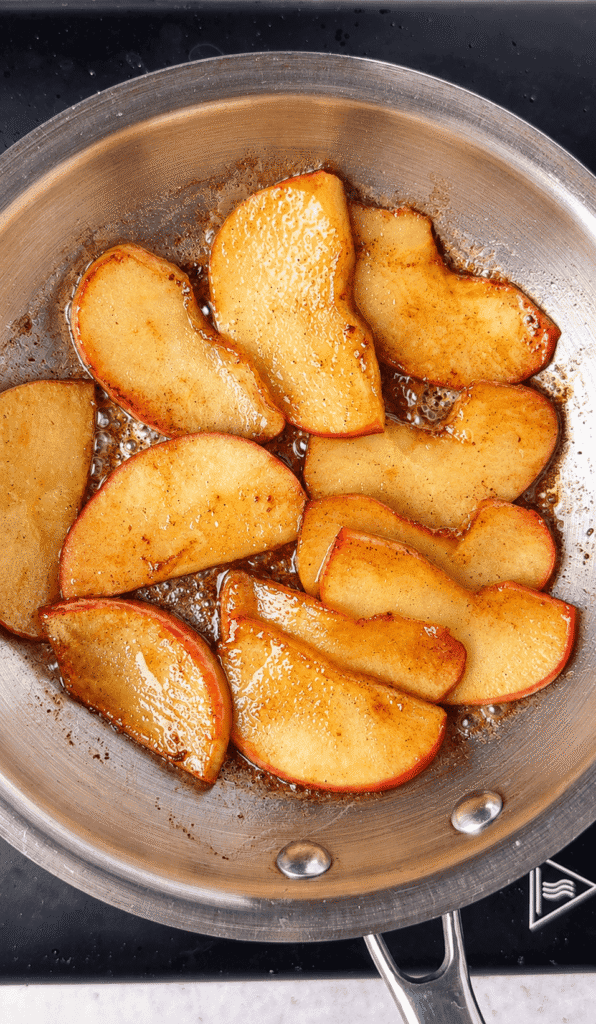
Lower the heat and let the apples cook gently, turning them about halfway through. Start checking around 6 minutes; they may need closer to 10 depending on their thickness, variety, and how low your burner runs.
Look for softened slices with a glossy coating and some golden color. A fork should slide into the flesh with a little resistance. The apples should bend slightly when lifted, but still be easy to move in one piece.
If the sugar darkens quickly while the apples are still firm, reduce the heat. You can add a teaspoon of water to loosen the coating if the pan looks dry. Let that extra moisture cook away before assembling.
Soften the Brie on the toast
When the apples are nearly ready, arrange the sliced Brie over the toasted sourdough. Set it on a baking sheet and place it in the warm oven.
Begin checking after about 3 minutes. Depending on the thickness and temperature of the cheese, it may take around 3 to 5 minutes to soften.
Look at the creamy center rather than waiting for the rind to disappear. You want the cheese soft enough to settle against the bread. It does not need to bubble heavily or run over the sides.
If the apples finish first, take their skillet off the heat while you finish the cheese. Leaving the pan over the burner can turn a glossy coating into a sticky, overly reduced one.
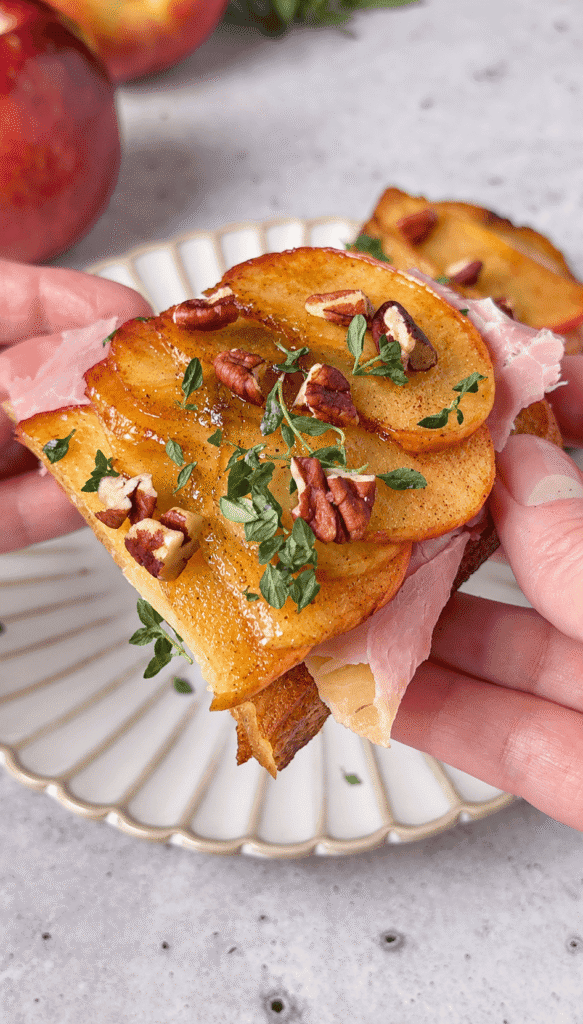
Add the ham and apples
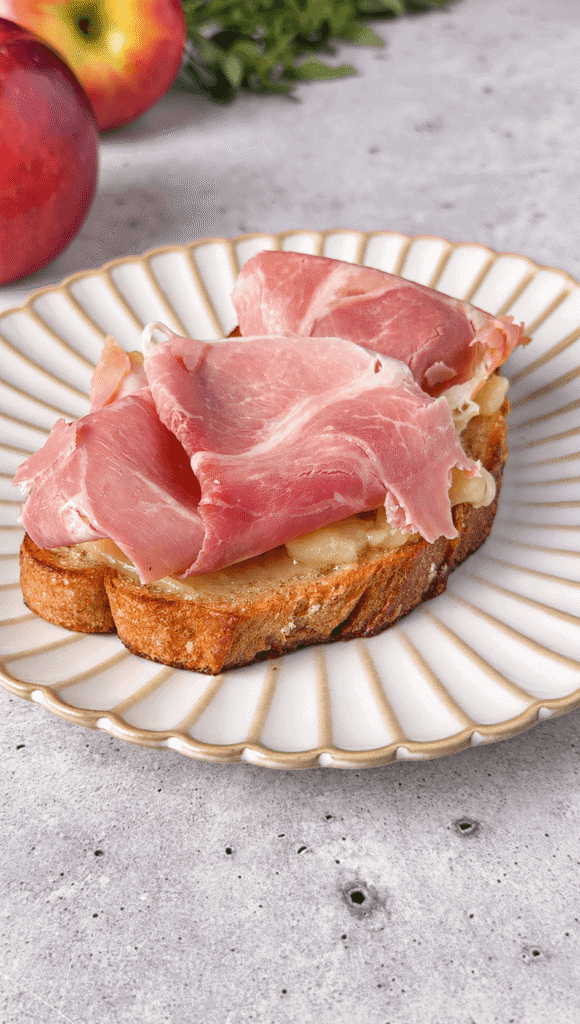
Move the warm Brie toast onto a plate. Arrange the ham in loose folds over the cheese, then add the apple slices.
Overlap them slightly so you get some apple across most of the bread. Keep the layer reasonably even, especially if you plan to eat it with your hands.
Spoon a little of the buttery cinnamon coating over the apples if there is some left in the pan. You want enough to make the fruit glossy, without soaking the bread underneath.
Finish with the chopped pecans and thyme leaves. Serve right away, while the Brie is soft and the bread still has its crunch. A knife and fork are completely reasonable here.
Tips for Success
1. Cut the apples evenly
The slices do not have to look identical, but keep their thickness similar. Very thin pieces can soften and break while thicker ones are still firm.
If a few slices finish before the others, lift them out of the skillet rather than continuing to cook everything together. Return them briefly at the end if they need warming.
2. Use gentle heat once the apples are in the pan
Brown sugar and butter can darken before the fruit has time to soften. A low, gentle sizzle gives you more control.
If you are not seeing much color but the apples are already tender, do not keep cooking just to make them darker. Tender apples with a glossy cinnamon coating are better than browned slices that have turned to mush.
3. Assemble just before eating
Toast is at its best when the bread is crisp and the toppings are warm. Even well-toasted sourdough will soften if it sits under the apples for a long time.
Prepare the components first, then bring them together when you are ready to sit down. If making two servings, melt the cheese on both slices together so neither finished toast waits around.
Variations and Substitutions
Use prosciutto instead of ham
Replace the ham with two thin slices of prosciutto, tearing them into manageable pieces if needed. Keep the rest of the recipe the same.
Prosciutto adds a more pronounced salty flavor, so there is no need to add extra salt to the apples. Taste the finished combination before deciding it needs anything else.
If you enjoy warm fruit with prosciutto, my burrata with roasted grapes is another option when you want something to share.
Try a different cheese
Camembert is the closest swap in this recipe. It softens in a similar way and works with the cinnamon apples.
Sharp cheddar would give the toast a different character, with a firmer texture and more familiar apple-and-cheddar flavor. Slice it thinly and check that it has melted before adding the toppings.
If you prefer a stronger blue cheese with fruit, try my warm pear and Gorgonzola toast. That recipe is built around the sharper cheese rather than treating it as an exact replacement for Brie.
Leave out the meat
You can skip the ham and make the toast with Brie, apples, and pecans. It will lean sweeter without the salty meat, but the cheese still gives it a savory base.
If you need the dish to be strictly vegetarian, check that your cheese uses vegetarian rennet.
Swap or omit the pecans
Chopped walnuts are an easy alternative. If you do not want nuts, leave them out. The bread still provides some crunch.
There is no need to add another topping just to replace that teaspoon of pecans. Keeping the recipe simple works well here.
Make smaller appetizer toasts
For smaller portions, use baguette slices and cut the apples into shorter pieces that fit comfortably on top.
Distribute the cheese, ham, and cooked apples across the bread according to its size. You may need to adjust the quantities, since a large sourdough slice and several baguette rounds do not always have the same surface area.
Keep these bites easy to pick up. A long apple slice hanging over the edge can pull the rest of the topping off with it.
Storage and Make-Ahead
Prepare the apples ahead
The apples are the most useful part to make in advance. Cook them, transfer them to a covered container, and refrigerate promptly. For this recipe, I would prepare them no more than two days ahead.
Reheat them gently in a small skillet. If the coating has thickened in the refrigerator, add a small splash of water and turn the slices carefully as they warm.
You can also chop the pecans and portion the cheese ahead. Keep the cheese and ham refrigerated until you are ready to use them.
Toast the bread and assemble shortly before serving.
Store assembled leftovers briefly
If you have part of a finished toast left, cover and refrigerate it promptly. Plan to eat it the next day for the best texture.
Reheat in the oven until warmed through, watching the bread so it does not become too dark. The apples will soften further, and the ham may dry slightly around the edges.
A microwave is convenient, but it will soften the bread rather than restore its crispness. For that reason, making only the number of toasts you need is the better option.
I would not freeze the assembled toast. Keeping a few slices of sourdough in the freezer and preparing the toppings fresh is much more practical.
Frequently Asked Questions
What apples are best for apple Brie toast?
Honeycrisp is my first choice. Use a firm apple with a sweet or sweet-tart flavor, rather than one that is already soft.
Gala or Pink Lady are alternatives. Granny Smith will give you a noticeably tarter result, which can be nice if you prefer less sweetness. Cooking time may vary, so check the texture rather than relying only on the clock.
Do you remove the rind from Brie before melting it?
You do not have to. The rind is edible and can stay on the sliced cheese.
It will not melt in exactly the same way as the creamy center. Check that the inside has softened rather than leaving the toast in the oven until every part of the cheese looks liquid. Trim the rind first if you prefer the texture without it.
Can I make apple Brie toast ahead of time?
Prepare the apples ahead, but leave the final assembly until you are ready to eat.
The bread absorbs moisture from the toppings as it sits. Reheating the apples separately, then adding them to freshly toasted bread with warm Brie, gives you a much better result than reheating the entire assembled toast.
Can I make this without an oven?
Yes. Toast the bread first, then place it in a dry skillet over low heat with the Brie on top. Cover briefly to help the cheese soften.
Watch the underside of the bread carefully, since it can become too dark before the cheese warms through. Once the Brie is soft, transfer the toast to a plate and add the ham, apples, and finishing ingredients.
What to Serve with Apple Brie Toast
For lunch, I would serve this with a small green salad dressed with lemon juice or a simple vinaigrette. The fresh greens are especially nice alongside the buttery apples and cheese. You do not need another rich topping or dressing.
A bowl of soup makes it a more substantial meal. My creamy mushroom orzo soup brings a savory mushroom flavor alongside the sweet apples. Since both dishes are filling, a smaller bowl is plenty.
For a fall lunch, you could also serve it with creamy butternut squash soup with chicken. Prepare the soup first and keep it warm while you cook the apples, then assemble the toast at the last minute.
For breakfast or brunch, the toast can stand on its own with coffee. There is already plenty on that slice of bread. Serve it while the cheese is warm, with any extra pecans scattered over the plate.
This post contains affiliate links. If you purchase through them, I may earn a small commission at no extra cost to you.
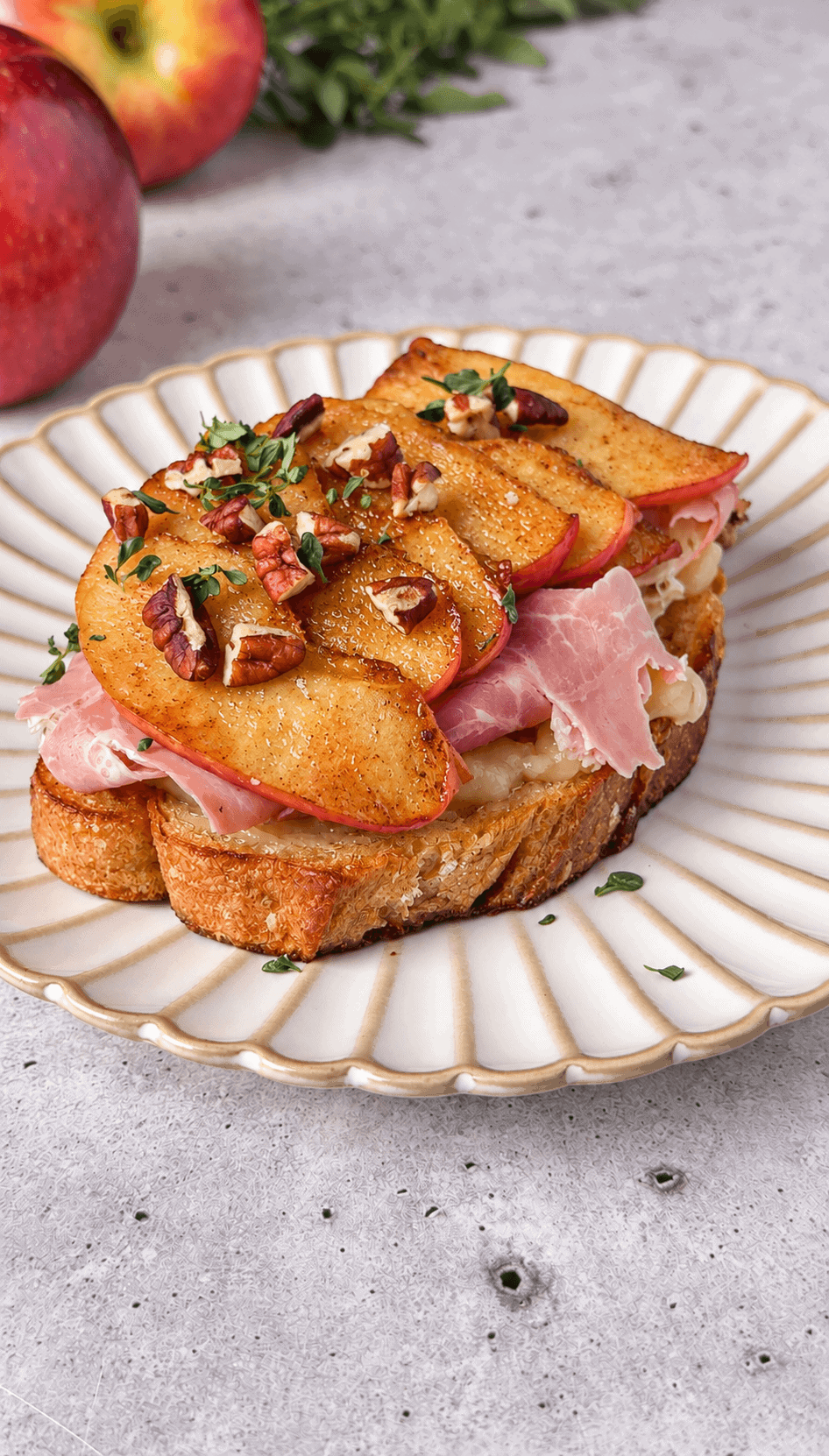

Apple Brie Toast with Ham and Caramelized Apples
Ingredients
Method
- Preheat the oven to 350°F.
- Toast the sourdough until golden and crisp on both sides.
- Melt the butter with the brown sugar in a small skillet over medium heat, stirring to combine.
- Arrange the apple slices in the skillet in a single layer.
- Sprinkle the apples evenly with cinnamon.
- Reduce the heat to low and cook for approximately 6 to 10 minutes, turning halfway through, until tender and glossy.
- Arrange the Brie over the toasted sourdough on a baking sheet.
- Warm the cheese-topped toast in the oven for approximately 3 to 5 minutes, until the Brie softens.
- Arrange the ham over the warm Brie.
- Layer the caramelized apples over the ham.
- Spoon a little of the remaining skillet coating over the apples, if desired.
- Sprinkle with the pecans and fresh thyme leaves.
- Serve immediately.
Notes
- Apples: Honeycrisp is my favorite. Keep the slices similar in thickness so they cook evenly. Peeling is optional.
- Cooking the apples: The brown sugar may look grainy in the melted butter at first. The apple juices help it dissolve as the fruit cooks. If the pan becomes dry before the apples soften, add 1 teaspoon water and continue cooking gently.
- Cheese: The Brie rind can stay on. Look for a softened center; the rind will retain more of its shape.
- Substitutions: Use Camembert instead of Brie, prosciutto instead of ham, or chopped walnuts instead of pecans.
- Make ahead: Prepare the apples up to 2 days ahead and refrigerate promptly in a covered container. Reheat gently before assembling with freshly toasted bread.
- Leftovers: Refrigerate promptly and enjoy the next day for the best texture. Reheat in the oven until warmed through. The bread will be softer than when freshly made.
- Scaling: Multiply the ingredients as needed. Use a larger skillet or cook the apples in batches to keep them in one layer.