
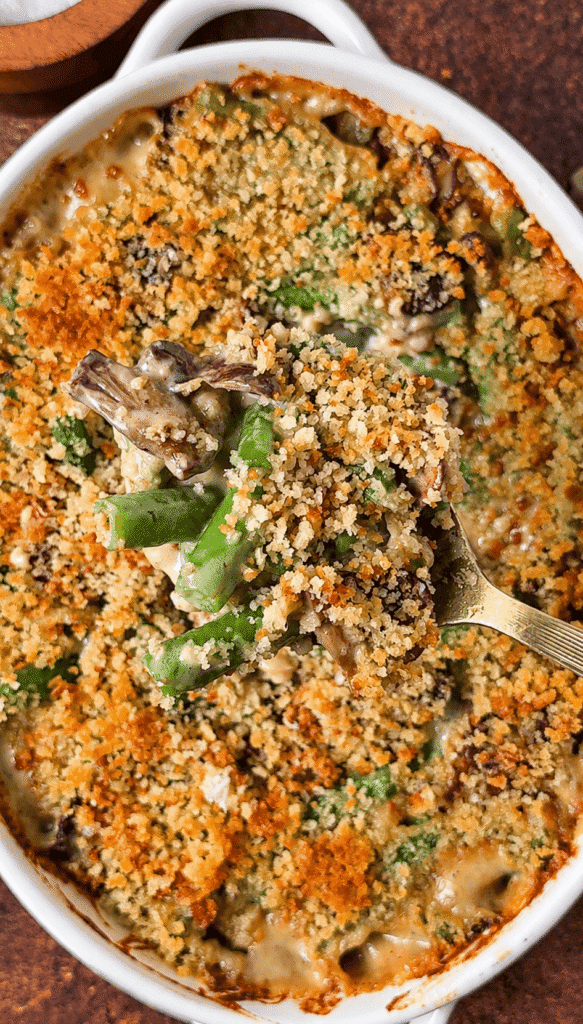
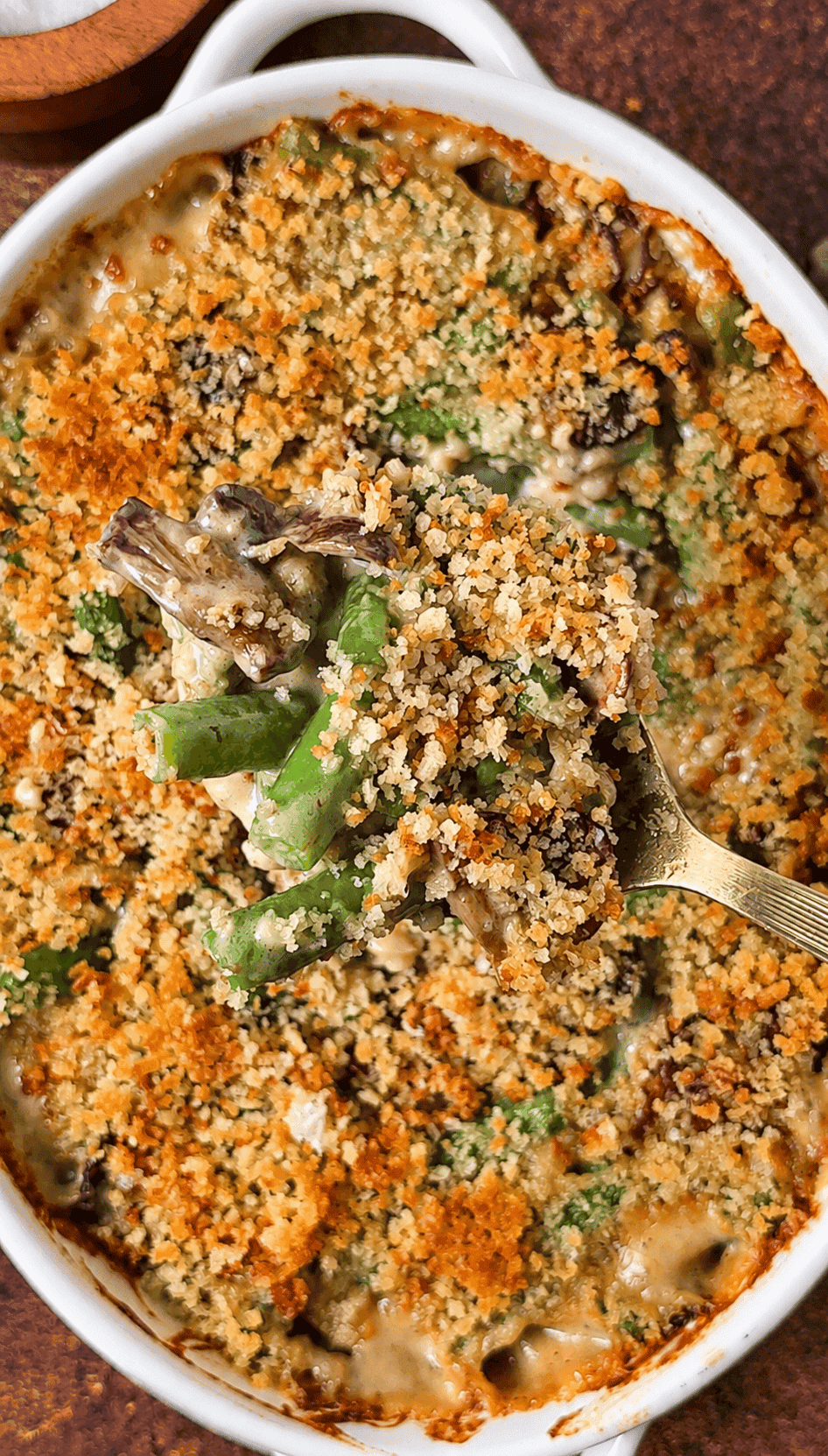
I wanted a green bean casserole that I’d be happy to put next to a holiday roast, without adding homemade fried onions to my cooking list. This green bean casserole from scratch has fresh beans, browned cremini mushrooms, and a creamy Gruyère sauce, with buttery panko scattered over the top. The sauce comes together in the same skillet as the mushrooms, so you keep all that flavor in the dish.
I made mine in a smaller baking dish, about the same capacity as an 8×8-inch pan. It’s enough for four to five side servings, which makes it useful for a family dinner as well as a smaller Thanksgiving meal. You don’t need a full table of guests to make it.
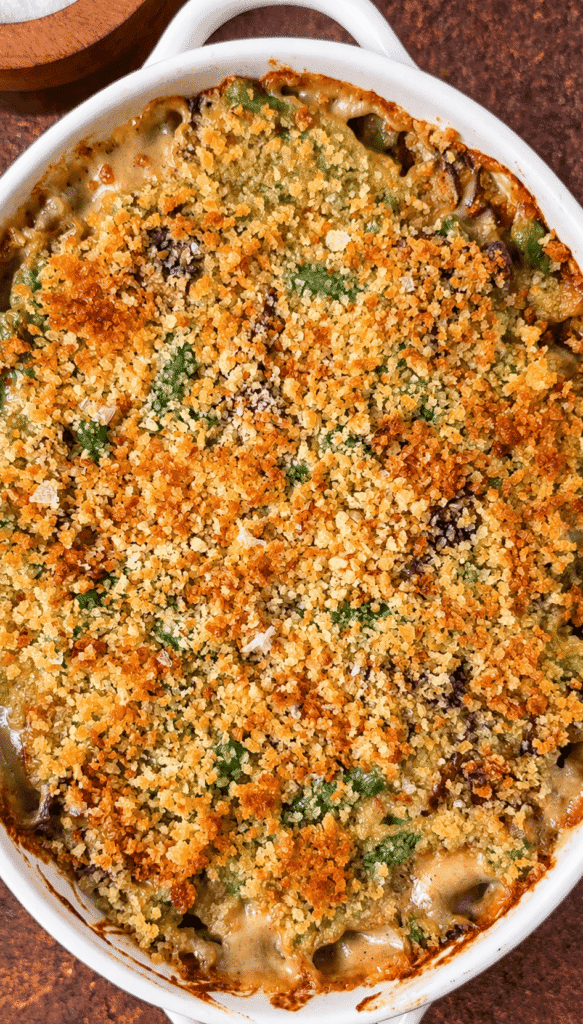
The topping was the last thing I adjusted. After baking, I put the casserole under the broiler for a few minutes to give the breadcrumbs more color. That little finish is worth watching closely for.
If you liked my butternut squash gratin with bacon and Gruyère, this is another vegetable side with a creamy, savory finish. Here, though, the mushrooms are a big part of the flavor, and the breadcrumbs give each spoonful a little crunch.
Why You’ll Love This Recipe
- The mushroom sauce is homemade. You brown the mushrooms first, then build the sauce around them. No canned soup needed.
- There’s no frying a separate topping. Panko and melted butter take just a minute to mix.
- It makes a smaller casserole. The recipe fits an 8×8-inch baking dish or one with a similar capacity.
- You can prepare it in stages. Trim the beans, slice the mushrooms, and grate the cheese ahead to make cooking easier.
Ingredient Notes
Fresh green beans
Use fresh green beans that feel firm, with no soft patches. Trim the stem ends and cut the beans into pieces that are comfortable to scoop and eat. Halving them works well for most beans, though very long ones may need another cut.
Try to choose beans of a similar thickness. Very thin French green beans cook faster than thicker standard green beans, so they shouldn’t automatically get the same boiling time.
The beans need a short cook before they go into the sauce. This gives you more control over their final texture. Taste one before draining rather than relying entirely on the timer.
Cremini mushrooms
Cremini mushrooms give the sauce a savory flavor and visible pieces of mushroom throughout. Slice them evenly, but don’t make them paper-thin. You want some texture left after browning and baking.
White button mushrooms are a reasonable substitute if that’s what you have. Either way, the cooking matters more than choosing a fancy variety. Let the moisture evaporate and give the mushrooms time to brown before adding the other ingredients.
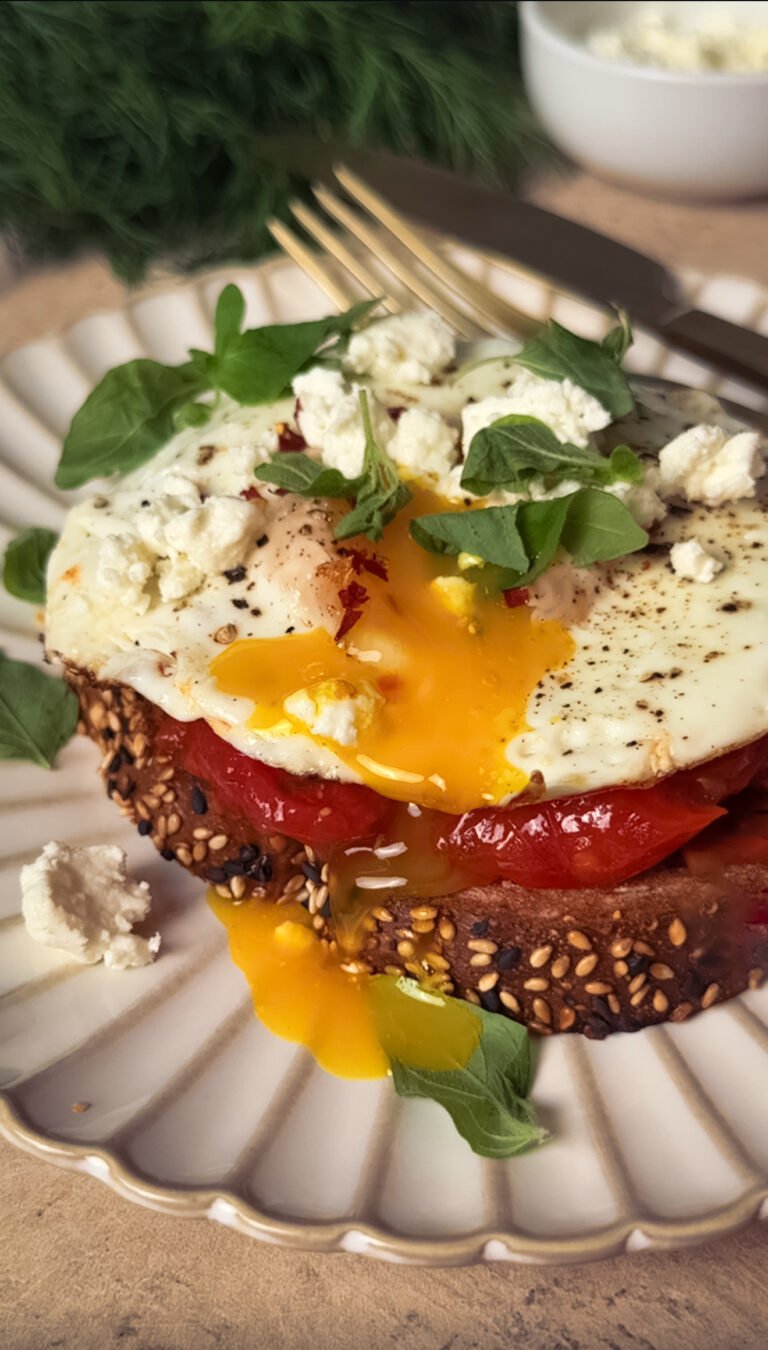
If you buy a larger package, the extra mushrooms can go into my double cheese mushroom toast for another meal. You don’t need to squeeze them all into this casserole.
Gruyère
Gruyère adds a nutty flavor that works well with mushrooms. There’s enough to season the sauce without turning the casserole into a thick layer of melted cheese.
Grate it from a block if possible, and have it ready before you start the sauce. Once the sauce is thickened, you can take the skillet off the heat and stir the cheese straight in.
The amount of salt you need will depend partly on your cheese and broth. Taste after adding the Gruyère, then adjust.
Broth, cream, and flour
Broth loosens the sauce and adds flavor, while heavy cream gives it richness. Chicken or vegetable broth works here. A lower-sodium broth makes it easier to control the seasoning.
The flour thickens the liquid so it coats the beans. Measure it with a level spoon. An extra heaping spoonful can make a noticeable difference in a small batch.
I used heavy cream for this version. Milk would give you a thinner, less rich sauce, so I wouldn’t treat it as an identical substitution.
Shallot, garlic, Dijon, and dried thyme
Chop the shallot finely so it softens into the mushroom sauce. You want its flavor without large pieces of onion competing with the beans.
The Dijon adds a little sharpness to the cream and cheese. At this amount, it shouldn’t make the casserole taste strongly of mustard.
I used ¼ tsp dried thyme. It’s a small amount, but enough for this dish. Add it with the garlic so it gets a brief moment in the warm butter before the liquid goes in.
Panko breadcrumbs
Plain panko gives the topping a light, uneven crunch. Mix it with melted butter before scattering it over the casserole so the crumbs have a chance to brown more evenly.
I wouldn’t replace it with heavily seasoned breadcrumbs for the first batch. There’s already garlic, thyme, and cheese in the sauce, and you don’t need another seasoning blend on top.
How to Make Green Bean Casserole from Scratch
Cook the beans until crisp-tender
Start with a pot of generously salted boiling water. The beans should have enough room to move around rather than sitting in a tightly packed bundle.
For standard green beans, begin checking around five minutes. Bite into one after cooling it briefly. It should have lost its raw, hard texture but still have some firmness. The oven will soften it further.
If you like very soft green beans, give them a little longer at this stage. It’s easier to get them close to your preferred texture in boiling water than to keep extending the bake after the topping is already brown.
Drain, rinse under cold water, and let them drain thoroughly. Shake the colander a few times. Water caught between the beans will otherwise go straight into the sauce.
Give the mushrooms time to brown
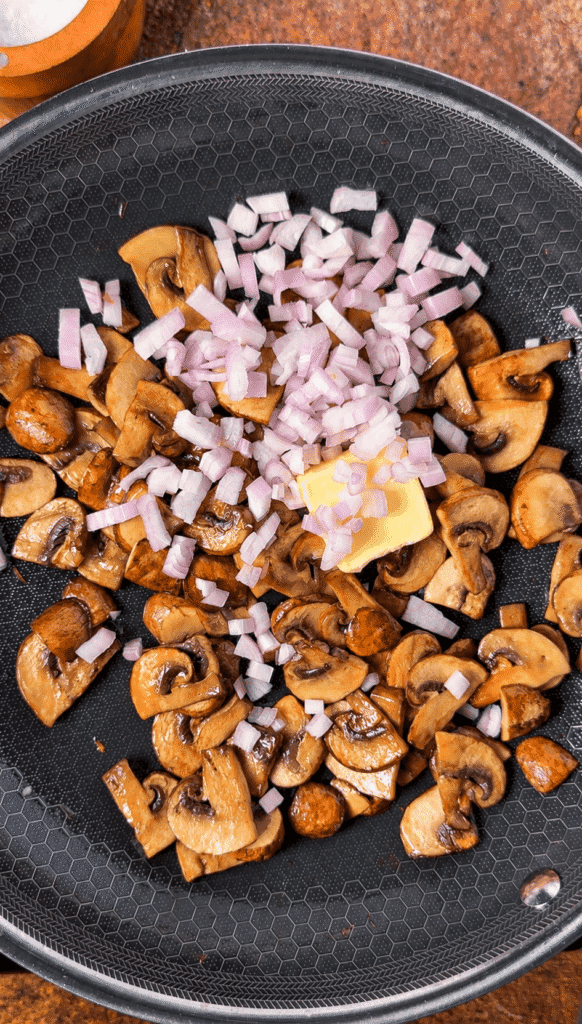
Heat the olive oil in a large skillet and spread out the sliced mushrooms. They may look like a lot at first, but they shrink as they cook.
Initially, you’ll see moisture collect in the pan. Keep cooking. Once that liquid has evaporated, the mushrooms can begin taking on color.
Stir occasionally rather than moving them constantly. They need contact with the hot skillet to develop browned surfaces. If your pan is small, cook them in batches and return everything to the skillet afterward.
Don’t add the garlic at the beginning. It would spend too long over the higher heat while you wait for the mushrooms.
Build the sauce around the mushrooms
Leave the browned mushrooms in the pan. Reduce the heat, add the butter and chopped shallot, and let the shallot soften. Stir in the garlic and dried thyme just until fragrant.
Sprinkle the flour over the mixture and stir it through. It will cling to the mushrooms and look a little dry. Cook it briefly before adding the broth.
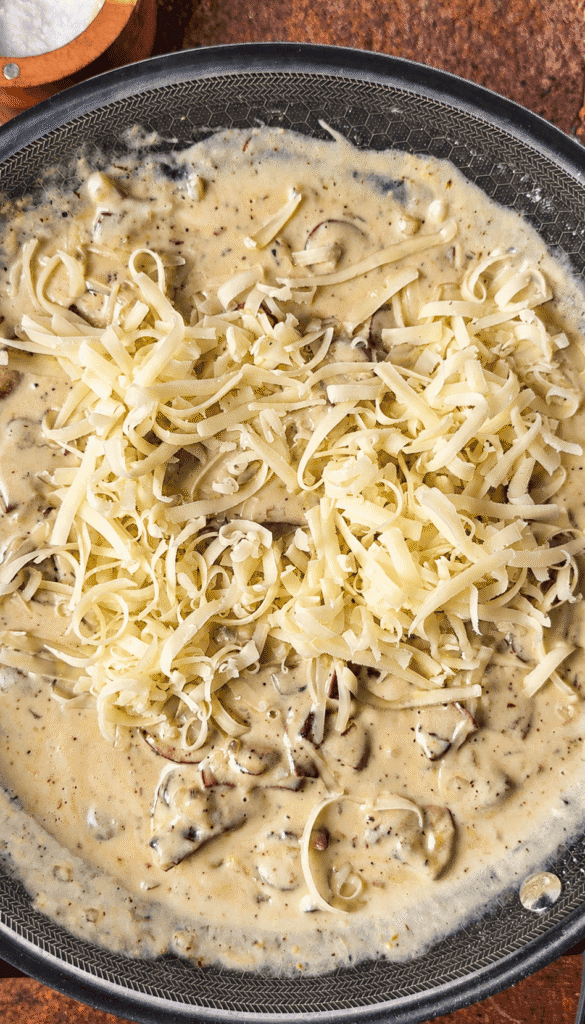
Pour in the broth gradually while stirring, scraping along the bottom of the skillet. Add the cream and let the sauce simmer gently. You’re looking for a smooth coating on the back of a spoon, with enough movement that the sauce still flows when stirred.
It shouldn’t look like a stiff paste. Remember that cheese is going in next, and the sauce will thicken further as the casserole bakes and rests.
Stir in the Gruyère and add the beans
Take the skillet off the heat before adding the Dijon and grated cheese. Stir until the cheese has melted into the sauce.
Now taste it. This is the easiest point to adjust salt and pepper because the sauce is still separate from the beans. It should be well seasoned, but keep in mind that you can always add a little pepper at the table.
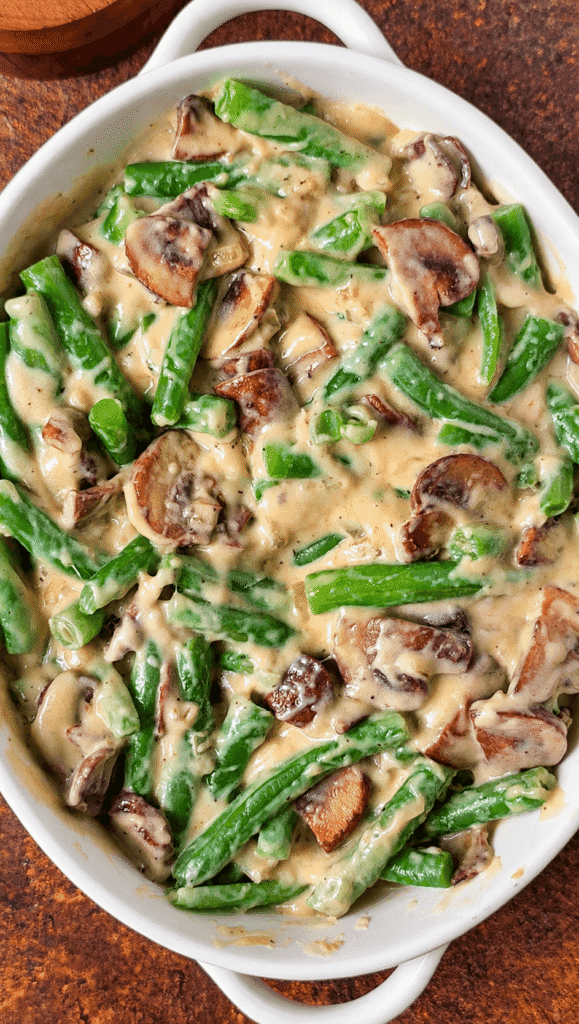
Fold in the drained beans gently, lifting the sauce from the bottom of the skillet so everything gets coated. Transfer the mixture to a buttered baking dish and spread it evenly.
If the skillet is too small for comfortable mixing, combine the beans and sauce in a large bowl instead. There’s no benefit to spilling half the sauce while trying to keep everything in one pan.
Add the panko and bake
Mix the breadcrumbs with melted butter and a pinch of salt. Scatter them across the surface in a light layer.
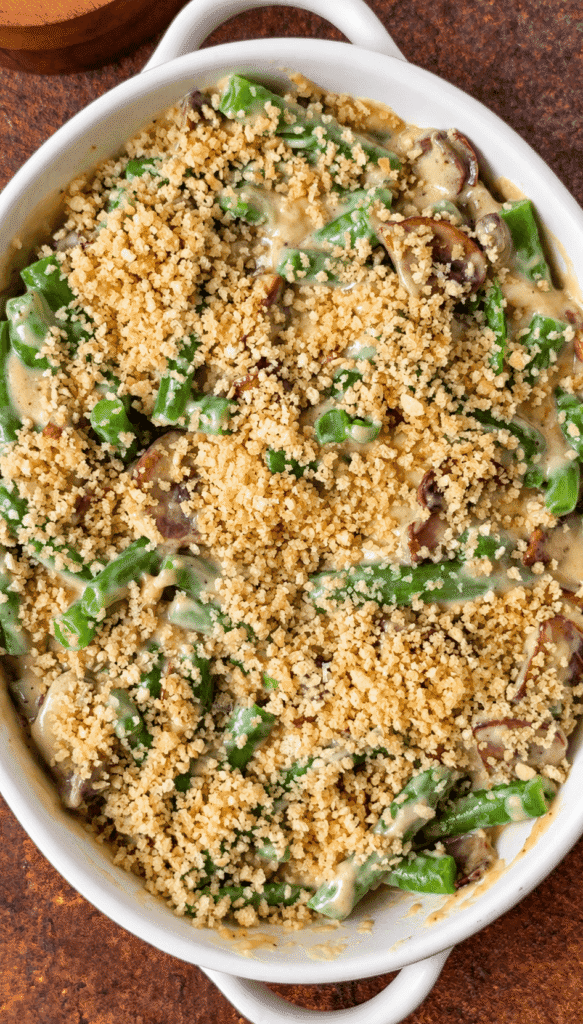
Bake until the sauce is bubbling around the edges and the casserole is hot through the center. The crumbs may be lightly golden at this point, with some paler areas.
I finished mine under the broiler for a few minutes. That gave the topping more color without needing to keep the whole casserole baking for much longer.
Stay by the oven during this step. Breadcrumbs can go from golden to burnt quickly, and broiler strength varies. Your dish also needs to be specifically broiler-safe. If it isn’t, skip that finish and let the topping brown during the regular bake.
Let the casserole rest for about five minutes before serving. The sauce settles slightly, and it’s easier to lift out a spoonful without everything running off it.
Tips for Success
Drain the beans and cook off the mushroom liquid
These are the two places where extra water can enter the casserole.
The beans should be well drained, and the mushrooms should have no puddle of liquid left in the skillet before you start the sauce. Adding more flour later is not the best fix for moisture that could have been removed earlier.
If your beans still look wet after draining, spread them briefly on a clean kitchen towel and blot away the excess.
Keep the sauce loose enough to coat
A sauce that looks very thick in the skillet will become thicker after baking. Stop simmering once it coats a spoon.
If you accidentally reduce it too far, stir in a small splash of broth before adding the beans. Add a little at a time. You want to loosen the sauce, not turn it back into soup.
Avoid boiling the sauce hard after adding the cheese. Gentle heat and a short cooking time help keep it smooth.
Choose the dish for its shape as well as its capacity
An 8×8-inch baking dish or a similarly sized oval dish works for this batch. A very deep dish will take longer to heat through than a shallower one, even if both hold the same amount.
Leave a little space above the filling so the sauce can bubble without spilling over. If your dish is quite full, place it on a rimmed baking sheet.
For a double batch, use a larger dish, such as a 9×13-inch pan. Don’t stack twice the mixture into the smaller dish and expect the same result.
Variations and Substitutions
The version I made uses fresh green beans, cremini mushrooms, heavy cream, and Gruyère. These are suggested alternatives if you need to work with what you have.
Another melting cheese: Comté or a Swiss-style melting cheese would be a reasonable substitute for Gruyère. Fontina would give a milder result. Sharp cheddar can work, but it will change the flavor more noticeably.
White button mushrooms: Use the same weight and follow the same browning cues. Let their liquid evaporate before moving on.
Fresh thyme: Use about ½ tsp fresh thyme leaves in place of the dried thyme. You can also leave the thyme out if you prefer.
Onion instead of shallot: A few tbsp of finely chopped yellow onion can stand in for the half shallot. Cook until softened before adding the garlic.
A vegetarian version: Use vegetable broth and a cheese made with vegetarian rennet. Check the cheese label rather than assuming all Gruyère-style cheeses are vegetarian.
A larger casserole: Double the ingredients for about eight to ten side servings. Use a wider baking dish and check the center for heat before finishing the topping. The bake may take longer, but it shouldn’t need twice as much time.
I’d keep the topping simple for the first batch. Extra cheese, nuts, and fried onions are all possible additions, but they aren’t necessary to make this version satisfying.
Make-Ahead and Storage
Prepare the components ahead
If you want to reduce the work on cooking day, trim the beans, slice the mushrooms, and grate the cheese the day before. Keep everything refrigerated in separate containers.
You can also measure the flour and panko ahead. Having the ingredients ready is especially useful when you’re making several dishes and don’t want to keep stopping to find a measuring spoon.
For a holiday meal, choose an appetizer that doesn’t need attention at the same moment as the casserole. My burrata with roasted grapes is one option if you roast the grapes earlier and assemble the platter closer to serving.
Assemble before baking
For a make-ahead approach, assemble the beans and sauce without the breadcrumb topping up to two days ahead. Refrigerate promptly, then cover once chilled. Keep the panko dry and mix it with melted butter when you’re ready to bake.
This refrigerated version will need longer in the oven than the freshly assembled casserole. Start covered at 375°F, then uncover and add the topping once the center is warming through. Continue baking until hot throughout and bubbling.
Allow roughly 40–50 minutes in total as a planning estimate, with extra time if needed for a deep dish. I made the fresh version, so use the temperature and appearance of your casserole as the final guide for this make-ahead method.
Follow your baking dish manufacturer’s instructions about refrigerator-to-oven use.
Store and reheat leftovers
Refrigerate leftovers within two hours and use within three to four days. If you prepared the beans and sauce ahead, count that earlier refrigerated time as part of the storage window.
For a larger portion, reheat in a covered oven-safe dish at 350°F until the center reaches 165°F. Uncover toward the end to help dry the topping slightly.
The microwave is convenient for an individual serving, although the breadcrumbs will soften. Add a small splash of broth if the sauce has become very thick, then heat in short intervals until hot throughout.
I haven’t tested freezing this recipe. For the best texture, I’d choose refrigeration for advance preparation rather than freezing an entire casserole for a special meal.
Frequently Asked Questions
Can I make green bean casserole without canned soup?
Yes. This recipe uses a mushroom sauce made directly in the skillet. Flour thickens the broth and cream, and Gruyère melts into the sauce at the end.
You don’t need to make a separate batch of mushroom soup first. The mushrooms stay in the pan while you build the sauce around them.
Can I use frozen green beans?
Fresh beans are what I used for this recipe. Frozen beans are a possible alternative, but their texture and cooking needs will differ.
If you use them, follow the package guidance to bring them to a crisp-tender stage, then drain thoroughly. Don’t add them frozen directly to the sauce. Excess water can thin the filling, and the center will take longer to heat.
Very thin frozen beans may need little additional cooking before assembly. Check them instead of automatically using the fresh-bean boiling time.
Why is my green bean casserole watery?
The first things to check are the beans and mushrooms. Wet beans carry extra water into the dish, and mushrooms release liquid as they cook.
The sauce also needs to thicken before assembly. If it still looks like plain cream and broth, let it simmer a little longer while stirring.
Finally, give the finished casserole a short rest. The sauce will settle as it stands, although resting won’t fix a large amount of excess liquid.
Can I make it ahead without the breadcrumbs getting soggy?
Yes. Keep the breadcrumbs separate until you’re ready to finish baking.
For a refrigerated casserole, begin heating the filling covered, then add the buttered crumbs for the uncovered portion of the bake. This helps the center get hot without exposing the topping to the oven for the entire extended cooking time.
Once the casserole has been baked and refrigerated, some softening of the topping is expected.
What to Serve with Green Bean Casserole
I’d serve this with roast chicken, turkey, or a simple pork roast. The sauce already brings plenty of richness, so the main dish doesn’t need its own cream sauce.
For a Thanksgiving table, my corn pudding with honey and jalapeño gives you a sweeter side with a little heat alongside the mushrooms and green beans. Both recipes work for a smaller gathering, and you can increase the quantities if needed.
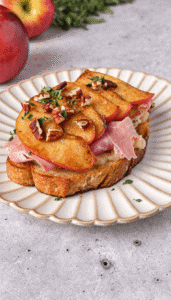
A fresh dish is useful beside the warm casseroles. My apple, burrata, and prosciutto salad wreath adds crisp apple and greens, and it doesn’t need oven space.
For an ordinary dinner, I’d keep it simpler: a roasted main, this casserole, and something fresh on the side. Serve it directly from the baking dish while the filling is hot and the breadcrumbs still have their crunch.
This post contains affiliate links. If you purchase through them, I may earn a small commission at no extra cost to you.

Green Bean Casserole with Mushrooms and Gruyere
Ingredients
Method
- Preheat the oven to 375°F.
- Lightly butter an 8×8-inch baking dish or one with a similar capacity.
- Cook the green beans in generously salted boiling water for 5–6 minutes, until crisp-tender.
- Drain the beans, rinse under cold water, and drain thoroughly.
- Heat the olive oil in a large skillet over medium-high heat.
- Cook the mushrooms for 7–10 minutes, stirring occasionally, until their liquid evaporates and they turn golden brown.
- Reduce the heat to medium.
- Add the butter and shallot to the mushrooms and cook for 2–3 minutes, until the shallot softens.
- Stir in the garlic and dried thyme and cook for 30 seconds.
- Stir in the flour and cook for 1 minute.
- Gradually stir in the broth, followed by the cream.
- Simmer gently for 3–5 minutes, stirring, until the sauce lightly coats a spoon.
- Remove the skillet from the heat.
- Stir in the Dijon and Gruyère until the cheese melts.
- Season the sauce with salt and pepper to taste.
- Fold the drained green beans into the mushroom sauce.
- Transfer the mixture to the prepared baking dish.
- Mix the panko with the melted butter and a pinch of salt.
- Scatter the breadcrumbs evenly over the casserole.
- Bake uncovered for 25–30 minutes, until hot throughout and bubbling around the edges.
- Broil briefly, if desired, watching constantly, until the topping is golden brown.
- Rest for 5 minutes before serving.
Notes
- Serving size: Makes 4 generous or 5 smaller side servings. Use 5 servings for nutrition calculations.
- Green beans: Thin French green beans may cook faster. Taste a bean before draining and adjust the boiling time to your preferred texture.
- Broiling: Use a broiler-safe dish. Skip this step if your dish is not suitable. A few minutes may be enough, but watch the topping continuously.
- Make ahead: Assemble without the topping up to 2 days ahead and refrigerate promptly. Bake covered at 375°F to begin heating the filling, then add the buttered panko and finish uncovered until hot throughout, with the center reaching 165°F. Allow approximately 40–50 minutes total, adjusting as needed. This timing is an estimate for the make-ahead method, not the tested fresh bake.
- Storage: Refrigerate within 2 hours and use within 3–4 days. Include any earlier refrigerated preparation time in that window.
- Reheating: Reheat covered at 350°F until the center reaches 165°F. Uncover near the end to help refresh the topping.
- Substitutions: White button mushrooms can replace cremini. Comté or a Swiss-style melting cheese can replace Gruyère, with a different flavor. These alternatives have not been tested in this recipe.
- Vegetarian option: Use vegetable broth and cheese made with vegetarian rennet.
- Double batch: Double the ingredients and use a 9×13-inch baking dish. Adjust baking time as needed.