
When I’m hosting, I want a few appetizers finished before anyone arrives. Especially around the holidays, when there’s already plenty happening in the kitchen. This marinated antipasto salad is exactly the kind of recipe I like to have ready in the fridge. It takes about 15 minutes to put together, and I actually like it better the next day.
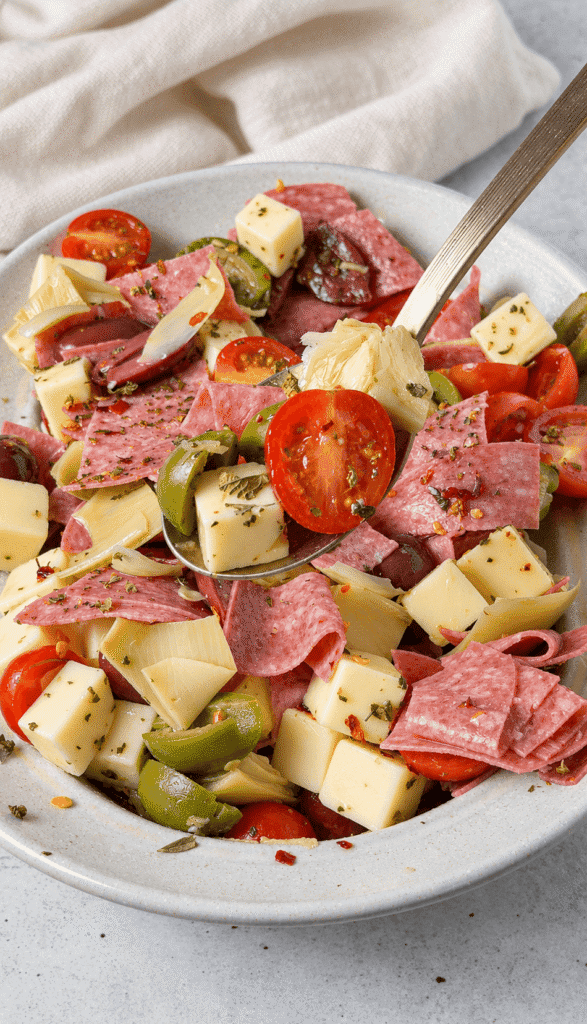
The Havarti is my favorite part. I love how creamy it is, especially alongside the salty olives and salami. Everything gets coated in a tangy dressing, so even a small spoonful has plenty of flavor. Add some bread on the side and it’s ready for the table.
If you’ve made my marinated feta with artichokes and olives, this belongs in that same easy entertaining rotation. There’s very little work involved, and you can adjust it to what you have or what your guests enjoy.
I’d happily serve this before Thanksgiving dinner or as part of a Christmas appetizer spread. But it’s just as useful for a casual weekend with friends. Quick, make-ahead appetizers are my everything when it comes to hosting, and this one is very easy to keep coming back to.
Why You’ll Love This Recipe
- It’s ready with very little hands-on work. About 15 minutes of prep, followed by a short rest while you get something else done.
- You can finish it the day before. The dressing goes in ahead of time, so there’s less to think about when guests arrive.
- The creamy Havarti makes it special. It adds a mild, buttery bite alongside the sharper, briny ingredients.
- It’s easy to adjust. Change the olives, try another cheese, or add a few vegetables from an open jar in the fridge.
Ingredient Notes For Antipasto Salad
Havarti cheese
I used Havarti because I like how creamy it is. Its mild flavor works well with the olives, which already bring plenty of salt and intensity to the bowl. You still taste the cheese, and its softer texture is lovely alongside the firmer salami.
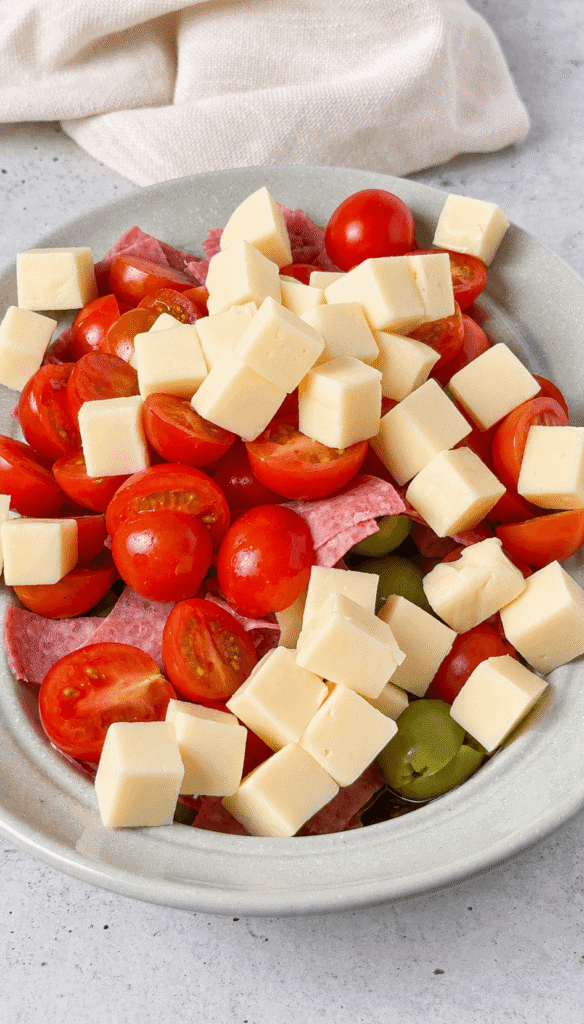
Buy a block that you can cut into cubes. Thin sandwich slices are harder to keep separate once everything is dressed. Plain Havarti is my choice here because the dressing already has garlic and oregano.
Keep the cheese cold until you’re ready to cut it. A chilled block is easier to handle, particularly if your kitchen is warm. Once it’s in the bowl, a gentle toss will help the cubes keep their shape.
Genoa salami
Sliced Genoa salami works well because the strips spread throughout the salad. They’re easy to pick up with a little cheese or an olive, and you don’t need a large piece in every bite.
The thickness of the slices will affect the texture. Very thin slices can cling together, so separate any folded pieces as you add them. Slightly thicker deli slices give you more distinct strips. Either works with this recipe.
Taste the salami before seasoning the finished bowl. Different brands vary in saltiness, and that matters when you’re adding olives and marinated artichokes too.
Castelvetrano and Kalamata olives
I used a mix of Castelvetrano and Kalamata olives. Castelvetrano olives are mild and buttery, while Kalamata olives bring a deeper, brinier flavor. I like having both in the same bowl.
Pitted olives make serving much easier. Even when the container says pitted, it’s worth checking as you halve them.
If you only have one variety, use that. The recipe is flexible enough to work with your favorite olives. With a particularly salty batch, wait until the salad has rested before deciding whether it needs any added salt.
Marinated artichoke hearts
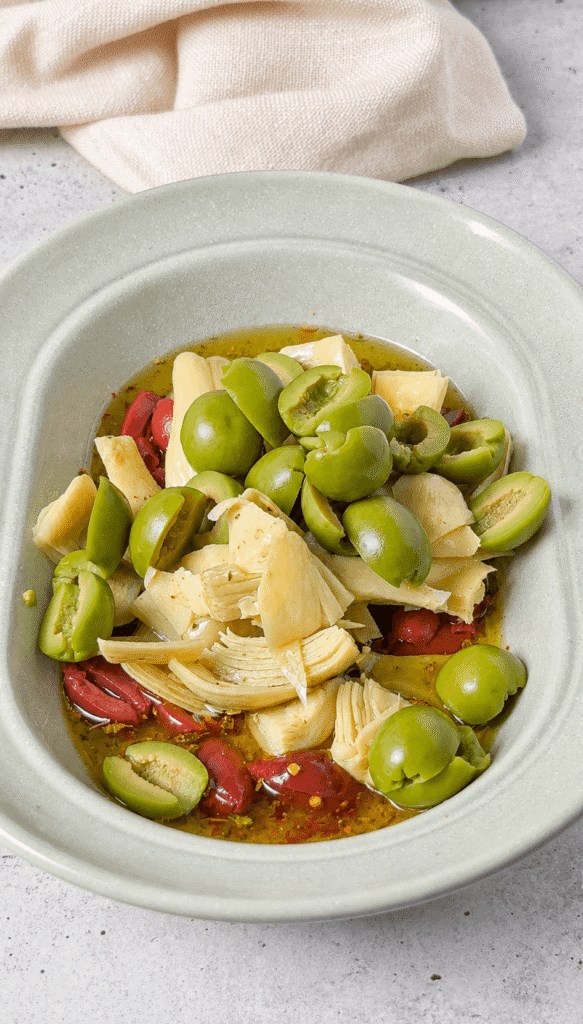
Jarred marinated artichoke hearts are convenient here because they already have flavor. Their tender leaves also catch some of the dressing. Drain them well so the liquid from the jar doesn’t dilute the dressing you’re making. Chop large pieces enough that they’re easy to scoop, but leave some texture. Very finely chopped artichokes can disappear into the bowl.
Plain canned artichoke hearts are an option if that’s what you have. Drain them thoroughly and taste the finished salad carefully, since they bring less seasoning than the marinated kind.
Cherry tomatoes
Choose firm, ripe cherry tomatoes that hold their shape when halved. Very soft tomatoes release more juice and are more likely to break apart as you toss the salad. Grape tomatoes work too. If they’re particularly large, cut them into smaller pieces so they’re comfortable to eat with the rest of the ingredients.
The tomatoes will soften somewhat as the salad sits. That suits a marinated appetizer, but starting with firm tomatoes gives you a better texture the next day.
Red wine vinegar, olive oil, and seasonings
Red wine vinegar gives the dressing a noticeable tang. It works well with the rich cheese and salami, so choose one you enjoy the taste of.
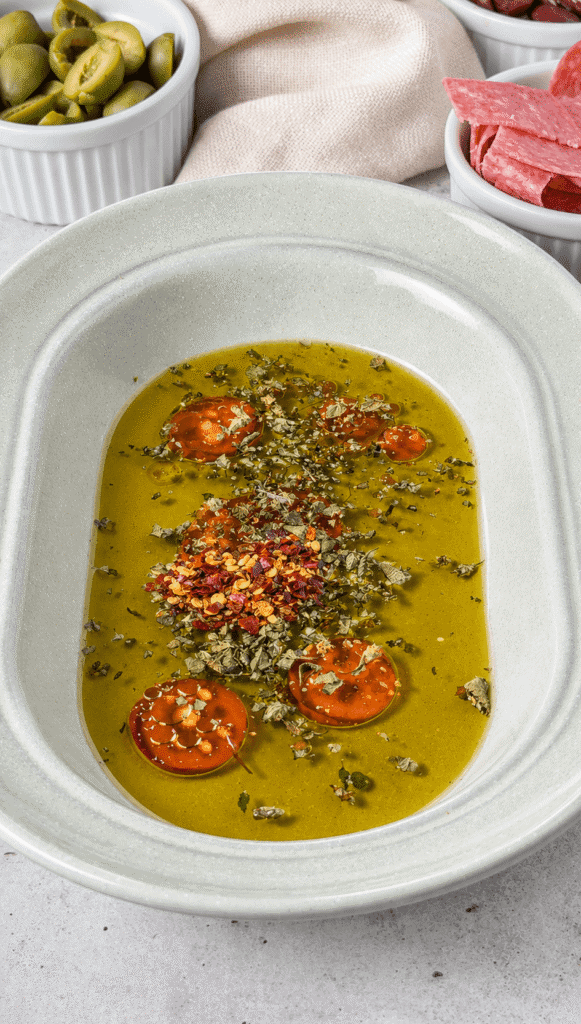
Use olive oil you’d happily put on a salad. The oregano adds a familiar Italian-style flavor, while the red pepper flakes bring some heat. You can reduce the flakes if your guests prefer mild food.
Finely mince the garlic so it distributes through the dressing. Larger pieces can give someone a much stronger bite than they expected. Since the garlic stays raw, a small clove is enough for this bowl.
Tips For Success
Drain the jarred ingredients thoroughly
Olives and artichokes can carry quite a bit of liquid into the serving bowl. Give them time to drain before combining everything.
A little clinging marinade is fine. What you want to avoid is adding enough jar liquid to change the flavor and consistency of your dressing. If the artichokes look especially wet after draining, gently blot them.
The tomatoes will release some juice during the rest as well. Starting with well-drained ingredients helps keep that from turning into an overly watery salad.
Keep the pieces easy to scoop
Think about how someone will eat this from a small appetizer plate. The cheese, tomatoes, and artichokes should be manageable in a bite or two.
Leave the salami in short strips so it doesn’t wrap around the serving spoon. Large artichoke quarters may need another cut, especially if the leaves are still tightly packed.
This also helps distribute the ingredients more evenly. You want people to be able to take a spoonful with a little variety.
Taste after the salad has rested
The olives, salami, cheese, and artichokes all contribute seasoning. As the salad sits, their flavors mingle with the dressing.
For that reason, be cautious with salt at the beginning. Taste a bite that includes several ingredients after the rest, then decide whether it needs more.
The same goes for adding extra vinegar. Give the dressing time to coat everything before making adjustments. It can taste quite sharp by itself and more rounded once you eat it with the cheese.
Variations and Substitutions
Try a different cheese
Havarti is my preference for its creaminess, but provolone would give the bowl a firmer texture and a more pronounced cheese flavor. Mild provolone is a good starting point if you want to stay close to the original combination.
Small mozzarella balls are another option. Drain them well, and halve larger ones so they’re easy to eat. If you enjoy mozzarella in an herby dressing, my easy marinated mozzarella balls are another appetizer to keep in mind.
These substitutions will change the texture, so choose according to what you like about the finished bowl.
Add something from the pantry
Roasted red peppers or sliced pepperoncini would fit well here. Drain either one before adding it. Roasted peppers bring some sweetness, while pepperoncini add more tang and a little heat.
For your first batch, keep additions modest. The dressing is measured for the ingredients in the recipe card. A large amount of extra vegetables will leave everything more lightly coated.
If you want a separate vegetable appetizer for the table, my marinated mushroom salad gives you another option with a different texture.
Leave out the salami
You can omit the salami for a meatless version and add more artichokes or some well-drained chickpeas. Chickpeas make it a little more substantial and pick up the dressing nicely.
Taste again after the salad rests, since removing the salami changes the seasoning. For a vegetarian version, also choose a Havarti made with vegetarian rennet.
Adjust the heat
The red pepper flakes are easy to reduce or leave out. If you’re serving guests with different preferences, keep the bowl mild and offer extra flakes alongside it.
Pepperoncini and spicy salami can also add heat, so take those into account if you’re making substitutions.
How to Store and Make Ahead
This is a make-ahead antipasto salad you can fully dress before storing. Cover the bowl tightly or transfer it to an airtight container, then refrigerate it until you’re ready to serve.
For entertaining, I’d make it the day before. I like the flavor better the next day, and having the entire appetizer finished is a big part of the appeal.
Give it a gentle stir before serving to bring the dressing up from the bottom. Olive oil can become cloudy or thicken in the refrigerator. A brief rest out of the fridge can help loosen it enough to coat the ingredients again.
For the best tomato texture, plan to enjoy the salad within two to three days. Keep it refrigerated at 40°F or below, and use any safely stored leftovers within three to four days. Count from the day you made it.
When serving at a party, keep track of the time it spends out of the refrigerator. Refrigerate perishable food within two hours, or within one hour if the temperature is above 90°F. For a longer gathering, serve a smaller bowl and replenish it from the fridge.
Freezing would compromise the texture of the tomatoes and cheese, so this is a recipe to make and enjoy from the refrigerator.
Frequently Asked Questions
Can I make antipasto salad the night before?
Yes. This version works well made the night before, including the dressing. Use firm tomatoes, drain the jarred ingredients well, and refrigerate the finished salad in a covered container.
Give it a gentle stir and taste before serving. That final taste is especially helpful when you’re using a different brand of olives or salami.
Can you make antipasto salad without lettuce?
Yes, and that’s how I make this one. The bowl is filled with cheese, salami, olives, artichokes, and tomatoes. Everything can sit together in the dressing without having lettuce to wilt.
If you’d like to serve it over greens for lunch, add those to individual plates just before eating. Keep any remaining antipasto separate from the greens for storage.
What cheese is best for antipasto salad?
For this recipe, I like Havarti because it’s creamy and mild. It’s especially good with the salty olives and tangy dressing.
Provolone works if you prefer a firmer cheese. Mozzarella is another mild option, though it has a different texture. Choose a cheese you enjoy eating cold and cut it into pieces that are easy to serve.
Can I double this recipe for a party?
Yes. Double the ingredients and use a bowl with enough room to toss everything gently. A crowded bowl makes it harder to distribute the dressing without breaking up the cheese.
The original recipe serves five as an appetizer, so a double batch gives you about ten appetizer servings. How far it goes will also depend on what else you’re serving.
What to Serve With Marinated Antipasto Salad
A sliced baguette or sturdy crackers are easy choices. The bread is especially good for catching a little of the dressing left on the plate. Set out a serving spoon and small forks so guests can help themselves without trying to balance everything on a cracker.
For something warm alongside it, I’d serve pesto pull-apart bread. The soft bread is a nice addition to an appetizer spread, and guests can take as much or as little as they want.
Around the holidays, baked Brie with cranberries and honey would bring something warm and slightly sweet to the table. You can have the antipasto ready in the fridge while the Brie bakes.
This also works as a starter before a larger dinner. Keep the portions small, put the bread within reach, and let guests help themselves while you finish the main course.
This post contains affiliate links. If you purchase through them, I may earn a small commission at no extra cost to you.
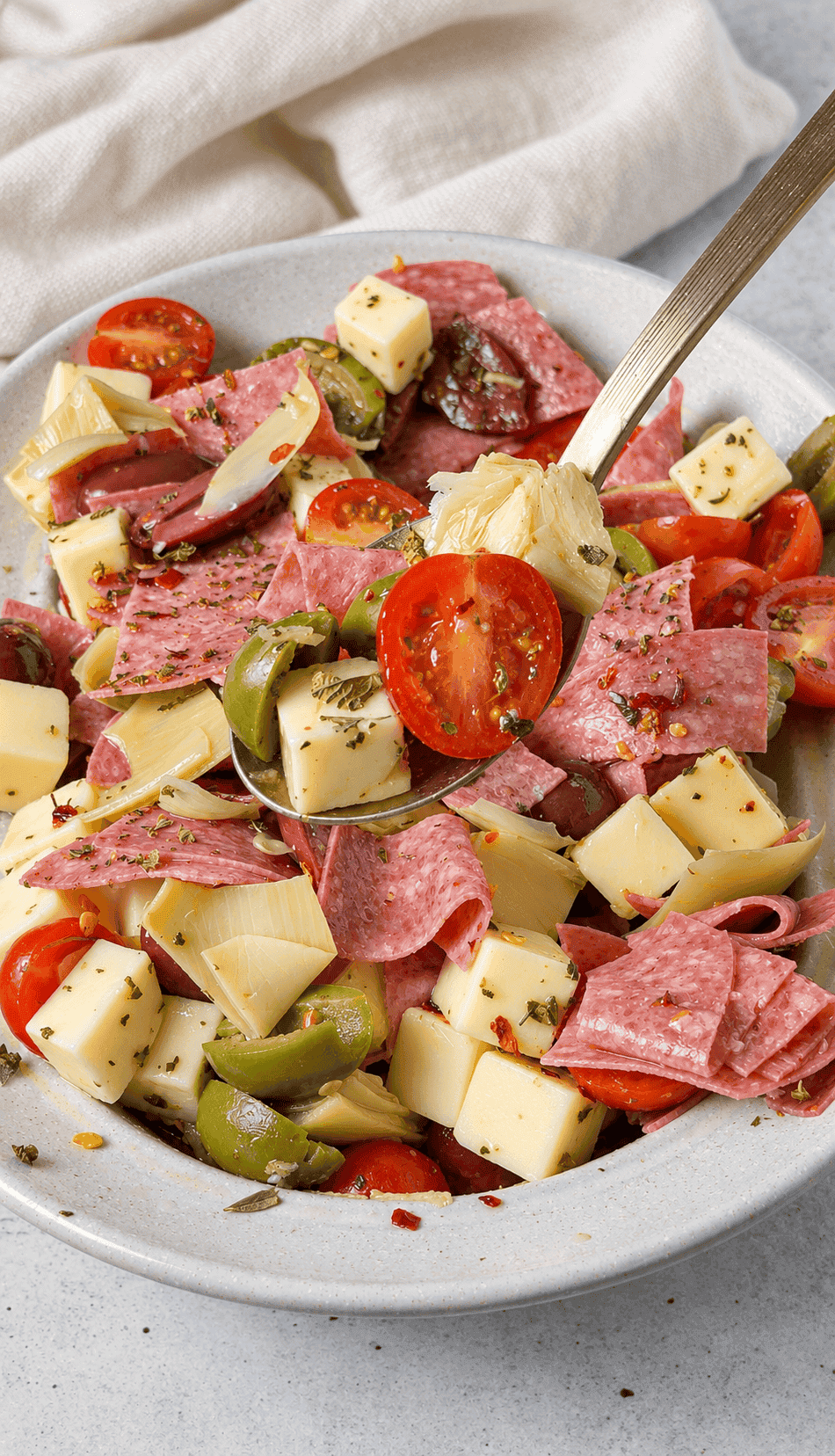

Marinated Antipasto Salad with Salami and Havarti
Ingredients
Method
- Whisk the olive oil, red wine vinegar, oregano, red pepper flakes, and garlic together in a serving bowl.
- Add the salami, Havarti, olives, artichoke hearts, and tomatoes.
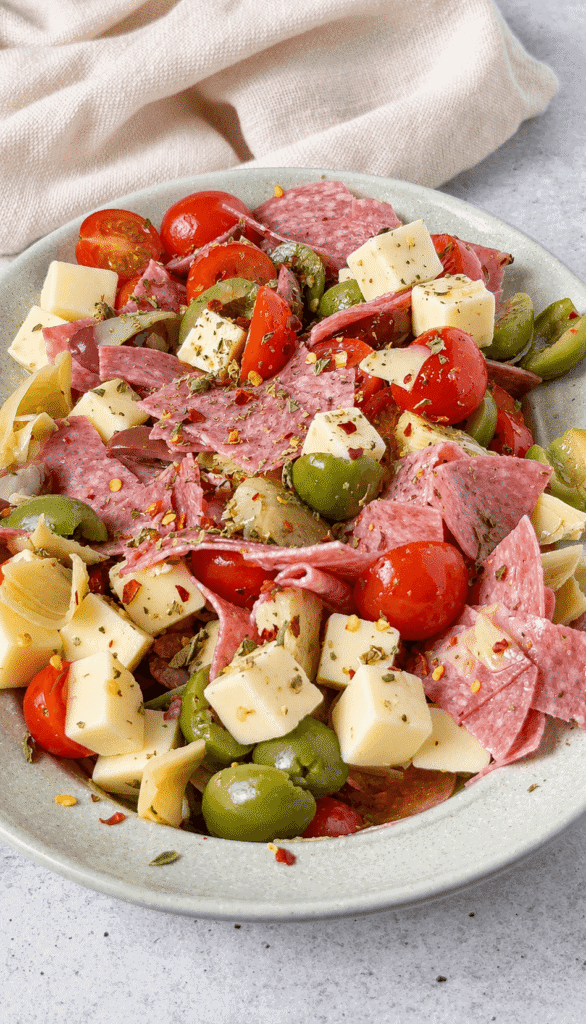
- Toss gently to coat everything with the dressing.
- Let the salad rest for 20 minutes.
- Taste and add salt only if needed.
- Serve with bread or crackers, if desired.
Notes
- Make ahead – Prepare the salad up to one day ahead and refrigerate in a covered container. Stir gently before serving.
- Storage – Refrigerate in an airtight container at 40°F or below. Enjoy within two to three days for the best texture, and use safely stored leftovers within three to four days of preparation.
- Cheese substitutions – Mild provolone or well-drained mozzarella balls can replace the Havarti. Each will give the salad a different texture.
- Heat – Reduce or omit the red pepper flakes for a milder dressing.
- Seasoning – Olives, salami, cheese, and marinated artichokes already contain salt. Taste the rested salad before adding more.
- Serving size – Serves five as an appetizer. Bread and crackers are optional and additional to the recipe.