
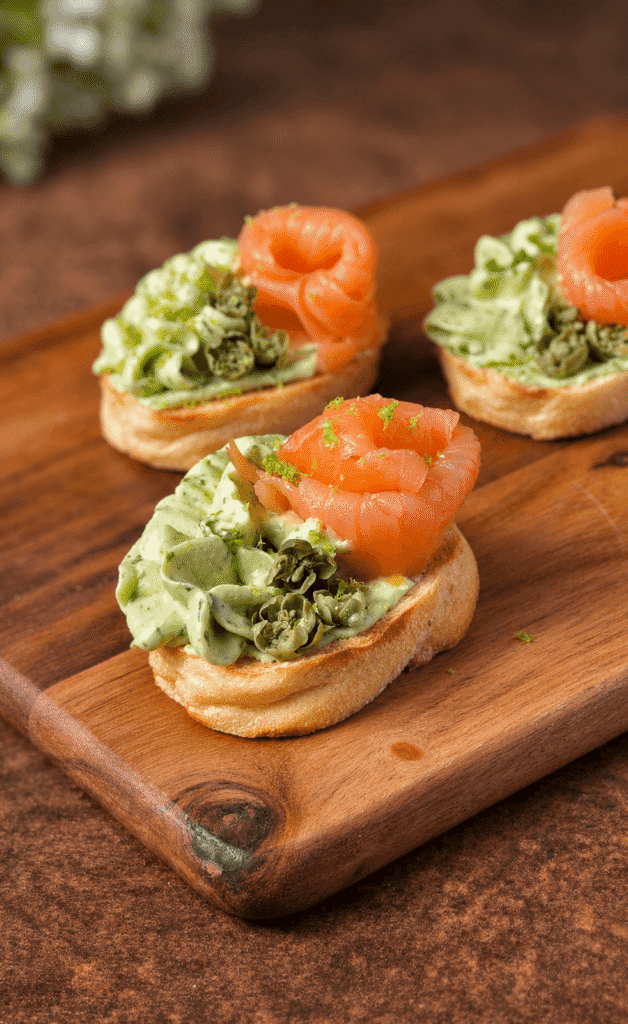
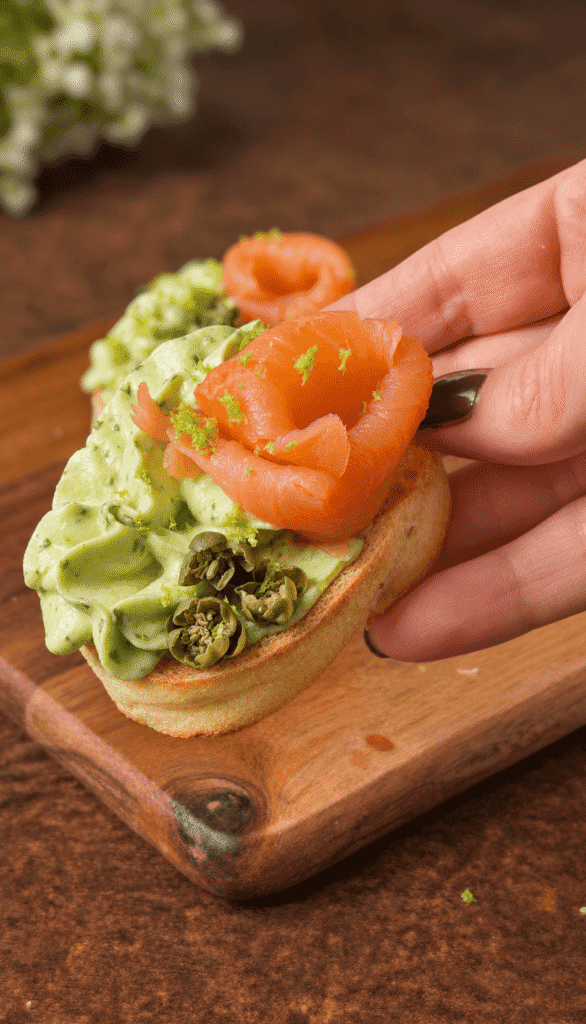
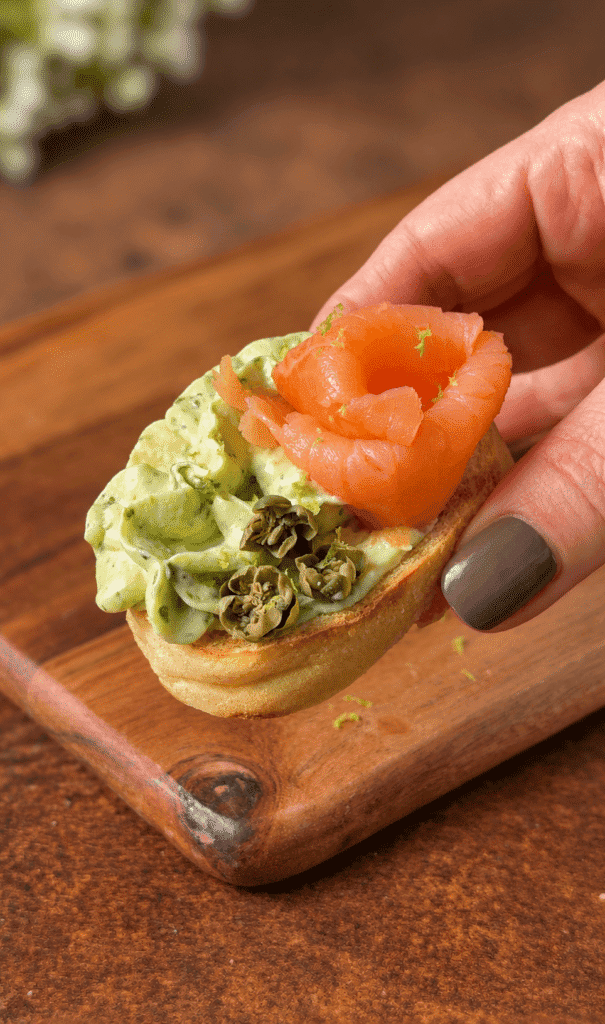
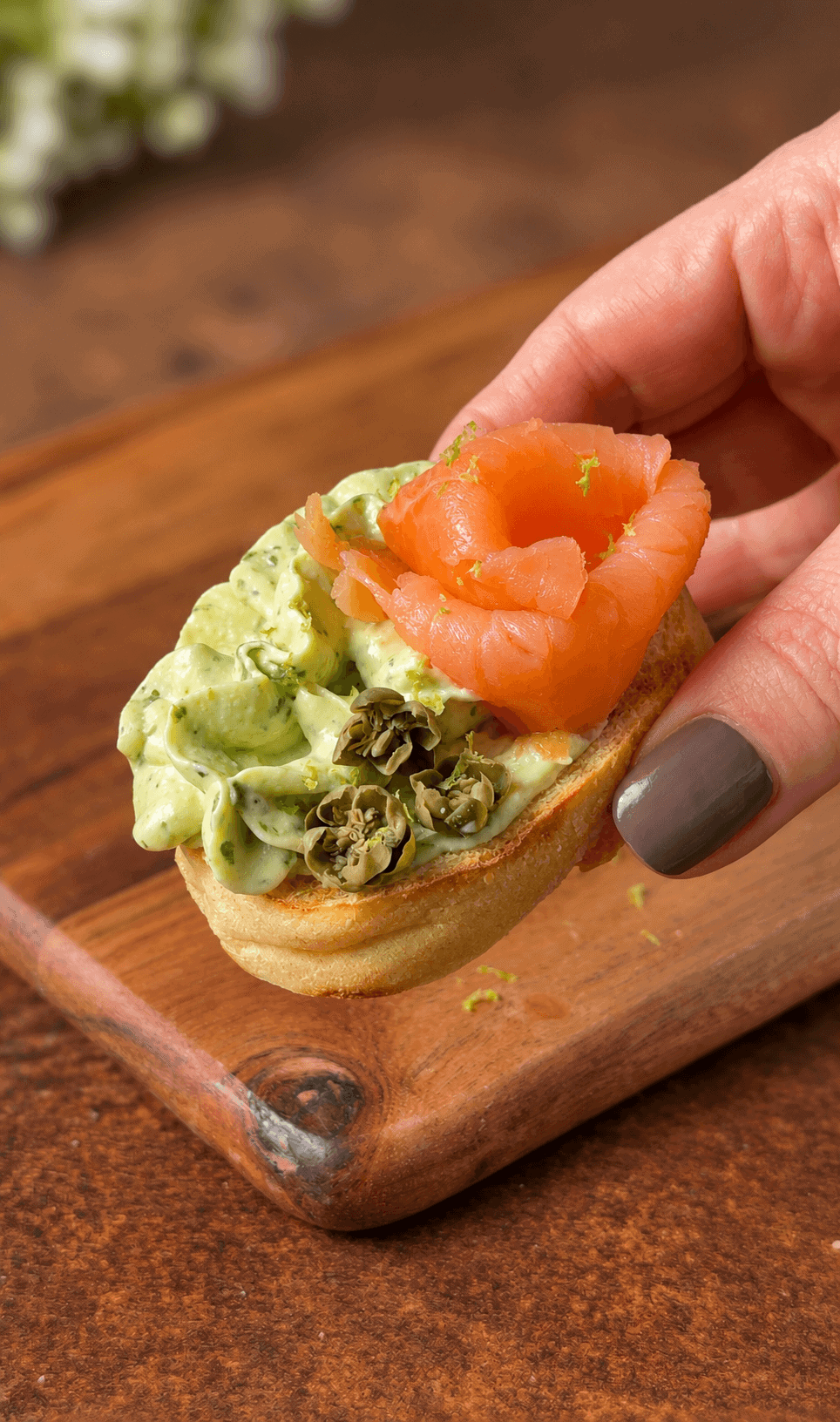
I wanted these smoked salmon crostini to look like little flowers on the plate. The soft green mousse, salmon roses, and tiny caper flowers came together so nicely, and I love that the decorating only needs a piping bag and a toothpick.
I’d serve them before dinner with friends or as part of a weekend brunch. They look dressed up, but underneath the pretty finish is a simple appetizer with crisp toast and a creamy, savory topping. You can prepare the mousse ahead and leave the assembly until you’re ready to serve.
Why You’ll Love These Smoked Salmon Crostini
- The mousse makes them different. It’s creamy, full of fresh chive flavor, and thick enough to pipe into soft folds.
- You can keep the decorating simple. Loosely folded salmon and whole capers work beautifully if you don’t feel like making flowers.
- The preparation is easy to split up. Make the mousse ahead, then finish the crostini shortly before serving.
- The recipe makes a small batch. It’s enough for a few people to enjoy before dinner and easy to increase for a larger gathering.
What Makes the Chive Mousse Different
The mousse is the part I wanted to build this recipe around. It gives the salmon a soft, creamy base, but the chives are noticeable too. They bring a fresh onion flavor that works well with the smoky topping without needing slices of raw onion.
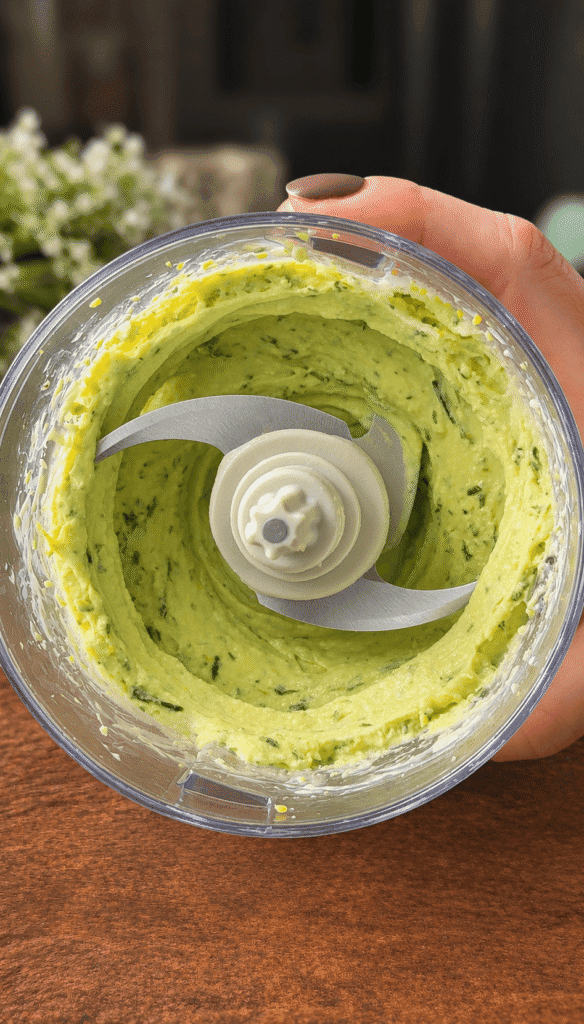
I used hard-boiled eggs and Laughing Cow cheese in the base, with a little mayonnaise to bring everything together. Once blended, the mixture becomes a smooth spread that can hold the folds from a piping tip. The chives give it that pale green color, with small flecks still visible.
If you’ve made my smoked salmon crostini with egg-cheddar mousse, this is a different direction. That version has a golden cheese base. Here, I wanted the fresh herbs to be the main flavor in the mousse.
The capers stay on top, where you get a little salty bite alongside the salmon. Lime zest is the finishing touch. It adds a fresh citrus smell as you pick up the toast, without introducing extra liquid into the mousse.
There’s plenty going on already, so I wouldn’t add a drizzle of sauce. The piped mousse and salmon need room to show, and the toast should stay easy to pick up.
Ingredient Notes
Smoked salmon
Thinly sliced cold-smoked salmon is the best fit for this presentation. It’s soft and flexible, so you can fold it loosely or shape it into a rose without breaking it into flakes.
The slices don’t have to be perfect. Packages often contain a mix of larger pieces and smaller ones tucked underneath. Save the broad pieces for the most visible folds, then use smaller strips to fill out the center. A torn edge usually disappears once the salmon is arranged.
Hot-smoked salmon has a firmer, flaky texture. You could use it for a more casual topping, but it won’t give you the same soft folds shown in the photos.
I’d choose a plain smoked salmon for this recipe. A heavily peppered or strongly flavored version can compete with the chives, and there’s already seasoning in the mousse. Keep the salmon refrigerated while you prepare the other components.
Hard-boiled eggs
The eggs give the mousse body. Use fully set yolks and let the eggs cool before blending them with the other ingredients.
A slightly jammy egg is lovely on toast, but it changes the consistency here. For this recipe, you want a spread that stays where you pipe it and supports the salmon.
Make sure there are no little pieces of shell left on the eggs. It sounds obvious, but once everything goes into the processor, they’re much harder to find.
The finished color can vary depending on the yolks. Some batches will look more yellow-green than others. There’s no need to adjust the recipe just to match the exact shade in the photographs.
Laughing Cow cheese and mayonnaise
Laughing Cow cheese is what I used for this batch. Its soft texture makes it convenient for blending into the eggs, and the mild flavor leaves space for the chives.
The mayonnaise helps the mixture come together. You don’t need to keep adding more just because it looks a little uneven during the first few seconds of blending. Give the processor time, scrape down the bowl, and check again.
This is especially useful to remember with a small batch. Sometimes the ingredients cling to the sides instead of passing through the blade. More mayonnaise won’t solve that problem, and too much can make the mousse loose.
I’d stick with plain cheese wedges for the closest result. Flavored varieties can work differently with the herbs and may need less seasoning.
Fresh chives
The chives are part of the mousse itself, rather than just a sprinkle at the end. That’s why fresh ones matter here.
Look for firm green chives without wet or yellowed sections. After washing, dry them well. Water caught between the stems can end up in the processor and change the consistency of a small batch.
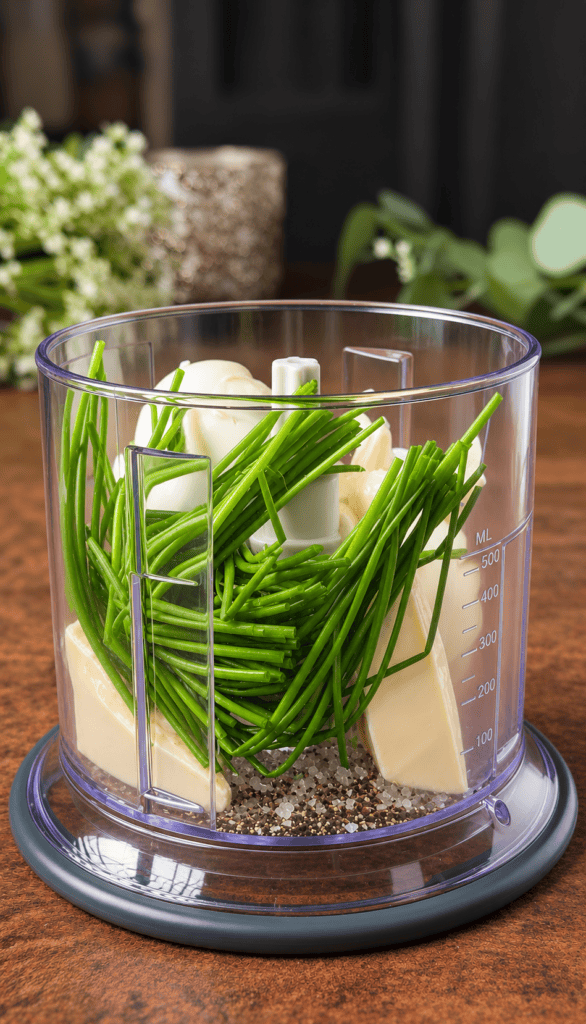
Roughly chopping them before blending helps prevent long strands from wrapping around the blade. The goal is a smooth mixture with fine green flecks, especially if you’re using a piping tip.
Dried chives won’t give you the same color or fresh flavor. I wouldn’t use them as a direct replacement in this particular recipe.
Capers
Use the small pickled caper buds sold in jars. The larger caperberries with stems are a different shape and won’t give you the little flowers shown here.
Some buds open more easily than others. Choose the slightly larger ones from the jar for decorating and keep any tiny or tightly closed ones whole.
I used a toothpick to gently open the layers. It gives you more control than trying to pull them apart with your fingers. The method is included in the recipe card, but the main thing is to be gentle. You’re opening a small bud, so it doesn’t need much pressure.
Drain the capers and pat them dry before arranging them. Otherwise, little drops of brine can run over the mousse.
Lime zest
I finished these with lime zest. It works especially well with the fresh chive flavor and gives the salmon a little citrus lift.
Use a light hand with the grater so you collect the green outer skin without digging into the white pith. Fine zest also looks prettier on the salmon than long, thick strips.
The zest is enough here. Adding lime juice to the mousse would change its consistency, and squeezing it over the finished crostini would introduce moisture onto the topping.
If you prefer a recipe built around lemon, my lemon-caper smoked salmon crostini use a different herb mixture with lemon and capers in the spread.
Bread
Choose a baguette with enough bread in the middle to support the mousse. A few air pockets are fine, but very large holes make it awkward to pipe an even base.
A diagonal slice gives you a little more room for the salmon and caper flowers. You still want something comfortable to eat, though. Very long slices can turn a small appetizer into a toast that needs a plate and knife.
The bread should be crisp at the edges without becoming hard all the way through. That matters with a soft topping. If you have to bite down too firmly, the mousse can squeeze out before the bread breaks.
Tips for Success
Use a processor that suits the batch
A mini food processor is useful for this amount of mousse. In a large bowl, the ingredients may spread below or around the blade instead of blending evenly.
Stop and scrape down the sides as needed. Look for any pieces of egg white or long strands of chive before transferring the mixture to a piping bag. Those are the bits most likely to interrupt a smooth ribbon of mousse.
If the mixture feels soft after blending, a short chill can help it firm up. Avoid adding liquid to make it blend faster. It’s easier to adjust a thick spread than rescue one that no longer holds its shape.
Let the toast cool completely
Warm toast can soften the mousse as soon as it touches the bread. Even if the topping still tastes good, the piped folds won’t look as clear.
Give the slices enough space to cool without stacking them while they’re warm. Trapped steam can soften the surfaces you just toasted.
This is a good time to prepare the salmon or work on the caper flowers. By the time the toppings are ready, the bread should be cool enough to assemble.
Keep the toppings comfortable to eat
A loose salmon rose looks full without needing a thick bundle of fish in the middle. Leave a little space between the folds rather than rolling the slice tightly.
The same idea applies to the mousse. You want enough to enjoy with the bread, but you don’t need a tall tower. Leave some of the piping visible around the salmon so the green color shows.
With the caper flowers, a small cluster is enough. If a bud tears while you’re opening it, use it anyway or save it for another toast. A slightly uneven flower still looks lovely beside the salmon.
Variations and Substitutions
The simplest variation is to skip the piping. Spread the mousse with the back of a spoon, leave a few soft swirls, and add the salmon. You’ll still have the same combination of flavors.
Whole capers are also completely fine. Opening them changes the presentation, not the basic recipe. For a larger party, I’d consider decorating a few crostini with flowers and keeping the rest simple.
If you don’t have lime, lemon zest is a reasonable substitute. It will give the topping a different citrus finish, but it still works with smoked salmon and herbs.
Softened plain cream cheese is a possible replacement for the cheese wedges, though I haven’t tested this exact batch with it. The mousse may be firmer, and the flavor will be different. For the result shown here, use the Laughing Cow cheese.
For a gluten-free version, use gluten-free baguette slices and check the labels on the remaining ingredients. Sturdy crackers are another option, but assemble them close to serving because thinner ones can soften quickly.
If you’re putting together a mixed crostini platter, you don’t have to adapt every piece from this recipe. My whipped labneh crostini with pesto and cherry tomatoes would give you a separate meatless option with plenty of color.
Make-Ahead and Storage
This is an easy smoked salmon appetizer to prepare in stages. The important part is keeping the bread separate from the toppings until close to serving.
You can make the mousse up to a day ahead and refrigerate it in an airtight container. A securely closed piping bag is another option. If you use a bag, keep the tip covered so the exposed mousse doesn’t dry out.
The refrigerated mixture may feel firmer when you’re ready to use it. Gently work the bag with your hands and try a small amount before filling all the toasts. It doesn’t need to sit out until it becomes warm.
Toast the bread earlier the same day if that helps with timing. Let it cool completely before placing it in an airtight container at room temperature. Packing it away while warm traps moisture.
You can also open the caper flowers ahead and refrigerate them in a small covered container. Keep them in a single layer so they don’t get crushed.
Leave the lime zest until assembly for the freshest finish. Keep the smoked salmon refrigerated and follow the storage instructions on its package.
Assembled leftovers should be covered and refrigerated promptly, but the bread will soften. I’d plan to enjoy them the next day rather than save them for another gathering. Freezing isn’t a good option for preserving the texture of the finished crostini.
Frequently Asked Questions
Can I make smoked salmon crostini the night before?
Prepare the mousse the night before, but wait to assemble the crostini. Once the spread sits on the bread, it gradually softens the toast.
If you’re serving guests, having the mousse ready and the capers prepared takes care of much of the work. You can then focus on the bread and final arrangement.
Can I make the mousse without a food processor?
You can finely grate the eggs and mash them thoroughly with the cheese and mayonnaise, then mix in very finely chopped chives. Expect a more textured spread.
That version would be better spooned onto the toast. For the smooth, piped finish in the photos, a small food processor is the more reliable choice. An immersion blender may work in a suitably narrow container, provided the blade can reach the small quantity.
Why is my egg mousse not smooth?
First, check whether the ingredients are actually moving through the blade. A large processor can struggle with a small batch, even when the ingredients themselves are soft enough.
Scrape down the bowl and blend again. Large pieces of egg white and long chive strands need more attention than the cheese. Don’t immediately add more mayonnaise, since that can loosen the mixture before the pieces have blended.
Do I need a special piping tip?
You don’t need a particular brand or model. A wide petal tip can make soft ribbons, while a large star tip creates more defined ridges.
Avoid very small openings, which are less forgiving if a piece of chive remains in the mousse. A bag with the corner snipped off can make simple rounded shapes, or you can use a spoon and skip the bag altogether.
What to Serve with Smoked Salmon Crostini
I’d serve these on a platter with enough space between them to pick one up without disturbing the next. The salmon roses have some height, so squeezing everything together hides the details and makes serving awkward.
For brunch, keep the rest of the table fairly simple. A green salad, fresh fruit, and something warm from the oven would give people a few different choices without making every dish rich or creamy.
For a mixed appetizer board, my pear crostini with goat cheese and prosciutto would bring a sweeter flavor beside these savory salmon bites. You could offer smaller portions of each so guests can try both.
If you’re serving them before a holiday dinner, baked Brie with cranberries and honey gives you a warm dish alongside the cool crostini. Have the salmon platter ready before the Brie comes out, so the hot appetizer can go straight to the table.
For something you can prepare earlier, marinated feta with artichokes and olives is another option. Serve it in its own bowl with extra bread, and let the crostini stay arranged on their platter.
Plan on a couple of crostini per person when you have other appetizers. If these are the main thing people will snack on before dinner, make extra. The batch is small enough that doubling it is straightforward.
This post contains affiliate links. If you purchase through them, I may earn a small commission at no extra cost to you.

Smoked Salmon Crostini with Chive Mousse
Ingredients
Method
- Preheat the oven to 375°F.
- Arrange the baguette slices in a single layer on a baking sheet.
- Toast for 8–10 minutes, turning halfway through, until lightly golden and crisp at the edges.
- Let the toasted bread cool completely.
- Blend the eggs, Laughing Cow cheese, mayonnaise, chives, and black pepper in a small food processor until smooth, scraping down the bowl as needed.
- Taste the mousse and adjust the salt and pepper.
- Transfer the mousse to a piping bag fitted with a wide petal or star tip.
- Gently open the outer layers of each caper with a toothpick, keeping the base intact to form a small flower.
- Pipe the mousse evenly onto the cooled baguette slices.
- Loosely roll or fold the smoked salmon into roses and place on the mousse.
- Arrange the caper flowers beside the salmon.
- Finish with a light sprinkle of freshly grated lime zest and serve promptly.
Notes
- Mousse consistency: If the mousse feels too soft to pipe, refrigerate it for 20–30 minutes before assembling. Use a small processor so the blade can blend the batch effectively.
- Salt: Taste before adding salt. The cheese, salmon, and capers already contribute saltiness.
- Simple presentation: Spread the mousse with a spoon and use whole capers if you prefer.
- Make ahead: Refrigerate the mousse in an airtight container or securely closed piping bag for up to 24 hours. Toast the bread earlier the same day, cool completely, and store airtight at room temperature. Assemble close to serving.
- Leftovers: Cover and refrigerate promptly. Enjoy the next day, knowing the toast will have softened. Follow the smoked salmon package’s storage instructions.
- Substitution: Lemon zest can replace lime zest. Plain softened cream cheese is a possible alternative to the wedges, but this exact mousse was tested with Original Laughing Cow cheese.