

This is the condiment that earns its spot in your fridge permanently. Dark sweet cherries, a splash of Merlot, fresh thyme, and barely enough sugar to call it a jam. Ready in 20 minutes and good on absolutely everything.
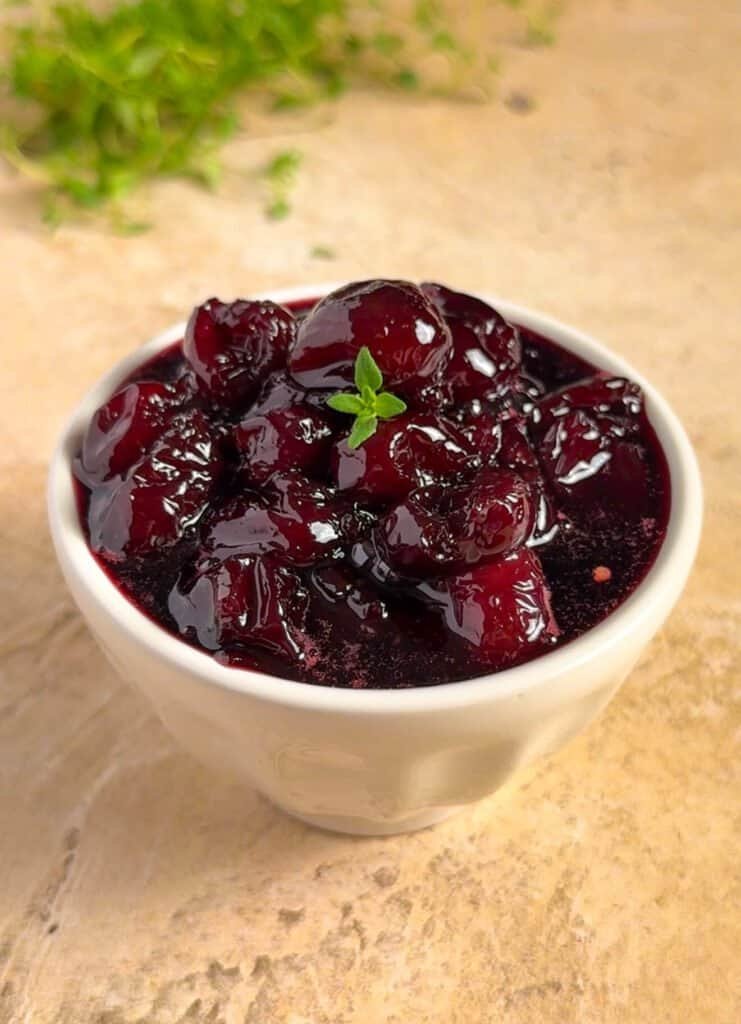
It started as a component for baked goat cheese – that burnished, soft cheese that disappears within minutes every time I set it out. There’s a jar of this in my fridge right now, and I keep finding excuses to open it.
It started as a component for baked goat cheese – that burnished, soft cheese that disappears within minutes every time I set it out. But then I found myself spooning this jam over ricotta toast before the goat cheese was even in the oven. Then stirring a little into a vinaigrette. Then simply eating it off a spoon at the kitchen counter, standing there, not even remotely apologetic about it.
This dark cherry jam is cooked low and slow with dry red wine, a few sprigs of fresh thyme, a bright hit of lemon juice, and the faintest whisper of red pepper flakes. It’s not a traditional jam – no pectin, no canning, no sterilized jars and water baths. It’s a small-batch refrigerator jam meant to live in your kitchen for a week and work hard the entire time. Rich, glossy, a little complex, deeply fruited, and barely sweet enough to call itself a jam.
Once you make it, you’ll understand why it earns its own post!
Why You’ll Love This Recipe
It comes together in one saucepan in about 20 minutes. There’s very little fuss here – no specialized equipment, no candy thermometer required, no experience with canning. If you can stir a pot, you can make this jam.
The flavor is layered in a way store-bought never is. The wine reduces into the cherries and becomes something richer and more rounded than either ingredient on its own. The thyme adds a whisper of herbal earthiness. The red pepper flakes – and I urge you to keep them in – provide a warmth that you feel at the back of the throat, not a heat you taste.
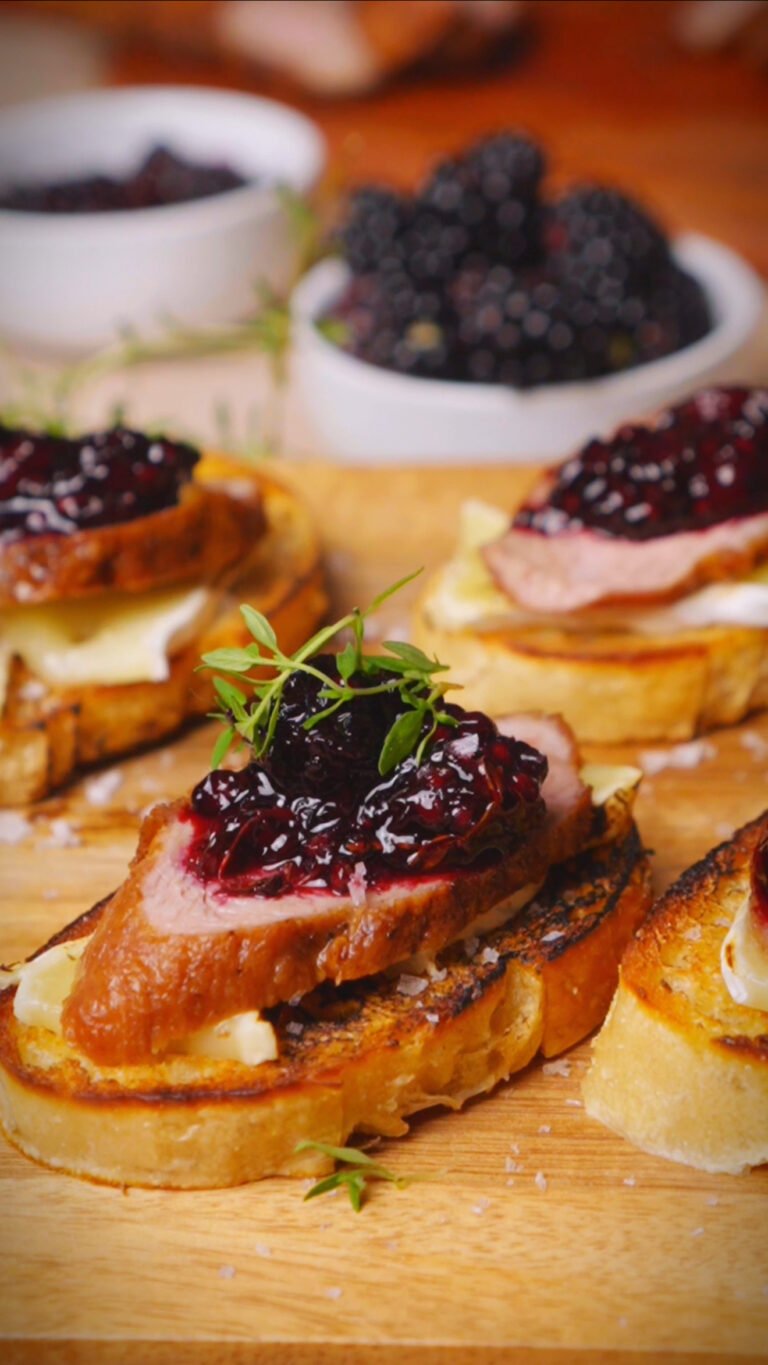
It works on everything. This is the jam for people who don’t think they want jam. Spoon it over baked goat cheese or brie. Serve it on a cheese board alongside aged cheddar and manchego. Dollop it onto ricotta toast with a drizzle of honey. Add it alongside roasted chicken thighs or duck. Stir it into a pan sauce. The list really does go on.
Frozen cherries work just as well as fresh. Which means this is a year-round recipe, not a precious summertime-only situation.
The Ingredients – And Why Each One Matters
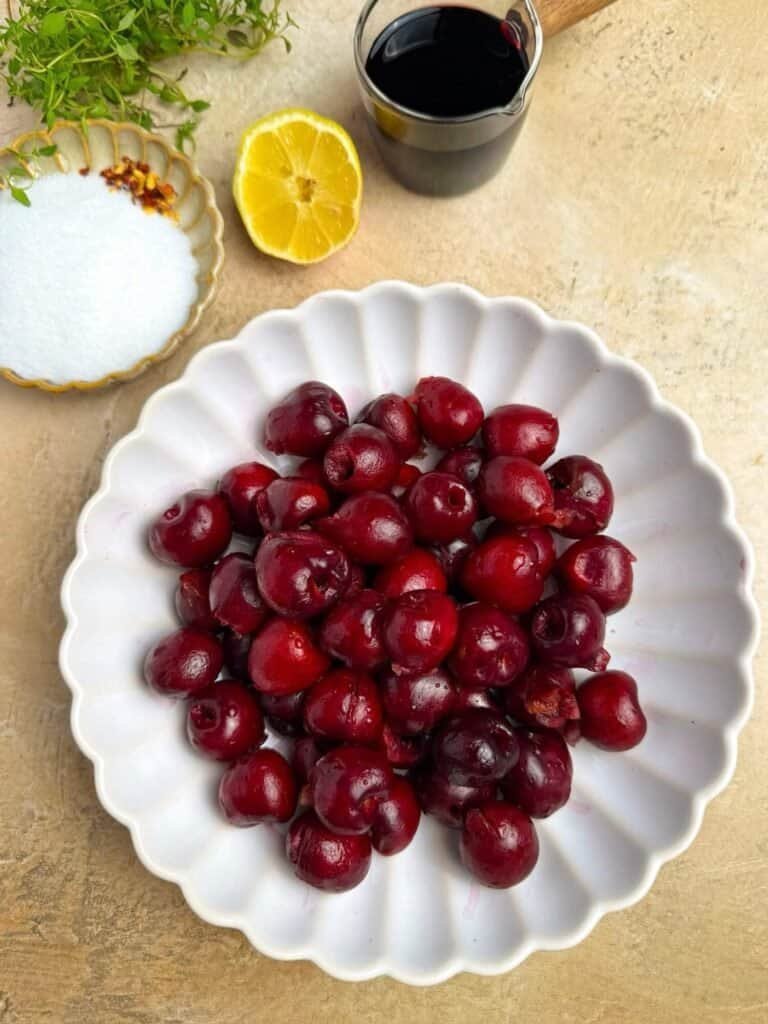
Dark sweet cherries (2 cups, pitted and halved) I use dark sweet cherries here – the deep burgundy-red variety, not sour Montmorency cherries. They have a natural sweetness that needs very little sugar, and when they cook down, they turn an almost ink-dark, glossy purple. Halving them (rather than leaving them whole) helps them break down faster and creates that jammy, spoonable texture. If you’re using frozen cherries, don’t thaw them first – add them straight to the pot and give them 2 to 3 extra minutes of cooking time.
Dry red wine (¼ cup – I use Merlot) This is the ingredient that elevates this jam from a nice homemade condiment to something people ask you for the recipe. The wine doesn’t make the jam boozy – the alcohol cooks off completely – but it contributes tannin, depth, and a subtle complexity you simply cannot get from fruit alone. Use a wine you’d actually drink: nothing precious, but nothing terrible either. Merlot is my preference here for its soft fruit-forward profile. Pinot noir would be lovely and slightly more savory. Avoid anything oaky.
Sugar (3 tablespoons) A smaller amount than most jam recipes – intentionally. The dark cherries are naturally sweet, and we’re not trying to candy them. This is a jam that tastes of fruit first, and a little sweetness second.
Lemon juice (1 tablespoon) Brightens the whole jam and balances the sweetness of the cherries. Fresh lemon is best. It also provides a small amount of natural pectin that helps with the texture.
Red pepper flakes (¼ teaspoon, optional – but really, use them) This is the ingredient people can never identify but always notice. The flakes don’t make the jam spicy – at ¼ teaspoon in this quantity of fruit, they provide warmth, not heat. They push the flavor profile from “sweet fruit condiment” into something a bit more sophisticated and savory. If you’re serving this to children or anyone with a low spice tolerance, reduce to ⅛ teaspoon or omit entirely. But try it with them first.
Fresh thyme sprigs (3) The herbal note here is subtle – you won’t bite into a piece of thyme and think “herb jam.” Instead, it lends a quiet earthiness that rounds out the wine and the cherries and makes everything taste a little more grown-up. Remove the sprigs before serving; the leaves will have mostly fallen off into the jam during cooking, which is exactly what you want. Rosemary could work here as a substitute, though it’s a stronger flavor – start with just one small sprig.
Flaky salt (a pinch) Salt in jam sounds strange until you’ve tasted it. A small amount sharpens every other flavor in the pot. I use Maldon or fleur de sel – nothing coarser or it will stay gritty.
What This Jam Tastes Like
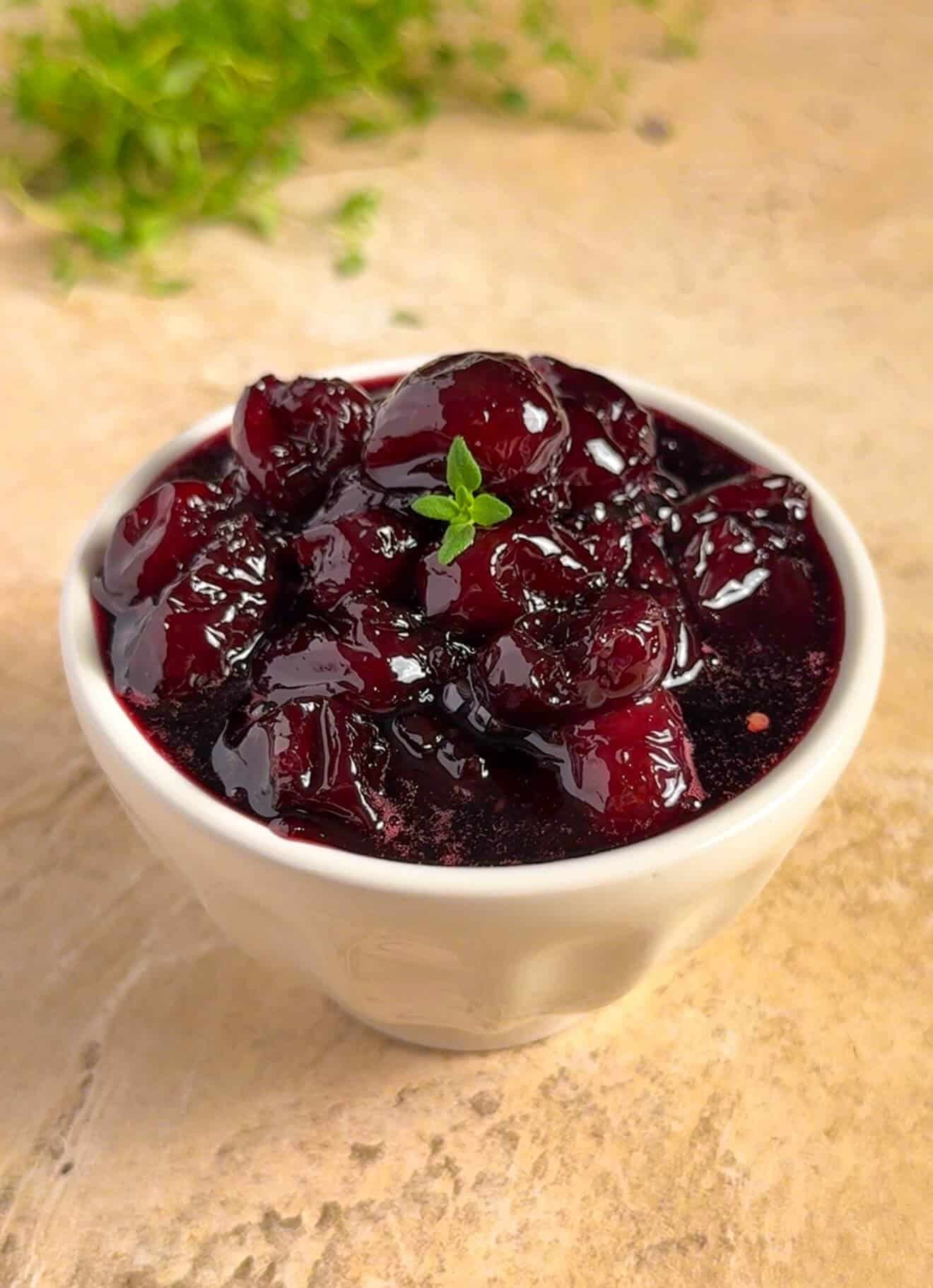
Picture cherries at their peak – full, dark, slightly winey on their own – cooked down into something deeply jammy and glossy, with the red wine woven all the way through. There’s fruit at the front of every bite, then a shift: something herbal and quiet in the middle, a warmth at the end. The texture is thick enough to mound on a spoon but soft enough to spread easily. Not chunky, not pureed – somewhere exactly in between.
The color alone is extraordinary. It cooks to a deep burgundy that looks almost jewel-like in the jar, catching the light in a way that makes it look like it belongs on the table at a dinner party. Presentation-wise, it gives ricotta toast a dramatic, restaurant-level quality for approximately no effort.
It is, in short, exactly the kind of condiment that makes people think you know something they don’t.
Step-by-Step Instructions
Makes approximately 1 cup | Active time: 5 minutes | Total time: 20–25 minutes
What you’ll need: One small saucepan (1.5–2 quart), a wooden spoon or silicone spatula, a clean jar or container for storage.
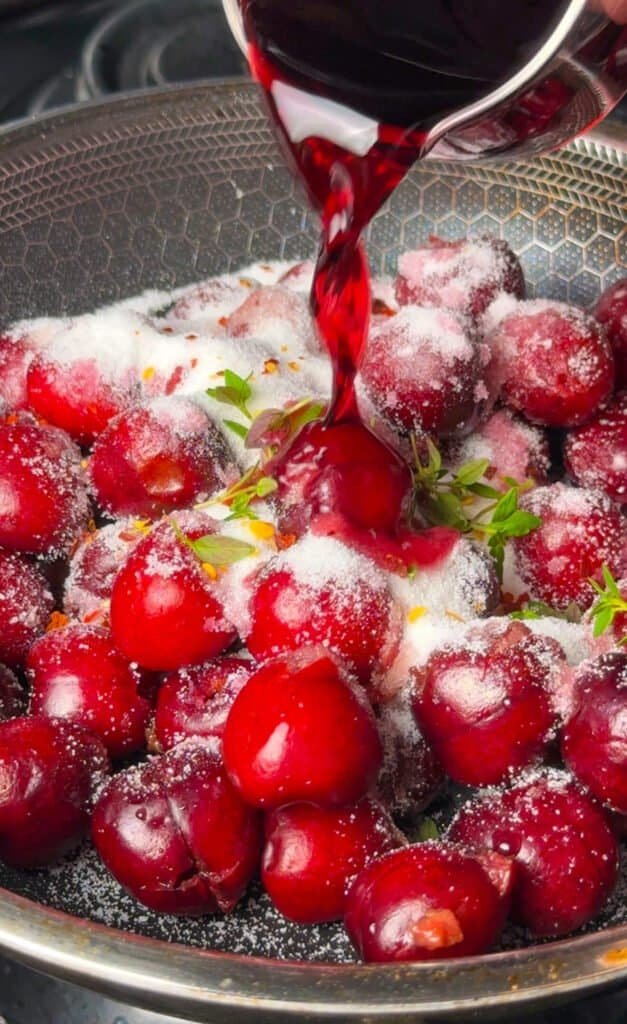
Step 1: Combine everything in the saucepan. Add the pitted and halved cherries, red wine, sugar, lemon juice, red pepper flakes, thyme sprigs, and salt directly to a small saucepan. No need to macerate the fruit or prep anything separately – everything goes in at once.
At this point, the mixture will look like it’s not going to amount to much. This is normal. Trust the process.
Step 2: Cook over medium heat, stirring occasionally. Set the burner to medium and let the mixture come to a gentle simmer. As it heats, the cherries will begin releasing their juice and the mixture will start looking much more like jam. You’ll see it shift from pale and fruit-forward to a deep, staining purple within the first 5 minutes.
Stir occasionally – every couple of minutes is enough. You don’t need to babysit this.
Step 3: Cook for 15–20 minutes until thick and jammy. The jam is ready when:
- The cherries have mostly broken down (a few small pieces are fine and lovely)
- The liquid has reduced significantly and coats the back of a spoon
- When you drag a spoon across the surface, the jam holds the line for a second before slowly coming back together
- The mixture smells like deeply cooked cherries and wine
- If you dip a spoon in and hold it up, the jam should fall off in thick, slow drops, not a stream.
A note on timing: If you’re using frozen cherries, the process will take a few minutes longer – closer to 20–22 minutes – because of the additional moisture. Keep cooking until the jam reaches the same thickness.
Step 4: Remove the thyme sprigs and taste. Use tongs or a spoon to fish out the three thyme sprigs. Give the jam a taste. Is there enough brightness? Add a few more drops of lemon juice. Too sweet? A pinch more salt. You’re looking for balance: fruity, a little savory, slightly sweet, warmly spiced.
Step 5: Cool and store. Let the jam cool in the saucepan for 10 minutes, then transfer to a clean jar or lidded container. It will continue to thicken slightly as it cools – this is normal and desirable. Refrigerate and use within 1 week.
Expert Tips for the Best Results
Use a wide saucepan if you have one. More surface area = faster evaporation = quicker, more flavorful reduction. A small skillet with higher sides can work well here.
Don’t skip the salt. I know it seems counterintuitive in a jam, but a pinch of flaky salt in the cooking liquid elevates all the fruit flavors in the same way salt in baked goods makes everything taste more like itself.
The spoon test is more reliable than the clock. Ovens vary, stovetops vary, the size of your cherries varies. Use the spoon test – not the timer – to determine doneness. The jam should coat the back of a spoon and hold a line when dragged.
Make it ahead. This jam actually tastes better on day two, once the flavors have had time to settle and meld together in the fridge. If you’re making it for a gathering, cook it the night before.
On wine choice: The wine doesn’t need to be expensive, but use something you’d drink. A $12 bottle of Merlot is perfect. Avoid overly tannic wines (heavy Cabernets) or very sweet wines; both throw off the balance. Pinot noir adds a slightly earthier, more savory note.
Serving ideas beyond the obvious:
- Spooned warm over a round of baked goat cheese or brie with crusty bread or crackers
- On a cheese board alongside aged manchego, sharp cheddar, or creamy brie
- Dolloped onto ricotta toast with a drizzle of honey and cracked black pepper
- Stirred into a pan sauce for seared duck breast or chicken thighs
- Layered into a grilled cheese with brie and arugula
- Warmed and served over vanilla ice cream or panna cotta
- As a glaze for roasted pork tenderloin in the last 10 minutes of cooking
FAQ
Can I use frozen cherries instead of fresh? Yes, absolutely. Frozen dark sweet cherries work beautifully here – one of the reasons I love this recipe year-round. Add them frozen (no need to thaw), and plan for an extra 2–3 minutes of cooking time since they release more liquid. The final result is identical in flavor and texture.
Does it need pectin? No, and this recipe doesn’t benefit from it. This is a small-batch refrigerator jam, not a shelf-stable canned product, so the texture question is simpler: cook it long enough to thicken naturally. The lemon juice provides a small amount of natural pectin, and the sugar concentration handles the rest. The result is slightly softer than commercial jam – more like a thick compote – which is exactly what makes it so good for spooning.
How long does this cherry jam last in the fridge? Up to 1 week stored in a sealed jar or airtight container. The wine and lemon juice act as natural preservatives. If you want to extend the shelf life, it can also be frozen for up to 3 months – transfer to a freezer-safe container and thaw in the fridge overnight.
Can I use sour cherries instead of sweet cherries? You can, but you’ll want to increase the sugar – I’d start with 4–5 tablespoons rather than 3 and taste as you go. Sour cherries are more acidic and will produce a tangier, brighter jam. Both are excellent; they’re just quite different in character.
What wine works best? A medium-bodied, fruit-forward dry red wine is ideal. Merlot is my first choice for this recipe – soft tannins, plummy fruit, and it doesn’t overpower the cherries. Pinot noir works beautifully too, adding a slightly earthier note. Avoid heavily oaked wines (they can taste bitter when reduced) and sweet wines (the jam will be too sweet to balance).
What can I serve this jam with? So much. The most natural pairings are baked goat cheese or brie, ricotta toast, and cheese boards. But it’s also excellent alongside roasted chicken, duck, or pork – anywhere you’d use a fruit-based sauce. Stir it into plain yogurt, use it as a tart filling, or add a spoonful to a cheese grilled sandwich with brie and arugula. It’s one of those recipes that rewards experimentation. For a full appetizer spread, it pairs beautifully alongside lemon-caper smoked salmon crostini – the briny, bright flavors balance the jam’s depth perfectly.
Can I double the recipe? Yes. Double the ingredients and use a larger saucepan. Expect the cooking time to increase by 5–8 minutes to account for the additional liquid. The key is to cook until thick, not to cook for a set amount of time – so use the spoon test regardless of batch size.

Dark Cherry and Red Wine Jam with Thyme
Ingredients
Method
- Combine the cherries, red wine, sugar, lemon juice, red pepper flakes, thyme sprigs, and salt in a small saucepan over medium heat.
- Cook, stirring occasionally, for 15–20 minutes (20–22 minutes if using frozen cherries), until the cherries have broken down, the wine has reduced, and the mixture is thick enough to coat the back of a spoon.
- Remove the thyme sprigs. Taste and adjust — add a few drops of lemon juice if it needs more brightness, a pinch more salt if the flavors seem flat.
- Let cool slightly in the pan, then transfer to a clean jar or airtight container. The jam will continue to thicken as it cools.
- Refrigerate for up to 1 week, or freeze for up to 3 months.
Notes
- Frozen cherries work beautifully here – add them straight from frozen, no need to thaw, and add 2–3 extra minutes of cooking time.
- The red pepper flakes add background warmth, not spice – reduce to ⅛ teaspoon or omit if preferred.
- Use a wine you’d actually drink – nothing precious, but nothing you’d avoid. Merlot or pinot noir both work beautifully.
- This jam is excellent spooned over baked goat cheese, served on a cheese board, dolloped onto ricotta toast, or used as a sauce alongside roasted chicken, duck, or pork.




excellent