
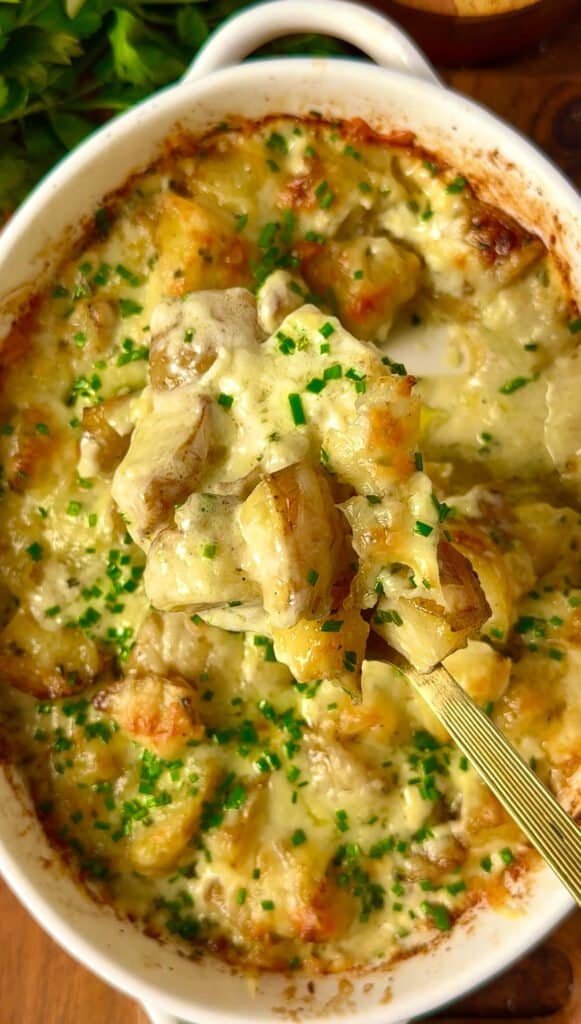
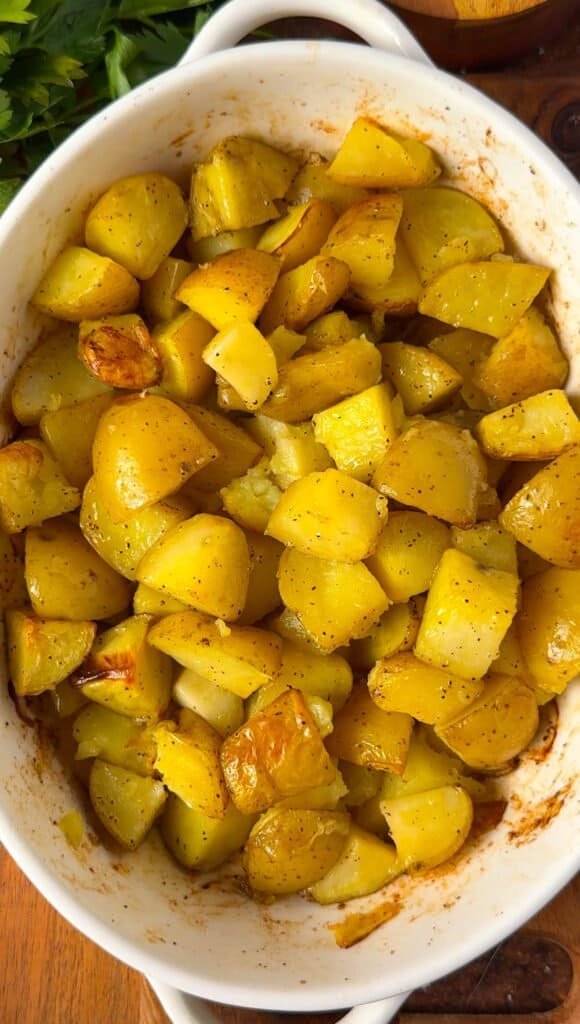
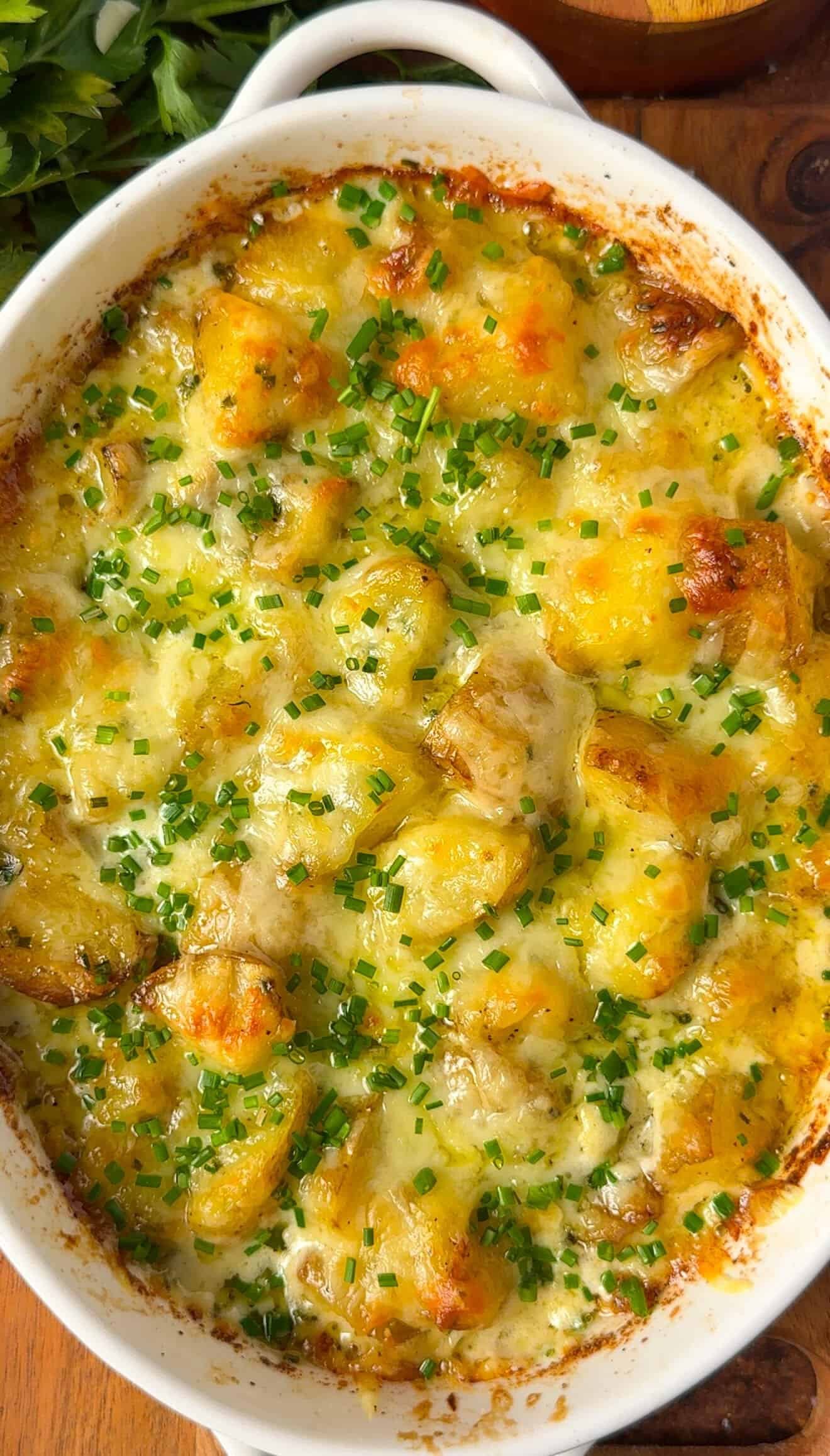
These roasted potatoes au gratin start with skin-on cubes, so there’s no peeling or slicing a whole pile of potatoes into thin rounds. Roasting gives the potatoes some color before the cream goes in. You can still see those golden edges in the finished dish, with melted cheese between the pieces and chives scattered over the top.
I used Monterey Jack alongside the cheddar to give the cheese mixture a softer melt. There’s garlic in the cream, too, but the cheddar is the flavor I wanted to come through. Some chives go into the cream, and the rest go on at the end.
This is something I’d serve with roast chicken on a weekend or put on the table for Thanksgiving. If you enjoyed my butternut squash gratin with bacon and Gruyère, you’ll recognize the idea. The potatoes have their own flavor, though, and I kept this version meatless.
Why You’ll Love These Roasted Potatoes Au Gratin
- The skins stay on. Yukon Golds have thin skins that work well with the roasted cubes and save some prep.
- You get roasted potato flavor throughout. The potatoes develop color before the dairy goes into the dish.
- The cheeses are familiar. White cheddar brings flavor, while Monterey Jack helps with the melt.
- It makes a smaller batch. There’s enough for a family dinner or a smaller holiday table without committing to a huge casserole.
What Makes This Potato Gratin Different?
A traditional potato gratin usually starts with thin slices layered in a dish. Here, the potatoes are cut into cubes and roasted first. That changes both the preparation and the finished texture. The pieces hold their shape, and a serving spoon picks up distinct potato cubes with cream and cheese around them.
I liked being able to see the potatoes through the topping. Some pieces have more cheese, while others have a golden corner sticking out. There’s enough cream to bring everything together without completely hiding the roasted potatoes.
This method also separates the potato cooking from the cheese finish. By the time the dairy goes in, the potatoes should already be tender. You’re not waiting for a firm center to soften while the cheese keeps baking on top.
That mattered with the cheddar. In my batch, keeping the final oven time short gave me the finish I wanted. Letting the cheese sit in the heat too long caused it to release oil, so this isn’t a dish I would leave baking while waiting for everything else to catch up.
Ingredient Notes
Why I used Yukon Gold potatoes
Yukon Golds have a buttery flavor and a creamy interior that suits this recipe. They also hold together well enough to fold with the cream and cheese after roasting. You want tender pieces that still look like potatoes when you lift them out of the dish.
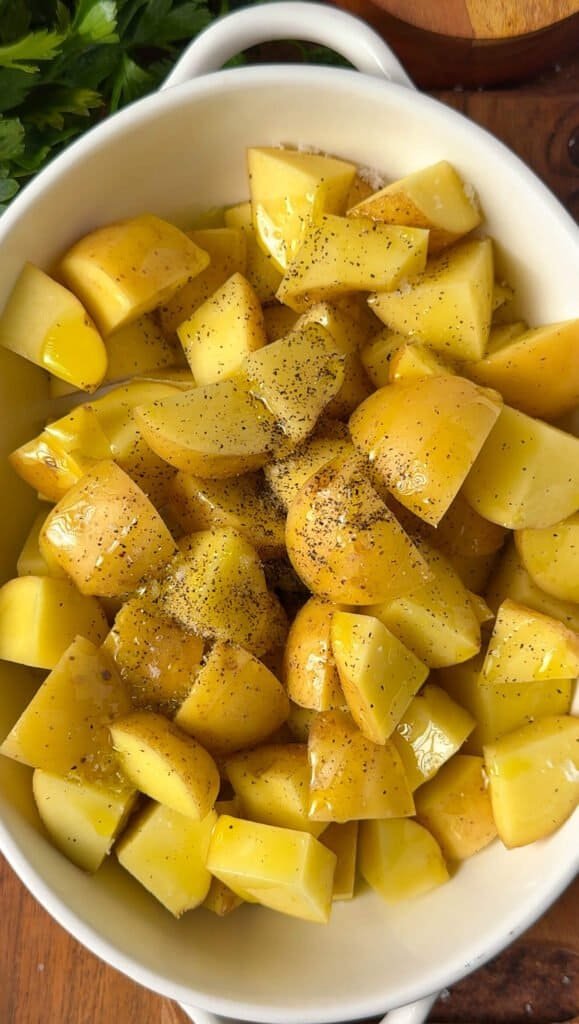
Their thin skins are another reason I chose them. I left mine on, and you can see them on the finished cubes. Scrub the potatoes well and remove any damaged spots before cutting.
Try to keep the pieces reasonably even. A few slightly different shapes are fine, but a very large chunk will take longer to cook than the smaller pieces around it. That becomes inconvenient once the rest are ready for the cheese.
White cheddar for flavor
White cheddar gives the potatoes a savory, slightly tangy flavor. The color is mostly an appearance choice here. An orange cheddar of similar age and sharpness can work, too, although it will change the color of the finished dish.
I recommend sharp cheddar rather than an especially dry, crumbly, long-aged cheese. More age doesn’t automatically mean a better result in a baked dish. You want enough flavor to stand up to the potatoes while still getting a pleasant melt.
Grate it from a block if you can. That also makes it easier to combine evenly with the Monterey Jack before dividing the cheese between the filling and the top.
What the Monterey Jack adds
Monterey Jack is milder than cheddar, so its job here is mostly texture. It softens the overall cheese mixture without taking away the cheddar flavor.
Using the two together also keeps the ingredient list accessible. You don’t need to track down a specialty melting cheese for this recipe. Look for regular Monterey Jack, rather than an aged dry Jack, which behaves quite differently.
The blend still needs a short finishing bake. Adding Monterey Jack doesn’t make the cheddar immune to releasing oil if it stays under high heat too long.
Heavy cream, garlic, and fresh chives
Heavy cream gives the potatoes a rich coating without making a separate sauce. I used it as written in the recipe card and wouldn’t replace it with milk as a straight swap. Milk would make the mixture thinner and change the result.
Finely grated garlic distributes through the cream more evenly than larger chopped pieces. Since it goes in after the potatoes are roasted, it also avoids sitting exposed in the hot oven during the first bake.
I added chives to the cream as well as the garnish. The ones inside soften and give the dish a gentle onion flavor. The fresh chives on top are more noticeable when you take a bite. I like having both, particularly with the cheddar.
Tips For a Good Potato Gratin
Make sure the potatoes are tender before adding the cream
This is the most useful checkpoint in the recipe. Check more than one piece, including potatoes near the center of the dish. A small knife should slide through without resistance.
My potatoes needed the full roasting time listed in the card. Their size, the baking dish, and your oven can all affect that timing. If yours still feel firm, let them keep roasting before moving on.
Once the cheese is added, there isn’t a long baking window left to finish undercooked potatoes. Getting the texture right first makes the last stage much easier to manage.
Give the potatoes room to roast
The potatoes need some exposed surface to develop color. If they’re piled deeply, more of the moisture stays trapped between the pieces, and you’ll get less browning.
That doesn’t mean every cube needs a perfect space around it. Just spread them evenly and avoid packing extra potatoes into the dish because there happens to be room at the top.
If you increase the recipe, increase the surface area of the baking dish as well. A deeper pile won’t cook or brown in the same way as the batch I made.
Watch the cheese during the finish
The potatoes have already done most of their cooking before the cheese goes on. The last stage is about melting the cheese, heating the cream, and getting some color on top.
I finished mine under the broiler, but broilers vary a lot. Watch the dish rather than waiting for a timer to tell you it’s ready. Yours may brown sooner, particularly if the dish sits closer to the heating element.
A little browning is enough. The golden potato edges already add color, so you don’t need to push the cheddar until the entire surface is deeply browned. Let the gratin rest briefly before serving so the cream has a chance to settle around the potatoes.
Substitutions And Small Variations
The cheddar and chive combination is the version I’d start with. It gives the dish a clear flavor without needing bacon, breadcrumbs, or another topping.
If you only have orange sharp cheddar, use it in place of white cheddar. Choose a similar style and grate it yourself. The difference will be more obvious in the color than in the overall character of the dish.
Regular Gouda could be a substitute for the Monterey Jack, although I haven’t tested that variation here. Smoked Gouda would change the flavor more substantially. I would use it only if you specifically want smoky potatoes.
Thinly sliced scallion greens are another option if fresh chives are unavailable. They have a stronger onion flavor and a different texture, so they won’t be quite the same. Chop them finely and use a light hand.
You can peel the potatoes if you prefer. I like the skins in this version, but the method doesn’t depend on keeping them. The more important detail is using evenly sized pieces.
For a side with a completely different flavor, my chipotle roasted sweet potatoes with lime and cotija take the roasted-cube idea in a spicier direction. I’d choose those when I wanted heat and lime instead of a cream-based potato dish.
Can You Prepare This Ahead?
For the best freshly melted topping, I would plan to finish this gratin close to serving. That doesn’t mean you have to do every bit of preparation at the last minute.
The cheese can be grated ahead and refrigerated in a covered container. You can also wash and dry the potatoes earlier in the day, then cut them when you’re ready to cook. Snipping the chives and measuring the other ingredients ahead makes the final assembly easy.
I haven’t tested a fully assembled overnight version, so I wouldn’t promise that it will bake on the same schedule straight from the refrigerator. Cold potatoes and cream would need more time to heat, and the cheddar topping would then be exposed to heat for longer.
If you want to roast the potatoes ahead, refrigerate them promptly and reheat them before adding the cream and cheese. That is a suggested make-ahead approach rather than the method I tested. You would need to allow extra warming time, and the roasted surfaces may soften.
For a holiday meal, I’d do the ingredient prep early and reserve the final cheese stage for when the main dish is resting. It’s a more useful place to save time than trying to keep the finished gratin in the oven for an extended period.
Storing and Reheating Leftovers
Refrigerate leftovers within two hours and use them within three to four days. Keep them in a covered container so the exposed potatoes and cheese don’t dry out.
The cream will thicken as the potatoes cool. That is expected, and the reheated dish won’t look quite as loose as it did when freshly made. A small splash of cream or milk can help loosen an individual portion if it needs it.
Reheat gently and cover the potatoes to keep moisture in. For a larger portion, use an oven-safe dish in a moderate oven. Individual portions can be reheated in the microwave in short intervals. Heat leftovers through to 165°F in the center.
I wouldn’t broil the leftovers again just to recreate the original top. The cheese has already been melted and browned once, and more intense heat can make it oily.
Freezing wouldn’t be my first choice for this recipe. The cream sauce and potato texture can change after thawing. A smaller fresh batch, followed by refrigerated leftovers, is how I would plan to serve it.
Frequently Asked Questions
Do I need to boil the potatoes before making gratin?
No. This version cooks the potatoes by roasting them directly in the baking dish before adding the cream and cheese.
The important part is making sure they are fully tender at that point. If a knife catches in the center of a cube, the potatoes need more roasting time. Don’t rely on the short cheese bake to finish them.
Can I use pre-shredded cheese for potatoes au gratin?
You can, but I recommend freshly grated cheese for this recipe. Packaged shredded cheeses often have ingredients added to keep the shreds separate, which can affect how evenly they melt.
Since the cheese is such a noticeable part of the dish, grating it yourself is worthwhile. It also lets you choose the cheddar you like rather than relying on a packaged blend with different proportions.
Why did my cheddar release oil?
Excessive heat or a prolonged bake can make cheddar separate and release fat. The age and composition of the cheese can affect how it behaves, too.
For this recipe, cook the potatoes completely before adding the cheese, then keep the finishing stage brief. A little sheen on melted cheese is normal, but you don’t want to keep baking once the dish is ready just to force more browning.
The timing in the card reflects my batch. It helps guide the finish, but watching your own cheese matters, especially under the broiler.
Can I double this recipe?
Yes, but use a larger, wider baking dish so the potatoes have room to roast. Don’t simply double the ingredients in the same dish.
Check tenderness rather than assuming the roasting time will be identical or twice as long. The cheese still needs only a brief finish once the potatoes are hot and tender. For a larger gathering, two smaller dishes can also make it easier to manage the roasting and serving.
What To Serve With Roasted Potatoes au Gratin
I’d serve these with roast chicken, pork tenderloin, or a simply cooked steak. The potatoes already bring cream and cheese to the plate, so the main dish doesn’t need a heavy sauce.
For Thanksgiving or Christmas, they would fit beside my roasted citrus turkey with orange and sage. The orange and sage give the turkey its own flavor, while these potatoes keep the side dish familiar. You could finish the gratin while the turkey rests, adjusting the oven temperature as needed.
Something with a little acidity is useful alongside it. My marinated mushroom and pepper salad has red wine vinegar, lemon, and fresh herbs, which would give you a different texture and flavor next to the creamy potatoes. It’s also a dish you can prepare ahead, which helps when the oven is busy.
For a larger holiday table, my green bean casserole with mushrooms and Gruyère is another option. Both dishes are rich, so I’d serve smaller portions and include a fresh salad or a simpler green vegetable.
If you want a warm appetizer before dinner, baked Brie with cranberries and honey would suit a holiday menu. I’d serve it early enough to enjoy with drinks, then let the potatoes be the creamy side that comes to the table with the main course.
This post contains affiliate links. If you purchase through them, I may earn a small commission at no extra cost to you.

Roasted Potatoes au Gratin with White Cheddar
Ingredients
Method
- Preheat the oven to 425°F.
- Toss the potatoes with the olive oil, salt, and pepper directly in the baking dish.
- Spread the potatoes into an even layer.
- Roast uncovered for 50 minutes, turning after 25 minutes, until lightly golden and fully tender when pierced with a knife.
- Stir together the heavy cream, grated garlic, and 1 tbsp chives.
- Combine the grated white cheddar and Monterey Jack in a separate bowl.
- Reduce the oven temperature to 375°F.
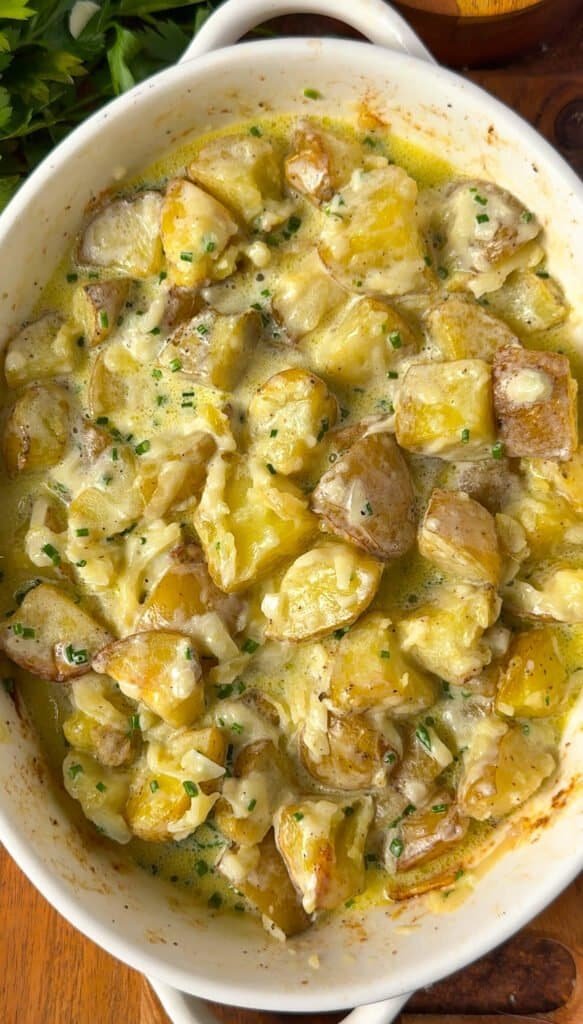
- Gently fold the cream mixture and half the combined cheeses into the roasted potatoes.
- Spread the potatoes evenly in the dish.
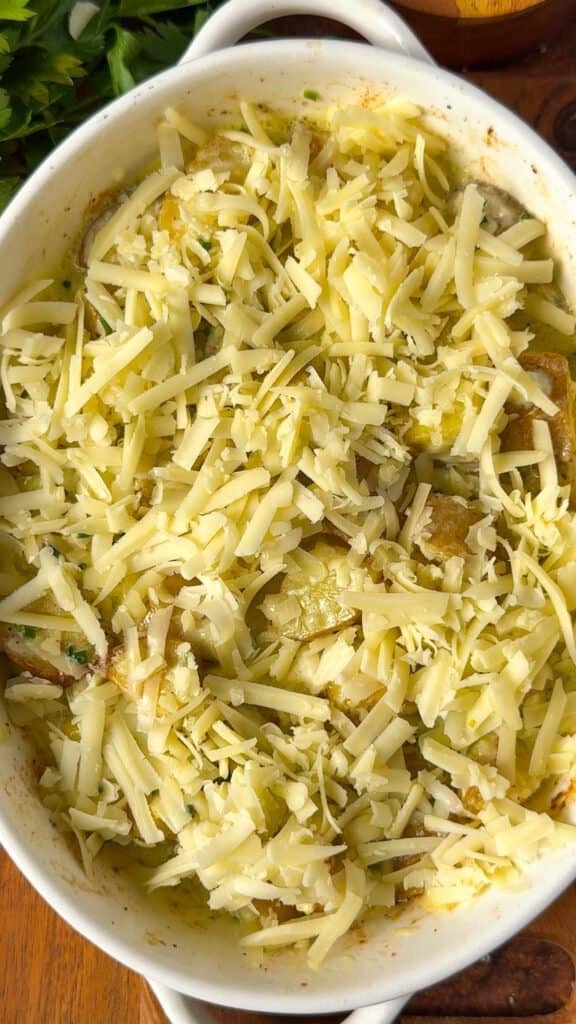
- Scatter the remaining cheese over the top.
- Bake uncovered for about 11 minutes, until the cheese melts and the cream begins bubbling around the edges.
- Broil for up to 4 minutes, watching constantly and removing the dish sooner if the top is golden. Keep the entire finishing stage, including broiling, to no more than 15 minutes.
- Rest for 10 minutes.
- Sprinkle with the remaining 1 tbsp chives before serving.
Notes
- Roasting time: The tested batch took 50 minutes. Check several potatoes near the center of the dish. If they are still firm, continue roasting before adding the dairy.
- Cheese finish: The tested finish was about 11 minutes baking followed by 4 minutes broiling. Prolonged heat can cause cheddar to release oil. Broilers vary, so remove the dish sooner if browned.
- Baking dish: Follow the manufacturer’s instructions for broiler use. If the dish is not broiler-safe, finish at 375°F for up to 15 minutes, until melted and bubbling. The top will be lighter.
- Cheese: Freshly grated cheese is recommended. Orange sharp cheddar can replace white cheddar. Regular Monterey Jack is intended here, not aged dry Jack.
- Make ahead: Grate the cheeses and prepare the other ingredients ahead, refrigerating dairy ingredients until needed. A fully assembled overnight version has not been tested.
- Storage: Refrigerate within 2 hours and use within 3–4 days.
- Reheating: Reheat gently, covered, until the center reaches 165°F. Add a small splash of cream or milk if needed.
- Scaling: Use a larger, wider dish when increasing the recipe. Check potato tenderness before adding the cream and cheese.