
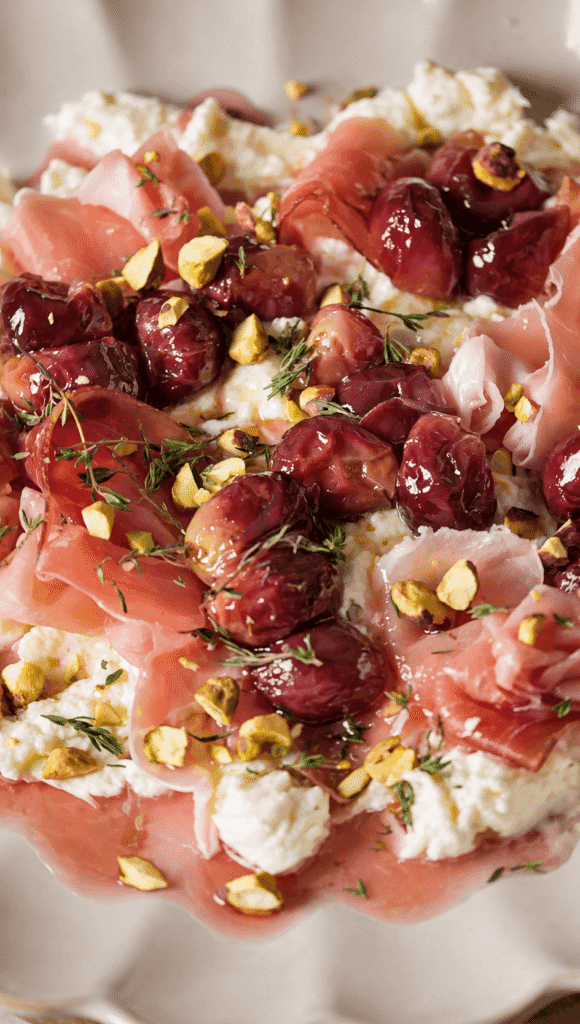
I’d put this burrata with roasted grapes and pistachios in the middle of the table before dinner, with plenty of bread and a spoon for getting into the creamy cheese. It looks beautiful, but most of the work happens in the oven. There’s no filling tiny pastry shells or assembling twenty individual bites while everything else needs your attention.
The grapes roast with a little balsamic vinegar until their skins wrinkle and the juices collect in the baking dish. Spoon them over torn burrata, tuck in thin ribbons of prosciutto, and finish with chopped pistachios and fresh thyme. The warm grapes soften into the cheese, while the prosciutto adds enough saltiness to keep the fruit from making the dish feel too sweet.
And those roasting juices? They belong on the platter, too. Once they mingle with the creamy burrata, you’ll understand why the bread is important.
If you enjoy the warm topping and creamy cheese in my cheesy roasted tomato toast with burrata, this is another combination to try. It works as a holiday appetizer, but I wouldn’t save it only for a special occasion.
Why You’ll Love This Recipe
- Most of the cooking is hands-off. While the grapes roast, you can prepare the toppings and slice the bread.
- You don’t need a separate sauce. The balsamic and grape juices dress the burrata.
- It’s easy to serve family-style. Bring out one platter and let everyone build their own bites.
- The oven and air fryer both work. Choose whichever fits your kitchen plans, especially when you’re cooking several dishes.
Ingredient Notes
Choose sweet, seedless grapes
You’ll need 2½ cups of seedless red grapes, measured after removing the stems. Red grapes give this appetizer its deep color. Look for firm grapes that taste good before cooking. Roasting concentrates their flavor, but it won’t completely fix fruit that tastes unpleasantly sour.
Remove the stems before roasting. Clusters can look lovely in a photograph, but loose grapes are much easier to scoop onto bread. You don’t want guests pulling stems out of a spoonful of burrata.
Wash the grapes and dry them well. Water clinging to the skins dilutes the small amount of oil and balsamic used here. A clean kitchen towel works well for drying them without bruising the fruit.
Leave them whole. Some will split as they roast, while others will keep their shape and become soft inside.
Burrata is the creamy base
Burrata has a mozzarella exterior with a soft filling of mozzarella pieces and cream. That center spreads across the platter when you open the cheese, giving the grapes somewhere to settle. www.belgioioso.com
Drain it before assembling. You want the flavorful grape juices on the plate, rather than extra liquid from the cheese container.
The size of burrata balls varies, so check the package when shopping. Smaller balls are convenient for distributing across a platter; a larger ball can be opened and spread in the same way. The goal is a generous layer of cheese with enough room for the toppings.
Use regular balsamic vinegar
A little balsamic adds acidity to the sweet grapes. Use regular balsamic vinegar for roasting, rather than a thick balsamic glaze. Glaze is more concentrated and often sweeter, so it changes how the dressing behaves.
There’s no need to cover the fruit in vinegar. This recipe uses a small amount, letting the grapes provide most of the juice as they soften.
The olive oil helps coat the grapes and becomes part of that dressing. Choose one you enjoy, since you’ll taste it in the finished appetizer.
Torn prosciutto adds a savory layer
Use 4 thin slices of prosciutto, torn into smaller pieces. Tearing the slices makes the platter easier to serve and helps distribute the prosciutto throughout the cheese.
Keep the pieces manageable. A whole slice draped across the platter can pull several toppings along with it when someone tries to take a bite. Loose folds also leave little spaces for the grapes and pistachios to settle.
Add the prosciutto during assembly. It doesn’t need to go into the oven with the grapes.
Burrata with prosciutto also works beautifully with crisp fruit. My apple, burrata and prosciutto salad wreath uses that combination in a fresh, no-cook appetizer.
Roasted pistachios and fresh thyme finish the dish
Use shelled roasted pistachios and chop them roughly. A mix of small pieces and a few larger ones gives you crunch without making the topping difficult to eat.
Salted pistachios are fine. Just season the grapes lightly at first, since the prosciutto contributes salt as well.
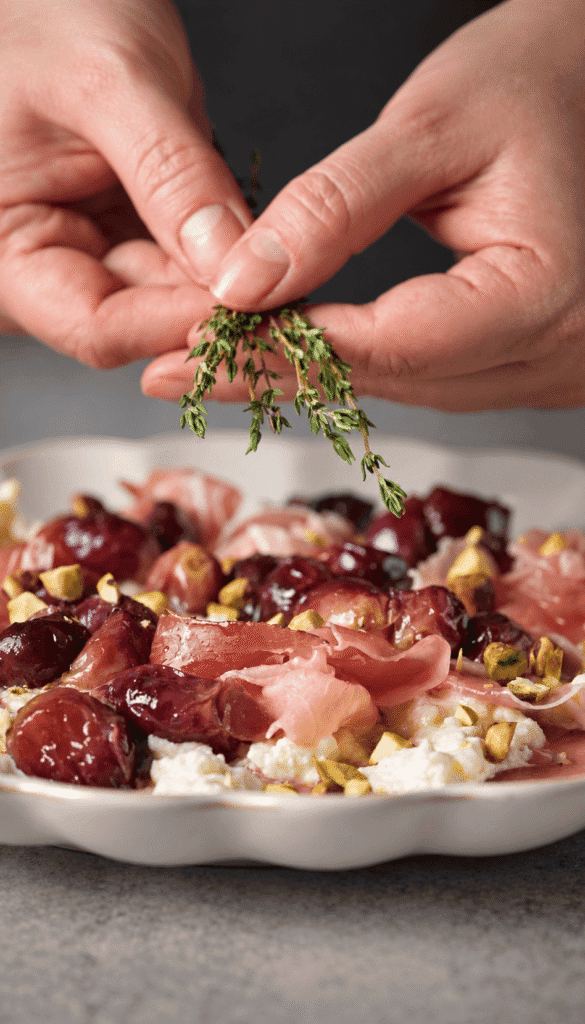
Fresh thyme brings a savory note that works with the roasted fruit. Pull the small leaves from the stems before adding them. Tender tips are easy to eat, but thicker, woody stems are best left off the platter.
How to Make Burrata with Roasted Grapes
The full quantities, temperatures, and cooking times are in the recipe card below. Here’s what to look for as you put it together.
Start with a baking dish that catches the juices
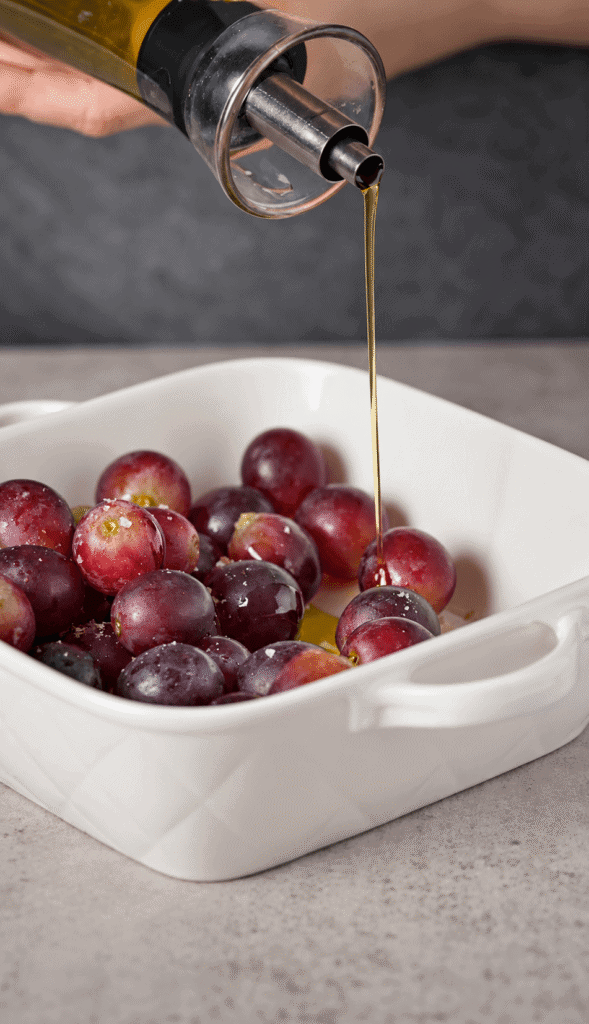
Choose a baking dish with enough space to hold the grapes mostly in one layer. They can touch, but avoid packing them into a deep pile.
Toss them directly in the dish with the oil, balsamic, salt, and pepper. Turn them over a few times so the seasoning reaches more than just the top layer.
You don’t need a separate mixing bowl, and using a dish with sides means you can keep all the liquid the grapes release. Avoid an unnecessarily large pan, which spreads those juices into a thin layer that can evaporate more quickly.
Roast until the skins wrinkle and the grapes soften
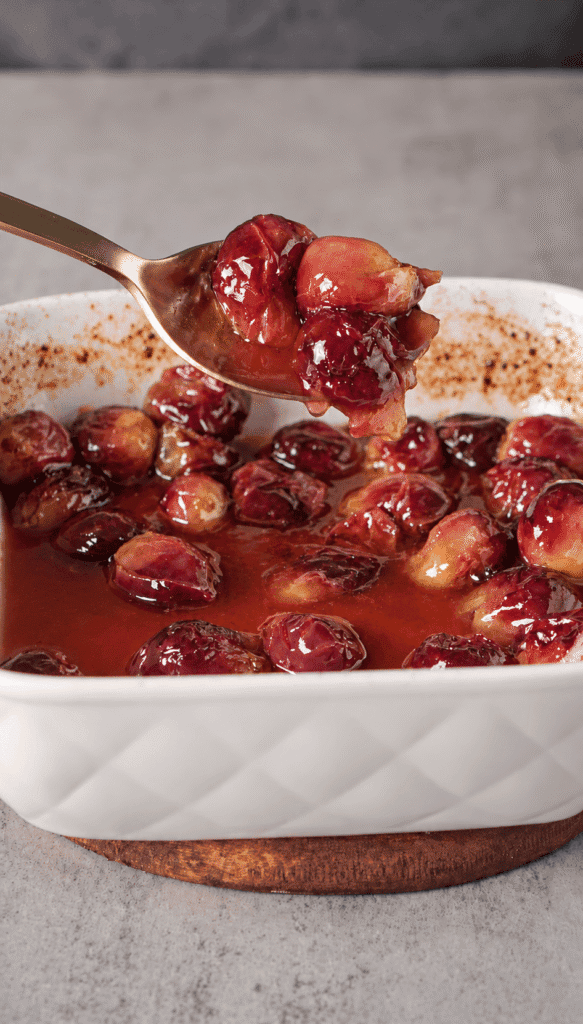
The grapes should look different when they come out of the oven. Their skins will lose that firm, smooth appearance, some may split, and you should see juice in the bottom of the dish.
Check one with a spoon. It should yield easily rather than feel firm and springy.
Don’t wait for every grape to collapse. Keeping some whole gives the platter texture and makes it easier to spoon a grape onto bread. You’re also trying to preserve enough juice to dress the cheese.
If the grapes are still firm at the suggested cooking time, give them a little longer and check again. Their size and starting temperature can affect how quickly they soften.
Open the burrata and arrange the prosciutto
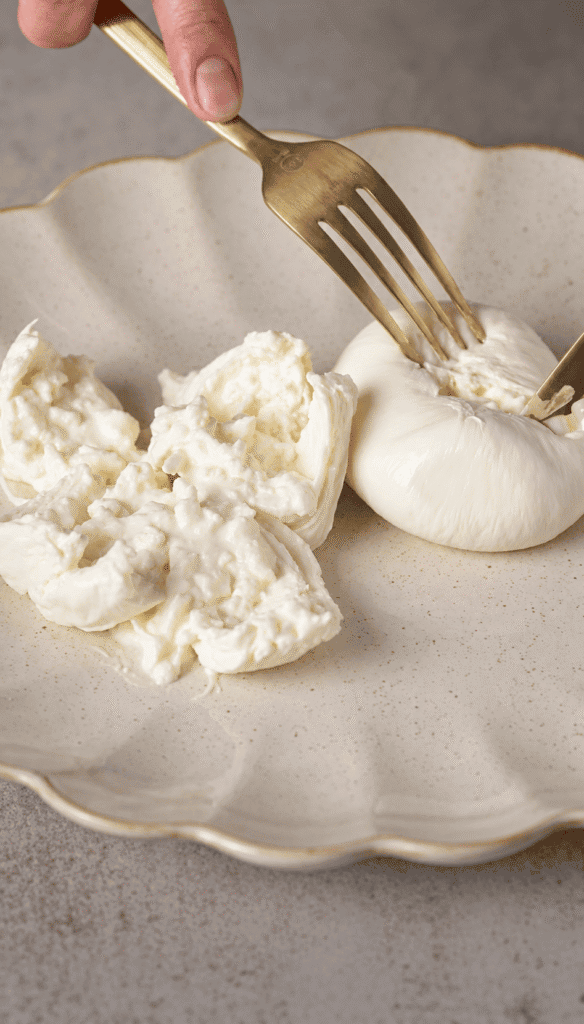
While the grapes rest briefly, drain the burrata and place it on a shallow platter. Open the balls with a knife and fork, then gently spread the creamy centers.
Leave some of the mozzarella exterior in soft pieces. You don’t need to mash everything into a smooth dip.
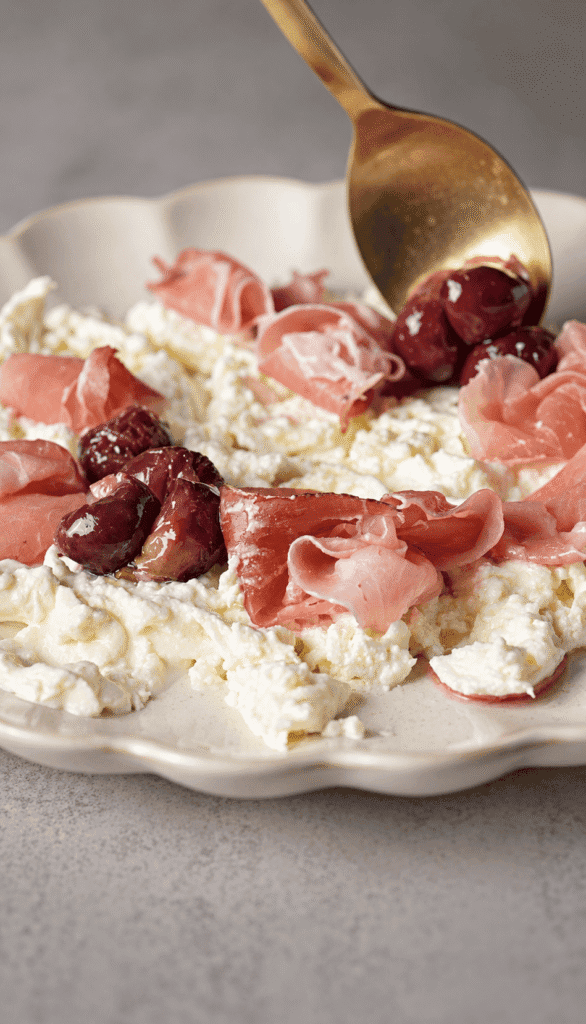
Arrange the torn prosciutto in loose folds over the cheese. Spread the pieces around the platter so people can get a little in each serving, rather than gathering them all in the middle.
Spoon on the warm grapes
Let the grapes stop bubbling before adding them. They should still be warm, but there’s no benefit to pouring sizzling liquid straight over the cheese.
Distribute the grapes across the burrata and prosciutto, then spoon over the pan juices. Let some settle into the cheese and some pool around it.
Finish with the pistachios and thyme just before serving. Adding the nuts last keeps their texture distinct from the soft fruit and creamy cheese.
Using the air fryer
For the air fryer version, keep the grapes in an oven-safe dish that fits comfortably inside the basket. Leave room around it for air to circulate.
Putting loose grapes directly into a perforated basket would let the juices drain away. Those juices are part of the appetizer, so use a dish that catches them.
The grapes should still sit mostly in one layer. If your air fryer dish is too small for the full amount, cook in batches rather than filling it deeply.
Start checking at the earlier end of the cooking range. Air fryers vary, and small grapes can soften faster than larger ones. Look for the same signs as the oven version: wrinkled skins, tender fruit, and released juices.
Three Tips for the Best Burrata Platter
1. Keep the cheese layer generous
A very large platter can make the burrata look sparse. Choose one that lets you spread the cheese without scraping it into a thin coating.
A shallow rim is useful, too. It keeps the roasting juices contained while still making everything easy to reach with a spoon.
2. Taste a complete bite before adding more salt
Prosciutto and salted pistachios both contribute seasoning. Taste a little cheese with a grape and the toppings before finishing the whole platter with extra salt.
The grapes alone don’t tell you how salty the assembled appetizer will be.
3. Keep the bread beside the platter
Bread sitting under the cheese will absorb moisture quickly. That can be delicious when you’re eating immediately, but it’s less useful for a shared appetizer that people serve themselves.
A separate basket lets each person build a fresh bite. Put out a serving spoon or small spreader so nobody has to drag a fragile cracker through the cheese.
Variations and Substitutions
Leave out the prosciutto
The grapes, burrata, pistachios, and thyme work together without meat. If you want a vegetarian version, omit the prosciutto and choose burrata made with vegetarian-suitable enzymes.
Taste the finished dish again, since removing the prosciutto also removes some saltiness.
Try another nut
Chopped toasted walnuts or hazelnuts can replace the pistachios. Both bring a different flavor, so choose whichever you prefer with sweet fruit and mild cheese.
For a version without nuts, leave them out or use toasted pumpkin seeds if those suit your guests’ dietary needs. Keep the bread crisp so there’s still some texture alongside the burrata.
Use green grapes
Seedless green grapes can work, although the flavor and finished color will be different. Taste them before cooking, particularly if they’re a tart variety.
A mixture of red and green grapes is another option. Try to choose grapes of a similar size so they soften at roughly the same rate.
Substitute fresh mozzarella
Fresh mozzarella is a practical alternative if you can’t find burrata. Tear it into small pieces so the dressing can reach the cheese.
You won’t get the creamy center that makes burrata so easy to spread, but the roasted grapes and prosciutto still make sense with mozzarella.
For a different fruit-and-burrata combination, my blackberry burrata salad uses fresh berries and cucumber ribbons. It’s a useful option when you want to skip roasting altogether.
Add a little heat
A small pinch of red pepper flakes can go into the grapes before roasting. Keep it light at first. The aim is a gentle warmth behind the fruit, rather than a spicy topping that hides the thyme.
I’d keep the rest of the platter simple if adding heat. There’s already plenty going on without several extra sauces.
Make-Ahead and Storage
What to prepare ahead
You can wash and dry the grapes, chop the pistachios, and remove the thyme leaves from their stems earlier in the day. Keep the prepared herbs refrigerated and the nuts dry.
Leave the burrata in its container in the refrigerator until you’re getting ready to assemble. You can tear the prosciutto ahead, too. Keep it covered and chilled so the exposed edges don’t dry out.
If you want to roast the grapes ahead, refrigerate them promptly with their juices in a covered container. Reheat them thoroughly before serving, then let them cool briefly so they’re warm rather than sizzling when they meet the cheese.
The final assembly is best saved for serving time. That keeps the pistachios crunchy and prevents the grape juices from spreading through the entire layer of burrata before the platter reaches the table.
Storing leftovers
Transfer leftovers to a covered container and refrigerate promptly. Perishable food should not sit out for more than two hours, or one hour if the temperature is above 90°F.
Plan to enjoy the assembled leftovers the next day for the best texture, and follow the burrata package’s instructions for how soon to use it after opening. Some burrata labels specify one to two days.
The pistachios will soften once stored against the cheese, and the juices will tint the burrata. It won’t look quite like the freshly assembled platter, but a spoonful on fresh toast is an easy way to serve it.
I wouldn’t freeze the finished appetizer. The fresh cheese and delicate toppings are better suited to making a smaller platter and enjoying it promptly.
Frequently Asked Questions
Can I make burrata with roasted grapes ahead of time?
You can prepare the components ahead, but assemble the platter shortly before serving. Keep the roasted grapes and their juices separate from the cheese, then reheat the grapes and let them cool briefly before adding them.
If you’re taking this to someone else’s home, transport the chilled components separately. Add the pistachios and thyme after assembling.
Do you roast the burrata with the grapes?
No. Only the grapes go into the oven or air fryer for this recipe.
The burrata stays fresh and is opened onto the serving platter. Adding warm grapes softens the cheese slightly while keeping its creamy texture. Baking the entire platter would give you a different result and would also heat the prosciutto.
Can I use balsamic glaze instead of balsamic vinegar?
Regular balsamic vinegar is the better choice for the roasting step. Glaze is thicker and sweeter, so the same quantity won’t behave in quite the same way.
If you only have glaze, save a small drizzle for serving rather than treating it as an exact replacement. Taste the grapes first, since the finished dish may already be sweet enough without it.
What bread goes with burrata and roasted grapes?
Baguette, sourdough, and ciabatta are all good choices. The bread should be sturdy enough to hold cheese and a grape without folding or breaking.
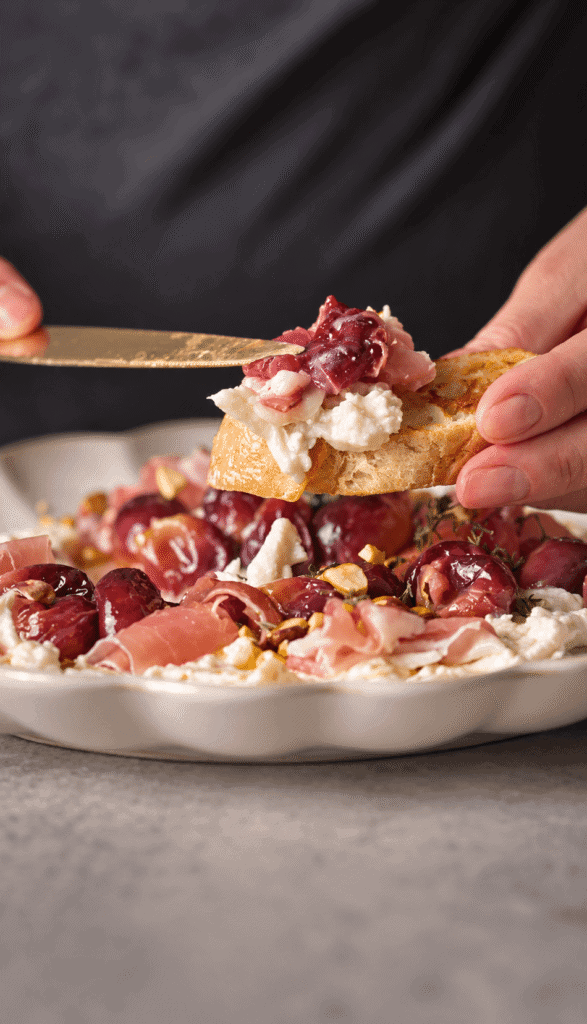
Toast it if you want more crunch, but avoid making it so hard that it’s awkward to bite. Fresh bread with a good crust is lovely here, especially for collecting the juices left on the platter.
What to Serve with This Burrata Appetizer
For a small gathering, start with the burrata platter, a basket of bread, and a bowl of olives. You don’t need several more rich cheese dishes beside it. Something crisp or briny gives people a different bite between servings.
If you’re making a larger appetizer spread, artichoke crostini with sun-dried tomatoes bring a more savory topping to the table. Use smaller pieces of bread for those so guests can try both without filling up before dinner.
For a fall or holiday meal, I’d serve this burrata first, then bring out the main course with butternut squash gratin as a side. Keeping them in separate courses gives each dish its own moment and makes serving easier.
The red grapes and green pistachios make this an easy holiday appetizer, but the presentation doesn’t need extra decorating. A light-colored platter shows off the toppings. Leave some burrata visible between the grapes so the plate doesn’t become one solid layer of fruit.
For a more casual lunch, serve a smaller portion with a green salad and toasted bread. Dress the greens lightly with something acidic rather than creamy. The burrata already provides plenty of richness.
Put the bread within easy reach, give everyone a small plate, and serve while the grapes are still warm. That first spoonful, with the cheese and a little juice caught underneath, is the one to get onto the toast!
This post contains affiliate links. If you purchase through them, I may earn a small commission at no extra cost to you.
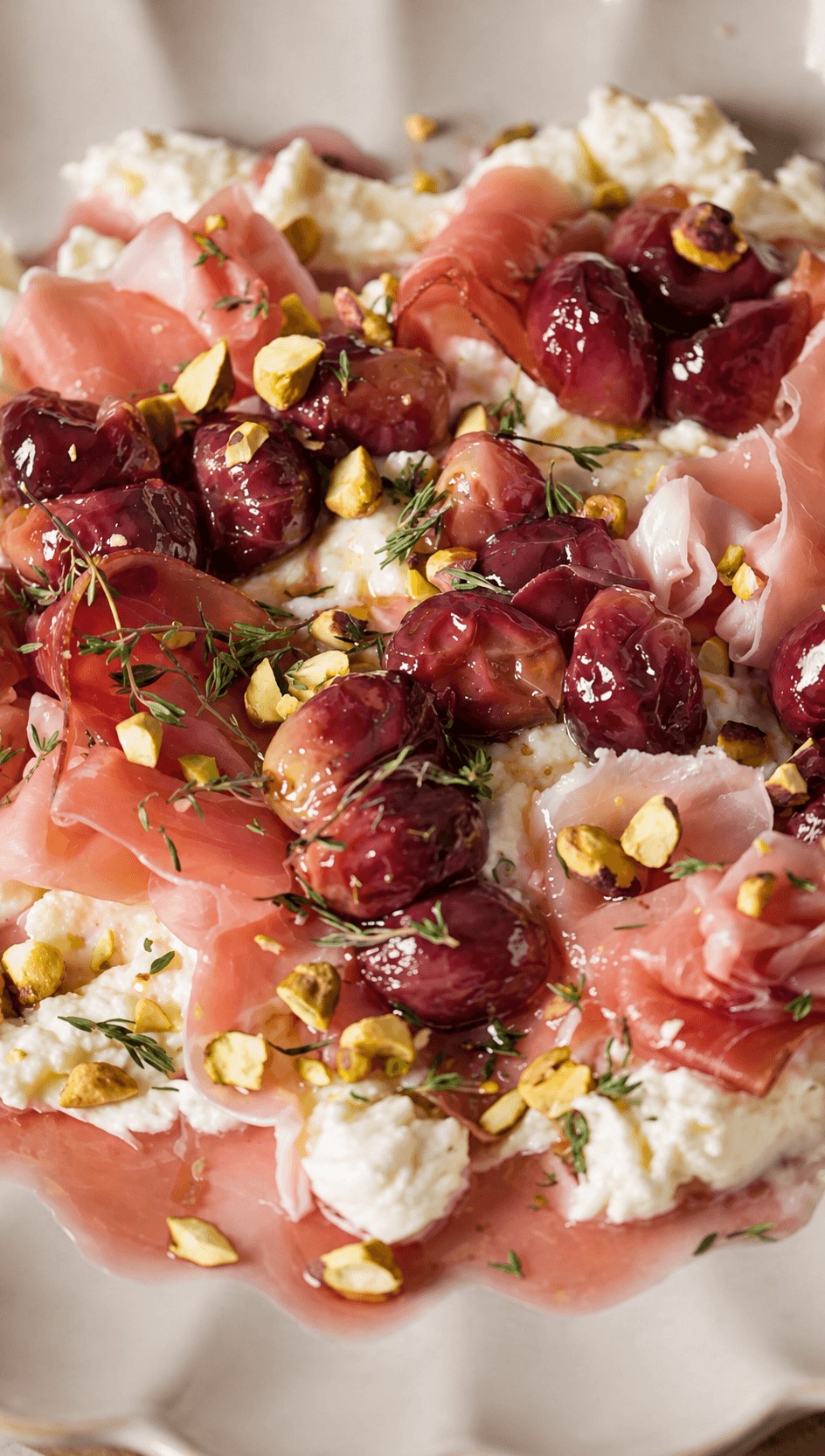

Burrata with Roasted Grapes and Pistachios
Ingredients
Method
- Preheat the oven to 350°F.
- Place the grapes in a baking dish large enough to hold them in one layer.
- Toss with the olive oil, balsamic vinegar, salt, and pepper.
- Spread the grapes evenly across the dish.
- Roast for approximately 30 minutes, until softened, slightly wrinkled, and releasing their juices.
- Let the grapes cool briefly until warm rather than sizzling.
- Gently open the drained burrata onto a shallow serving platter.
- Arrange the torn prosciutto in loose folds over the burrata.
- Spoon the roasted grapes and their pan juices over the platter.
- Sprinkle with the pistachios and thyme.
- Serve immediately with bread.
Notes
- Air fryer option: Place the seasoned grapes in an oven-safe dish that fits inside your air fryer with space for airflow. Air fry at 400°F for 10–15 minutes, checking at 10 minutes. The grapes should be tender and releasing their juices. Cook in batches if necessary to avoid piling the grapes deeply. Assemble as directed.
- Make ahead: Prepare the toppings separately. If roasting the grapes ahead, refrigerate them promptly with their juices. Reheat thoroughly, then cool briefly before assembling.
- Seasoning: Prosciutto and salted pistachios contribute salt. Taste a complete bite before adding more.
- Substitutions: Use fresh mozzarella in place of burrata, or chopped toasted walnuts instead of pistachios. Omit the prosciutto if preferred.
- Storage: Refrigerate leftovers promptly and enjoy the next day for best texture. Follow the cheese package’s after-opening storage instructions.
- Timing: Prep and cooking times are approximate. Grape size, baking dish, and appliance can affect cooking time.