
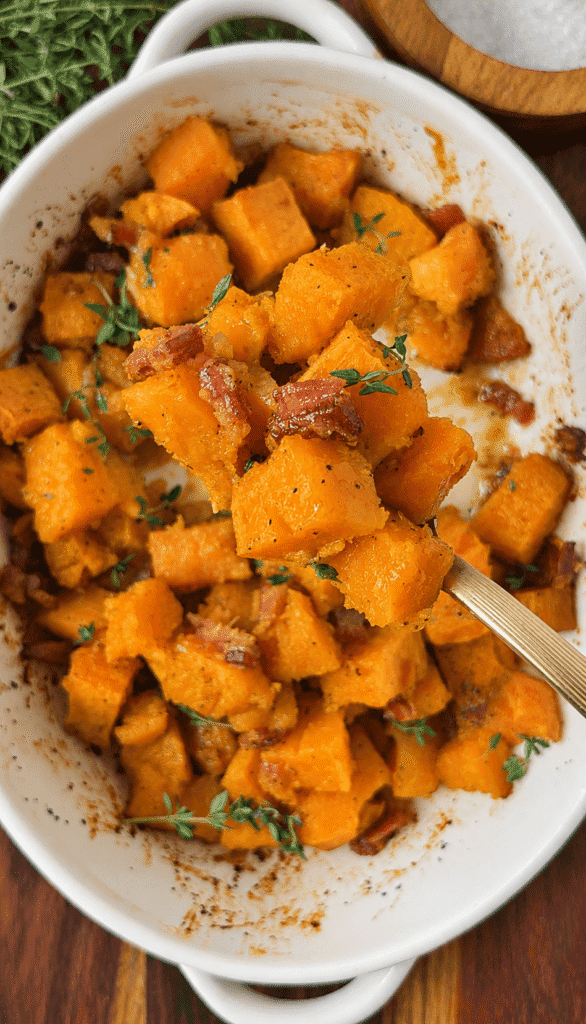
I wanted to add a little more variety to my usual side dishes. Potatoes are easy to reach for, and I love them, but I felt like I kept coming back to the same things. This maple roasted butternut squash with bacon came from wanting another simple option that I would be happy to serve with dinner.
Butternut squash gets overlooked, I think. It’s such a beautiful ingredient, especially once it’s roasted and those orange cubes start getting golden around the edges. It already has plenty of flavor. A little smoky bacon and a light maple glaze give it something extra while letting the squash come through.
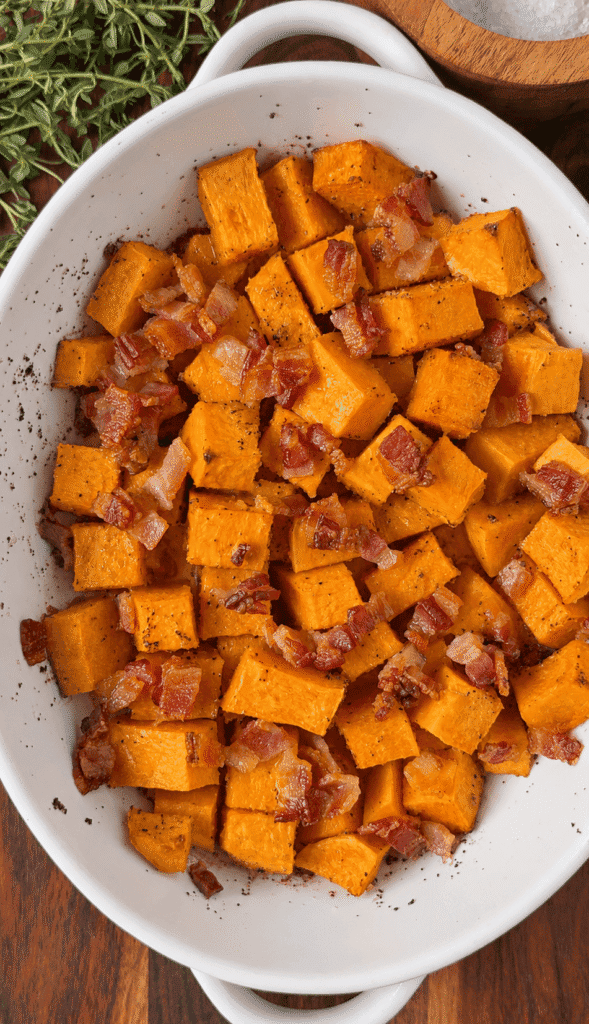
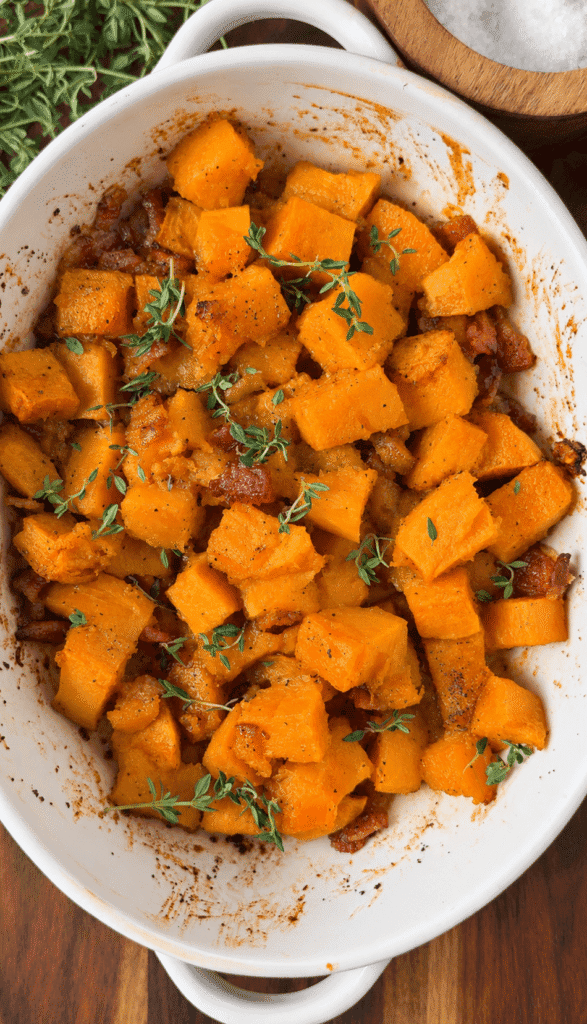
I kept this recipe easy and made it in my baking dish. The cubes came out tender, with little pieces of bacon tucked between them and fresh thyme scattered over the top. I like bringing the whole dish to the table.
My roasted potatoes au gratin will still have their place on the menu. Now I have another side to rotate in, whether I’m making a regular dinner or planning something for Thanksgiving.
Why You’ll Love This Recipe
- Everything cooks in one baking dish. The bacon roasts with the squash, so there’s very little cleanup.
- The ingredients are easy to find. Fresh precut squash makes it even more convenient when you want to save some preparation time.
- It works for a smaller meal. The recipe makes enough for about four side servings, with room to adjust for a larger table.
- It looks lovely as it is. The orange squash and fresh thyme bring plenty of color to the serving dish.
Ingredient Notes
Butternut squash
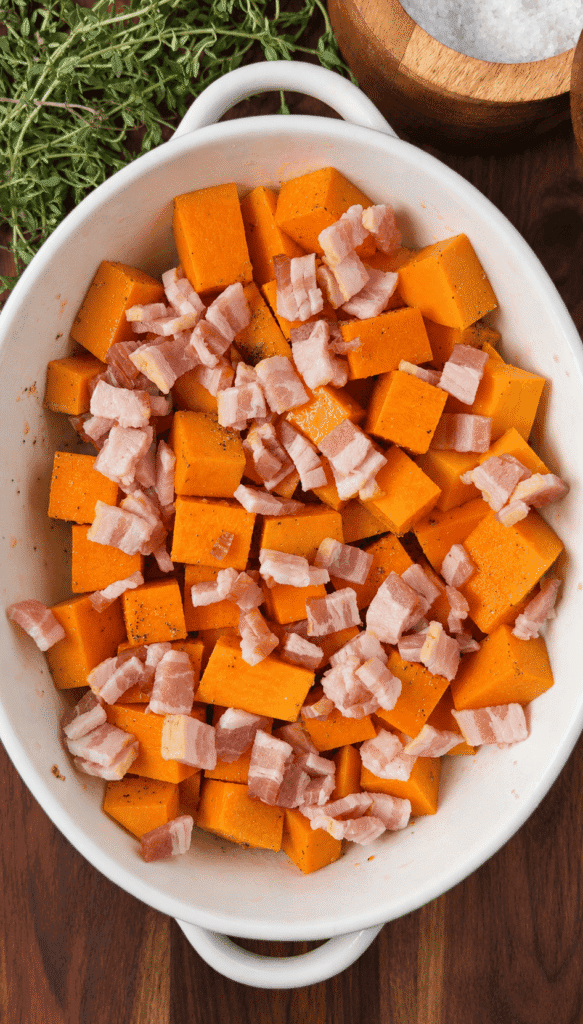
The squash weight in the recipe card is for the peeled, seeded flesh. A whole squash includes the skin, seeds, and parts you trim away, so buying one that weighs exactly the amount listed will leave you short.
If you’re buying a whole squash, look for one that feels firm and heavy for its size. A long neck gives you a good amount of solid flesh that’s easy to cut into cubes. The rounded end is useful too, although the pieces will be a little less uniform once you remove the seeds.
Fresh precut squash is a practical shortcut. Check the package before using it because the pieces can vary quite a bit. Cut down any especially large chunks so the squash cooks at roughly the same pace.
If you have extra squash after preparing this dish, my butternut squash prosciutto crostini are another way to use it. Squash works beautifully in small appetizers as well as warm sides.
Bacon
Regular-cut bacon works well with this preparation. Small pieces spread through the squash and give you bacon in different spoonfuls without needing a large amount.
Separate the pieces before scattering them into the dish. Bacon that stays stuck together in a little stack will cook unevenly, especially where it sits between the squash.
The bacon contributes salt as it cooks, which is why I keep the added salt modest. Brands vary, so it’s worth remembering how salty your usual bacon tastes when you season the dish.
Pure maple syrup
Use pure maple syrup for its maple flavor. Pancake syrup can contain different sweeteners and flavorings, and the finished glaze will taste different.
The maple syrup coats the squash lightly. It also collects on some of the browned edges and around the bacon, so you get a little variation from one bite to the next.
Since squash itself varies in sweetness, taste the finished dish before deciding whether it needs anything extra. Adding more syrup at the table can quickly make the maple flavor much stronger.
Dijon mustard
Dijon gives the glaze a little sharpness. It mixes smoothly with the syrup and is easy to distribute over the cubes.
I used a small amount here. Mustard is part of the seasoning, with the maple and squash still carrying the sweeter flavor. Smooth Dijon is the closest match to the recipe. Whole-grain mustard would leave visible seeds and give the glaze a different texture.
Garlic powder and thyme
Garlic powder is convenient for this dish because it coats the squash evenly. It also saves the extra chopping and the possibility of small garlic pieces catching on the exposed edges of the baking dish.
Fresh thyme adds a little freshness at the end. Strip the small leaves from the stems before eating. You can leave a few sprigs on the dish for serving, as I did in the photos, then set the stems aside.
If you enjoy squash with bacon and herbs, my butternut squash gratin uses that combination with Gruyère and cream. It’s another option for a meal where you want a cheesy side.
Tips for Roasting Butternut Squash in a Baking Dish
Use a dish with enough surface area
The shape of the baking dish matters. A wide, shallow dish allows more squash to sit against the bottom and leaves room for moisture to escape. A deep dish filled with several layers will give a different result and can take longer.
I used the baking dish shown in the photos. Look at how the squash fits in yours before it goes into the oven. The cubes should sit in a fairly shallow, even layer.
This matters even more when increasing the recipe. Use a larger dish or divide the squash between two dishes. Keeping a similar depth will make the timing easier to judge.
Check a larger cube for tenderness
Color is helpful, but it doesn’t tell you everything about the center of the squash. Test one of the larger pieces with a fork. The fork should slide in easily by the time the dish is finished.
Cube size, the material of the dish, and your oven all affect cooking time. The timing in the card reflects my baking-dish version. Larger pieces or a more crowded dish may need longer.
Keep an eye on the bacon too. Pieces sitting on top may brown faster than those tucked underneath the squash.
Turn the squash gently
Once the cubes soften, they can break if you stir them too firmly. Use a broad spoon or spatula to lift and turn them when coating them with the glaze.
A few softened corners are completely fine. Gentle handling helps keep enough of the cubes intact for serving, especially if you’re bringing the baking dish to the table.
It also helps when reheating leftovers. The squash is already cooked at that point, so it needs very little stirring.
Variations and Substitutions
The maple, bacon, and Dijon combination is the version I made. These are simple changes you could try depending on what you have.
For a meatless version, leave out the bacon and check the seasoning at the end. The olive oil will still coat the squash, but you’ll lose the bacon’s salt and smoky flavor. A small pinch of smoked paprika would be an option if you want some smokiness.
For a different herb, a little finely chopped rosemary would work with the maple. Rosemary has a stronger flavor than thyme, so start lightly. Finely chopping it also makes the leaves easier to eat.
For a little heat, add a small pinch of crushed red pepper. It would work well with the sweet squash and maple, especially alongside a simply seasoned main dish.
For honey instead of maple syrup, expect a different flavor. Honey can be more floral and may taste sweeter, depending on the variety. Maple syrup is my first choice for the recipe as written.
Keep additions modest if you try a variation. The baking dish needs enough room for the squash, and adding other vegetables can change both the moisture level and cooking time.
Make-Ahead and Storage
Prepare the ingredients ahead
For the easiest dinner preparation, peel and cube the squash the day before. Keep it covered in the refrigerator. You can also cut the bacon and mix the glaze ahead, storing each separately in covered containers.
Keeping the components separate makes it easy to spread the squash evenly and scatter the bacon where you want it. It also lets you remove any moisture that collects around the cut squash before cooking.
This is the approach I’d choose for a holiday meal. Much of the preparation is already done, and you can cook the dish close to serving time.
Store leftovers
Transfer leftovers to a shallow, airtight container and refrigerate within two hours. Keep them refrigerated at 40°F or below and use within three to four days.
Store the remaining squash with the little bits of bacon and glaze from the dish. Those are part of the flavor, and there’s no reason to leave them behind when packing everything away.
Reheat gently
For a larger portion, use an oven-safe dish at 350°F, loosely covered to help protect the edges. A small portion is convenient to warm in the microwave. Reheat leftovers to 165°F throughout.
The squash will soften further as it reheats. Check it as it warms and handle it gently so it keeps as much shape as possible.
You can also turn a leftover portion into lunch. Warm it and spoon it over cooked farro or lentils, then add a handful of greens and a little lemon dressing. The bacon and maple already bring plenty of flavor.
Frequently Asked Questions
Do you have to peel butternut squash before roasting?
For this recipe, yes. Peeling gives the cubes the tender texture shown in the photos and makes them easy to eat by the spoonful.
Remove the skin and the firm, pale layer just beneath it where needed. You want the orange flesh exposed. Fresh peeled, precut squash is a good option if this is the part of preparation you’d prefer to skip.
Can I use frozen butternut squash?
I used fresh squash for this version. Frozen squash can release more moisture and soften differently, so the same timing may give a different result.
Fresh precut squash is the closest shortcut to the recipe. If you use frozen, expect softer pieces and watch the moisture in the dish. I would test that version before relying on it for a holiday meal.
Can I double this recipe for Thanksgiving?
Yes. Increase the ingredients proportionally and use enough baking-dish space to keep the squash in a shallow layer.
Two dishes can be easier to manage than one very full dish. Check both for tenderness because oven position can affect browning. A larger batch also takes more preparation time, especially if you’re peeling and cutting whole squash.
Can I make maple roasted butternut squash without mustard?
Yes, you can leave it out. The glaze will have a more straightforward maple flavor, with less tang.
If you’re unsure about Dijon because you don’t usually enjoy mustard, the amount in this recipe is small. You can also taste the glaze before adding it to get a sense of the combination.
What to Serve with Maple Roasted Butternut Squash
For an everyday meal, I’d serve this roasted butternut squash with bacon alongside roast chicken or pork tenderloin. A simple green salad would finish the plate. The squash already has a glaze, so the main course can stay fairly simple.
For Thanksgiving, it would be lovely with my roasted citrus turkey with orange and sage. Plan the oven space ahead, since the squash needs its own roasting time and temperature.
If you’re building a larger menu, my roasted pear salad with crispy prosciutto adds greens and a sharper dressing alongside the warm squash. Smaller portions of each would work well with the main course.
I like serving the squash in the dish it cooked in, with a serving spoon tucked into the side. The fresh thyme and orange cubes already look beautiful together. It’s an easy way to put another vegetable on the table when you feel like changing your usual dinner routine.
This post contains affiliate links. If you purchase through them, I may earn a small commission at no extra cost to you.
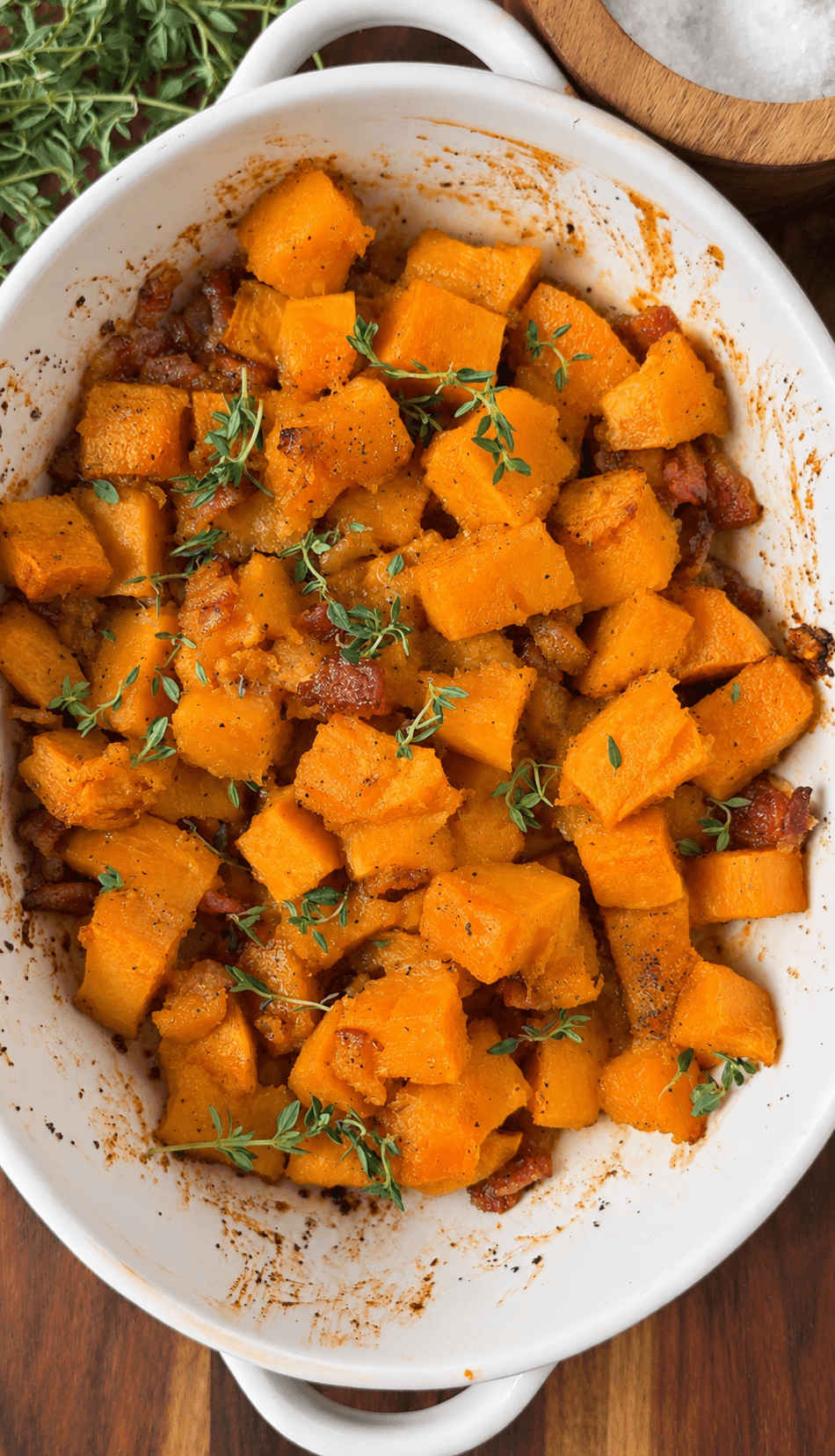

Maple Roasted Butternut Squash with Bacon
Ingredients
Method
- Preheat the oven to 425°F.
- Toss the squash with the olive oil, garlic powder, salt, and pepper directly in a shallow baking dish.
- Spread the squash into an even layer.
- Scatter the bacon over and between the squash cubes, separating any pieces that stick together.
- Roast uncovered for 30 minutes, until the squash begins to soften and develop golden edges.
- Stir the maple syrup and Dijon mustard together in a small bowl.
- Drizzle the glaze over the squash and bacon.
- Gently turn the cubes with a spatula to coat them.
- Roast uncovered for another 7–10 minutes, until the squash is fork-tender and the bacon is cooked through.
- Sprinkle with fresh thyme leaves before serving warm.
Notes
- Squash weight and size – Weigh the squash after peeling and removing the seeds. Fresh precut squash works well. Cut larger pieces down to a similar size and pat away excess surface moisture.
- Baking dish – Choose a shallow dish wide enough to avoid piling the squash deeply. Cooking time can vary with the dish, cube size, and amount of squash.
- Salt – A scant ¼ tsp means slightly less than a level ¼ tsp. Start lightly because the bacon and Dijon also contribute salt.
- Make ahead – Prepare the squash, cut the bacon, and mix the glaze up to one day ahead. Refrigerate separately in covered containers until ready to cook.
- Storage and reheating – Refrigerate leftovers in a shallow, covered container within two hours and use within three to four days. Reheat in an oven-safe dish at 350°F or in the microwave until the center reaches 165°F.
- Substitutions – Omit the Dijon for a simpler maple glaze. For a meatless variation, omit the bacon and adjust the seasoning. These variations may change the flavor and texture.
- Larger batches – Double the ingredients and use a larger dish or two baking dishes to maintain a shallow layer. Check for tenderness before serving.