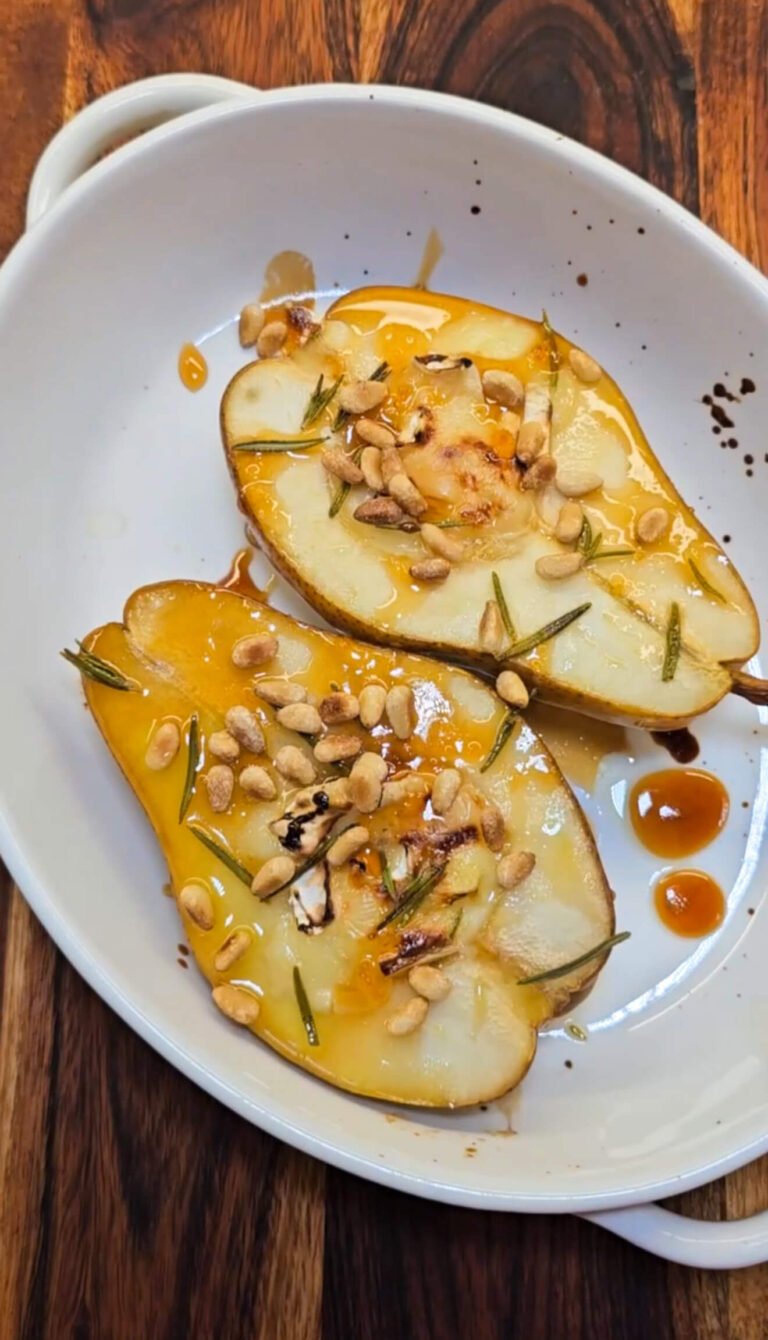


I wanted a butternut squash side dish that felt special enough for a holiday dinner without turning into a whole separate cooking project. This butternut squash gratin with bacon and Gruyere is where I landed. Roasted squash, melted cheese, a little garlic cream, and fresh rosemary, all finished in the same dish the squash roasts in.
The cheese choice actually came from what I already had in the refrigerator. I considered a few options before finding the Gruyère, and it made sense with the bacon and sweet squash. There’s no need for several kinds of cheese here.
If you’ve made my butternut squash prosciutto crostini, this uses that same idea of pairing squash with something savory, but in a warm side dish you can spoon straight onto your plate.
I’d serve it with roast chicken for a fall dinner or make a larger dish for Thanksgiving. The recipe below uses just one pound of prepared squash, so you don’t need a crowd to make it. And for a holiday meal, roasting the squash the day before takes the longest step off your list.
Why You’ll Love This Butternut Squash Gratin
- The squash gets roasted first. You get golden edges and tender pieces that are still recognizable when you scoop into the dish.
- No separate cheese sauce. Stir the garlic and rosemary into the cream, add it to the squash, and fold in the cheese.
- It makes a small batch. One pound of squash gives you about three side servings, with the option to double it.
- You can prep the components ahead. Roast the squash, cook the bacon, and grate the cheese before you need to finish dinner.
Ingredient Notes
Butternut squash
The one-pound measurement is for the squash after peeling and removing the seeds. That matters because a whole one-pound squash won’t give you one pound of usable cubes.
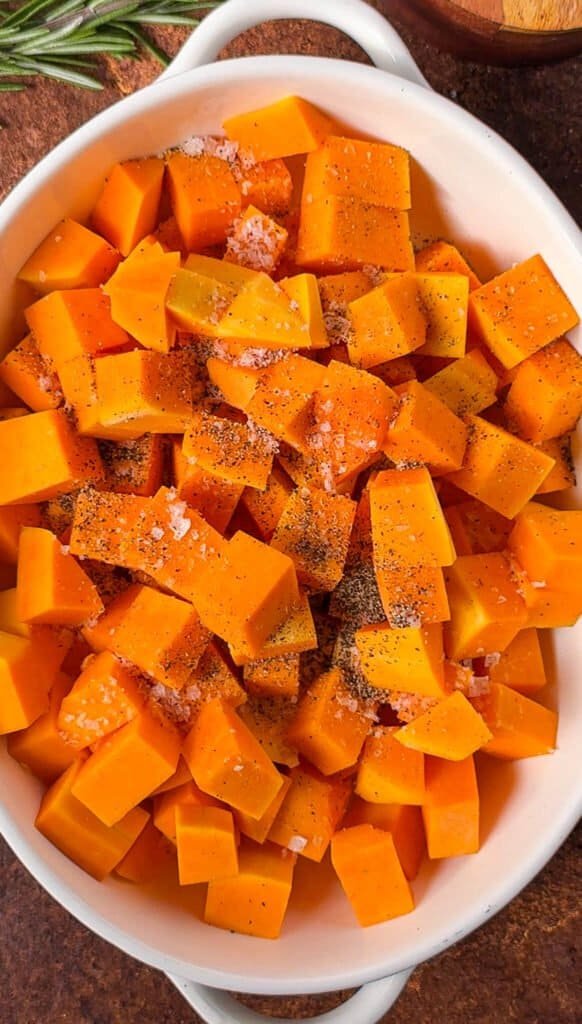
Cut the flesh into roughly ¾-inch pieces. They don’t need to look identical, but try to avoid mixing tiny pieces with very large ones. The small pieces can start falling apart while you’re waiting for the larger ones to soften.
Fresh precut squash is fine here. Check the size before putting it in the dish, since some packages have fairly large chunks. Pat away excess surface moisture if needed, then season and roast.
If you’re working with a whole squash and have more than you need, save the extra for another meal. My creamy butternut squash soup with chicken is another way to use it without making the same side dish twice.
Gruyere
Gruyere gives this gratin a nutty, savory flavor that works with the natural sweetness of the squash. I use three ounces total, with most folded into the squash and the rest sprinkled over the top. Grate it from a block if you can. It’s easier to distribute freshly grated cheese between the cubes, and you don’t need to add much to each spot.
There’s no need to make a completely solid blanket of cheese across the surface. Leave some squash showing. You’ll still get melted cheese in each serving, and the orange cubes look lovely against the bacon and herbs.
Bacon
Use three regular slices of bacon. Cook them until just crisp, then let them drain on a paper towel, then chop.
Half goes into the gratin. The rest goes on near the end, where it keeps more of its crisp texture.
I wouldn’t pour the rendered bacon grease into the baking dish. The cream, cheese, and olive oil already provide enough richness. You want the bacon pieces and their flavor without adding everything left in the skillet.
Heavy cream
This small batch uses only 1/3 cup of heavy cream. It helps distribute the garlic and rosemary and adds a little creaminess around the squash.
The finished texture is roasted squash with melted Gruyère and cream throughout. You don’t need to make a thick sauce before assembling it.
Measure the cream rather than pouring freely. With a small recipe, an extra splash can change the amount of liquid in the dish quite a bit.
Rosemary and garlic
Fresh rosemary is strong, so ½ teaspoon is enough here. Strip the leaves from the stem and mince them finely. Long rosemary needles might look pretty, but smaller pieces are much nicer to eat.
Finely grate the garlic so it mixes evenly into the cream. One clove gives you garlic flavor without leaving larger pieces tucked between the squash.
Start lightly with salt. You can season the squash before roasting, but remember that the bacon and Gruyère will add more salt later.
How to Make Butternut Squash Gratin With Bacon
Roast the squash until tender
Heat the oven to 425°F. Add the squash to a shallow baking dish with the olive oil, a small pinch of salt, and black pepper. Toss until the cubes have a light coating of oil.
An approximately one-quart shallow baking dish works for this quantity, but the shape matters as much as the capacity. If the squash is piled deeply, use something wider.
Roast for about 25–35 minutes, stirring halfway through. Look for a little browning on the edges and test a larger piece with a fork. It should be tender before you add the cream and cheese.
If it still feels firm in the center, give it more time. The short second bake is there to melt the cheese and bring the dish together. It shouldn’t have to finish cooking hard squash.
Cook the bacon while the squash roasts
Put the bacon in a skillet over medium heat. Flip once so the pieces cook evenly, then transfer them to a paper-towel-lined plate when they’re browned and just crisp. Chop into pieces.
You don’t need to take them all the way to very dark and crunchy. They’ll spend a little more time in the oven.
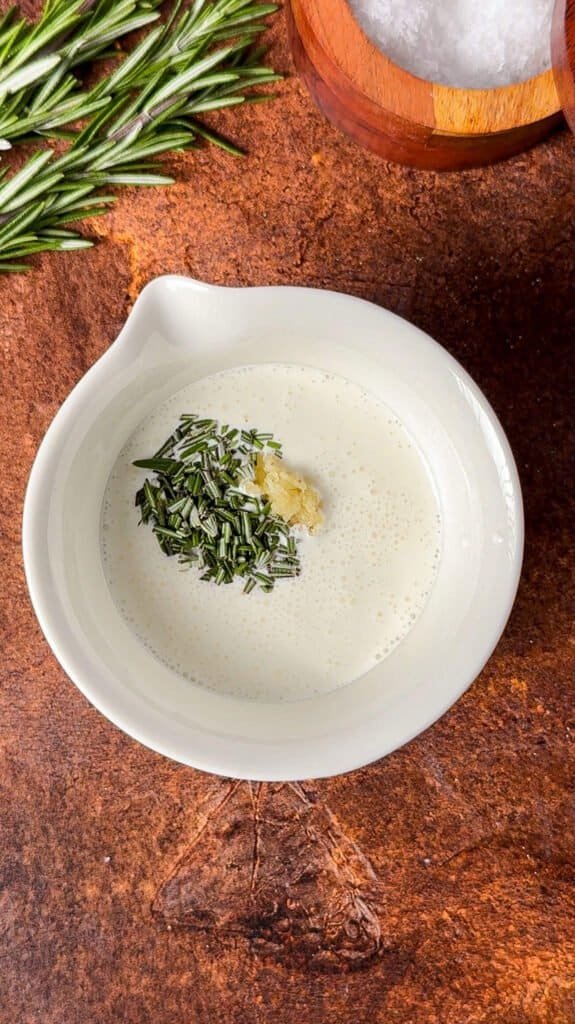
While the bacon cooks, grate the Gruyere, mince the rosemary, and mix the cream with the garlic and rosemary. Once the squash is ready, the rest comes together quickly.
Fold in the cream and Gruyere
Reduce the oven temperature to 400°F.
Pour the garlic-rosemary cream over the roasted squash. Add half of Gruyere and half the bacon, then fold everything together gently.
At this point the squash is soft, so use a spoon or spatula to lift and turn it rather than stirring vigorously. A few broken edges are fine. You just don’t want to mash the whole dish while mixing.
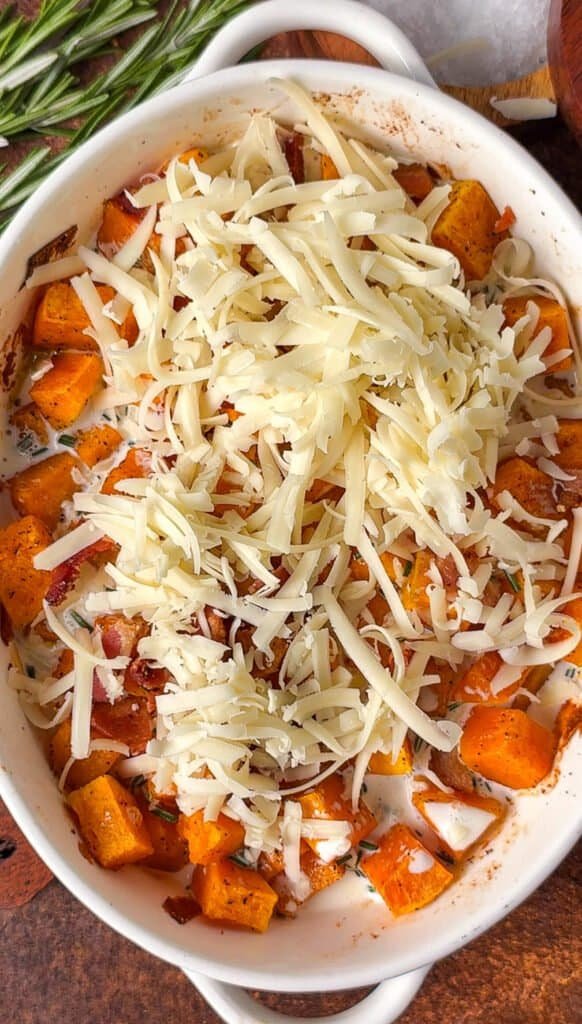
Spread the squash back into an even layer and sprinkle the remaining cheese over the top.
Finish baking
Return the dish to the oven for 10–15 minutes. The cheese should be melted, and you should see some bubbling around the edges.
Scatter the reserved bacon over the top during the last three minutes. That gives it time to warm without spending the whole final bake exposed to the heat.
Let the gratin rest for five to ten minutes before serving. It will still be hot, but a little easier to scoop. You can bring the baking dish straight to the table.

Tips For Success
1. Use the squash as your guide, not only the timer
The roasting time changes with the size of the cubes, the baking dish, and how crowded it is. Start checking within the suggested range, but don’t add the cheese until the squash is tender.
A fork should slide into a larger cube without meeting a hard center. The outside can look cooked before the inside is ready, especially with precut squash that comes in bigger pieces.
2. Give it room to roast
For golden edges, the squash needs contact with the dish and some space for moisture to escape. A deep, tightly packed layer will cook differently from a shallow one.
This is especially important when doubling the recipe. Use a wider dish instead of stacking twice as much squash into the original one. A 9 × 13-inch baking dish is a useful starting point for a double batch.
3. Stop when the gratin is ready
You don’t need a deeply browned cheese crust across the entire surface. Once the squash is tender, the cheese has melted, and the cream is bubbling, check it.
Keeping it in the oven much longer just to darken the top can dry out the edges and make the cheese release more fat. The browned squash and cooked bacon already give the dish plenty of color.
Variations And Substitutions
A different cheese: If you don’t have Gruyere, a good melting Swiss-style cheese is a reasonable alternative. Sharp cheddar would give it a different, more familiar casserole flavor. These are suggested substitutions; Gruyere is the cheese used in this version.
Thyme instead of rosemary: Use about ½–1 teaspoon of fresh thyme leaves. You don’t need to add both herbs. Keeping to one lets you taste it without making the squash overly herbal.
Without bacon: You can omit the bacon and keep the squash, garlic cream, and cheese. Taste for seasoning because you’ll be removing one of the salty ingredients. For a strictly vegetarian dish, also check that your cheese is made with vegetarian rennet.
A larger batch: Double the ingredients for approximately six side servings. Use a wider baking dish and check the squash for tenderness. Doubling the quantity doesn’t mean doubling the oven time.
I would keep the first batch close to the recipe before adding more ingredients. Nuts, breadcrumbs, onions, or extra cheese all change the dish, and each addition affects how much squash you taste in a spoonful.
Make-ahead And Storage
Roast the squash a day ahead
The squash takes the longest to cook, so roasting it ahead is the most useful place to start.
Roast it as directed, then transfer it to a shallow container and refrigerate promptly. You can cook the bacon and grate the cheese at the same time. Keep those refrigerated in separate containers so you can add them at the right stage.
When you’re ready to finish, put the squash in an oven-safe baking dish and warm it, loosely covered, at 350°F. Once it’s warm throughout, add the cream mixture, cheese, and bacon. Finish at 400°F as directed.
Starting with warm squash helps you avoid a cold center while the cheese on top is already fully melted. Allow extra time for this warming step. It depends on the dish and the temperature of the squash, so check the center rather than relying on a fixed number of minutes.
If you’re planning several dishes, my fall appetizers and Thanksgiving recipes can help you put the rest of the menu together. Choose a few things you can prepare in advance so everything doesn’t need your attention at once.
Store leftovers
Refrigerate leftover gratin in a covered container within two hours of cooking. Use within three to four days.
For the make-ahead version, count storage time from when you first cooked the squash and bacon. Finishing the gratin later doesn’t restart that clock.
Reheat gently
For a small portion, the microwave is convenient. Cover loosely and heat in short intervals, checking the center.
For a larger amount, use a covered oven-safe dish at 350°F until heated through. Reheated leftovers should reach 165°F in the center. Avoid heating longer than necessary, since the squash is already tender.
The bacon topping will soften during storage. That’s another reason to keep the topping separate when preparing the components ahead.

Frequently Asked Questions
Can I make butternut squash gratin without boiling the squash?
Yes. This recipe roasts the squash directly in the baking dish before adding the cream and cheese.
That gives the cubes a chance to develop color and avoids a separate pot of boiling water. The important part is getting the squash tender during that first roast. Don’t rush that step and expect the final cheese bake to do all the remaining cooking.
Can I use frozen butternut squash?
I used fresh squash for this recipe. Frozen squash can release more moisture and may soften differently, so I wouldn’t give it the same timing without testing it.
Fresh precut squash is the simpler shortcut if you want to skip peeling and chopping. Check the pieces for size and cut larger ones down before roasting.
Does butternut squash gratin need breadcrumbs?
No. This version uses Gruyère on top, with bacon added near the end of baking.
You still get contrasting textures from the tender squash, melted cheese, and crisp bacon. There’s no flour or breadcrumb topping in the recipe. If you need it to be gluten-free, check the labels on your packaged ingredients as well.
Can I assemble the whole gratin the night before?
For this version, I’d prepare the components and keep them separate. That lets you warm the squash before adding the cheese and save some bacon for the topping.
A fully assembled refrigerated gratin would need a longer bake than the recipe below. I haven’t tested that approach, so I’d use the component method when planning a meal where timing matters.
What To Serve With Butternut Squash Gratin
I’d put this next to roast chicken, pork tenderloin, or turkey. It’s rich enough that the rest of the plate can stay fairly simple. Green beans, a lightly dressed salad, or another vegetable with a little acidity would work well.
For a fall dinner, my kale farro salad with brown butter maple vinaigrette is another seasonal option. Serve modest portions of both alongside the main course, since the farro adds substance too.
If you want a warm appetizer before dinner, try my feta-stuffed mushrooms. They’re an option for the menu rather than something you need to make alongside every batch of gratin.
For Thanksgiving, I’d serve this as a savory butternut squash casserole alongside the other sides. The bacon and Gruyere give it enough flavor to stand on its own without adding sugar or a sweet topping.
This small recipe makes about three side servings. For a holiday table with several other dishes, portion sizes may be smaller. If you want generous servings or leftovers, double it and give the squash enough room in the baking dish.
This post contains affiliate links. If you purchase through them, I may earn a small commission at no extra cost to you.


Butternut Squash Gratin with Bacon and Gruyere
Ingredients
Method
- Preheat the oven to 425°F.
- Toss the squash with olive oil, salt, and pepper in a shallow baking dish.
- Spread the squash into a mostly single layer.
- Roast for 25–35 minutes, stirring halfway through, until lightly golden and tender when pierced.
- Meanwhile, cook the bacon in a skillet over medium heat until browned and just crisp.
- Transfer the bacon to a paper-towel-lined plate to drain. Then chop it.
- Reduce the oven temperature to 400°F.
- Stir together the heavy cream, grated garlic, and minced rosemary in a small bowl.
- Gently fold the cream mixture, half the Gruyere, and half the bacon into the roasted squash.
- Sprinkle the remaining cheese over the top.
- Bake for 10–15 minutes, adding the remaining bacon during the final 3 minutes, until the cheese is melted and the cream bubbles around the edges.
- Rest for 5–10 minutes before serving.
Notes
- Squash weight: Measure one pound after peeling and removing the seeds. Fresh precut squash can be used; trim larger chunks to roughly ¾ inch.
- Roasting time: The squash should be tender before adding the cream and cheese. Allow more time if necessary. Total cooking time can range from about 35–50 minutes.
- Salt: Start with a small pinch because the bacon and Gruyere add salt.
- Make ahead: Roast the squash up to one day ahead and refrigerate promptly. Refrigerate cooked bacon and grated cheese separately. Warm the squash, loosely covered, at 350°F before adding the remaining ingredients and finishing at 400°F. Extra warming time is not included in the recipe timing.
- Substitutions: Fresh thyme can replace the rosemary. A melting Swiss-style cheese or sharp cheddar is a suggested alternative to Gruyere, though the flavor and texture will differ.
- Double batch: Double the ingredients and use a wider baking dish, such as a 9 × 13-inch dish. Check tenderness rather than doubling the cooking time.
- Storage: Refrigerate within two hours and use within three to four days. When preparing components ahead, count from the earliest cooking day. Reheat leftovers to 165°F in the center.