

A make-ahead Mediterranean appetizer that comes together in 10 minutes with pantry staples. Cubed feta absorbs a bright herb-lemon marinade alongside artichoke hearts and two kinds of olives. Serve this marinated feta with artichokes and olives cold with crusty bread and it disappears fast.
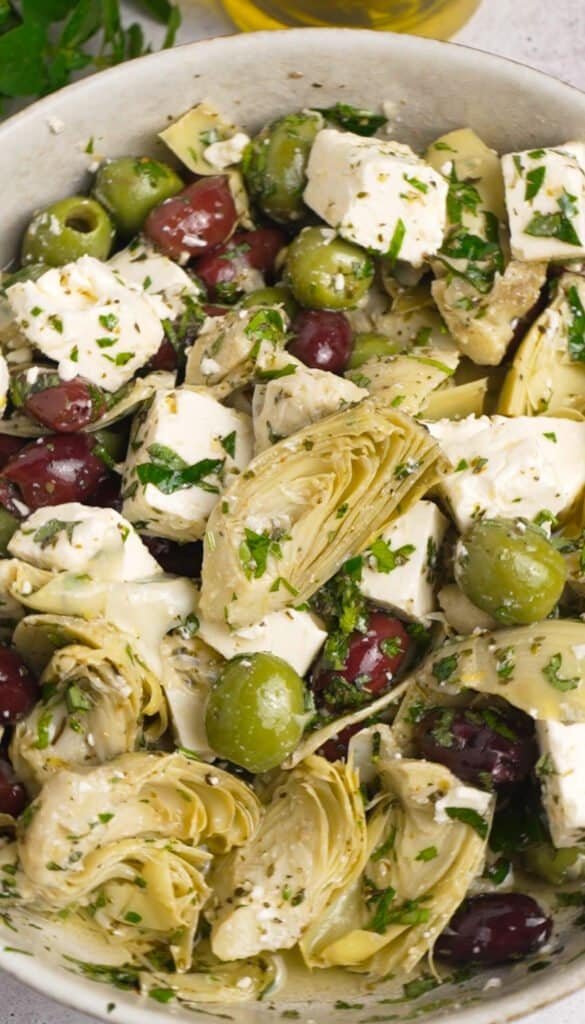
Some of the best recipes come from staring into the refrigerator with no plan. Two open jars of olives left over from another dish. A can of artichoke hearts that had been sitting in the pantry long enough to become a source of mild guilt. A block of feta. Lemons on the counter, as always. Herbs in the garden – oregano and parsley thick enough to harvest with both hands.
I wasn’t trying to make something beautiful. I was trying to make something before those olives turned into a sunk cost. What came out of the bowl thirty minutes later was one of the most satisfying appetizers I’ve put together in months, and the one my guests asked about before they even sat down.
This marinated feta with artichokes and olives is now on permanent rotation.
Why You’ll Love This Recipe
There’s no cooking involved for this marinated feta with artichokes and olives – the marinade does all the work. You build a bright, garlicky dressing with red wine vinegar, olive oil, lemon zest, and a combination of dried and fresh herbs, then fold in cubed block feta, drained artichoke hearts, and pitted olives. A short rest is all it needs. The feta absorbs the marinade from the outside in, the olive oil softens into a fragrant pool at the bottom of the bowl, and everything that was once separate becomes one coherent thing.
It also makes ahead beautifully – better, actually, after a few hours in the fridge. Which means it’s the kind of appetizer you can set out before guests arrive and forget about, because it only improves with time.
Ingredients
Olive oil – 1/2 cup The base of the marinade and what the feta will essentially cure in. Use an olive oil you’d actually want to dip bread into – this is not the place for a neutral cooking oil. A good extra virgin with some fruity weight to it will make the whole dish taste more expensive than it is.
Red wine vinegar – 3 tablespoons This is the element most similar recipes skip, and it’s what separates a flat marinade from one with real backbone. The acidity cuts the richness of the oil and the salt of the feta, and gives the whole dish a sharpness that keeps it from feeling heavy. Don’t substitute with white wine vinegar – red wine vinegar has more depth and pairs better with the Greek-leaning herbs here.
Garlic – 1 clove, finely grated Grated, not minced. A Microplane-grated garlic clove dissolves into the marinade and distributes evenly across every bite. Minced garlic tends to cluster and can be overpowering in spots. One clove is enough – the olives, feta, and artichokes all carry their own character, and the garlic should support rather than dominate.
Dried oregano – 1 teaspoon The dried version of oregano behaves differently than fresh: it’s more concentrated and earthy, and it blooms beautifully in olive oil over time. This is the aromatic anchor of the whole marinade. Greek or Turkish dried oregano will have more potency than generic supermarket varieties – worth seeking out if you bake with dried herbs regularly.
Dried savory – 1 teaspoon Savory is the underused herb in this recipe and the one people will ask about. It has a thyme-adjacent quality with a slightly peppery edge, and in combination with oregano it gives the marinade a complexity that reads as more sophisticated than the ingredient list suggests. If you can’t find it, substitute with half dried thyme and half dried marjoram.
Fresh herbs – 1/4 cup each parsley and oregano Fresh herbs added at the end (rather than cooked into the oil) keep their brightness intact. The parsley brings a clean green note; the fresh oregano doubles down on the dried version in the marinade and adds a different dimension – softer, less dusty. You can use other tender herbs here: fresh thyme, basil, or chives all work. Use what’s in the garden or what looks best at the market.
Lemon zest – from half a lemon The zest, not the juice. Juice would make the marinade too acidic given the red wine vinegar already present. Zest gives you the bright citrus aroma without tipping the balance. Use a Microplane and work lightly – you want the yellow outer layer only, not the bitter white pith beneath.
Salt – to taste, added carefully The three main components in this dish (feta, olives, artichoke hearts) are all salted in their packaging. Season the marinade lightly and taste after everything has had a chance to meld. You can always add more salt; you can’t take it back.
Marinated quartered artichoke hearts – 12 oz jar, drained Canned or jarred artichoke hearts work here. Marinated artichoke hearts (packed in seasoned oil) add slightly more flavor, but plain water-packed quarters work just as well – the marinade will take care of the seasoning. The critical step is draining them thoroughly. Extra liquid from the jar dilutes the marinade and makes the whole dish taste thin.
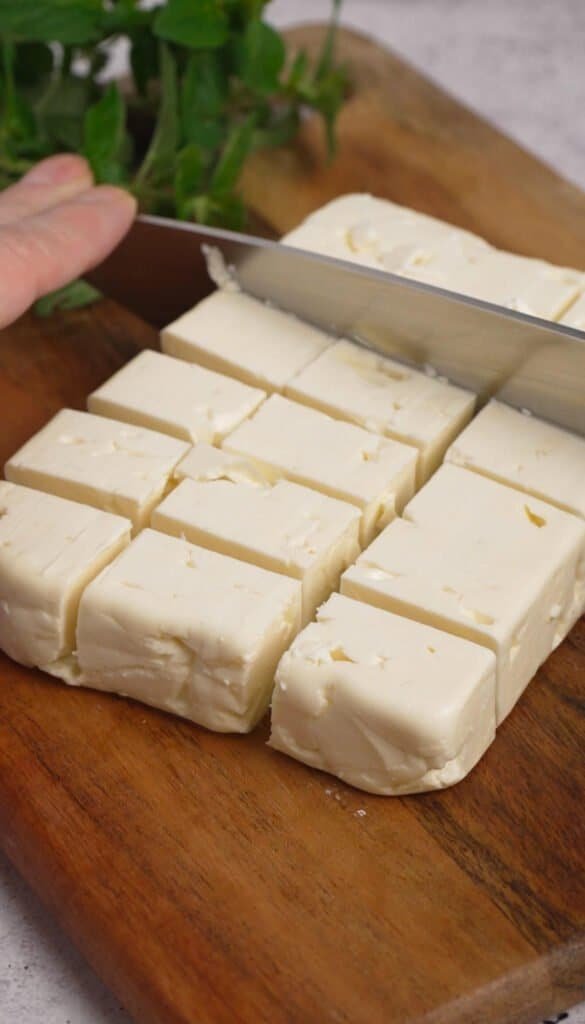
Block feta – 8 oz, drained and cubed Buy a block, not pre-crumbled. Pre-crumbled feta is too dry and won’t hold its shape in the marinade. A block cut into half-inch cubes stays intact, absorbs the dressing from the edges, and gives you those satisfying, creamy bites that crumbles can’t deliver. Bulgarian or Greek feta are the best options here – both are made from sheep’s milk and have a richer, creamier texture than cow’s milk varieties.
For another appetizer that puts cheese at the center, my Baked Tomato Bruschetta Dip is the warm, baked version of this concept same bold flavors, totally different format.
Pitted olives – 1 cup, drained The mix matters. Castelvetrano olives (bright, buttery, mild) and Kalamata olives (briny, deep, slightly fruity) together give you contrast in both color and flavor. The Castelvetrano rounds out the sharpness of the Kalamata; the Kalamata gives the Castelvetrano some backbone. If you only have one variety, use it – but the combination is worth it if you have the option. As with the artichokes and feta: drain thoroughly before adding.
The Marinade: Flavor and Texture
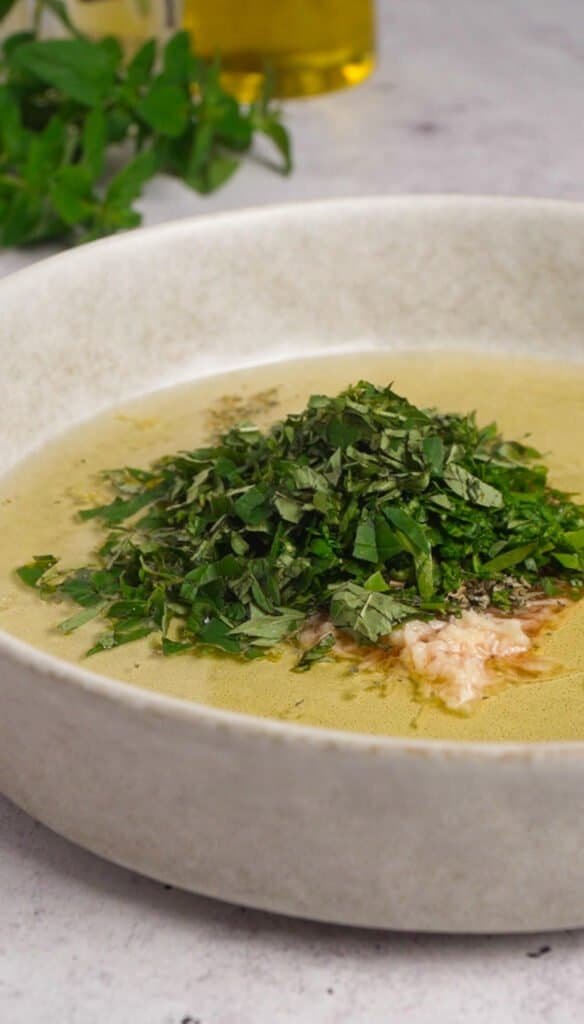
Before the main components go in, the marinade itself is worth pausing on. Whisked together, it smells like a Greek hillside in July: warm dried herbs, raw garlic, vinegar, and olive oil. The lemon zest cuts through with something brighter and more floral on top.
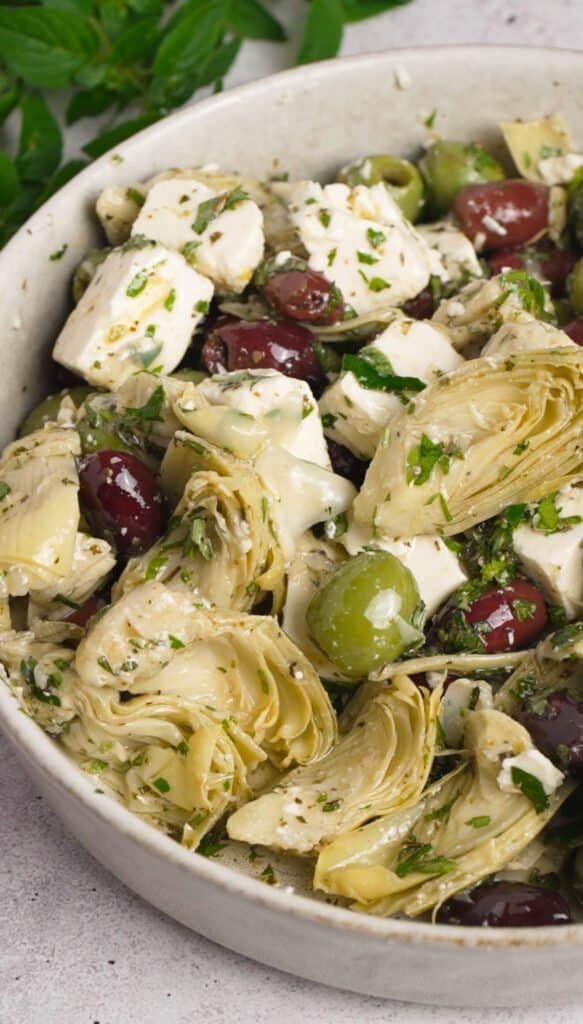
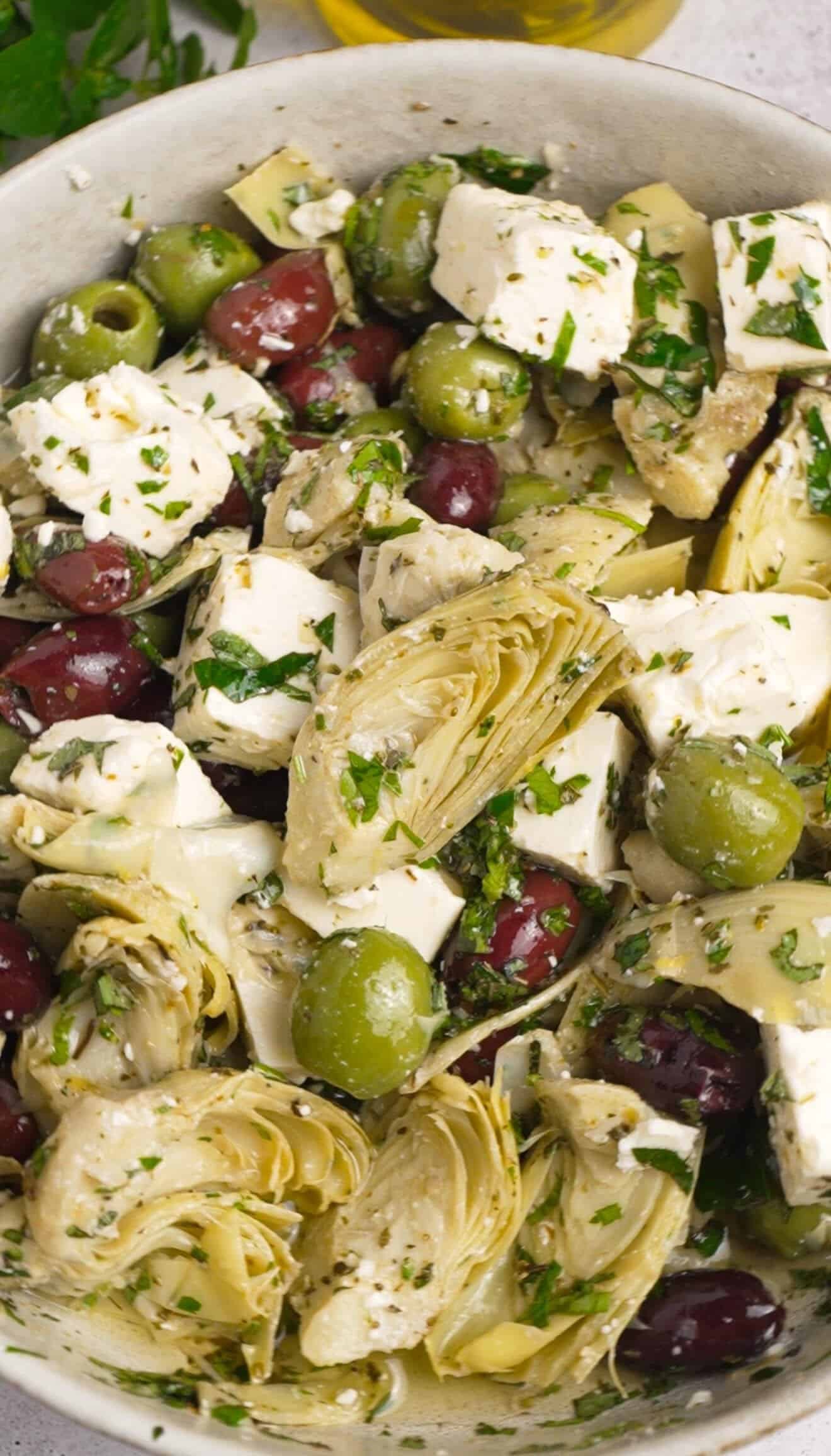
Once the feta, artichokes, and olives go in, something happens. The feta begins to absorb the dressing at its edges, turning from bright white to a faintly golden, herb-speckled surface. The artichokes soak up the garlic and vinegar and lose any lingering canned quality. The olives, already salted and brined, contribute their liquid to the marinade at the bottom of the bowl, making it deeper and more complex than what you started with.
After thirty minutes, the whole thing tastes like it came from a restaurant’s antipasto case. After a few hours, it’s even better.
Texturally: the feta is creamy but holds its cube shape. The artichokes are tender with a slight bite at the edges. The olives have that characteristic firm chew. The herb leaves are soft but not wilted. The olive oil at the base of the serving bowl is fragrant and deeply flavored — you want bread for it.
How to Make Marinated Feta with Artichokes and Olives
Step 1: Build the marinade. In a large bowl, combine the olive oil, red wine vinegar, finely grated garlic, dried oregano, dried savory, fresh herbs, and lemon zest. Whisk until the oil and vinegar are emulsified. Taste the marinade before adding anything else. It should be bright, herby, and well-balanced – sharp from the vinegar, fragrant from the garlic and herbs, with the citrus riding on top. Season with a small pinch of salt, knowing the feta and olives will add more.
Step 2: Drain everything thoroughly. This step is not optional. Place the artichoke hearts, feta, and olives in separate fine-mesh strainers and let them drain for several minutes. Pat the artichoke hearts dry with a paper towel if they’re particularly wet. The goal is to add as little extra liquid to the marinade as possible. When you add watery ingredients to an olive oil marinade, the oil and water separate, the marinade becomes thin, and the flavors don’t bind the way they should.
Step 3: Cut the feta. Slice the block feta into half-inch cubes. Work carefully – feta is delicate and will crumble if you rush it. A sharp knife and gentle pressure are all you need. If the block is very wet from its brine, blot it lightly with a paper towel before cutting.
Step 4: Combine. Add the drained artichoke hearts, feta cubes, and olives to the bowl with the marinade. Using a large spoon or flexible spatula, fold everything together gently. You want every piece coated, but you don’t want to break the feta. A few turns with a wide spoon, lifting from the bottom of the bowl, is enough.
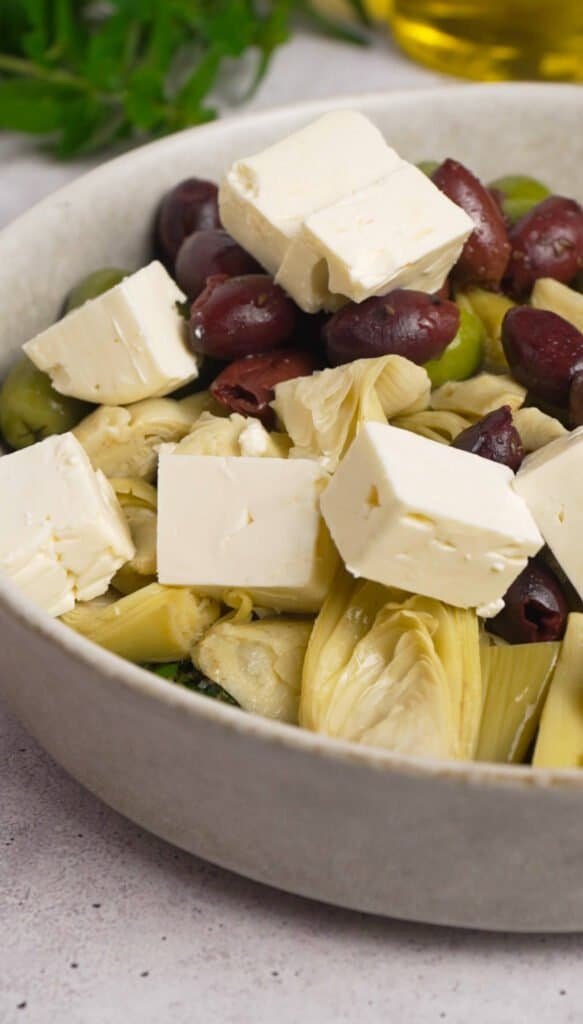
Step 5: Let it rest. Cover the bowl and let it sit at room temperature for at least 30 minutes before serving. This is the step most people skip and shouldn’t. The short rest lets the feta absorb the garlic, lemon, herbs, vinegar, and olive oil. The first bite straight from mixing is good; the bite after 30 minutes is the one that makes people ask for the recipe. If you have more time, refrigerate for up to 24 hours and bring to room temperature for 20 minutes before serving.
Step 6: Taste and adjust. Before serving, taste for salt. The marinade will have changed as everything released its natural brine into the oil. Add salt if needed. If it tastes flat, a few extra drops of red wine vinegar will sharpen it immediately.
Step 7: Serve. Transfer to a shallow serving bowl or a wide plate with a lip. Spoon the marinade from the bottom of the bowl over the top. Scatter a few fresh herb leaves over the surface. Serve with crusty bread, toasted crostini, pita, or crackers. The infused olive oil at the base of the bowl is as good as the cheese – make sure there’s something to soak it up!
Expert Tips
Don’t skip the block feta. Pre-crumbled feta is drier and won’t absorb the marinade the same way. The creamy, cubed texture from a block is what makes the dish look and taste elevated.
Drain aggressively. The most common mistake with marinated dishes is adding too much liquid from the ingredient packaging. Drain the olives, artichokes, and feta thoroughly. A few extra minutes here makes a significant difference in the final flavor concentration.
Go light on salt at the start. Season the marinade before adding the main components, then taste again after 15 minutes of marinating. The olives and feta release salt as they sit. What tasted under-seasoned at minute one may be perfectly balanced at minute thirty.
Make it the night before. This dish is genuinely better after several hours. The feta absorbs more of the marinade, the garlic mellows, and the herbs bloom into the oil. Make it the day before a party, refrigerate overnight, and pull it out 20 minutes before serving.
If you’re planning a full entertaining menu in advance, my Baked Brie with Pear and Honey comes together just as easily and covers the warm appetizer end of the table.
Serve at room temperature. Cold feta from the fridge is denser and less flavorful. Let the dish come up to room temperature before serving – it makes a noticeable difference in texture and taste.
The infused oil is the bonus. The olive oil at the bottom of the serving bowl takes on the garlic, herbs, lemon, vinegar, and brine from the olives and feta as it sits. It’s deeply flavorful. Serve it with bread for dipping, or drizzle it over pasta, grains, or roasted vegetables the next day.
Storage: Keep covered in the refrigerator for up to 5 days. The longer it sits, the more the feta will absorb the marinade – some people prefer it at day 2 or 3.
The herb-infused olive oil left in the bowl makes an excellent base for tomorrow’s Whipped Labneh Crostini – drizzle it over the top instead of plain olive oil.
What to Serve With This
The natural pairing is crusty bread or toasted crostini – something with enough structure to scoop and soak. Warm pita works equally well. For a full spread, this sits naturally alongside a whipped feta dip, a bowl of hummus, some cured meats, or a simple green salad. It’s also good as a pasta topping: toss a scoop over warm fettuccine with some of the marinade oil and a handful of pasta water to bring it together.
For entertaining, serve it in a shallow bowl with a small spoon and a stack of crostini alongside. It looks more composed than it is, which is the whole point.
These pair naturally with my Smoked Salmon Crostini with Egg-Cheddar Mousse if you’re building a full appetizer spread – cold and briny next to warm and smoky.
This also pairs beautifully on a spread with my peach burrata salad for an easy no-cook appetizer table.
FAQ
Can I use canned artichoke hearts instead of jarred? Yes. Canned water-packed artichoke hearts work perfectly here. Drain and pat dry thoroughly before adding to the marinade. If they’re packed in quarters, they’re ready to use as-is. If you have whole canned artichoke hearts, quarter them yourself before adding.
Can I make marinated feta ahead of time? This is one of the best make-ahead appetizers you can prepare. It keeps in the refrigerator for up to 5 days, and the flavor actually deepens and improves over the first 24 to 48 hours. Pull it from the fridge 20 minutes before serving so the olive oil comes back to its fluid state.
What kind of feta is best for marinating? A block of Greek or Bulgarian feta works best. Both are typically made from sheep’s milk (or a blend of sheep and goat) and have a creamier, richer texture than cow’s milk feta. Avoid pre-crumbled feta – it’s too dry to absorb the marinade and will fall apart in the bowl.
Can I use a different type of olive? Yes. Castelvetrano and Kalamata are the recommended combination for their contrasting flavors and colors, but any pitted olives work. Green Cerignola olives, Nicoise, or a pre-mixed olive blend all translate well. Avoid olives packed in heavy vinegary brine – it will overpower the marinade.
How long should I marinate the feta? A minimum of 30 minutes at room temperature is enough for the flavors to meld. For best results, marinate for 2 to 4 hours or overnight in the refrigerator. The feta will absorb more flavor the longer it sits.
Is this recipe gluten-free? The marinated feta itself is gluten-free. Serve with gluten-free crackers or crudités if needed.
Can I add other ingredients? Yes. Roasted red peppers, sun-dried tomatoes, pepperoncini, or capers all work well here. Keep additions brined or preserved (not fresh and wet) to avoid diluting the marinade.
If you’re building out a bigger spread, this pairs really well with my Mediterranean tomato and olive dip, the Parmesan in that one keeps things from tasting too feta-heavy across the table.

Marinated Feta with Artichokes and Olives
Ingredients
Method
- In a large bowl, whisk together the olive oil, red wine vinegar, grated garlic, dried oregano, dried savory, fresh parsley, fresh oregano, and lemon zest. Season with a small pinch of salt.
- Drain the artichoke hearts, feta, and olives thoroughly. Pat the artichokes dry with a paper towel if they are particularly wet. Extra liquid will dilute the marinade and dull the flavor.
- Cut the feta block into 1/2-inch cubes using a sharp knife and gentle pressure.
- Add the artichoke hearts, feta cubes, and olives to the bowl. Fold gently with a wide spoon until everything is evenly coated. Do not overmix – the feta should hold its shape.
- Cover and let rest for at least 30 minutes before serving. For best results, refrigerate for 2 to 4 hours, then bring to room temperature for 20 minutes before serving.
- Taste for salt and adjust. Transfer to a serving bowl, spoon the marinade over the top, and garnish with a few fresh herb leaves. Serve with crusty bread, crostini, or warm pita.
Notes
- Go light on salt at the start. The feta, olives, and artichokes all carry salt from their packaging. Season the marinade lightly, then taste again after 15 to 30 minutes once everything has had a chance to meld.
- Drain everything thoroughly. This is the most important technique step. Extra brine or liquid from the jars will water down the marinade and make the whole dish taste flat.
- Buy block feta, not pre-crumbled. Block feta holds its shape, absorbs the marinade from the edges, and gives you that creamy bite crumbles cannot deliver.
- Make it ahead. This dish improves significantly after a few hours in the fridge. The feta absorbs more of the marinade and the garlic mellows. Ideal for entertaining.
- The infused oil is a bonus. The olive oil at the bottom of the serving bowl takes on the garlic, herbs, lemon, and brine as the dish sits. Serve with bread for dipping, or drizzle it over pasta or grains the next day.
- Storage: Refrigerate in an airtight container for up to 5 days.




Great summer recipe and was a hit at the dinner. I doubled the garlic , and put way more vinegar adding some sherry vinegar. Had to substitute savory for thyme, and added some baby arugula leaves from the garden (finely chopped). Delish!