

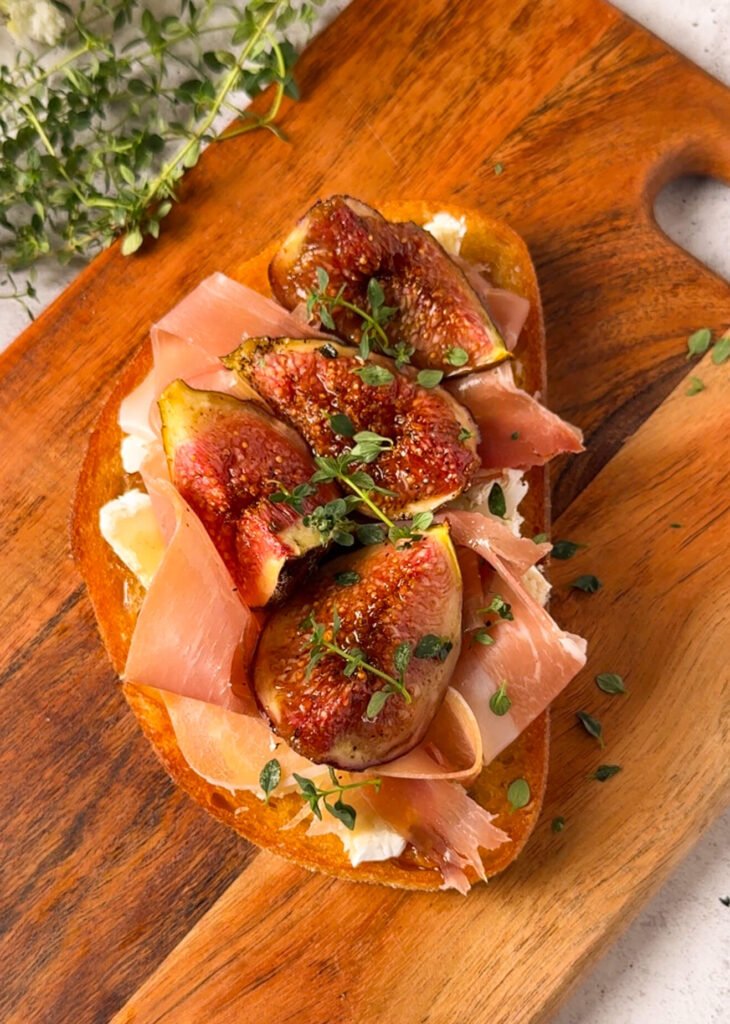
Starting in June and running clear through September, whenever figs show up at my farmers market in those dusty purple crates, I make some version of this roasted fig and brie toast at least once a week. It started as something I threw together for a last-minute wine night with my friend: a piece of brie in the fridge, a few slices of prosciutto, and a bowl of figs that were a day past raw-eating and needed roasting more than snacking. That accident turned into one of the most requested things I make, the kind of appetizer people ask about mid-bite.
Roasting the figs instead of eating them raw is what changes everything here. Fifteen minutes in a hot oven with honey, balsamic and thyme turns them jammy and deeply sweet, and it leaves behind a small pool of syrupy juice in the baking dish that you spoon right over the finished toast. If you’ve made my Fig & Prosciutto Toast with Crème de Brie and Pine Nuts before, think of this one as its warmer, stickier cousin, built for the exact stretch of fig season when the fruit is a little too ripe for the cheese board but perfect for the oven.
This is a five-ingredient, twenty-minute appetizer that looks like it came off a wine bar menu. No fig jam shortcuts, no fussy technique. Just real figs doing what they do best once you give them some heat.
Why You’ll Love This Recipe
- Five ingredients, one small baking dish, ready in about twenty minutes — there’s no multi-step sauce or advance prep required.
- It looks like it took real effort. The color, the shine from the pan juices, the folds of prosciutto: this is the appetizer people photograph before they eat it.
- Roasting does double duty. The figs turn jammy and the dish left behind becomes a built-in sauce, so you’re not reaching for a jar of fig jam or reducing anything on the stove.
- It scales easily. Double the fig quantity and use a sheet pan instead of a small dish for a party platter, or keep it to two toasts for a quiet night in.
Ingredient Notes
Bread. I reach for a thick-cut sourdough or a rustic artisan loaf here, something with an open crumb and a real crust. It holds up to the fig juices without going soft in the two minutes it takes to plate. A sourdough baguette or ciabatta works too. Skip pre-sliced sandwich bread; it won’t survive the drizzle.
Fresh figs. Black Mission or Brown Turkey figs both work beautifully. You want them ripe and slightly soft to the touch but not bruised or split. Quarter large figs, halve smaller ones, so every piece roasts evenly and holds its shape instead of collapsing into mush.
Brie. Go for a real wedge of brie, not the flavored kind, sliced thin. It doesn’t need to fully melt: the warmth from the toasted bread and the roasted figs softens it just enough to spread slightly on its own. If you want something even creamier, my fig and prosciutto toast with crème de brie uses the spreadable version instead, which is worth trying if you like your brie extra soft.
Prosciutto. Thin, delicate slices, torn rather than cut into neat pieces. Tearing gives you natural folds and little gaps, which matter more than you’d think because that’s where the fig juices pool and where the prosciutto gets to stay a little crisp at the edges instead of lying flat and steaming.
Honey. A good, mild honey like wildflower or clover lets the fig flavor stay in front. Save anything smoky or heavily floral for another recipe.
Balsamic vinegar. This is what keeps the whole thing from tasting like dessert. You don’t need a 25-year aged bottle, but skip the cheapest one on the shelf; a mid-range balsamic has enough acidity and body to balance the honey and the richness of the brie and prosciutto.
Fresh thyme. Non-negotiable here. Dried thyme won’t release the same fragrance while roasting, and the fresh sprigs scattered on top at the end are doing real flavor work, not just sitting there for the photo.
How to Make Roasted Fig and Brie Toast
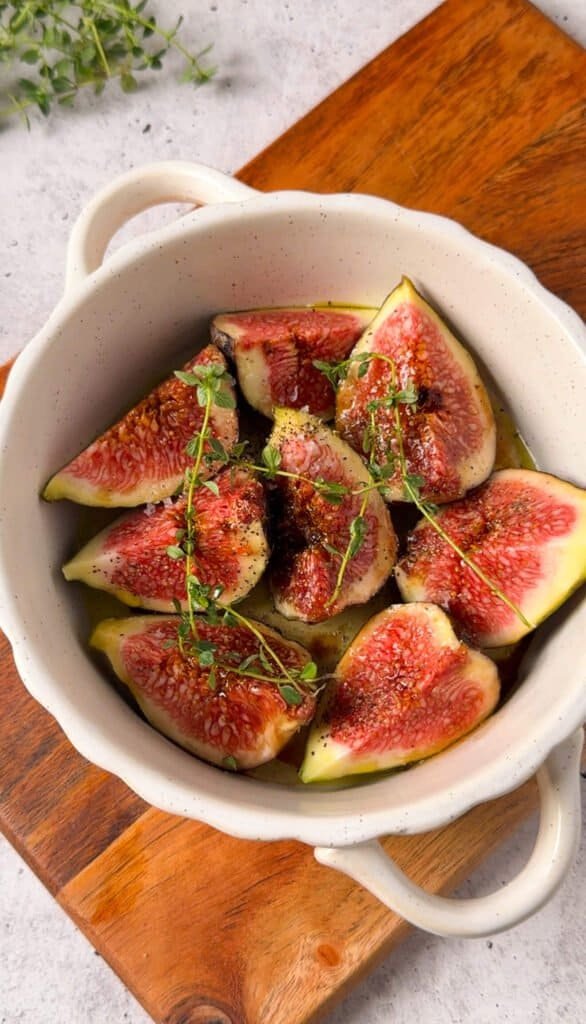
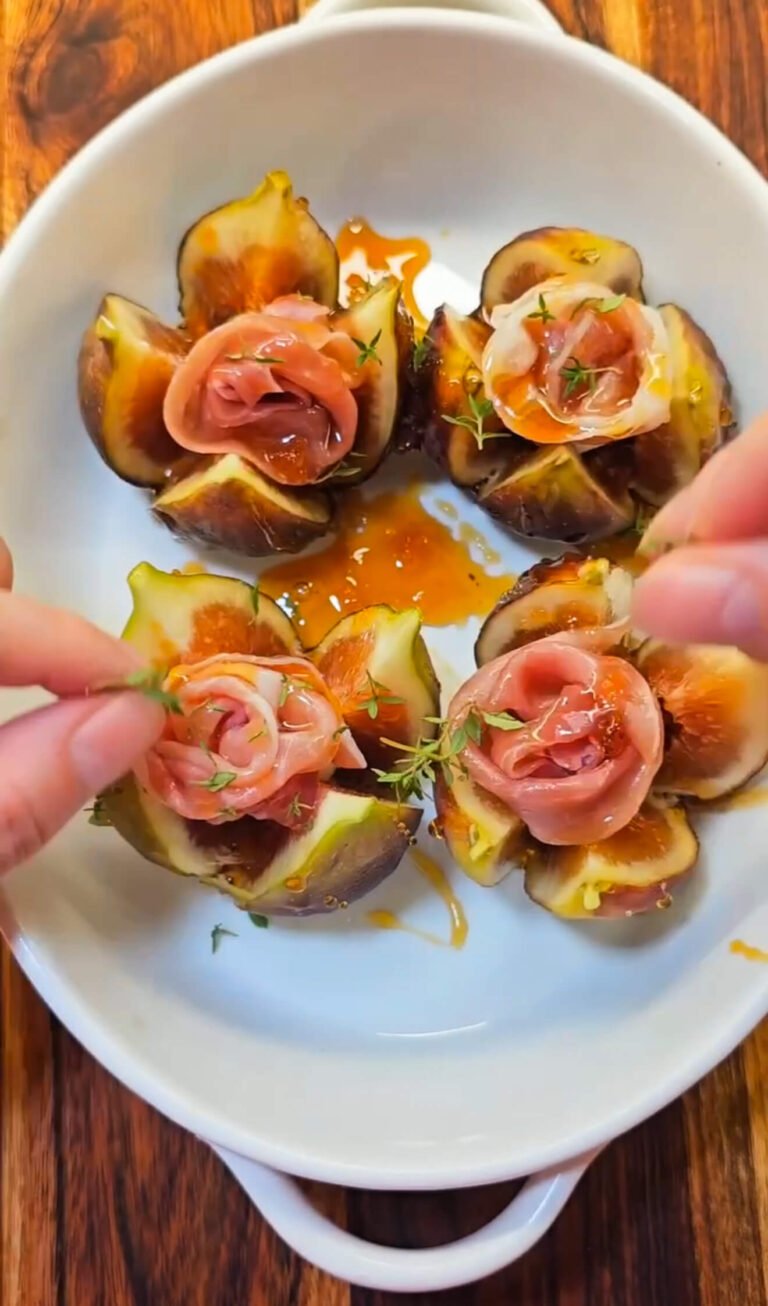
Start by getting your oven hot, 425°F, because these figs want a fast roast, not a slow one. Arrange the quartered figs in a small baking dish, and I do mean small: you want them close together so the juices that render out actually pool instead of spreading thin across a big sheet pan. Drizzle over the olive oil, honey and balsamic, tuck in a couple of thyme sprigs, and season lightly with salt and pepper. Slide the dish into the oven and let it go for about fifteen minutes. You’re watching for the figs to turn tender and jammy at the edges while still holding their shape in the middle; if you catch them at twelve minutes and they’re already deeply glazed, pull them. When they come out, don’t discard that syrupy liquid pooling around them. That’s the whole point of roasting instead of using jam.
While the figs are in the oven, brush your bread slices with a little olive oil and toast them until they’re a deep golden brown with some real crunch at the edges. A hot skillet, a broiler, or a toaster oven all work; you just want color and crispness, not a pale, timid toast.
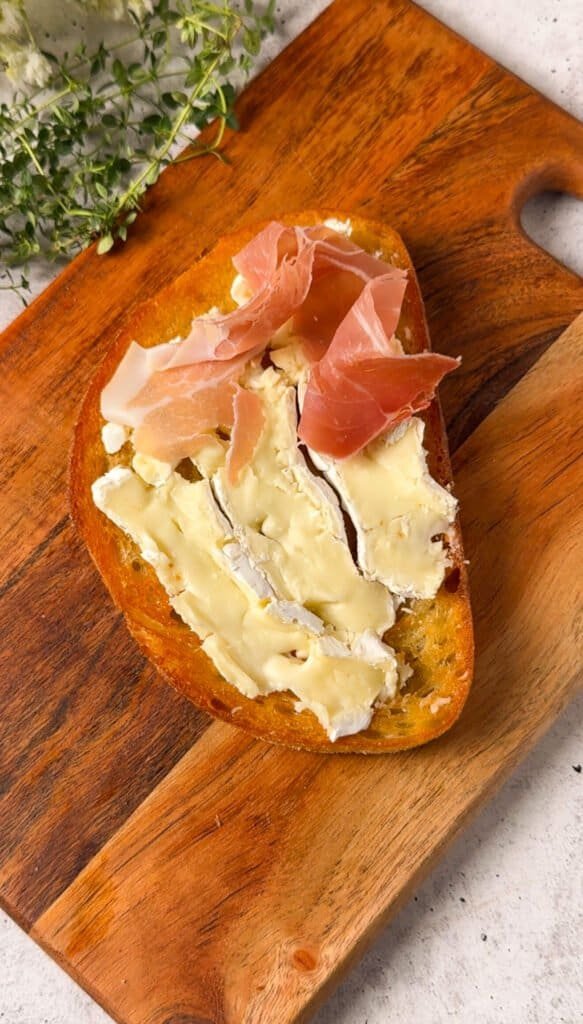
While the bread is still warm, this part matters, lay your brie slices across the surface. The residual heat softens the cheese just enough that it starts to spread on its own without any effort from you. Resist the urge to smash it flat with a knife; let the warmth do the work.
Tear your prosciutto into loose pieces and drape them over the brie, letting them fold and overlap naturally rather than laying them flat like a blanket. Those folds are where the fig juices will catch later.
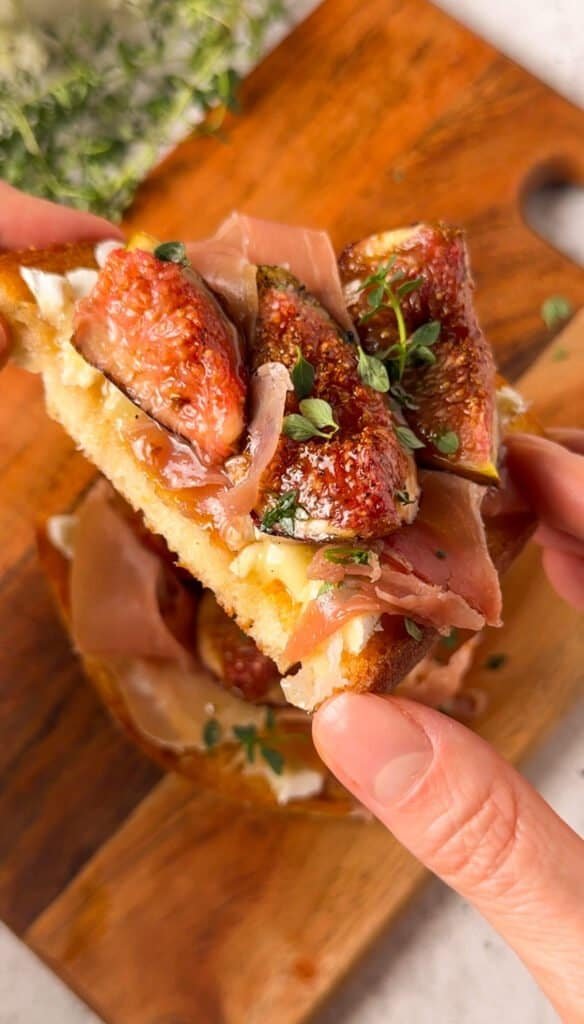
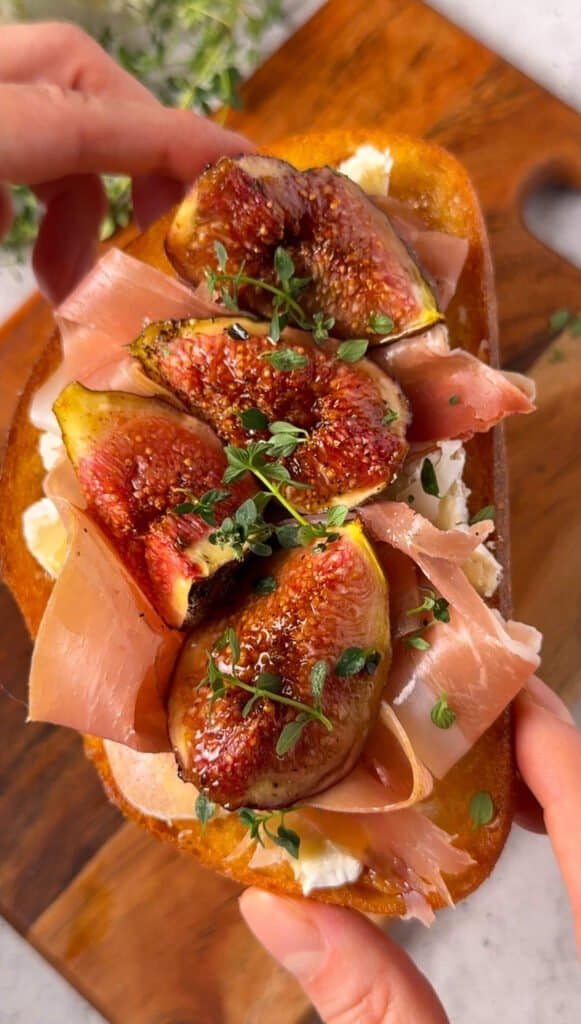
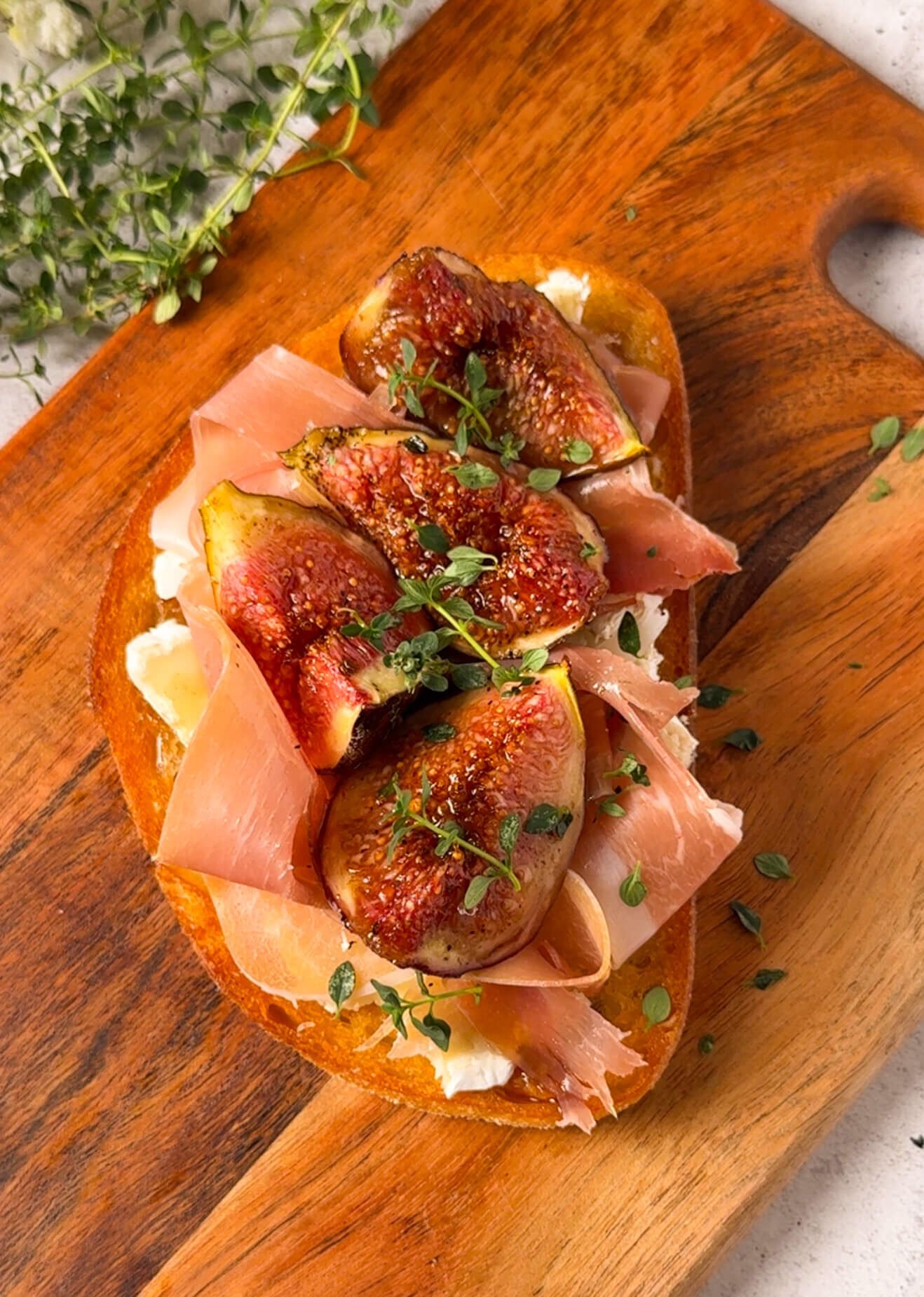
Now nestle the roasted fig quarters into the gaps between the prosciutto, cut side up so you can see the jammy interior. Four quarters per toast (one whole fig) is the right ratio: enough fig in every bite without drowning the other ingredients.
Finish by spooning that reserved roasted fig juice generously over the top of each toast. This is the step people skip and shouldn’t; it’s what ties the sweetness, acidity and richness together into one bite instead of three separate flavors sitting next to each other. Scatter fresh thyme leaves and a small sprig over the top, and serve right away while the bread is still crisp and the brie is still soft.
Tips for Success
Use a small baking dish, not a sheet pan, for the figs. This is the single biggest thing that separates this recipe from a flat, dry version. A crowded dish means the honey, balsamic and fig juices actually collect into something you can spoon, instead of evaporating across a wide surface.
Let the bread do the melting. You don’t need a broiler or a torch to soften the brie. Assembling everything while the toast is still warm from the oven or skillet is enough to get that just-right, barely-melted texture without turning the cheese into a puddle.
Assemble at the very last minute. This isn’t a dish you build ahead and let sit on the counter. Once the fig juices hit the warm bread, the clock starts ticking on crispness. Roast the figs and toast the bread ahead if you need to, but do the actual stacking right before you serve.
Variations and Substitutions
If figs aren’t in season, ripe pears roast beautifully using the exact same honey-balsamic-thyme method; just add a few extra minutes in the oven since pears take slightly longer to soften. Prefer more tang than richness? Swap the brie for goat cheese, which is exactly what I do in my goat cheese and fig stack with prosciutto and hot honey if you want to see how that combination plays out. For a vegetarian version, leave out the prosciutto entirely and add toasted walnuts or pistachios along with a pinch of flaky sea salt to make up for the salty note you’d otherwise be missing. If you’d rather caramelize than roast, my caramelized figs and honey burrata toast uses a stovetop method and burrata instead of brie, which gives you a softer, more pooled cheese layer. And if you’re building a party platter rather than plating individual toasts, slice a baguette into rounds instead of using thick bread and follow the same method for bite-sized crostini; my crostini with whipped ricotta and prosciutto walks through that smaller format in more detail.
Storage and Make-Ahead Info
The roasted figs, juices and all, hold well in the fridge for up to three days in an airtight container. Gently rewarm them in a low oven or a small skillet before using so the juices loosen back up. Toast the bread up to a few hours ahead and re-crisp it in a 350°F oven for three to four minutes right before assembling. What you shouldn’t do is build the fully assembled toasts ahead of time; the bread softens and the brie turns gummy within twenty to thirty minutes of sitting under the warm figs. Prep the components, assemble at the last minute, and you’ll get the texture this recipe is actually built for.
Frequently Asked Questions
Can I make this ahead of time?
You can roast the figs and toast the bread in advance, but hold off on stacking everything together until just before you’re ready to serve. Assembled too early, the toast loses its crunch and the brie goes from soft to soggy.
Can I use fig jam instead of fresh figs?
You can in a pinch, but you’ll lose the pan juices that make this recipe what it is. If you go the jam route, spread a thin layer on the toast before adding the brie and prosciutto, then finish with an extra drizzle of honey mixed with a splash of balsamic to mimic that syrupy top note.
What’s a good substitute for brie?
Goat cheese, Camembert, or mascarpone all work well here. Goat cheese leans tangier, Camembert is close to brie but slightly more pungent, and mascarpone gives you the mildest, creamiest result of the three.
Do I need to peel the figs before roasting?
No. Fig skin is thin, edible, and adds a slight chew that’s part of the texture here. Just give them a rinse and pat them dry before quartering.
Pairing and Serving Ideas
This toast is meant for a table with a few other things on it, not as a solo dish. I like putting it out alongside my fresh fig, arugula and brie salad when figs are at their peak, since you get the same flavor profile in both a warm and a cold format without it feeling repetitive. For a fuller spread, especially around the holidays, set it next to a wheel of my baked brie with pear, honey, rosemary and pine nuts so guests can move between the two brie preparations. On the drinks side, a dry sparkling rosé or a chilled Sauvignon Blanc cuts through the richness nicely, and if you’re pouring red, keep it light: a young Pinot Noir won’t fight with the sweetness of the figs the way a bigger, tannic red would.
This post contains affiliate links. If you purchase through them, I may earn a small commission at no extra cost to you.

Roasted Fig and Brie Toast with Prosciutto
Ingredients
Method
- Preheat the oven to 425°F.
- Arrange the quartered figs in a small baking dish.
- Drizzle the figs with olive oil, honey and balsamic vinegar.
- Tuck the thyme sprigs among the figs and season lightly with salt and pepper.
- Roast for 15 minutes, until the figs are tender and jammy but still holding their shape.
- Remove from the oven and set aside, reserving the juices in the dish.
- Brush the bread slices with olive oil and toast until golden and crisp.
- While the bread is still warm, arrange 3 slices of brie on each toast and let it soften slightly.
- Tear the prosciutto into pieces and loosely fold them over the brie.
- Nestle 4 roasted fig quarters into the folds of prosciutto on each toast.
- Spoon the reserved fig juices over each toast.
- Finish with fresh thyme leaves and a few small sprigs.
- Serve immediately.
Notes
- If your figs are on the smaller side, halve them instead of quartering.
- Use a small baking dish for roasting so the honey, balsamic and fig juices collect and concentrate rather than spreading thin.
- There’s no need for extra seasoning after assembly: the prosciutto and brie bring the salt, and the roasted fig juices bring the sweetness and acidity.
- Best assembled and served immediately; components can be prepped a few hours ahead but the toast itself doesn’t hold well once fully built.





Delicious!!!