
This creamy butternut squash soup with chicken turns a classic fall soup into a complete meal. The chicken roasts alongside the vegetables, adding savory flavor to the squash and creating delicious pan juices that are blended right into the soup. Finished with cream, fresh lemon and tender chunks of roasted chicken, it is rich and comforting without feeling too heavy.

Butternut squash soup is everywhere once fall arrives, but most versions leave me wanting something else with it. They are lovely as a starter, yet a bowl of puréed vegetables does not always feel like dinner.
That was the idea behind this creamy butternut squash soup with chicken. I wanted the cozy texture and warm fall flavor of the classic soup, but I also wanted enough protein to make it a complete meal. Instead of cooking the chicken separately, I roast it in the same dish as the squash, tomatoes, pepper, shallot and garlic.
It keeps the recipe simple, but convenience is only part of the reason. While the chicken roasts, its juices mingle with the vegetables and collect at the bottom of the dish. Everything left behind goes into the soup, giving the purée a savory depth that squash and broth alone cannot create.
The soup is finished with chunks of roasted chicken, a light drizzle of cream and a squeeze of fresh lemon. It is creamy without being too heavy, and substantial enough to serve on its own.
Butternut Squash Soup That Actually Feels Like Dinner
I did not want to solve the “not filling enough” problem by adding potatoes, rice or pasta. Chicken gives the bowl more staying power while keeping the focus on the roasted vegetables.
Leaving the chicken in visible pieces matters, too. If it were shredded finely and stirred throughout the soup, it would disappear into the purée. Generous chunks give each serving contrast: smooth soup, juicy chicken and those deeply seasoned browned edges.
The chicken is not an afterthought. It helps flavor the soup and then becomes the main topping.
What Does This Soup Taste Like?
Butternut squash is naturally sweet and nutty, so the rest of the ingredients are there to keep the final flavor balanced and savory.
Tomatoes contribute acidity and a little umami without making the soup taste tomato-based. Red bell pepper adds roasted sweetness and strengthens the orange color. Shallot and garlic form the aromatic base, while dried thyme gives everything a familiar, cozy flavor.
Ground coriander adds subtle warmth without turning the soup into a curry. Smoked paprika brings gentle smokiness and gives the chicken a richer color.
The heavy cream softens the roasted flavors and makes the texture feel polished, but this is still very much a vegetable-forward soup. The fresh lemon added at the table is what pulls everything together. It cuts through the cream, brightens the squash and keeps the bowl from becoming too sweet or heavy.
How to Keep Butternut Squash Soup from Tasting Bland
Blended soups can look beautiful and still taste flat. The usual problem is not a lack of ingredients; it is a lack of contrast. Squash, roasted pepper, shallot and cream all lean sweet or mellow, so the soup needs savory seasoning, acidity and enough salt to define those flavors.
Roasting helps because it concentrates the vegetables rather than diluting them in a pot of water. Cooking the chicken in the same dish adds another savory layer. Most importantly, all the juices from the roasting dish are blended into the soup. They may not look like much, but they contain concentrated chicken flavor, seasoning and caramelized vegetable juices.
Using unsalted or low-sodium broth gives you control over the final seasoning. A heavily salted broth can make the soup taste salty before the other flavors are properly balanced. Start with a broth that leaves room to adjust after blending.
Then finish each bowl with lemon. A small squeeze is enough; the soup should not taste distinctly lemony. If it suddenly tastes brighter and more complete, you have added the right amount.
Why the Covered Roasting Dish Works
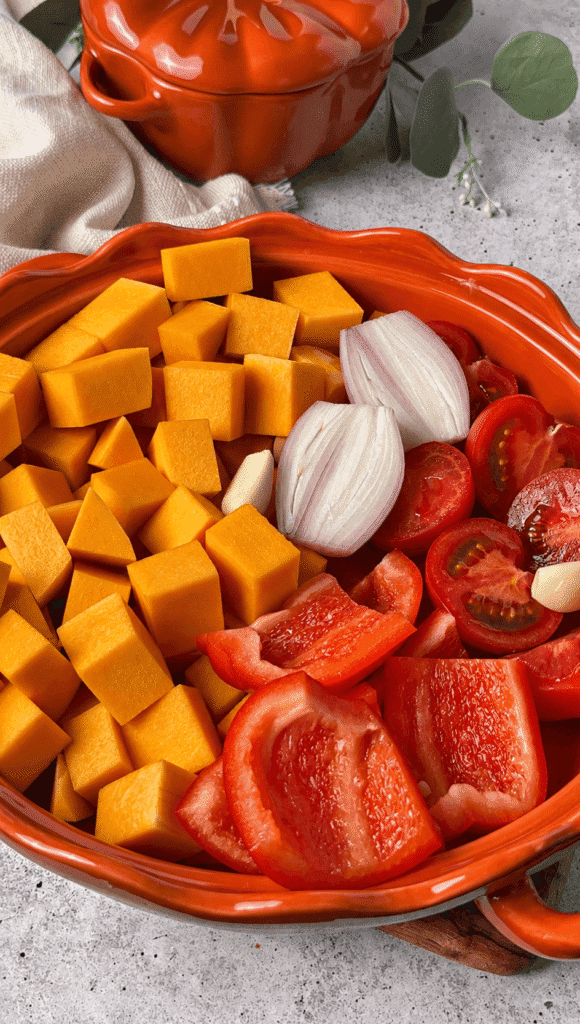
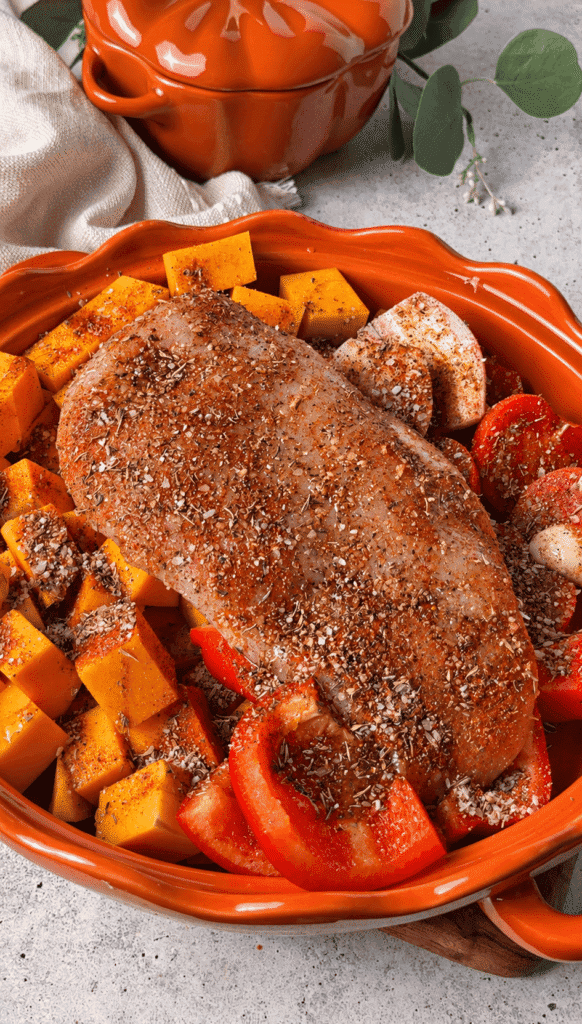
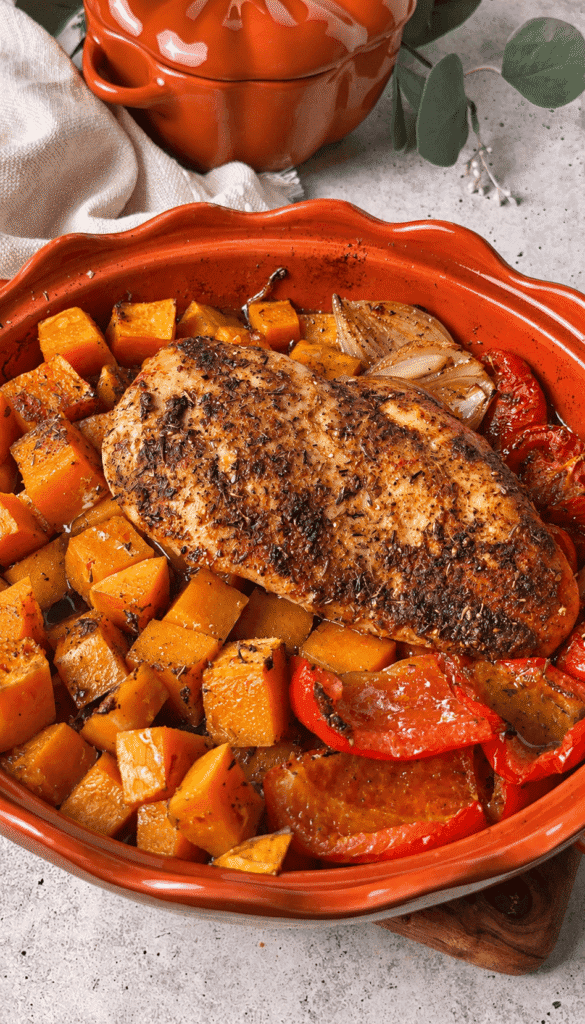
My pumpkin-shaped ceramic dish is very cute, but the lid is what makes it especially useful for this recipe. Covered roasting traps moisture, allowing the chicken to cook gently while the squash and aromatics soften in the released juices.
A short uncovered finish gives the chicken and exposed vegetables better color. This combination is helpful in a deeper casserole dish, where the ingredients need time to soften before they can brown.
You do not need pumpkin-shaped cookware to make the soup. Any covered oven-safe ceramic or enameled baking dish will work. If your dish does not have a lid, cover it securely with foil and remove the foil for the final portion of roasting.
How Thick Should the Soup Be?
I prefer this soup thick enough to support the chicken pieces on top, but not so thick that it feels like mashed squash. It should flow easily from the ladle and settle naturally in the bowl.
The exact amount of broth needed will vary. Squash can contain more or less moisture, tomatoes release different amounts of juice, and a wide baking dish allows more evaporation than a deep one. This is why it is better to begin with less broth and add more only after the vegetables are smooth.
If the soup is too thick, blend in additional broth a small amount at a time. If it is slightly thinner than you wanted, warm it gently in a saucepan to let some moisture evaporate. Adding extra cream will make it richer, but it will not necessarily correct a thin consistency.
The soup will also become thicker after refrigeration. Leftovers usually need a small splash of broth while reheating.
Blending Hot Soup Safely
A countertop blender creates the silkiest result, but hot ingredients need care. Do not fill the blender to the top or trap steam beneath a tightly sealed lid. Vent the center opening and begin at low speed.
An immersion blender also works, although the texture may be slightly more rustic. Transfer the vegetables and roasting juices to a deep saucepan before blending. I would not use an immersion blender directly in a decorative ceramic dish because the blade guard can scratch the glaze.
How to Serve It
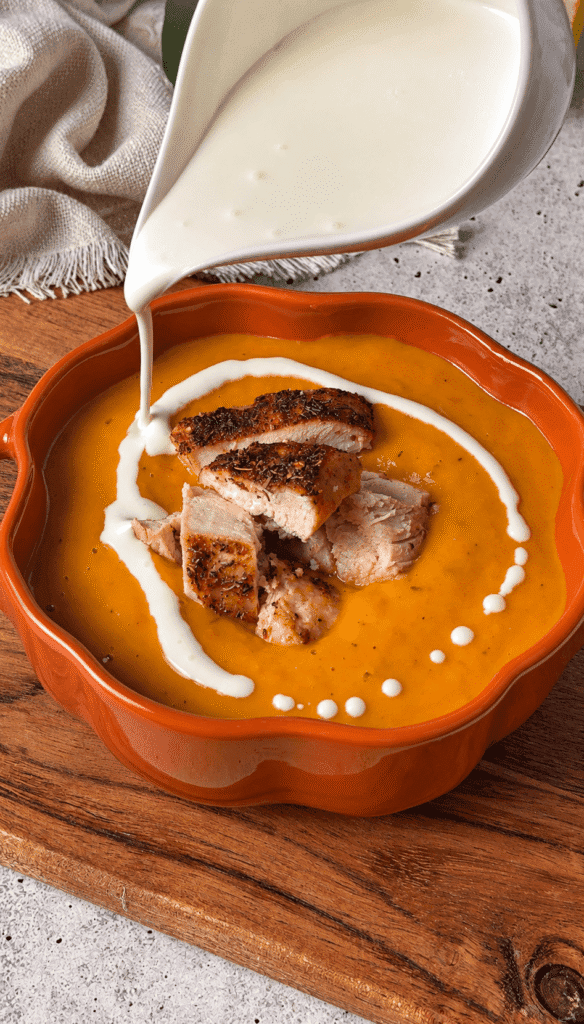
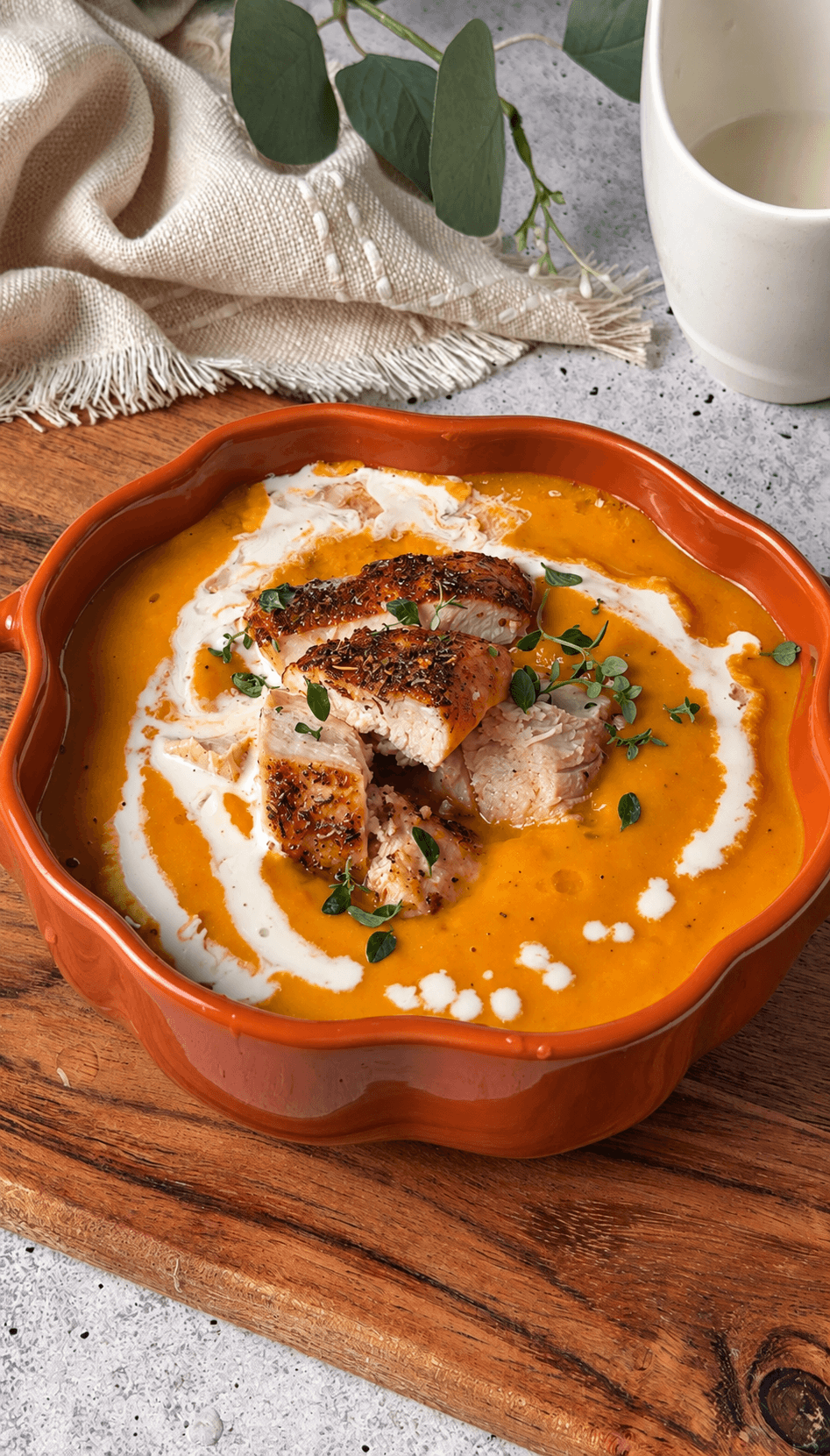
I like to serve the soup in wide bowls with the roasted chicken piled in the center. A light cream drizzle adds contrast against the orange soup, while a few fresh thyme leaves make the bowl look finished without covering the food.
Add the lemon directly to each serving rather than mixing it into the entire batch. The flavor stays fresher, and everyone can adjust it to taste.
The soup is filling enough to stand alone, but bread is always welcome. My pesto pull-apart bread is especially good for tearing and dipping into the creamy soup.
For a fall dinner or small gathering, you could begin with my butternut squash cheese crackers. They use the same seasonal ingredient in a completely different way and can be prepared before guests arrive.

Make-Ahead and Leftovers
The soup can be prepared ahead, but store the chicken separately from the purée. This keeps the browned exterior from becoming soft and prevents the chicken from absorbing too much liquid.
Reheat the soup gently over medium-low heat, stirring occasionally. Avoid a hard boil after the cream has been added. Loosen the soup with broth as needed, then warm the chicken separately or add it during the final few minutes.
Wait until serving to add the cream drizzle, lemon and fresh thyme. The leftovers will taste much closer to the first bowl when those finishing touches are fresh.
The soup base can also be frozen separately from the chicken. Creamy puréed soups sometimes look slightly separated after thawing, but gentle heat and a quick blend will usually restore the texture.
Frequently Asked Questions
Can I use chicken thighs instead of chicken breast?
Yes, but the cooking time and final presentation will be slightly different. Chicken breast cuts into cleaner pieces for topping the soup, which is why I prefer it here. Whichever cut you use, cook it to a safe internal temperature.
Can I make the soup without heavy cream?
You can omit it for a lighter soup or replace it with a dairy-free cream that has a neutral flavor. Coconut milk will work technically, but it will noticeably change the flavor and may compete with the coriander and smoked paprika.
Why did my soup need more broth?
The moisture content of squash and tomatoes varies, and some baking dishes allow more evaporation than others. Treat the broth measurement as a starting point and adjust the consistency after blending.
This post contains affiliate links. If you purchase through them, I may earn a small commission at no extra cost to you.

Creamy Butternut Squash Soup with Chicken
Ingredients
Method
- Preheat the oven to 425°F.
- Place the butternut squash, chicken breast, shallot, red bell pepper, tomatoes and garlic in a covered oven-safe ceramic baking dish.
- Drizzle with olive oil. Add the salt, black pepper, coriander, smoked paprika and dried thyme, then turn the chicken and vegetables until coated.
- Cover and roast for 15 minutes. Carefully remove the lid, turn the chicken over, replace the lid and roast for another 15 minutes.
- Check that the chicken has reached 165°F in its thickest part and the squash is fork-tender. Remove the lid and roast for 10 more minutes to add color.
- Transfer the chicken to a cutting board to rest. Place all the roasted vegetables and every bit of liquid from the baking dish in a blender.
- Add 1 cup of warm chicken broth. Vent the blender lid safely and blend until completely smooth.
- Add ½ cup heavy whipping cream and blend briefly. Add more broth a little at a time if you prefer a thinner soup. Taste and adjust the seasoning if needed.
- Cut the chicken into generous bite-size chunks.
- Ladle the soup into bowls and top with chicken. Lightly drizzle with cream, squeeze fresh lemon into each bowl and finish with fresh thyme leaves if desired.
Notes
- Chicken breasts vary in thickness, so confirm doneness with a thermometer.
- Start with one cup of broth and adjust after blending.
- Store the soup and chicken separately for the best leftovers.